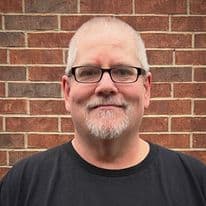
Keke’s Breakfast Cafe isn’t growing on hype. It’s winning by designing for how people actually want to eat breakfast — then scaling that experience with discipline. On a recent episode of the “Meet the Franchise” podcast, Keke’s Senior Director of Franchise Relations Jon Ahrendt and multi-unit franchisee John Ehrhard joined 1851 Franchise Publisher Nick Powills to explain why a breakfast-and-lunch-only model fits operators who want to diversify without sacrificing revenue or work-life balance.
The appeal starts with guardrails. Single-shift hours narrow complexity while sharpening execution. “It’s a single shift restaurant, so you’ve got just breakfast and lunch,” Ehrhard said. That cadence draws talent who want to work hard and be home for dinner, which becomes a strategic advantage when competitors struggle to staff nights. The customer feels the payoff in tempo, attention and consistency. “The wow factor is 100% right. It’s special. It’s hard to quantify.”
Keke’s builds rooms for conversation, not noise. High booths, drop ceilings and a controlled soundscape push against the industry’s “open, louder, trendier” reflex. “We like to say this is a very simple business. That doesn’t mean it’s easy,” Ahrendt said. Simple here means repeatable standards: keep guests with their own party, keep service eye-to-eye, keep plates memorable. In recent consumer research across Tampa and Dallas, the response surprised even leadership. “The term love was brought up in both cities multiple times,” Ahrendt said.
Culture scales the model. Ehrhard, a former television producer who now operates nine cafés, hands his teams real authority during the holidays: “We let them comp any table in November and December. They just have to share the story.” Those discretionary moments — servers reading the room, solving small problems fast — compound into loyalty more reliably than coupons ever could. Ahrendt’s boundary for operators is equally clear: “Don’t make your problem my problem.” Prices jump, supply chains hiccup; guests shouldn’t feel the turbulence as surcharges or shortcuts.
The growth plan leans on people, not promotion. Rather than chase every new market, Keke’s follows proven operators—existing franchisees expanding, select newcomers, and experienced Denny’s partners—into neighborhoods where the brand can land its playbook intact. “We’re a people-first organization,” Ahrendt said. That restraint hasn’t slowed momentum. The company expanded from one state to seven while keeping its metrics in rare company. “We’re up there in rarefied air with In-N-Out and Chick-fil-A, et cetera, competing with them on BBI scores, Google review scores.”
For multi-unit owners weighing portfolio additions, the Keke’s case is simple: bounded hours that protect lifestyle, unit economics built on high-frequency occasions, and an operating system engineered for consistency over flash. The core is durable because it’s built around human behavior—quiet tables, generous plates, empowered teams — and insulated from the industry temptation to make today’s back-of-house problem the guest’s problem tomorrow.
Ehrhard keeps the outlook practical, not poetic. “We just opened our ninth cafe last month,” he said, already scanning the map for what’s next. The throughline is the same whether you’re adding unit two or unit ten: keep it simple, make it feel good, land it every time.
A transcript of Ahrendt and Ehrhard’s interview with Powills has been provided below. It has been edited for brevity, clarity and style.
Nick Powills: I'm super pumped for this conversation. Here's why, and then we're going to get into it. One, I love the brand KeKe's, and I think it's important to let people understand what the business opportunity is.
I think a lot of people don't understand it because it's so focused on Florida right now, which we're going to get into. Two, I love talking to franchisees. I think, Jon, your story is exciting.
I want to break into that. Lastly, to have two Johns on a call, I'm just going to have to go Jon A., John E. to make this very simple, but I think there's a wealth of conversation that's coming out of this. Jon A., I'm going to start with you. Just to frame things up, give whoever's watching this a sense of what is the state of the union at KeKe's right now.
Ahrendt: Sure. I call us a 19-year-old startup. We were acquired by Denny's in July 2022.
That really accelerated our ability to grow. We're able to put in stronger support systems for that growth, apply the right capital and resources to get things aligned, and really grow. If you asked me how many states we were in in January of last year, I'd have said one, Florida, just as you'd stated in your opening.
If you asked me in December, I would have said seven. We've got states sprinkled out from Florida all the way over to California.
Powills: That's huge. John E., what's your franchise backstory? How did you accidentally fall into franchising, and how did you accidentally fall into KeKe's?
Ehrhard: I started off as a customer first. My wife and I — our background was in television for about 25 years. Never in a million years did I think I would ever end up in restaurants.
We had a good friend who was a franchisee in Orlando, and I was just mesmerized. So, A) we were a customer — we love the brand. We go there all the time with the kids. And then I got to see from his perspective, just being friends with him over the years. I was like, this is a really fascinating model you have here.
A buddy of mine invested with him to go and scale and do more units, and then that took off really well. I ended up buying out my partners — my wife and I did — about six, maybe seven years ago, and then continued to scale from there. So, yeah, it was a very nontraditional journey into restaurants.
Whenever I talk to restaurateurs, I'm like, all I know is KeKe's. It's awesome, but I'm always gathering information. I've been told many times I've been spoiled by getting into a Denny's brand because of the team, which I can appreciate because they're awesome.
Powills: Go back to this decision to buy in. Two things I'm curious about. Behind the scenes, what was going on with the knee-jerks? What was making you nervous about this? And then, to be somewhat of a pioneer franchisee in the system, once you got in, how did you overcome some of those fears and build up the confidence?
Ehrhard: Yeah. I mean, if you mean why restaurants in general — what were the knee-jerks? I think you always hear the difficulties of the restaurant business.
For a layperson, not in the industry, you just hear it's a very difficult industry — and it is. I'm not saying in general it's not. But what was fascinating about the KeKe's model was it's a single-shift restaurant, so you've got just breakfast and lunch.
The labor pool you're pulling from is fantastic because there are a lot of people who work in the restaurant industry who have family lives and don't like working nights and missing out. So you get a ton of people who get to drop their kids off at school, go work, make good money, and pick them up, and it works really great. So the labor pool is great.
The product is, again — it's fun when you're a customer first and you're a big fan of the brand and the product. You get to see your kids beg you to go on the weekends. What's funny is, I always tell these guys, we worked in TV for 25 years.
Our kids gave us no cool points for that at all. We did stuff for MTV — cool stuff in our world. They were like, TV? It's YouTube — social media. You produce anything, whatever.
The second we said we were getting into KeKe's, it was like we had rock-star status. "Can we go in the kitchen? Can we bring our friends? Can we do this?" They think it's the coolest thing in the world.
That was also a fun perk. I did not see that coming, but that was a fun tangent. I don't know if I answered all your questions.
Powills: No, I think it's a good start. It's funny that you say that. I took my kids to KeKe's last week — typical. I have a 13-year-old and a 10-year-old. They're like, "Dad, you know these guys?" I'm like, "Uh-huh."
And they're like, "Do you get discounts?" I was like, no, they kind of pay us OK. I don't think we need to ask for a discount. But it's interesting.
I think that's part of the allure of the restaurant business — sometimes to kids there is a rock-star component to this. And John E., I'm curious on your viewpoint on this. You've been in the system for a long time.
I think a lot about legacy and businesses that you can build and grow and scale — and two options at the end: you can sell it off or you can have a continuation. If we look at Denny's as a business model, you can see multigenerational involvement. Talk about that sense. There's a culture here that is family. There are franchisees who have family. Is that part of the magic of this business opportunity?
Ahrendt: There's no question. I think just an extra point to add to where your question was leading is that our franchise community did not necessarily have strong restaurant backgrounds. John just explained one, and he's one of our best.
Recognizing that great restaurant people can be found anywhere — John mentioned the pool for hourly and management. We feel the same way about the franchise community.
We know we've got a strong brand. We like to say this is a very simple business. That doesn't mean it's easy, right? There's a massive difference between those two things. You have to come in and see what that's all about—maybe even experience some other restaurants. To John's point, he was maybe a little bit spoiled being in this brand. It's really well established.
When you think about, if you're going to be king for a day, what would you come in and change? Not much. The founders did a good job of curating simplicity and excellent quality with efficient service.
That's just what we're trying to execute on a regular basis. So from a franchisee perspective, we've got it licked. We know exactly what we need to get done.
We'll help you get there pretty quickly. We're great on the development side now. We've got killer tools to help you make sure you're making good decisions in whatever market you choose to open a KeKe's.
And we're there for you from cradle to grave.
Powills: John E., I think through this fake cocktail party in my brain where people show up and they're like, "What do you do?" I use this as an entry point to this question. At what point do you go from, "I'm a TV guy," to "I'm a restaurant guy"? How long did it take for that to transform—or has it not transformed?
Ehrhard: Oh, no, it's transformed for sure. It probably took only a couple of years.
What's interesting is the brand is based in Florida and has such a good connection to the community. To Jon A.'s point earlier, the founders, when they built this, did no marketing. You would just open up a KeKe's in a strip mall—it didn't have to be on the corner of Sexy and Sexy — and the community would come. It is a very crazy thing that would happen.
Every time I talk to people about this, they're like, "That doesn't work that way." I'm like, I don't know, it just works that way. You have this really strong reaction from people.
When I tell them not just "restaurants," but "it's KeKe's," you get this great, "Oh, my God, we love KeKe's; we all love it." It's the same as what you say, right? It's a very consistent reaction.
So it probably took a couple of years before I realized something like that. TV is a dying thing anyway. People are like, "What is that? Did you do anything on social? YouTube? Did you do a Snapchat series, maybe?"
Powills: You're an influencer.
Ehrhard: Yeah.
Powills: If I zoom out of the better-breakfast industry, it hasn't worked out for brands that have stalled out. Obviously, KeKe's is growing — you can hear Jon A.'s opening statement: one state to seven by the end of the year.
The brands that stalled out over-indexed on saying, "John E., you can get into this; you don't need any restaurant experience," and they didn't look deep into whether you think about scale, about community, and—above anything with KeKe's — about expectations being met by the customer. So many breakfast brands overpromise and underdeliver in the execution.
Here, if I want five egg whites — where else can I order five egg whites? That's exactly what I want. They're like, "You can have two."
The point is, so many other brands over-index on "you don't need restaurant experience." This one seems very protective of two things: who's getting into the system and the culture. Jon A., is that accurate?
Ahrendt: That is accurate. I'll go through our growth pillars quickly. It lays out the way we operate and our strategy.
One is corporate. We were the ones that were the first two states outside Florida. We wanted to lead with our capital and resources and prove this brand works in brand-new markets.
John Ehrhard's comment — we were growing without marketing. So we did end up doing some marketing. I just went dark — crazy. I'll be with you in a second. It's live, baby.
Powills: It's live.
Ahrendt: I'm trying to save money. All right. It's a sustainability effort with motion sensors.
The second pillar is existing KeKe's franchisees. My good friend John is a big part of that. The third is traditional: going out and finding brand-new franchisees. Our superpower was going with Denny's. We've got incredible Denny's franchisees with successful businesses throughout the country that are saturated and doing an incredible job who want to grow.
They're going to find another brand. It was one of the genesis points behind why Denny's purchased KeKe's — to continue growth and keep it in the family, so to speak. We're able to tap into that talent. That's why we're in seven different states so quickly. We followed talent.
We're a people-first organization. That is one of our top guiding principles. We're putting that in action with how our growth pattern is flowing — putting people first.
Those great franchisees are leading us into communities that are really hard for other brands to execute. It's their home turf for us.
Powills: I want to ask both of you this. California kind of puts the bookends on the country, but if we go into most states and ask, "Do you know what KeKe's is?" the answer will be no. If we line up the business opportunity against others, it is best in class. Anyone who gets deep enough into the sales process can look at the numbers and see best in class for a restaurant category.
I'll start with Jon A. and then go to John E. Does it blow both of your minds that people don't understand what this is? Or is that still a marketing gap that's being closed — that not enough people understand that, one, this is a restaurant; two, it's a business opportunity; and three, it's best in class? And the asterisk is, yes, Denny's is involved in it. Jon, take a swing at that first.
Ahrendt: What I'd say is we know who we are, and we're happy putting one foot in front of the other as it relates to growth. We're not breathlessly trying to chase the next community, the next franchisee, the next opportunity. Because we have such strong metrics within the industry — really, we're leading all brands.
We're up there in rarefied air with In-N-Out and Chick-fil-A, competing with them on BBI scores and Google review scores. You can't control those things. Those are what they are based on your performance in your cafes.
Our team is able to put together some killer numbers. That gives me incredible confidence that when we go into markets — heck, we just had a conversation with a franchisee about going into a new market — we're like, we don't really think about the competition too much. We know they're there. We're well aware of what they are and what they're doing.
Everyone has the same metrics when they're making decisions in development now, but it doesn't change our calculus on going after the right real estate in the right communities.
Powills: John E., back to you with the same question. I'll add an extension to it. It's almost like you found a great secret before other people. Does that surprise you?
Ehrhard: Yes, it does surprise me because I know those don't come along that often. We were lucky to be in Florida where this brand was born, so we got to experience it in our backyard.
Especially in the breakfast category — and I'm truly saying this, not because I'm already in it — the breakfast category is very special, as a lot of people know. If I could redo it, I literally couldn't think of any other brand.
When you think of our competitors — who we go against — the experience is just... I was a customer first for many years. I know why we went to KeKe's. It's a very unique thing that the brand and the founders put together, and it's been expanded on since.
It's special. It's hard to quantify. There are lots of theories about it, but you go in and everything — from the booths and the way it's set up to the presentations and the food — there's a lot of magical stuff that happened just right. So, yeah, I think we're all lucky, honestly.
Powills: I'm going to ask both of you this. John E., I'll start with you. If I'm trying to understand the magic of KeKe's, I'll oversimplify with a comparison.
There's a nonfranchise brand in Chicago, where I live, called Wildberry. You sit down; you feel good. The service is great.
You're not overly cramped. There's no sense of being rushed. Even though there's a long wait, you feel taken care of — coffee outside if you're waiting. Then you get to the ordering experience, and the plate that comes out is enormous. Obviously, if you look at breakfast margins, there is wiggle room to do interesting things to increase size.
We don't live close to Wildberry; it's on our DoorDash list for breakfast. The kids crave it because it surpasses expectations constantly.
In breakfast, most restaurants get one shot with a customer. If it doesn't wow them, the odds of them coming back are slim unless it's within proximity. With KeKe's, my perception is it's built on giving the customer the pickle. That philosophy is simple but lost by many brands.
Every time I've been to KeKe's, I feel taken care of. Am I oversimplifying the excellence of this — or is that it?
Ehrhard: I'll go. I think it's a huge part of it. It's almost all of it, honestly.
The wow factor is 100 percent right. That's one of the big differentiators. We have anchor dishes that are those factors.
My picture on my phone for one of my daughters is the Florida pancakes being set at the table and her reaction. It's her and me on a daddy-daughter date, and she's overwhelmed. It has that impact.
You have to have that layer for breakfast to pop. The experience — the booths with high backs — it's intimate. You're with your guests. You're not looking at 20 people behind you.
It's about that experience in the moment. It's very cool and special. So, yeah, I would 100 percent agree.
Powills: Jon, any comments on that?
Ahrendt: Yeah, to follow up on the experience — we talk about that a lot. It's not super popular to say, "We really want drop ceilings." Not an exciting design feature. Most people want to open it up, make it bigger, get the music slamming.
Once you fill it with people, the experience becomes so chatty, so loud. If you're at a six-top and talking diagonally, you can't have a conversation across your own table. At KeKe's, you're with the people you're with.
That comes through in our consumer research. We recently concluded one in Tampa and one in Dallas with a reputable company. One thing that came forward, Nick — which still gets me emotional — the term "love" was brought up in both cities multiple times.
To have that type of connection from a consumer — it's not in our marketing. It's not on our menus. It's the feeling we evoke when they come in.
It's simply taking care of guests in an efficient, look-them-in-the-eye way. One mother expressed her kids' excitement about coming in, and it's not just the wow factor of the whipped cream and the strawberries and blueberries. The server looked the kids directly in the eye to take the order, as opposed to looking through the parents.
It's like your "pickle" example. For us, it's the orange and the parsley on every plate. Those little things add up.
Powills: I was curious. I just put it into ChatGPT: what's the worst restaurant in the breakfast space in America and what makes it the worst? I'll leave the brand out of it, but it's interesting because it's so simple and the opposite of what we're talking about.
From my viewpoint — yes, I'm connected to KeKe's — but me experiencing it as a customer, and John, your daughter, my children experiencing it as customers, there's consistency here. We don't need KeKe's to tell us it's really good. Then you look at what makes a bad brand — it's the opposite.
In the restaurant industry, the fundamentals are easy but overlooked because you get an egotistical leader who says, "Here's how we cut costs." Jon, what you just said — when you're at a table, you're together; the term "love" — those have currency that create the repeat guest.
John E., do you see that with your customer base? Have you been in this?
Ehrhard: One hundred percent. We have all our stories on Slack — channels for feel-good stories and things. There are so many stories from the front lines that are mind-blowing and remind you we’re not really in the pancake business; we’re in the people business.
We've had incredible moments. Customers will literally bring Christmas cards to the staff and even partake in our employee Christmas parties — bring potluck. There are moments of people going through tough times and the servers pick up on it, do that extra thing, and there's a crying moment. It's that extra touch.
It starts from the top down. There's something about the culture early on — it continued. It's a people business, but there is something unique about the culture here. You get stories after stories. I've got a channel that's loaded — constantly coming through. It is special.
That goes to the recurring-customer piece. We have a great recurring base that loves the brand and are advocates for it.
Powills: John E., yes, everyone needs passion about the business they buy into. At the end of the day, it's about making money, but there are two ways: You just make money because you set up a good business, or you make money because you make a difference. You're in business to make money, but what you just said is a different type of currency that might not be cash but inside here — "This was the right decision," right?
Ehrhard: One hundred percent. It was the right decision. Early on, I didn't appreciate what this industry is really about.
I looked into this brand and opportunity because it hits the nail on the head. I'm sure not all restaurants or cultures are like this, but it was the right fit. It's why we went from investors early on to, many years ago, buying out partners to take it over — we wanted to get to that next level and push it further because you have the palette to work with. It's a brand you can lean into; the culture is already there, and you can empower it.
During the holidays, one of the best things our servers love is we let them comp any table in November and December. They just have to share the story. It's a culture of how people think. They love finding these stories — something just happened — and they comp the whole table. It's the holidays.
I never thought I'd be in this industry, and I never thought I'd be talking about it the way I am now. It's very interesting, very unique.
Powills: One comment — I don't want to overlook what you just said. You let your staff comp a table in November and December. I would assume — you do make money as a franchisee, yes?
Ehrhard: Yes.
Powills: OK. The majority of franchisees in this industry would listen to what you said and say, "Who's going to pay for that?" Yes, you make money, but you empower your staff, and empowering your staff should empower the customers. It's a wheel.
What we're talking about is basic but often left off in business. Recently, I was at a breakfast place — it was $3.50 if you want toast at your table. How do we get to this place?
It's getting so bad that everybody's pinching dollars versus saying it might cost a little more short term, but what's the lifetime value of a guest you make feel really good? That's deeply valuable.
Jon A., clearly if you watch John E. throughout this video, there's a smile — authentic. How do you protect that as you expand? The business is so good it could attract people who just want to make money. If you get people who just want to make money, they're going to say, "I'm not comping a table." That doesn't fit the culture. How do you protect that going forward?
Ahrendt: For us, if you go back to those growth pillars — Denny's has 30- to 40-year relationships in some cases. We know how they're built; we know how they think.
With successful franchisees, almost 100 percent of the time, one of the first things they talk about is people. They recognize the value of getting people engaged the way John was talking about. Maybe comping a table is unique. What's not unique is hearing, "This person has worked with me for 10 years, has been in management, and is now a partner with me in my new venture."
As I open a new KeKe's, there's equity provided to that person. There's constant growth all the way up. If we're all looking out for each other on that level — continuing to get to the next level on that mountain we're all climbing — the care is what sets them apart.
We're able to identify that immediately with the Denny's folks. When we bring in new people, that's our dog's job in the early stages — making sure that fits.
From a franchise relations standpoint, my job is to be a pollinator of these ideas and create forums for John to express what he does in the community, etc. And going back to your toast example — another example we grappled with was egg prices. They spiked earlier this year to an obscene level. No one was prepared. How did you respond?
I'm not going to fault anybody for egg surcharges or raising prices. We all had to figure things out. But there's a mantra I use — self-reliance and responsibility: don't make your problem my problem.
In many scenarios, you can make the excuse — people called out, that's why service is slow, the kitchen is slow. You're making your problem my problem. I didn't come here to hear about staffing issues.
That's the part where it's simple — staff the restaurant, train well, have good quality product. The part that makes it hard is landing that every single time. That's where the difference makers are made.
Powills: I love that comment — we could spend another hour on this. Last night we ordered from DoorDash. We are a DoorDash user.
The fees on the dinner were $33. That's with me already being a premium member. I'm in the restaurant industry. I know the prices are more expensive for an experience at home where the food is colder than in the restaurant.
If I'm looking at futures, you’re setting this business up quietly to be a resolution. You're not going to solve dinnertime issues — you don't serve past two. But you're setting a business up so that when there's another turn, because customers are going to be frustrated, it's my problem as the customer, not the business owner.
They're going to look for businesses that build true loyalty and connection. That's what KeKe's is doing. John E., I want to close with this. You've had a great run. What does your future with the business look like? Where does the dream go from here?
Ehrhard: We just opened our ninth cafe last month, which is fantastic. We're excited — getting that up to speed with a bunch of the new designs, which are awesome. The new KeKe's redesign has been fantastic.
Looking ahead to 2026 — lots of exciting opportunities in our areas. We're keeping our eyes open and excited to grow with the brand. It's a fun time.
Powills: I love it. Jon, close with your closing statement. Someone's watched us to this point. What's the last thing you want them to know about KeKe's?
Ahrendt: All you have to do is look at the numbers. If you can get access to Black Box Intelligence numbers, Google reviews — go look in the public domains you have access to and see how we're doing. We are not afraid of competition.
We understand our competition and appreciate the hard work they put in. But we love our brand. If you want to learn more, feel free to get disclosed, reach out to our dog, and we'll get the ball rolling so we can have a more in-depth talk.
And John's door will always be open.
Ehrhard: Always open. Talk to many franchisees. I'm happy to share anything.
But most importantly, go eat at KeKe's. That's the first thing.
Powills: Two though — let's not, like, don't show up beyond that. You don't want to be like that. Now I'm going to close by saying this — and I overuse the statement — but you bet on the jockey, not on the horse. If anybody's watching this, you can read personalities on your own. You can see the two Johns.
I'm going to use the word "authentic." It feels authentic. There are no guarantees in business. You could buy this business or another. You could scale it. The sky could fall. There are no guarantees.
But you want to be in the barracks with a group that wants to give you the support needed. They are cheerleading you to scale the business. Clearly, John E., to have nine restaurants is insane. That's awesome.
I like betting on the jockey, not on the horse. With both of you — good human beings — no matter what either of you do, I look forward to following it because I appreciate authenticity. I'm grateful that both of you gave me some of your time today.
Ahrendt: We feel the same way about you too, Nick. Really an absolute treat to be here with you — and you, John.
Ehrhard: Absolutely. Thanks for having us.
Powills: For the Johns, I'm Nick. That could be our next band name. Take care.
Watch the full interview on YouTube.
To find out more information on costs to buy this franchise, please visit https://1851franchise.com/kekes-breakfast-cafe.