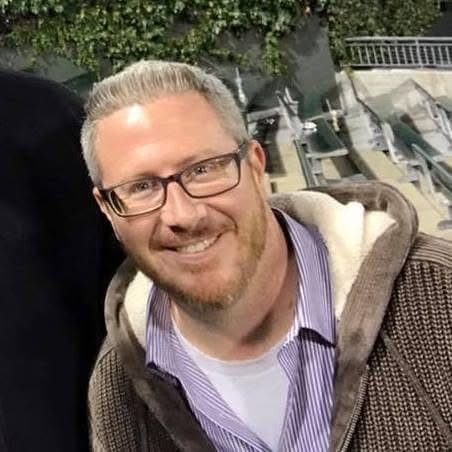
Over two decades ago, Robert Palmer founded Lawn Squad lawn care service near Cleveland, Ohio, growing and building his business for 22 years before partnering with Authority Brands to franchise it. Delivering lawn care services like fertilization, aeration, seeding, weed control and more, Lawn Squad now boasts more than 20 locations.
As a successful franchise owner, Palmer enjoyed the financial success, freedom and daily challenges of running the business he built, with the idea of franchising the model he created barely a fleeting thought. But responding to what he assumed was a random third party email opened up a world of possibilities that would shift not just Palmer’s approach to business but his entire idea of franchising.
“Over six to nine months, I went from not understanding franchising at all — and honestly not having a favorable opinion of it — to being fully engaged. Now, I genuinely have a different opinion and love to share that. I was the right guy at the right time,” Palmer said. “Franchising is like coaching. You motivate, teach and hold people accountable. Franchisees are running their businesses — but you provide the guidance to help them succeed. My goal is to make them better, help them earn more and ensure they grow. That’s my job now.”
Today, Lawn Squad thrives as a franchise under the Authority Brands umbrella, combining local emphasis and community-focused service with the power of a national brand, improved technology, more data and a blueprint for growth, a story which showcases the unexpected paths entrepreneurship can take.
Palmer joined 1851 Franchise Publisher Nick Powills on the “Meet the Franchise” podcast to discuss building a successful business and partnering to franchise it. A transcript of the interview, edited for length and clarity, has been provided below.
Nick Powills: All right, Rob, my favorite opening question. It's a little different for you because you just disclosed that you're fairly new to franchising. But how did you accidentally fall into franchising? What's your franchise backstory?
Robert Palmer: I was running my own lawn care business — fertilization, weed control, aeration, seeding — just outside Cleveland, Ohio. I had been doing that for 23 years before private equity started stepping into the lawn care space. Many of my friends across the country had been entertaining conversations with private equity — but I didn’t have much interest. I was having a lot of fun. As an entrepreneur, you get to do a lot of things. And if you're growing a good business, you’re successful, and you enjoy your life.
Then I got a random email from a third party, probably a broker, casting out a fishing line. Out of curiosity, I answered. It ended up being a company representing Authority Brands, which was trying to identify a lawn care company (either a franchise or a best-in-class model).
Over six to nine months, I went from not understanding franchising at all — and honestly not having a favorable opinion of it — to being fully engaged. The concept of royalties sounded foreign to me at first. But, now, I genuinely have a different opinion and love to share that. Authority Brands came looking, I was the right guy at the right time and we did a deal in 2023.
Powills: I love that answer. As an outsider, your opinion of franchising was different. You didn’t understand royalties or franchising in general. That’s fascinating because very few brands provide educational material before someone buys a franchise. Many skip straight to the transaction.
But, in my opinion, “royalty” is the wrong term. It seems like a payment on the business. But, if you zoom out, all the resources Authority Brands provides to Lawn Squad are available at a fraction of a percentage point. You gain access to teams thinking about innovation and growth. It’s more like an operating cost than a royalty. So, your opinion had to transform.
How did things turn beautiful for you in franchising?
Palmer: My wife is a first-grade teacher with no natural business instincts. While I was unsure about franchising and royalties, she said, "Aren’t you still using your financial consultant?" And I was like, “Yes, we still use him.” She asked about HR consultants and others we’ve used for years.
But she said, essentially, “That’s what franchising is: you’re the consultant and the royalty is how you’re paid.” My wife boiled down a complicated issue in my head. I realized I was paying for consultants all over the place to help me grow the business. Now, I see myself as the consultant, the HR consultant, the agronomic consultant — but just centralized through the franchise. It’s budget neutral because you’d pay for these services anyway.
Powills: Even for a million-dollar business, a 5% royalty is $50,000 a year. The word “royalty” makes franchising seem more complex than it is. It’s not covered in business school curriculums. For you, as an experienced business owner, it took six to nine months to get comfortable. What else impressed you as you did your own homework?
Palmer: We had expanded from northeast Ohio into Columbus. I had a five-plus-million-dollar location there — but I wasn’t involved day-to-day. I realized I could replicate our blueprint nationwide. But I didn’t have the bandwidth or resources — which led me to Authority Brands.
At the first Authority Brands conference, Google representatives were presenting on stage. That level of support and access to resources for each individual brand is powerful. For Lawn Squad franchisees, it’s a huge advantage. Even though we are a small emerging brand, we’re part of a larger network of thousands of franchises.
Powills: Franchising also provides an exit for a franchisee. They can sell what they’ve built. Did you reflect on that after selling your business?
Palmer: Yes and no. I’m asked often if I would do it again. Absolutely. The networking, peer groups and camaraderie of working alongside other experienced brand owners are invaluable. Our mistakes help our franchisees. My pain becomes their gain. Being part of 15 brand presidents in one organization aligns our growth with theirs. I wish I had done it 10 years sooner.
Powills: Technology also plays a role in consolidation of mom-and-pop businesses. Do you see a wave of consolidation in the industry?
Palmer: Yes. There’s been consolidation in the home services industry for about five years. Larger companies are acquiring smaller ones — and mom-and-pops feel the pressure. Consumers expect fast responses and easy access to information. Technology gives us a huge advantage. “Large enough to serve, small enough to care.” That’s been our motto from day one. Our franchises can deliver high-tech solutions with a locally owned, community-focused touch. It’s a killer combination.
Powills: Presenting as a professional, even as a smaller business, builds trust with customers.
Palmer: Confidence is key. Customers want to feel confident in your services. If you believe in what you’re doing, you present the right image to scale and grow. That philosophy — large enough to serve, small enough to care — has guided us for 24 years and now applies to all 30-plus franchises.
Powills: When you sold to Authority Brands, your focus shifted from running the business to franchising it. What’s your vision for Lawn Squad now?
Palmer: Franchising is like coaching. You motivate, teach and hold people accountable. Franchisees are running their businesses — but you provide the guidance to help them succeed. My goal is to make them better, help them earn more and ensure they grow. That’s my job now.
Powills: As a franchisee, first comes replacing income, then recouping the investment, then scaling. Once you reach that, it becomes a scorecard.
Palmer: Exactly. We’ve always been innovation and data-driven. We track marketing, operational and financial metrics. We’re building an AI-based dashboard to consolidate everything. Franchise A may do things slightly differently than Franchise B, giving us AB testing to optimize the system.
Powills: As a basketball coach analogy, it’s about finding team players, not just star scorers. The same applies to franchisees.
Palmer: Traits we saw in our best players translate to successful franchise owners. Some are now in business, law, medicine or the military. Those traits — grit, hustle, teamwork — define success.
Powills: You look for franchisees with drive and hustle. Financials matter — but character is crucial.
Palmer: Surround yourself with the best people. That’s business. Avoid potholes and advance faster than you could alone. Franchising is the ultimate blueprint.
Powills: You’re fairly new to franchising. What advice would you give others entering the space?
Palmer: You need a strong foundation. Conflicting pressures may arise, but if you stay grounded, you can work around them. I aim to be the franchisees’ coach: listen, guide and help them grow.
Powills: That’s the magic of franchising: treat franchisees as partners, not widgets. The more you motivate them, the more successful the business.
Palmer: Exactly.
Watch the full interview here.