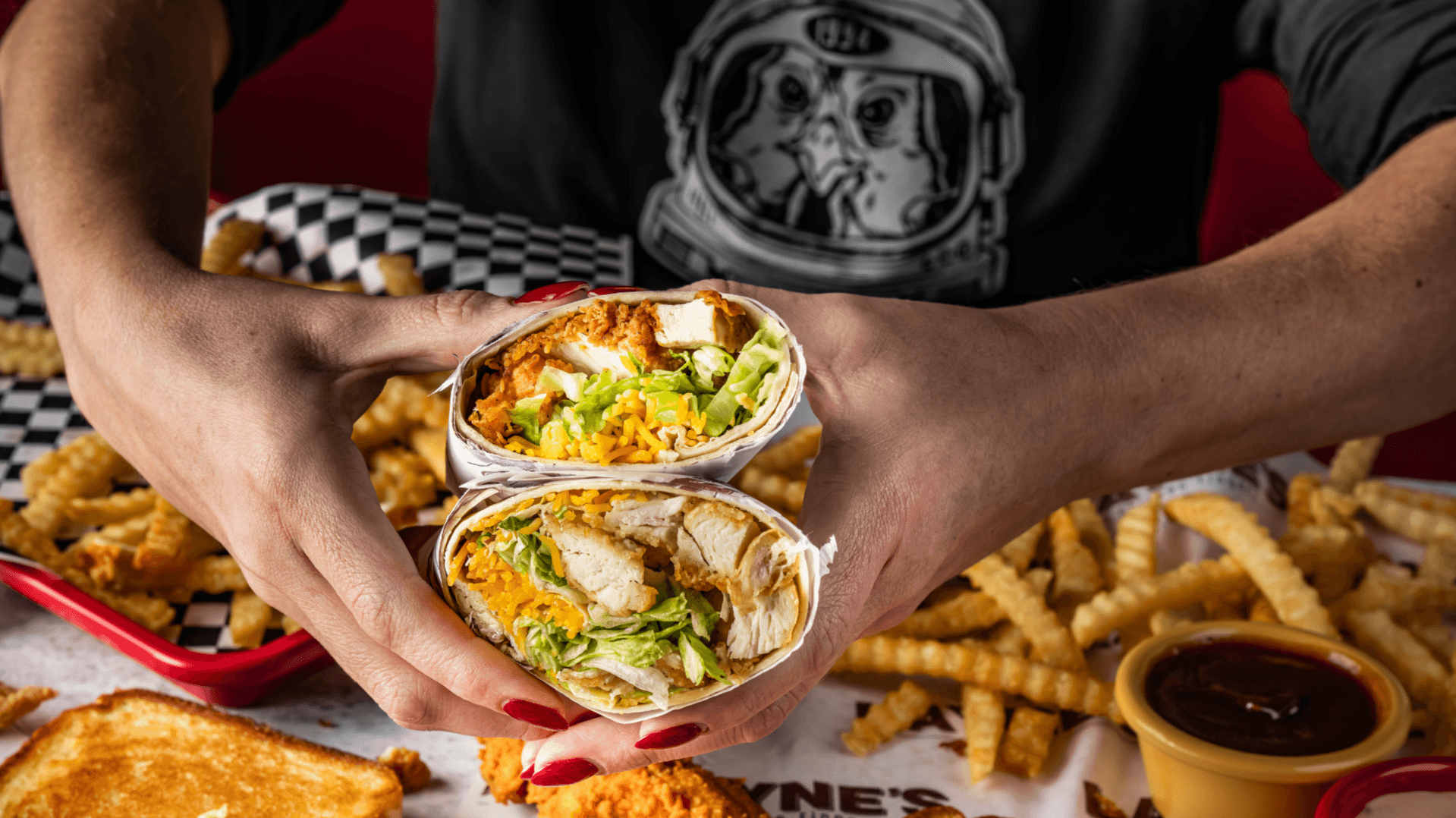
Layne’s Chicken Fingers, the Texas-based chicken finger franchise, is picking up steam across the United States. In addition to expanding its footprint, the brand continues to grow its average unit volumes, driving steady year-over-year revenue growth. According to its 2026 FDD, traditional restaurants reported average revenues of over $2.2 million in 2025. With an initial investment range of $481,500 to $1,555,000, Layne’s has clearly built a high-performing model with strong ROI potential. As it continues to attract multi-brand, multi-unit operators, Layne’s steadfast commitment to focusing on what it’s good at (chicken fingers, operations and hospitality) and becoming even greater at it is paying off big time.

“I think our unit economics are incredibly attractive. AUVs last year were around $2.2 million,” said CEO Garrett Reed. “The brand is growing in awareness, and our teams and processes are only getting better. We’re incredibly proud of the standard we’ve set across the system, but it all comes down to how we’ve built the brand and the focus we’ve put on the business model.”

Starting Strong: A Focused Training and Grand Opening Structure

A big contributor to Layne’s long-term success is how franchisees launch in their markets. Strong grand openings lay a great foundation in a market, and the leadership team knows this. As such, at Layne’s, an opening week that blows expectations out of the water is the norm. High-execution grand openings build community connections and help franchisees establish immediate market presence, driving strong week-one revenues and building momentum for the unit to stabilize at a high level, even after opening excitement has died down.

“We are always working to ensure our support structure is built before it’s needed,” Reed said. “This is especially true with our training and opening support teams. Between this, the pre-opening marketing we’re doing, how well we open — with well-trained owners, teams and support staff present, and how the stores look and feel, there’s a clear roadmap for franchisees to connect with the community.”

With that support in place, six-digit opening weeks have become common for Layne’s. A strong launch gives franchisees early momentum, and the simple model helps them keep building from there.

Streamlined Operations and Back-of-House Simplicity

Layne’s business model and menu create an opportunity that’s naturally highly focused and streamlined. The brand embraces chicken fingers as its staple, and it doesn’t stray far from that, nor does it launch too many LTOs or menu additions “just because.” This keeps everything from build-out to training and supply chain relatively simple. Further, it allows Layne’s to operate in two dayparts rather than running operations for 12 or more hours per day, further streamlining logistical demands and decreasing ongoing operational costs.

“If you look at the simplicity of what we do, focusing on chicken fingers and focusing on just two dayparts makes Layne’s much less expensive to both outfit and operate,” Reed said. “This is especially clear in our back-of-house. The equipment package for Layne’s is much simpler than that of a brand that serves burgers, chicken, multiple sides, and a range of dessert items. Cost and complexity-wise, our build-out is more in line with that of a coffee stand brand.”

Corporate Systems Built to Protect Franchisee Margins

Even after franchisees are operational, the Layne’s leadership team is on their side and working to protect their success while simultaneously protecting brand integrity.

“We see ourselves as being in the service business. We are here for our franchisees,” Reed said. “We have an unmatched corporate support staff ratio, with over one support person for every 2.25 restaurants we currently have open. We’ve recently made significant investments in targeted marketing infrastructure, and we’re very bottom-line-focused. We don’t make money on supply chain and equipment markups. We negotiate contracts, and our franchisees are able to buy products and equipment for the same price we do.”

For Layne’s, the franchisor, success comes by making franchisees successful. Successful restaurants and franchisees make for a successful brand, and in a very concrete way, higher AUVs and better profitability mean more royalties for the franchisor. 

“Our focus is on franchisee profitability,” Reed said. “It’s simple. We protect the brand and protect the franchisee by helping the franchisees be profitable.”

The Layne’s Franchise Opportunity

As Layne’s continues expanding, it is focused on growth with experienced, high-performing multi-unit operators. For such operators, a brand that has already built this level of infrastructure can be an efficient complement to their portfolio.

“We’ve been hyper-focused on bringing in franchise partners who are familiar with this level of execution,” Reed said. “We have high expectations for our partners, and we’ve built a model and scaffolding that stand up at the same level.”

Compared to other chicken franchises and the broader quick-service restaurant landscape, Layne’s offers a differentiated model, both in terms of its logistics and its financials, and it functions as a true partner with franchise owners focused on top-tier unit volumes and meaningful expansion.

To find out more information on costs to buy this franchise, please visit https://1851franchise.com/layneschickenfingers

Layne’s Chicken Fingers, the Texas-based chicken finger franchise, is picking up steam across the United States. In addition to expanding its footprint, the brand continues to grow its average unit volumes, driving steady year-over-year revenue growth. According to its 2026 FDD, traditional restaurants reported average revenues of over $2.2 million in 2025. With an initial investment range of $481,500 to $1,555,000, Layne’s has clearly built a high-performing model with strong ROI potential. As it continues to attract multi-brand, multi-unit operators, Layne’s steadfast commitment to focusing on what it’s good at (chicken fingers, operations and hospitality) and becoming even greater at it is paying off big time.

“I think our unit economics are incredibly attractive. AUVs last year were around $2.2 million,” said CEO Garrett Reed. “The brand is growing in awareness, and our teams and processes are only getting better. We’re incredibly proud of the standard we’ve set across the system, but it all comes down to how we’ve built the brand and the focus we’ve put on the business model.”

Starting Strong: A Focused Training and Grand Opening Structure

A big contributor to Layne’s long-term success is how franchisees launch in their markets. Strong grand openings lay a great foundation in a market, and the leadership team knows this. As such, at Layne’s, an opening week that blows expectations out of the water is the norm. High-execution grand openings build community connections and help franchisees establish immediate market presence, driving strong week-one revenues and building momentum for the unit to stabilize at a high level, even after opening excitement has died down.

“We are always working to ensure our support structure is built before it’s needed,” Reed said. “This is especially true with our training and opening support teams. Between this, the pre-opening marketing we’re doing, how well we open — with well-trained owners, teams and support staff present, and how the stores look and feel, there’s a clear roadmap for franchisees to connect with the community.”

With that support in place, six-digit opening weeks have become common for Layne’s. A strong launch gives franchisees early momentum, and the simple model helps them keep building from there.

Streamlined Operations and Back-of-House Simplicity

Layne’s business model and menu create an opportunity that’s naturally highly focused and streamlined. The brand embraces chicken fingers as its staple, and it doesn’t stray far from that, nor does it launch too many LTOs or menu additions “just because.” This keeps everything from build-out to training and supply chain relatively simple. Further, it allows Layne’s to operate in two dayparts rather than running operations for 12 or more hours per day, further streamlining logistical demands and decreasing ongoing operational costs.

“If you look at the simplicity of what we do, focusing on chicken fingers and focusing on just two dayparts makes Layne’s much less expensive to both outfit and operate,” Reed said. “This is especially clear in our back-of-house. The equipment package for Layne’s is much simpler than that of a brand that serves burgers, chicken, multiple sides, and a range of dessert items. Cost and complexity-wise, our build-out is more in line with that of a coffee stand brand.”

Corporate Systems Built to Protect Franchisee Margins

Even after franchisees are operational, the Layne’s leadership team is on their side and working to protect their success while simultaneously protecting brand integrity.

“We see ourselves as being in the service business. We are here for our franchisees,” Reed said. “We have an unmatched corporate support staff ratio, with over one support person for every 2.25 restaurants we currently have open. We’ve recently made significant investments in targeted marketing infrastructure, and we’re very bottom-line-focused. We don’t make money on supply chain and equipment markups. We negotiate contracts, and our franchisees are able to buy products and equipment for the same price we do.”

For Layne’s, the franchisor, success comes by making franchisees successful. Successful restaurants and franchisees make for a successful brand, and in a very concrete way, higher AUVs and better profitability mean more royalties for the franchisor. 

“Our focus is on franchisee profitability,” Reed said. “It’s simple. We protect the brand and protect the franchisee by helping the franchisees be profitable.”

The Layne’s Franchise Opportunity

As Layne’s continues expanding, it is focused on growth with experienced, high-performing multi-unit operators. For such operators, a brand that has already built this level of infrastructure can be an efficient complement to their portfolio.

“We’ve been hyper-focused on bringing in franchise partners who are familiar with this level of execution,” Reed said. “We have high expectations for our partners, and we’ve built a model and scaffolding that stand up at the same level.”

Compared to other chicken franchises and the broader quick-service restaurant landscape, Layne’s offers a differentiated model, both in terms of its logistics and its financials, and it functions as a true partner with franchise owners focused on top-tier unit volumes and meaningful expansion.

To find out more information on costs to buy this franchise, please visit https://1851franchise.com/layneschickenfingers

Don’t Miss the Next Big Franchise Story

Sign up for the 1851 Franchise newsletter to get our biggest stories before everyone else

By signing up, you agree to our user agreement (including class action waiver and arbitration provisions), and acknowledge our privacy policy.

Morgan Wood

About the Author

Morgan Wood

Follow

All Articles

No related articles found