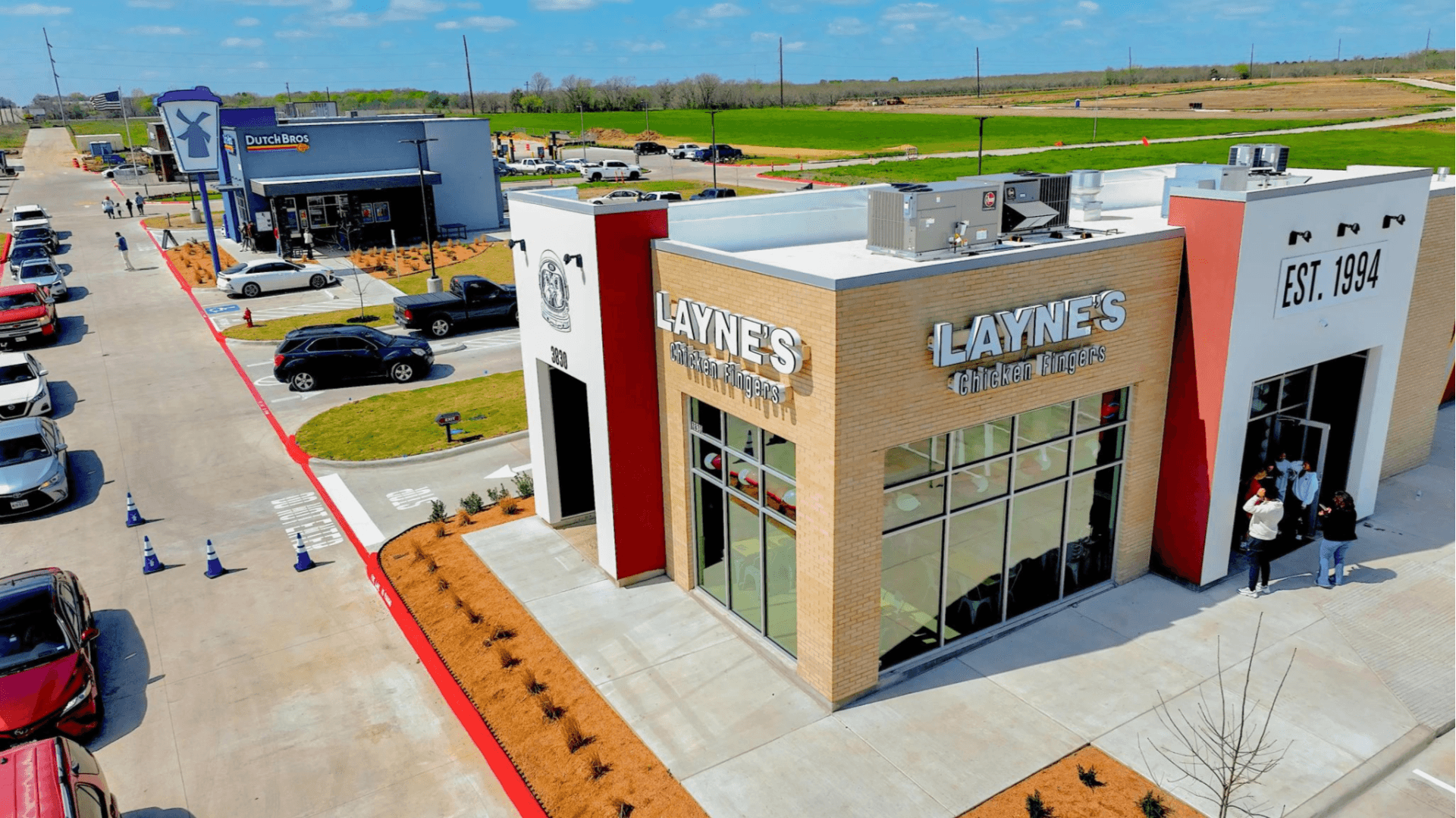
The fast-food chicken segment is booming, but many brands within it are fighting for a seat at the table by doing more. Layne’s Chicken Fingers, the 50-plus-unit chicken finger franchise, does the opposite. By focusing on doing less and doing it better, the brand has built a predictable, scalable franchise model that attracts high-performing operators and empowers them to build long-term success.

Layne’s has the backing of a highly experienced team and a passionate, successful group of franchisees,” said CEO Garrett Reed. “We’ve proven our strength as a business model with multiple six-figure openings and steady traffic and revenue growth, but unlike other big players in the space, we still have notable white space across the country. Layne’s offers the support of an established brand with the growth potential of an emerging one.”

Here are 10 reasons why experienced operators are investing in Layne’s in 2026:

1. Operational Simplicity Creates a Competitive Advantage

Layne’s has a focused menu that hinges on chicken fingers, fries, toast and its signature sauces. While the brand may present its chicken fingers in different formats, such as sandwiched between two pieces of toast, Layne’s is still all about its legendary chicken fingers.

“We found what we were good at, and we worked to become great at it,” said Eric Reed, chief development officer. “Now, we continue to focus on becoming even better at it. We’re not going to add burgers to our menu just for fun. Chicken fingers are our thing, and we’re committed to having the best damn chicken fingers in the United States.”

For Layne’s, keeping the menu lean is not a limitation. It’s the basis of the model, and it supports a stronger brand identity, quicker service, consistency in the guest experience and a more streamlined training process for unit-level team members. Rather than juggling dozens of menu combinations and specialty items while managing hundreds of SKUs, Layne’s teams can focus on the quality and service that actually move the needle at the unit level and for the brand as a whole.

2. Proven Financial Performance

According to Layne’s 2026 FDD, traditional locations reported average revenues of $2.2 million in 2025, with the top-performing restaurant reporting over $2.9 million in sales.

This level of performance alone is something to note, but the whole picture is even more attractive. 

“By combining the reliable demand of the industry with Layne’s operational expertise and cultural strengths, we’ve built a model that can bring in nearly $3 million annually, all with an initial investment that starts under $500,000,” Eric said.

With average food costs of about 25% and average labor costs of about 22%, the strong return on investment is driven by a calculated model, not individual circumstances.

3. A Model Made for Builders

Layne’s is engineered for operators who want to grow. It is not an opportunity for someone who wants to make a passive investment or someone who is looking to open their first restaurant.

This intentionality changes how the Layne’s system works. The support is designed for high-performing operators. Franchisees are surrounded by other builders who have similar experience, resources and goals.

“We’ve been hyper-focused on bringing in franchise partners who have infrastructure that we believe in,” Garrett said. “The key to growing rapidly is having partners who have the knowledge and infrastructure. This way, we’re not teaching them how to run a restaurant or be a business owner. We’re teaching them how to be a Layne’s owner.”

Because Layne’s franchisee base is not navigating the basics of restaurant ownership, like learning how to build or manage teams for the first time, leadership can provide brand-specific support and focus on the initiatives that will drive the entire system forward rather than having to focus on stabilizing a single local unit.

4. Disciplined Execution, Not Trend Chasing

There are plenty of trends to chase in the chicken market. Some brands go after them, requiring bloated menus and a steady rotation of limited-time offers in an effort to catch and keep guests’ attention. Layne’s doesn’t do this. It doesn’t have to.

“A lot of brands try to be okay at a lot of different things,” said Taylor Thomas, a multi-unit franchisee. “But Garrett and Samir [Wattar] want Layne’s to be the best at one thing — chicken tenders. That focus speaks volumes.”

This maintains Layne’s position in the market in guests’ eyes, and it also keeps unit-level operations simpler for franchisees. Simpler operations lead to better service and a stronger perception of the brand, which ultimately drive repeat guest visits. Guests like to know what they’re going to get, and with Layne’s, they know the brand is not just reliable but reliably good.

5. Texas Heritage Creates Authenticity

Layne’s knows who it is, and it’s staying true to its roots. The brand, which started in College Station over 30 years ago, has built an incredibly loyal fan base over the years, and this continues to drive success systemwide.

The loyalty is long-term. Guests consistently return to Layne’s when they visit Texas and entrepreneurs who attended college in the state have gone on to open Layne’s locations in their own communities.

While Layne’s has grown beyond its home state, it hasn’t lost its identity, and this appeals to guests in a way that more “hype-driven,” transient chicken concepts just can’t.

6. Human-Centered Hospitality Drives Retention

Layne’s has a clear focus on streamlining things where possible, but this is never done at the expense of the brand’s identity or guest experience. For example, while Layne’s does have a mobile app, it also has a team member at a counter, ready to interact with guests and take orders. 

This guest interaction is a seemingly small part of the equation, but it’s another way that teams at the unit level can build relationships and support Layne’s position as a truly local, community-focused spot that people want to visit.

7. Past the ‘Proving’ Phase, Building Momentum

Layne’s has crossed the 50-unit mark and outgrown the proof-of-concept phase that experienced investors may view as risky. Layne’s knows its model works, and it’s now further honing it and building growth momentum nationwide. Better yet, existing Layne’s franchisees continue to reinvest and exceed their development schedules.

“We often say that there is no better validation for us than a franchisee reinvesting in the concept,” Eric said. “Franchisees who are happy with their investment very clearly validate both the model and the work we’re doing as a team.”

Experienced operators know that now is the time to invest. Momentum and interest are both building. The model is established enough to have proven itself but young enough to still have real expansion potential.

8. Controlled Labor and Food Costs

Layne’s streamlined menu lends itself to better labor and food costs, and it also allows for easier inventory management. These factors serve to improve the bottom line.

Franchisees also benefit from the leadership team’s focus on structural and design factors that further improve labor and food costs. For example, Layne’s prototype includes a kitchen that has been carefully laid out to minimize team members taking unnecessary steps throughout the kitchen as they prepare the food. 

The leadership team has also negotiated contracts with major suppliers, and it passes these savings along to franchisees. In addition to keeping inventory focused, which makes ordering easier and reduces food waste, the food itself comes at a fair price, which improves the bottom line.

9. An Opportunity for Local ‘Placemaking’

Layne’s provides great quality chicken fingers with even better service. This alone gets guests in the door. But each restaurant’s position in the community builds deeper trust and a layer of durability that other brands lack.

Each Layne’s restaurant is designed with a community wall that features local elementary schools, high schools, colleges, landmarks and sports teams. Franchisees are encouraged to support local events and causes. By bringing Layne’s beyond the four walls of the restaurant, operators can transform their restaurants from a local chicken spot to the local chicken spot.

10. Layne’s Simplicity Wins in Today’s Restaurant Economy

The fast food industry is getting more and more crowded, often with complex models and overbuilt menus. For franchisees, this often translates into more challenging operations, specialized kitchen equipment requirements and higher exposure to supply chain volatility.

In today’s restaurant economy, Layne’s simplicity is the foundation for growth, not just an operational preference. By refusing to overbuild its menu, Layne’s keeps its real estate requirements flexible and affordable, limits its exposure to supply chain disruptions and makes the model easier to scale. For operators looking to scale across multiple markets, or even across state lines, the simple model serves as a steady platform that allows for efficient growth and nimble operations that can outperform overbuilt legacy brands.

Layne’s gives experienced operators a chance to grow with a brand that still has open territory in strong markets. The model is built to support expansion without adding unnecessary complexity.

To find out more information on costs to buy this franchise, please visit https://1851franchise.com/layneschickenfingers

The fast-food chicken segment is booming, but many brands within it are fighting for a seat at the table by doing more. Layne’s Chicken Fingers, the 50-plus-unit chicken finger franchise, does the opposite. By focusing on doing less and doing it better, the brand has built a predictable, scalable franchise model that attracts high-performing operators and empowers them to build long-term success.

Layne’s has the backing of a highly experienced team and a passionate, successful group of franchisees,” said CEO Garrett Reed. “We’ve proven our strength as a business model with multiple six-figure openings and steady traffic and revenue growth, but unlike other big players in the space, we still have notable white space across the country. Layne’s offers the support of an established brand with the growth potential of an emerging one.”

Here are 10 reasons why experienced operators are investing in Layne’s in 2026:

1. Operational Simplicity Creates a Competitive Advantage

Layne’s has a focused menu that hinges on chicken fingers, fries, toast and its signature sauces. While the brand may present its chicken fingers in different formats, such as sandwiched between two pieces of toast, Layne’s is still all about its legendary chicken fingers.

“We found what we were good at, and we worked to become great at it,” said Eric Reed, chief development officer. “Now, we continue to focus on becoming even better at it. We’re not going to add burgers to our menu just for fun. Chicken fingers are our thing, and we’re committed to having the best damn chicken fingers in the United States.”

For Layne’s, keeping the menu lean is not a limitation. It’s the basis of the model, and it supports a stronger brand identity, quicker service, consistency in the guest experience and a more streamlined training process for unit-level team members. Rather than juggling dozens of menu combinations and specialty items while managing hundreds of SKUs, Layne’s teams can focus on the quality and service that actually move the needle at the unit level and for the brand as a whole.

2. Proven Financial Performance

According to Layne’s 2026 FDD, traditional locations reported average revenues of $2.2 million in 2025, with the top-performing restaurant reporting over $2.9 million in sales.

This level of performance alone is something to note, but the whole picture is even more attractive. 

“By combining the reliable demand of the industry with Layne’s operational expertise and cultural strengths, we’ve built a model that can bring in nearly $3 million annually, all with an initial investment that starts under $500,000,” Eric said.

With average food costs of about 25% and average labor costs of about 22%, the strong return on investment is driven by a calculated model, not individual circumstances.

3. A Model Made for Builders

Layne’s is engineered for operators who want to grow. It is not an opportunity for someone who wants to make a passive investment or someone who is looking to open their first restaurant.

This intentionality changes how the Layne’s system works. The support is designed for high-performing operators. Franchisees are surrounded by other builders who have similar experience, resources and goals.

“We’ve been hyper-focused on bringing in franchise partners who have infrastructure that we believe in,” Garrett said. “The key to growing rapidly is having partners who have the knowledge and infrastructure. This way, we’re not teaching them how to run a restaurant or be a business owner. We’re teaching them how to be a Layne’s owner.”

Because Layne’s franchisee base is not navigating the basics of restaurant ownership, like learning how to build or manage teams for the first time, leadership can provide brand-specific support and focus on the initiatives that will drive the entire system forward rather than having to focus on stabilizing a single local unit.

4. Disciplined Execution, Not Trend Chasing

There are plenty of trends to chase in the chicken market. Some brands go after them, requiring bloated menus and a steady rotation of limited-time offers in an effort to catch and keep guests’ attention. Layne’s doesn’t do this. It doesn’t have to.

“A lot of brands try to be okay at a lot of different things,” said Taylor Thomas, a multi-unit franchisee. “But Garrett and Samir [Wattar] want Layne’s to be the best at one thing — chicken tenders. That focus speaks volumes.”

This maintains Layne’s position in the market in guests’ eyes, and it also keeps unit-level operations simpler for franchisees. Simpler operations lead to better service and a stronger perception of the brand, which ultimately drive repeat guest visits. Guests like to know what they’re going to get, and with Layne’s, they know the brand is not just reliable but reliably good.

5. Texas Heritage Creates Authenticity

Layne’s knows who it is, and it’s staying true to its roots. The brand, which started in College Station over 30 years ago, has built an incredibly loyal fan base over the years, and this continues to drive success systemwide.

The loyalty is long-term. Guests consistently return to Layne’s when they visit Texas and entrepreneurs who attended college in the state have gone on to open Layne’s locations in their own communities.

While Layne’s has grown beyond its home state, it hasn’t lost its identity, and this appeals to guests in a way that more “hype-driven,” transient chicken concepts just can’t.

6. Human-Centered Hospitality Drives Retention

Layne’s has a clear focus on streamlining things where possible, but this is never done at the expense of the brand’s identity or guest experience. For example, while Layne’s does have a mobile app, it also has a team member at a counter, ready to interact with guests and take orders. 

This guest interaction is a seemingly small part of the equation, but it’s another way that teams at the unit level can build relationships and support Layne’s position as a truly local, community-focused spot that people want to visit.

7. Past the ‘Proving’ Phase, Building Momentum

Layne’s has crossed the 50-unit mark and outgrown the proof-of-concept phase that experienced investors may view as risky. Layne’s knows its model works, and it’s now further honing it and building growth momentum nationwide. Better yet, existing Layne’s franchisees continue to reinvest and exceed their development schedules.

“We often say that there is no better validation for us than a franchisee reinvesting in the concept,” Eric said. “Franchisees who are happy with their investment very clearly validate both the model and the work we’re doing as a team.”

Experienced operators know that now is the time to invest. Momentum and interest are both building. The model is established enough to have proven itself but young enough to still have real expansion potential.

8. Controlled Labor and Food Costs

Layne’s streamlined menu lends itself to better labor and food costs, and it also allows for easier inventory management. These factors serve to improve the bottom line.

Franchisees also benefit from the leadership team’s focus on structural and design factors that further improve labor and food costs. For example, Layne’s prototype includes a kitchen that has been carefully laid out to minimize team members taking unnecessary steps throughout the kitchen as they prepare the food. 

The leadership team has also negotiated contracts with major suppliers, and it passes these savings along to franchisees. In addition to keeping inventory focused, which makes ordering easier and reduces food waste, the food itself comes at a fair price, which improves the bottom line.

9. An Opportunity for Local ‘Placemaking’

Layne’s provides great quality chicken fingers with even better service. This alone gets guests in the door. But each restaurant’s position in the community builds deeper trust and a layer of durability that other brands lack.

Each Layne’s restaurant is designed with a community wall that features local elementary schools, high schools, colleges, landmarks and sports teams. Franchisees are encouraged to support local events and causes. By bringing Layne’s beyond the four walls of the restaurant, operators can transform their restaurants from a local chicken spot to the local chicken spot.

10. Layne’s Simplicity Wins in Today’s Restaurant Economy

The fast food industry is getting more and more crowded, often with complex models and overbuilt menus. For franchisees, this often translates into more challenging operations, specialized kitchen equipment requirements and higher exposure to supply chain volatility.

In today’s restaurant economy, Layne’s simplicity is the foundation for growth, not just an operational preference. By refusing to overbuild its menu, Layne’s keeps its real estate requirements flexible and affordable, limits its exposure to supply chain disruptions and makes the model easier to scale. For operators looking to scale across multiple markets, or even across state lines, the simple model serves as a steady platform that allows for efficient growth and nimble operations that can outperform overbuilt legacy brands.

Layne’s gives experienced operators a chance to grow with a brand that still has open territory in strong markets. The model is built to support expansion without adding unnecessary complexity.

To find out more information on costs to buy this franchise, please visit https://1851franchise.com/layneschickenfingers

Don’t Miss the Next Big Franchise Story

Sign up for the 1851 Franchise newsletter to get our biggest stories before everyone else

By signing up, you agree to our user agreement (including class action waiver and arbitration provisions), and acknowledge our privacy policy.

Morgan Wood

About the Author

Morgan Wood

Follow

All Articles

No related articles found