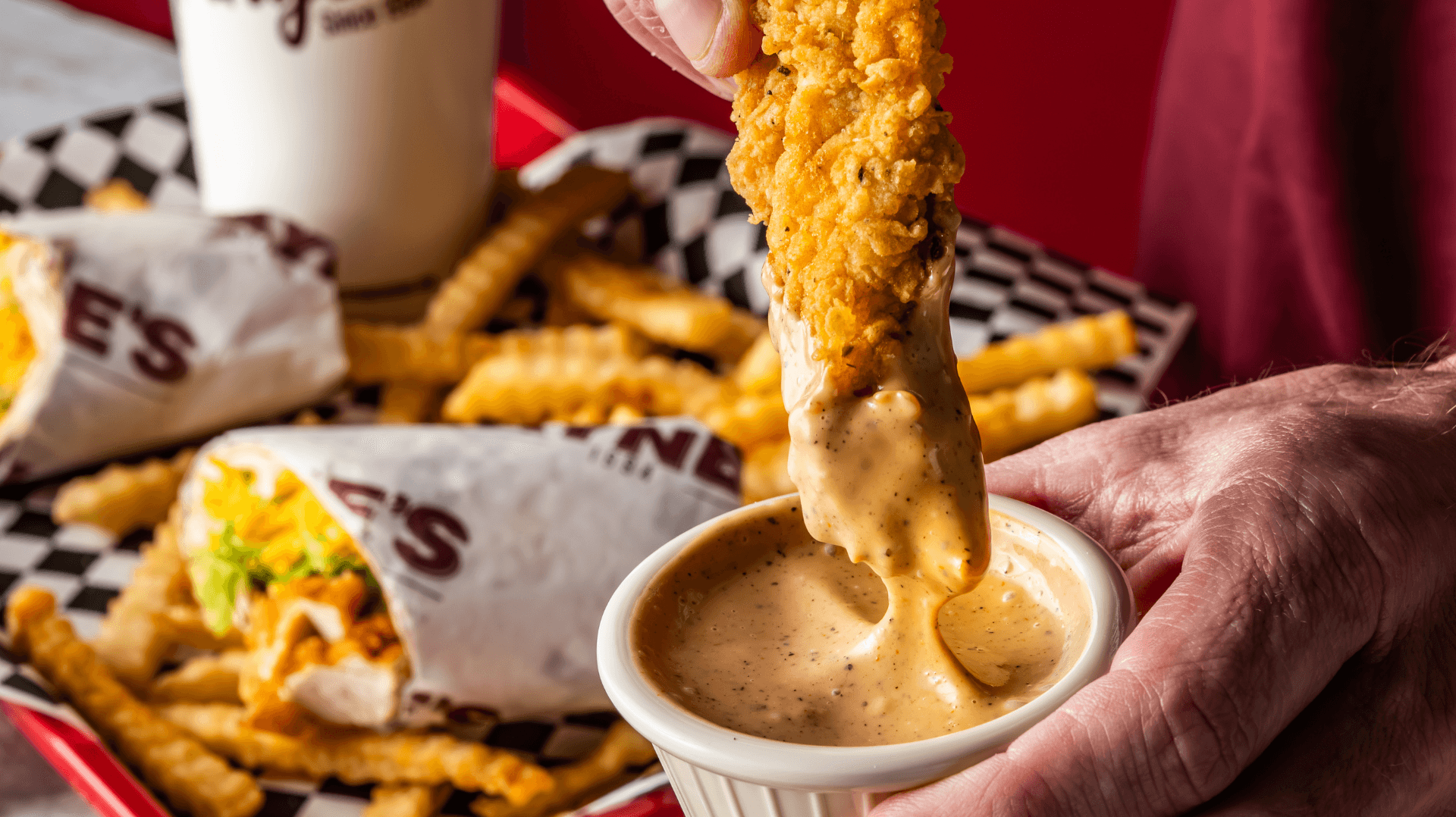
Layne’s Chicken Fingers, the 50+ unit chicken finger franchise, has been honing its model for over 30 years, focusing intently on what it does well, and working to get even better at it. As it has launched franchise opportunities and driven rapid, multi-state growth, the power of doing one thing incredibly well is increasingly clear.

“We found what we were good at, and we worked to become great at it,” said Eric Reed, chief development officer. “Now, we continue to focus on becoming even better at it. We’re not going to add burgers to our menu just for fun. Chicken fingers are our thing, and we’re committed to having the best damn chicken fingers in the United States.”

In an era of soaring restaurant costs and increasingly bloated menus, many fast food brands are sacrificing quality and service for variety and speed. Layne’s isn’t falling for it.

The brand’s focused approach to operations not only decreases start-up and overhead costs for franchisees, but it also creates a better guest experience, supporting both top-line revenue and bottom-line profitability. For Layne’s, a focus on absolute simplicity and prioritization of chicken fingers alone maximizes execution and consistency.

Layne’s Streamlined Inventory: The 125 SKU Rule

Layne’s keeps things simple in every aspect. By limiting the number of SKUs franchisees must manage, the team has decreased inventory management demands, supported franchise partners in minimizing waste and decreased prep work requirements for team members.

“It’s a really simple menu. The food is really good, but it’s simple to make,” Reed said. “Every one of the potential franchisees we meet with who walk into our kitchen and see just how simple it is is impressed.”

Minimizing SKUs and keeping kitchen demands simple also allows the real estate and design teams to consistently improve footprint optimization. On top of the generally smart kitchen design, the team gets as granular as looking at the number of steps back-of-house team members must take between tasks as they work through their days, decreasing wasted effort and further increasing throughput.

Mitigating Labor Friction With Quick Training 

Traditional quick-service brands require a long, involved onboarding and training process to ensure each team member is well-versed on the many demands of the kitchen. Layne’s streamlined model and ongoing focus on chicken fingers specifically allow the leadership team to shorten the training process and position new hires to become productive in a shorter time frame.

To make training easier, Layne’s has added QR codes at each workstation that take team members to short instructional videos, giving them a quick way to learn on their own or revisit a process when needed.

These resources allow team members to get up to speed quickly and support a real economic advantage for each new hire. This alone is an important benefit, but it also serves to protect the health of the business in the case of turnover.

“Turnover is normal in the restaurant space, and with some brands, it can be a real challenge,” Reed said. “For us, if we lose the occasional team member to standard turnover, it’s not terrible. We can bring in a new team member who can learn to fry chicken in a day. There’s a process, they follow it, and they come to know the system quite quickly.”

Protecting the Guest Experience With Smart Tech Implementation

For many brands, technology is a must for operational efficiency. While this is technically true at Layne’s, the team has embraced it carefully rather than adopting every new tool that comes along.

For Layne’s, this currently looks like an investment in a high-performing mobile app. This way, tech-driven guests can order ahead should they please, and those who prefer to speak with a person can order at the counter. While it doesn’t cut costs as much as a kiosk-only ordering setup would, for example, it’s ultimately a smarter choice for unit economics as it maintains a level of choice for guests and protects the level of service people expect from Layne’s.

“I think the way most brands are using kiosks right now is completely antiquated; they’ve been used to replace staff, not enhance the teams,” Reed said. “The problem with the kiosk is that it forces your choice, and people hate lack of choice. Having an app allows our guests to choose between ordering online, if they’d like, or interacting with a person at the counter. It’s a better guest experience because they’re able to experience the restaurant how they would like to experience it.”

A Brand Built for Financial Performance and Scale

Layne’s has always been about chicken fingers. Over the years, it has implemented new processes and tools, all aimed at enhancing operations without sacrificing what makes Layne’s special. Now, with a powerful suite of tools and dedicated leadership team, Layne’s is protecting the simplicity that has built its brand identity while implementing the strategy and scaffolding necessary to drive healthy, national growth and incredibly strong unit-level economics.

According to the brand’s 2026 Franchise Disclosure Document, average gross revenues across 15 franchised restaurants in 2025 were over $2.2 million, and the top-performing location reported nearly $3 million in gross revenue. With an estimated initial investment of $481,500 to $1,555,000 and average food, paper and labor costs of 25.05%, 4.2% and 22.15%, respectively, Layne’s presents a high-performing, incredibly scalable model to ambitious investors.

To find out more information on costs to buy this franchise, please visit https://1851franchise.com/layneschickenfingers

Layne’s Chicken Fingers, the 50+ unit chicken finger franchise, has been honing its model for over 30 years, focusing intently on what it does well, and working to get even better at it. As it has launched franchise opportunities and driven rapid, multi-state growth, the power of doing one thing incredibly well is increasingly clear.

“We found what we were good at, and we worked to become great at it,” said Eric Reed, chief development officer. “Now, we continue to focus on becoming even better at it. We’re not going to add burgers to our menu just for fun. Chicken fingers are our thing, and we’re committed to having the best damn chicken fingers in the United States.”

In an era of soaring restaurant costs and increasingly bloated menus, many fast food brands are sacrificing quality and service for variety and speed. Layne’s isn’t falling for it.

The brand’s focused approach to operations not only decreases start-up and overhead costs for franchisees, but it also creates a better guest experience, supporting both top-line revenue and bottom-line profitability. For Layne’s, a focus on absolute simplicity and prioritization of chicken fingers alone maximizes execution and consistency.

Layne’s Streamlined Inventory: The 125 SKU Rule

Layne’s keeps things simple in every aspect. By limiting the number of SKUs franchisees must manage, the team has decreased inventory management demands, supported franchise partners in minimizing waste and decreased prep work requirements for team members.

“It’s a really simple menu. The food is really good, but it’s simple to make,” Reed said. “Every one of the potential franchisees we meet with who walk into our kitchen and see just how simple it is is impressed.”

Minimizing SKUs and keeping kitchen demands simple also allows the real estate and design teams to consistently improve footprint optimization. On top of the generally smart kitchen design, the team gets as granular as looking at the number of steps back-of-house team members must take between tasks as they work through their days, decreasing wasted effort and further increasing throughput.

Mitigating Labor Friction With Quick Training 

Traditional quick-service brands require a long, involved onboarding and training process to ensure each team member is well-versed on the many demands of the kitchen. Layne’s streamlined model and ongoing focus on chicken fingers specifically allow the leadership team to shorten the training process and position new hires to become productive in a shorter time frame.

To make training easier, Layne’s has added QR codes at each workstation that take team members to short instructional videos, giving them a quick way to learn on their own or revisit a process when needed.

These resources allow team members to get up to speed quickly and support a real economic advantage for each new hire. This alone is an important benefit, but it also serves to protect the health of the business in the case of turnover.

“Turnover is normal in the restaurant space, and with some brands, it can be a real challenge,” Reed said. “For us, if we lose the occasional team member to standard turnover, it’s not terrible. We can bring in a new team member who can learn to fry chicken in a day. There’s a process, they follow it, and they come to know the system quite quickly.”

Protecting the Guest Experience With Smart Tech Implementation

For many brands, technology is a must for operational efficiency. While this is technically true at Layne’s, the team has embraced it carefully rather than adopting every new tool that comes along.

For Layne’s, this currently looks like an investment in a high-performing mobile app. This way, tech-driven guests can order ahead should they please, and those who prefer to speak with a person can order at the counter. While it doesn’t cut costs as much as a kiosk-only ordering setup would, for example, it’s ultimately a smarter choice for unit economics as it maintains a level of choice for guests and protects the level of service people expect from Layne’s.

“I think the way most brands are using kiosks right now is completely antiquated; they’ve been used to replace staff, not enhance the teams,” Reed said. “The problem with the kiosk is that it forces your choice, and people hate lack of choice. Having an app allows our guests to choose between ordering online, if they’d like, or interacting with a person at the counter. It’s a better guest experience because they’re able to experience the restaurant how they would like to experience it.”

A Brand Built for Financial Performance and Scale

Layne’s has always been about chicken fingers. Over the years, it has implemented new processes and tools, all aimed at enhancing operations without sacrificing what makes Layne’s special. Now, with a powerful suite of tools and dedicated leadership team, Layne’s is protecting the simplicity that has built its brand identity while implementing the strategy and scaffolding necessary to drive healthy, national growth and incredibly strong unit-level economics.

According to the brand’s 2026 Franchise Disclosure Document, average gross revenues across 15 franchised restaurants in 2025 were over $2.2 million, and the top-performing location reported nearly $3 million in gross revenue. With an estimated initial investment of $481,500 to $1,555,000 and average food, paper and labor costs of 25.05%, 4.2% and 22.15%, respectively, Layne’s presents a high-performing, incredibly scalable model to ambitious investors.

To find out more information on costs to buy this franchise, please visit https://1851franchise.com/layneschickenfingers

Don’t Miss the Next Big Franchise Story

Sign up for the 1851 Franchise newsletter to get our biggest stories before everyone else

By signing up, you agree to our user agreement (including class action waiver and arbitration provisions), and acknowledge our privacy policy.

Morgan Wood

About the Author

Morgan Wood

Follow

All Articles

No related articles found