
Mainland
SPONSORED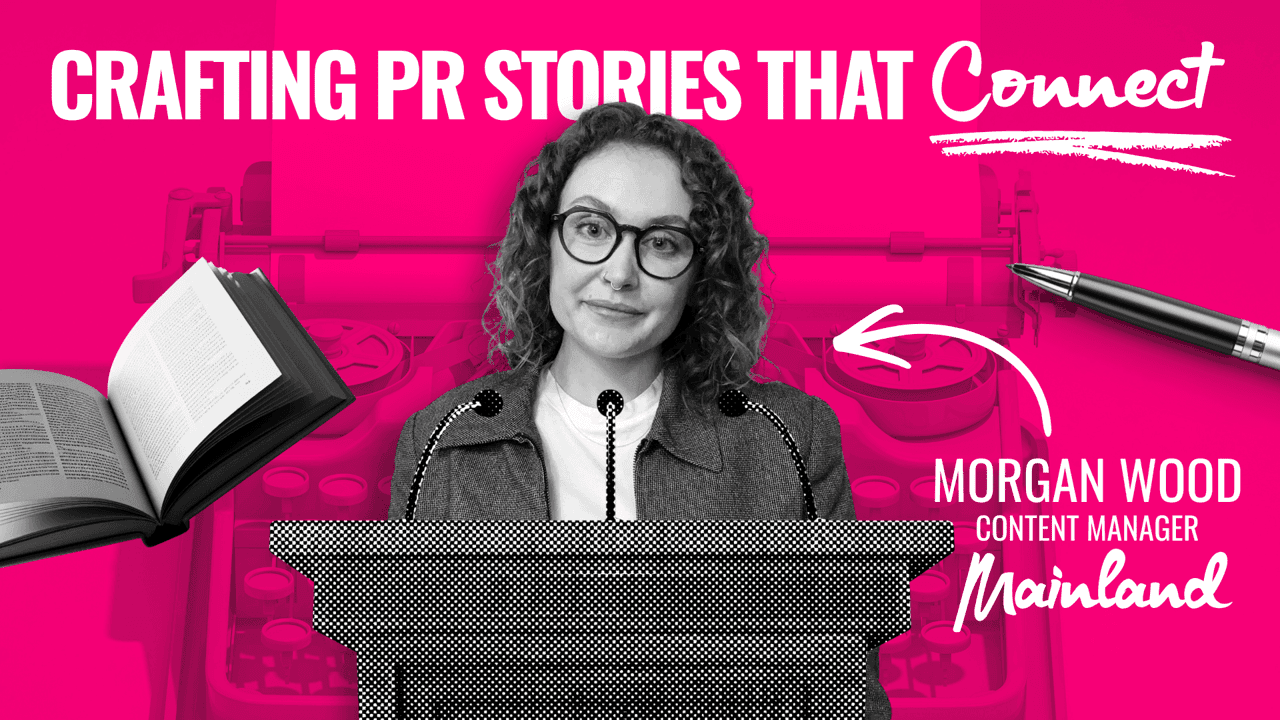
How To Craft PR Stories That Connect: How Mainland Focuses On The Human Hero Of A Story
Content Manager at Mainland, Morgan Wood, shares the vital theory behind achieving PR success for franchise brands and beyond.
For more than 15 years, Mainland has secured coverage for brands on FOX, NBC, CBS and ABC, as well as placements in local outlets such as Noozhawk in Santa Maria, California, or Tampa Bay Business & Wealth. With hundreds of PR placements each year, there must be some secret sauce to their stories — a possible angle that is irresistible to a producer who doesn’t seem interested in anything you have to offer. A secret phrase that unlocks doors and turns on TVs in your target market.
What if we told you the answer was simple?
Imagine a franchise brand is opening its doors in your city, and you see this headline on Facebook:
National Fitness Franchise Announces Expansion Into Downtown With Three New Territories Signed.
If you were a news producer, that headline might not inspire much beyond construction and, maybe, a grand opening months down the line. By the time the scissors are ready to cut, you’ve moved on.
Now try this:
After a Career-Ending Injury, Former Ohio Track Athlete Is Bringing National Fitness Franchise to Combat the City’s Post-Pandemic Health Crisis.
See the difference? Maybe images of a former athlete jumping a hurdle spring to mind, or an in-studio demonstration. Suddenly, there’s an opportunity to highlight statistics around an important, timely health issue that the brand is working to address.
Framing matters. People matter — more than brands think. This isn’t just a happy accident of copywriting. It’s a calculated editorial strategy that is heavily implemented at Mainland to land placements and media buys.
Morgan Wood, content manager at Mainland, has personally published more than 2,000 articles for 1851Franchise.com. She is the exclusive writer for record-breaking brands like Layne's Soon To Be Famous™ Chicken Fingers and Paris Baguette.
To understand how to consistently find the "human hero" in brand stories and start winning at PR, 1851 Franchise sat down with Wood to get some recommendations.
1851 Franchise: How do you approach writing and telling someone's story?
Morgan Wood: I've always been a “why person.” You know those little kids that ask a question, and you answer, and they say, “But why? But why? But why?” That was always me as a kid. I think I have a natural curiosity for everything, and I really think that everybody has an interesting story. It's just a matter of getting to it.
A lot of times, the franchisees we’re working with will come on the call and say, "I don't know why you want to talk to me. My story is not that interesting.”
There's a level of fulfillment and satisfaction in being able to see them see themselves in someone else's eyes and realizing what their story can mean and can do. It’s really fun.
1851: What do you think about Mainland’s “Brands don’t sell brands, people do” method?
Wood: When I'm browsing, I'm going to click on stuff that I feel like I relate to or something that is a human interest story.
In franchising, people often think, “I'd love to do that, but I don't know if I can,” or “Somebody else can do it, but I just can't.”
Being able to see the kind of person that's doing it, and, no matter who you are, there's someone who has a similar background or that you can relate to in some way, that has done it. I think putting that out there makes people curious. And then you click in, and it's their life story and their experiences. The reader likely doesn’t know this person, specifically, but it’s possible they have very similar experiences.
I think that can draw people in more effectively than “This restaurant is growing!” or “This business is opening!” ever could.
1851: How do you tell your writers to find the human hero in the story?
Wood: We have talked a lot about continuing to ask the questions. Again, everyone has a story. We just have to get to it. I've said countless times, “Just keep asking. There has to be something. Think outside the box. Get curious on these calls with the franchisee, and really think about what is special about this person.”
One of our questions for franchisee feature interviews is “What do you want me to know about you?” That opens it up. Regardless of your business or what you did before you bought a franchise, what do you want me to know about you?
Being able to do that and dig deeper, even when there may not be an immediate connection between this story and their franchise journey, is really valuable. There have been times when it “clicks” later, and the writer realizes, “Oh, that's why they're the hero!”
1851: Headlines and images are the first two things that people see. Are there any tricks in your bag when it comes to headlines and imagery to get picked up?
Wood: Specifically in headlines, we want to talk about the human hero, but we don't necessarily want to say their name. We want to say who they are.
More people are going to search for things like “veteran franchisee” or “moms in franchising” rather than a name that they’ve never heard before.
It also has to be interesting, but you can't give everything away in the headline.
And then with the image, just as much as possible, get a picture of a real person. It’s as simple as having something that people care about, and something that will catch a reader’s eye. If we’re talking about a person, we don’t want a stock image that someone will scroll right past.
1851: Do you have any advice that you would give brands looking to get started right away?
Wood: I think many in the franchise space have heard of the franchise horror stories: “I pay my franchise fee and the franchisor disappears,” or “I'm just a store number to them, I'm not a person.”
One of our clients often says that, to be a franchisor, you need to understand what the franchisee is going through. When someone at the franchisor gets home from work, their family will ask, “How was work?” When a franchisee gets home, their family is asking, “How were sales today?” or “How was traffic?” These are franchise units, but they often represent the investment of someone’s life savings and a manifestation of so many hopes and dreams for the future. We can’t lose sight of that.
No matter how big the brand gets or how fast they're growing, franchisors need to remember that these are real people with real backgrounds. Many have real families that this is supporting, and they've invested so much into this business. They’re building something in their communities and trying to make the most of the opportunity.
They can’t just be viewed as “the person that's going to help me get a PR win.” They're still people. When you start from a place of humanity, the rest comes more naturally.
Growing and selling franchises is difficult. Want to learn more about how Mainland helps franchisors grow their franchises with confidence? Visit https://hellomainland.com/ and see what we can do for you.
Mainland
SPONSOREDContent Manager at Mainland, Morgan Wood, shares the vital theory behind achieving PR success for franchise brands and beyond.
For more than 15 years, Mainland has secured coverage for brands on FOX, NBC, CBS and ABC, as well as placements in local outlets such as Noozhawk in Santa Maria, California, or Tampa Bay Business & Wealth. With hundreds of PR placements each year, there must be some secret sauce to their stories — a possible angle that is irresistible to a producer who doesn’t seem interested in anything you have to offer. A secret phrase that unlocks doors and turns on TVs in your target market.
What if we told you the answer was simple?
Imagine a franchise brand is opening its doors in your city, and you see this headline on Facebook:
National Fitness Franchise Announces Expansion Into Downtown With Three New Territories Signed.
If you were a news producer, that headline might not inspire much beyond construction and, maybe, a grand opening months down the line. By the time the scissors are ready to cut, you’ve moved on.
Now try this:
After a Career-Ending Injury, Former Ohio Track Athlete Is Bringing National Fitness Franchise to Combat the City’s Post-Pandemic Health Crisis.
See the difference? Maybe images of a former athlete jumping a hurdle spring to mind, or an in-studio demonstration. Suddenly, there’s an opportunity to highlight statistics around an important, timely health issue that the brand is working to address.
Framing matters. People matter — more than brands think. This isn’t just a happy accident of copywriting. It’s a calculated editorial strategy that is heavily implemented at Mainland to land placements and media buys.
Morgan Wood, content manager at Mainland, has personally published more than 2,000 articles for 1851Franchise.com. She is the exclusive writer for record-breaking brands like Layne's Soon To Be Famous™ Chicken Fingers and Paris Baguette.
To understand how to consistently find the "human hero" in brand stories and start winning at PR, 1851 Franchise sat down with Wood to get some recommendations.
1851 Franchise: How do you approach writing and telling someone's story?
Morgan Wood: I've always been a “why person.” You know those little kids that ask a question, and you answer, and they say, “But why? But why? But why?” That was always me as a kid. I think I have a natural curiosity for everything, and I really think that everybody has an interesting story. It's just a matter of getting to it.
A lot of times, the franchisees we’re working with will come on the call and say, "I don't know why you want to talk to me. My story is not that interesting.”
There's a level of fulfillment and satisfaction in being able to see them see themselves in someone else's eyes and realizing what their story can mean and can do. It’s really fun.
1851: What do you think about Mainland’s “Brands don’t sell brands, people do” method?
Wood: When I'm browsing, I'm going to click on stuff that I feel like I relate to or something that is a human interest story.
In franchising, people often think, “I'd love to do that, but I don't know if I can,” or “Somebody else can do it, but I just can't.”
Being able to see the kind of person that's doing it, and, no matter who you are, there's someone who has a similar background or that you can relate to in some way, that has done it. I think putting that out there makes people curious. And then you click in, and it's their life story and their experiences. The reader likely doesn’t know this person, specifically, but it’s possible they have very similar experiences.
I think that can draw people in more effectively than “This restaurant is growing!” or “This business is opening!” ever could.
1851: How do you tell your writers to find the human hero in the story?
Wood: We have talked a lot about continuing to ask the questions. Again, everyone has a story. We just have to get to it. I've said countless times, “Just keep asking. There has to be something. Think outside the box. Get curious on these calls with the franchisee, and really think about what is special about this person.”
One of our questions for franchisee feature interviews is “What do you want me to know about you?” That opens it up. Regardless of your business or what you did before you bought a franchise, what do you want me to know about you?
Being able to do that and dig deeper, even when there may not be an immediate connection between this story and their franchise journey, is really valuable. There have been times when it “clicks” later, and the writer realizes, “Oh, that's why they're the hero!”
1851: Headlines and images are the first two things that people see. Are there any tricks in your bag when it comes to headlines and imagery to get picked up?
Wood: Specifically in headlines, we want to talk about the human hero, but we don't necessarily want to say their name. We want to say who they are.
More people are going to search for things like “veteran franchisee” or “moms in franchising” rather than a name that they’ve never heard before.
It also has to be interesting, but you can't give everything away in the headline.
And then with the image, just as much as possible, get a picture of a real person. It’s as simple as having something that people care about, and something that will catch a reader’s eye. If we’re talking about a person, we don’t want a stock image that someone will scroll right past.
1851: Do you have any advice that you would give brands looking to get started right away?
Wood: I think many in the franchise space have heard of the franchise horror stories: “I pay my franchise fee and the franchisor disappears,” or “I'm just a store number to them, I'm not a person.”
One of our clients often says that, to be a franchisor, you need to understand what the franchisee is going through. When someone at the franchisor gets home from work, their family will ask, “How was work?” When a franchisee gets home, their family is asking, “How were sales today?” or “How was traffic?” These are franchise units, but they often represent the investment of someone’s life savings and a manifestation of so many hopes and dreams for the future. We can’t lose sight of that.
No matter how big the brand gets or how fast they're growing, franchisors need to remember that these are real people with real backgrounds. Many have real families that this is supporting, and they've invested so much into this business. They’re building something in their communities and trying to make the most of the opportunity.
They can’t just be viewed as “the person that's going to help me get a PR win.” They're still people. When you start from a place of humanity, the rest comes more naturally.
Growing and selling franchises is difficult. Want to learn more about how Mainland helps franchisors grow their franchises with confidence? Visit https://hellomainland.com/ and see what we can do for you.
Sign up for the 1851 Franchise newsletter to get our biggest stories before everyone else
By signing up, you agree to our user agreement (including class action waiver and arbitration provisions), and acknowledge our privacy policy.
No related articles found