Growing a Franchise
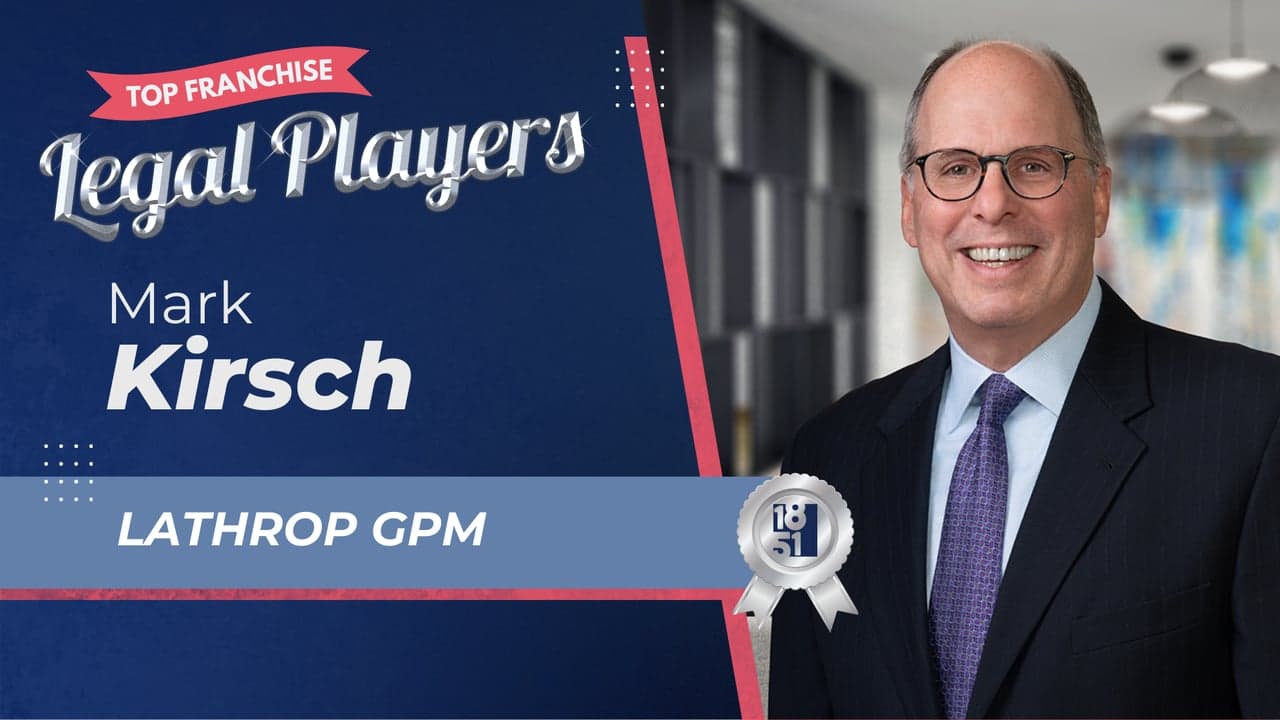
2025’s Top Franchise Legal Players: Mark Kirsch - Lathrop GPM
1851 Franchise’s annual roundup of the top legal players in the industry is back. Meet Mark Kirsch and hear his insights on legal issues in the franchise space.
Growing a Franchise
1851 Franchise’s annual roundup of the top legal players in the industry is back. Meet Mark Kirsch and hear his insights on legal issues in the franchise space.
Legal Player: Mark Kirsch
Firm: Lathrop GPM
Four decades in, Mark Kirsch still gravitates to the places where franchise law meets day-to-day operations. He moved into the field 39 years ago after an early career in regulatory litigation and found a practice that rewards curiosity and collaboration. He works comfortably with founders and seasoned executives, private equity and growing systems, and he prizes clients who treat counsel as a partner and set honest timelines so decisions land where they should.
His guidance is steady and practical. Listen to franchisees without handing over the wheel. Explain why changes and investments are happening so the network can move together. Enforce brand standards before small problems turn into big ones. Write agreements that can adapt as technology and customer expectations shift, and resist the “sweetheart” deals that feel good in the moment but weaken a system later.
At Lathrop GPM, Kirsch is part of a franchise group built for that kind of work — collaborative, business minded and backed by a full-service platform that can handle everything from compliance to disputes at home and abroad. The firm’s Multilaw ties, leadership roles in the International Franchise Association and American Bar Association Forum on Franchising, and a clear commitment to inclusion give clients reach and credibility. What Kirsch brings to the table is seasoned judgment and clear communication aimed at strengthening unit-level performance over time.
1851 Franchise reached out to Kirsch to learn how franchisors can protect their brand and avoid legal mistakes. Check out his insights below.
1851 Franchise: How did you fall into franchising?
Mark Kirsch: Like many franchise lawyers of my generation, I “fell” into franchising. There was not a well-established body of law, nor were there franchise law classes in law school. After a couple of years at a firm where I was doing mostly regulatory litigation-type work, I was looking for a business-focused, transactional practice. A firm that had one of the pillars of franchise law as a senior partner, Phil Zeidman, was looking for an associate. The more I interviewed, the more I was intrigued by the practice and the franchise “industry.” I made the move — over 39 years ago — and I have never looked back.
1851: What do you love most about franchising?
Kirsch: I love the diversity of franchising. Franchising involves businesses in scores of industries, from restaurants to home services to education to health care to retail and so much more. I work with companies large and small, from start-ups to multi-brand and multi-national companies. I work with investors and private equity companies. I work with founders, seasoned business executives, lawyers and finance professionals. Each person and each business brings a special background and experience that I can learn from, and which I hope helps me provide better service, guidance, advice and counsel to my clients. As a franchise lawyer, I’m in the middle of an ongoing mix of business, commercial, legal, regulatory, legislative and human relations issues that change and evolve over time.
1851: What makes a great client?
Kirsch: While the “client” is actually the company that retains us, I view a client through the lens of the person or people whom I interact with at the company. A great client is one where there is a true partnership between them and me. We recognize that we have complementary skills and knowledge and how we can best utilize them to solve the client’s and the company’s issues. I also like clients who provide challenging issues and problems. And going back to when I was a young associate, balancing the demands of many clients as well as partners in the firm, I like clients who provide realistic deadlines. Sometimes the clients need the answer or work product the next day, and sometimes they don’t need it until next Thursday. Providing those realistic deadlines serves everyone’s best interests.
1851: What are some common legal mistakes brands are making in 2025 and how can they address them?
Kirsch: The best brands understand that listening to franchisees and incorporating franchisee comments and views into the decision-making process is critical to success. This does not mean turning over the boardroom decisions to franchisees, because the franchisor is the steward of the system and must act in the best long-term interests of the entire network. Those brands that do this the best are most successful. Similarly, focusing on attracting the best franchisees, and not just hitting the next quarter’s target, is important. And focusing on communicating to the system why actions are being taken, why investments are being made and why franchisees have to share in those commitments will go a long way to building harmony, a collective purpose and long-term success for all of the stakeholders.
That is what makes brands strong. Turning to the other side of that question, there are a few mistakes that franchisors sometimes make that are a combination of operational and legal issues.
The first is franchisors that are not policing and enforcing system and brand standards. By allowing a few deviations from the standards, these small matters can snowball, and then it makes it more challenging to enforce them in the future — in terms of franchisee relations, legal costs and diversion of resources.
Second, franchisors should build into their agreements the flexibility to make changes and allow the system to evolve due to changes in technology, customer preferences and other marketplace issues. The lack of flexibility can hinder growth and change, without significant costs and at the risk of creating negative franchisee relations. Of course, finding the right balance between flexibility and unfettered changes is critical.
A third issue (and mistake), which applies more to start-up and emerging brands than to mature systems, is the willingness to deviate from contract requirements and permit significant negotiated changes, and/or deviating from the desired new franchisee profiles and signing up less-than-stellar franchisees. Oftentimes these sweetheart deals, or signing a new franchisee who may not have the right or best mix of knowledge, experience, personality or capital, are done to meet an arbitrary franchise sales goal. And while that may seem good at the time, to add new franchises to the system, it may backfire in the future.
1851: How does Lathrop GPM stand out as a franchise law firm?
Kirsch: Many law firms talk about the 3 C’s: culture, collegiality and collaboration. Sure, many firms have that. But from my experience (which includes firms big and small, and with no disrespect intended to previous firms or colleagues, but I have worked with many very good lawyers over the years), Lathrop GPM truly has the 3 C’s. The Franchise & Distribution group demonstrates this daily, and we work as a true team. We also have a whole lot of fun together. The firm as a whole is the same way. And because the franchise practice is a large and foundational practice in the firm, we collaborate with so many other practices — commercial transactions, bankruptcy, labor and employment, health care, to name a few — that it feels like a smaller and close-knit partnership.
1851 Franchise’s Supplier Database connects franchisors and franchisees with top legal experts. If you need guidance on agreements, compliance or disputes, click here for more information.
Sign up for the 1851 Franchise newsletter to get our biggest stories before everyone else
By signing up, you agree to our user agreement (including class action waiver and arbitration provisions), and acknowledge our privacy policy.