As Melting Pot, the iconic fondue franchise, celebrates its landmark 50th anniversary, the system is celebrating major progress in its Melting Pot Evolution redesign program. The systemwide initiative, which encompasses both new and existing locations, is a push to modernize the design of the brand, streamline operations and revolutionize the guest experience. 

While all new Melting Pot locations are built with the Melting Pot Evolution design, existing locations have been remodeled in waves, and this effort is expected to be complete by summer 2026. This evolution is more than aesthetic, though that is a major facet. The new design also represents a strategic pivot designed to broaden Melting Pot’s appeal with increased dining options and flexibility for the evolving consumer, and the results are already validating the strategy.

New locations in St. Petersburg, Florida, New Haven, Connecticut, and Rogers, Arkansas, are shattering national averages in select key performance metrics, driven by a design that puts the bar front and center and invites guests to dine on their own terms, and remodeled locations are receiving enthusiastic approval from guests and team members alike as they reopen post-renovation.

Proof in the Numbers

The financial impact of the Melting Pot Evolution design is undeniable. The new St. Petersburg location, which opened in April, reports a per-person average of $70.50, which is significantly higher than the national year-to-date average of $61. Similarly, New Haven, which opened in May, boasts a PPA of $64.18. In the first week of December, Rogers, which opened in November, had the third-highest sales week in the system.

A key driver of this growth is the reimagined bar experience. 

In the past, Melting Pot bars were often tucked away or inactive. The Melting Pot Evolution design places them as focal points, leading to a surge in alcohol sales. St. Pete’s alcohol product mix sits at 23.7% (the highest in the system) while New Haven follows closely at 17.1%. Both are well above the national average of 12.1%, proving that the new design successfully captures the high-margin "happy hour" and casual dining crowd.

A New Era in St. Pete

For Celinda Norton, general manager of the St. Pete location, the new design represents a necessary leap forward. Having operated nine Melting Pot locations over her career, she views the move to the vibrant Central Avenue district as a game-changer.

"We are at the beginning of the next 50 years," Norton said. "Fifty years ago, people wanted to dine for the whole evening. Now, we still have those guests, but we also have generations with busy lives who want to come, eat, have fun and leave."

In addition to the bar being more of a focal point in St. Pete than it was in previous locations, a unique garage-style door that opens to the street further integrates the bar and overall restaurant with the bustling city.”
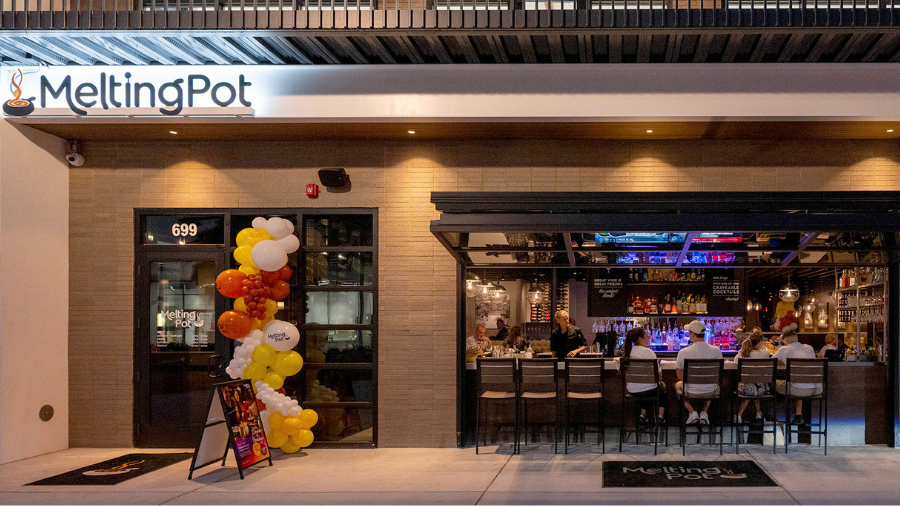
"A Melting Pot bar is not the type of place where you’d go for happy hour if it were buried in the back," Norton said. "Here, the bar is front and center, and it’s a huge draw. We have guests who come for a reservation and ask to sit at the bar instead, and we have guests who visit just for a drink and quick chocolate fondue at the bar."

Balancing Tradition and Modernity in New Haven

In New Haven, franchisees Jonathan and Daina Reeve, long-time guests who decided to open a Melting Pot after they learned their favorite local unit would be closing, noted that the new look initially shocked some loyalists, but even the most traditional guests have come to love the Melting Pot Evolution look.

"We underestimated how many people missed Melting Pot," Daina said. "People walk in, and there is an immediate reaction. The modern feel shocks them at first because they are used to the traditional, dark, secluded booths. But after experiencing it, they see it as an evolution. They see Melting Pot making changes to stay with the times."

The Reeves emphasized that, while the design is open and airy with quartz finishes and modern lighting, the soul of the brand remains.

"We shouldn’t lose sight of what makes Melting Pot what it is," Jonathan said. "For example, Lovers' Lane is still there. It’s the only place where you can have an intimate dinner for two and feel secluded. It’s nice to mix the old with the new."

While the new design does “mix the old with the new,” Daina pointed out that the modern aesthetic has been carefully curated and still aligns with the warm, welcoming atmosphere guests expect from Melting Pot. The spaces don’t feel “cold” like some modern designs can.

"I personally think that the new design has amazing textures," she said. "For such a modern space, it feels like you're kind of in your living room. We have a fireplace, candle walls and really well-done focal points that make the restaurant super special."

Building From the Ground Up in Arkansas

For Chad Hickerson and Candice Bright, the owners of the newly opened Rogers, Arkansas, location, the Melting Pot Evolution design offered a clean slate. Unlike retrofits, their location was built from the ground up with the new aesthetic in mind.

"It’s just really a clean restaurant," Candice said. “The focal features, like the bar and the ADA seating, are really beautiful. I’m really proud of the design.”

"I had struggled with feeling like I was walking into a 1970s home in the old designs," Chad said. "The modernization fits a whole lot better. It’s much more open.”

The Rogers location features distinct design elements like an aquifer water-vapor fireplace and sunk-in booths. And, thanks to the diversity in design, with anything from booths to high-top tables and bar seating, the restaurant has the perfect seating option for any occasion. Chad describes the different areas like different “neighborhoods” within the space.

“You can come six times, sit in six different places and feel like you’ve gone to six different restaurants," he said.

What Melting Pot Evolution Means for the Future of the Brand

With the Melting Pot Evolution project close to wrapping up, the brand is set up well for what comes next. Early results from St. Pete and New Haven show that the move to a more open, bar-forward design is not only bringing in new guests but also giving longtime regulars a fresh reason to come back.

As the franchise moves past its 50th year, the modern design serves as a physical signal that Melting Pot is evolving alongside its guests and franchise owners, all to the benefit of the brand and guest experience.

"We have seen the reaction of those who haven't been to a newly remodeled Melting Pot before or in some time," said Franchise Growth Strategist Collin Benyo. “From prospects to vendors to previous guests, the reaction is overwhelmingly positive.”

To find out more information on costs to buy this franchise, please visit https://1851franchise.com/meltingpot/info. 

As Melting Pot, the iconic fondue franchise, celebrates its landmark 50th anniversary, the system is celebrating major progress in its Melting Pot Evolution redesign program. The systemwide initiative, which encompasses both new and existing locations, is a push to modernize the design of the brand, streamline operations and revolutionize the guest experience. 

While all new Melting Pot locations are built with the Melting Pot Evolution design, existing locations have been remodeled in waves, and this effort is expected to be complete by summer 2026. This evolution is more than aesthetic, though that is a major facet. The new design also represents a strategic pivot designed to broaden Melting Pot’s appeal with increased dining options and flexibility for the evolving consumer, and the results are already validating the strategy.

New locations in St. Petersburg, Florida, New Haven, Connecticut, and Rogers, Arkansas, are shattering national averages in select key performance metrics, driven by a design that puts the bar front and center and invites guests to dine on their own terms, and remodeled locations are receiving enthusiastic approval from guests and team members alike as they reopen post-renovation.

Proof in the Numbers

The financial impact of the Melting Pot Evolution design is undeniable. The new St. Petersburg location, which opened in April, reports a per-person average of $70.50, which is significantly higher than the national year-to-date average of $61. Similarly, New Haven, which opened in May, boasts a PPA of $64.18. In the first week of December, Rogers, which opened in November, had the third-highest sales week in the system.

A key driver of this growth is the reimagined bar experience. 

In the past, Melting Pot bars were often tucked away or inactive. The Melting Pot Evolution design places them as focal points, leading to a surge in alcohol sales. St. Pete’s alcohol product mix sits at 23.7% (the highest in the system) while New Haven follows closely at 17.1%. Both are well above the national average of 12.1%, proving that the new design successfully captures the high-margin "happy hour" and casual dining crowd.

A New Era in St. Pete

For Celinda Norton, general manager of the St. Pete location, the new design represents a necessary leap forward. Having operated nine Melting Pot locations over her career, she views the move to the vibrant Central Avenue district as a game-changer.

"We are at the beginning of the next 50 years," Norton said. "Fifty years ago, people wanted to dine for the whole evening. Now, we still have those guests, but we also have generations with busy lives who want to come, eat, have fun and leave."

In addition to the bar being more of a focal point in St. Pete than it was in previous locations, a unique garage-style door that opens to the street further integrates the bar and overall restaurant with the bustling city.”

"A Melting Pot bar is not the type of place where you’d go for happy hour if it were buried in the back," Norton said. "Here, the bar is front and center, and it’s a huge draw. We have guests who come for a reservation and ask to sit at the bar instead, and we have guests who visit just for a drink and quick chocolate fondue at the bar."

Balancing Tradition and Modernity in New Haven

In New Haven, franchisees Jonathan and Daina Reeve, long-time guests who decided to open a Melting Pot after they learned their favorite local unit would be closing, noted that the new look initially shocked some loyalists, but even the most traditional guests have come to love the Melting Pot Evolution look.

"We underestimated how many people missed Melting Pot," Daina said. "People walk in, and there is an immediate reaction. The modern feel shocks them at first because they are used to the traditional, dark, secluded booths. But after experiencing it, they see it as an evolution. They see Melting Pot making changes to stay with the times."

The Reeves emphasized that, while the design is open and airy with quartz finishes and modern lighting, the soul of the brand remains.

"We shouldn’t lose sight of what makes Melting Pot what it is," Jonathan said. "For example, Lovers' Lane is still there. It’s the only place where you can have an intimate dinner for two and feel secluded. It’s nice to mix the old with the new."

While the new design does “mix the old with the new,” Daina pointed out that the modern aesthetic has been carefully curated and still aligns with the warm, welcoming atmosphere guests expect from Melting Pot. The spaces don’t feel “cold” like some modern designs can.

"I personally think that the new design has amazing textures," she said. "For such a modern space, it feels like you're kind of in your living room. We have a fireplace, candle walls and really well-done focal points that make the restaurant super special."

Building From the Ground Up in Arkansas

For Chad Hickerson and Candice Bright, the owners of the newly opened Rogers, Arkansas, location, the Melting Pot Evolution design offered a clean slate. Unlike retrofits, their location was built from the ground up with the new aesthetic in mind.

"It’s just really a clean restaurant," Candice said. “The focal features, like the bar and the ADA seating, are really beautiful. I’m really proud of the design.”

"I had struggled with feeling like I was walking into a 1970s home in the old designs," Chad said. "The modernization fits a whole lot better. It’s much more open.”

The Rogers location features distinct design elements like an aquifer water-vapor fireplace and sunk-in booths. And, thanks to the diversity in design, with anything from booths to high-top tables and bar seating, the restaurant has the perfect seating option for any occasion. Chad describes the different areas like different “neighborhoods” within the space.

“You can come six times, sit in six different places and feel like you’ve gone to six different restaurants," he said.

What Melting Pot Evolution Means for the Future of the Brand

With the Melting Pot Evolution project close to wrapping up, the brand is set up well for what comes next. Early results from St. Pete and New Haven show that the move to a more open, bar-forward design is not only bringing in new guests but also giving longtime regulars a fresh reason to come back.

As the franchise moves past its 50th year, the modern design serves as a physical signal that Melting Pot is evolving alongside its guests and franchise owners, all to the benefit of the brand and guest experience.

"We have seen the reaction of those who haven't been to a newly remodeled Melting Pot before or in some time," said Franchise Growth Strategist Collin Benyo. “From prospects to vendors to previous guests, the reaction is overwhelmingly positive.”

To find out more information on costs to buy this franchise, please visit https://1851franchise.com/meltingpot/info. 

Don’t Miss the Next Big Franchise Story

Sign up for the 1851 Franchise newsletter to get our biggest stories before everyone else

By signing up, you agree to our user agreement (including class action waiver and arbitration provisions), and acknowledge our privacy policy.

Morgan Wood

About the Author

Morgan Wood

Follow

All Articles

No related articles found