
Shuckin' Shack
The 5 Business and Life Lessons I Learned from Powerlifting
The Unbreakable Power of Consistent Effort: Essential Lessons Learned in the Weight Room and Applied to the Demands of Building a Thriving Business
This post is going to sound a little influencer-y and expert-y, and for that I don’t apologize. I stumbled across this thought process laying in bed about a week ago. While attempting to dig really deep into my motivations over the last year, I’ve sought to answer the question, “what actually drives me?”
While I’ve always had molten lava in the center of my chest cavity (think firebox of a steam locomotive), I knew that the boiler tubes and forced air had to come from somewhere to power the train.
So, where’s that for me? Simple: it’s the track (both in front and behind).
In other words, it’s the journey. What’s in front is what I’m chasing. And much like my position with Shuckin' Shack Oyster Bar, I find a lot of similarities in my powerlifting journey.
Okay, enough Thomas-talk, here’s the five lessons (and like any good click-bait post, I’ll save the best for last and my train won’t be derailed if you skip past the first four) I’ve learned from half a lifetime of powerlifting:
When I first started lifting weights (7 years old), I remember the sinking feeling of being weak while improperly seated on an 80s era triceps pushdown machine. “I can barely move the top two rectangles, and there’s like 18 more – I’ll never be able to do that,” is what I thought to myself.
Fast forward to when I seriously got into powerlifting, approaching advanced and then elite raw totals (bench press + squat + deadlift) in my weight class, and that sinking feeling reappeared, despite every metric telling me the opposite. Nothing was heavy enough. Everything I lifted left me feeling like I could’ve done more (and should’ve done more).
In business and in franchising, the weight only gets heavier. The stacked plates of units, AUVs, investments, and annual budgets continue to pile onto the barbell of the system, leadership, and support staff.
You’ll always chase the dragon. The victories are short-lived, the failures are remembered, and there’s always more weight in the gym.
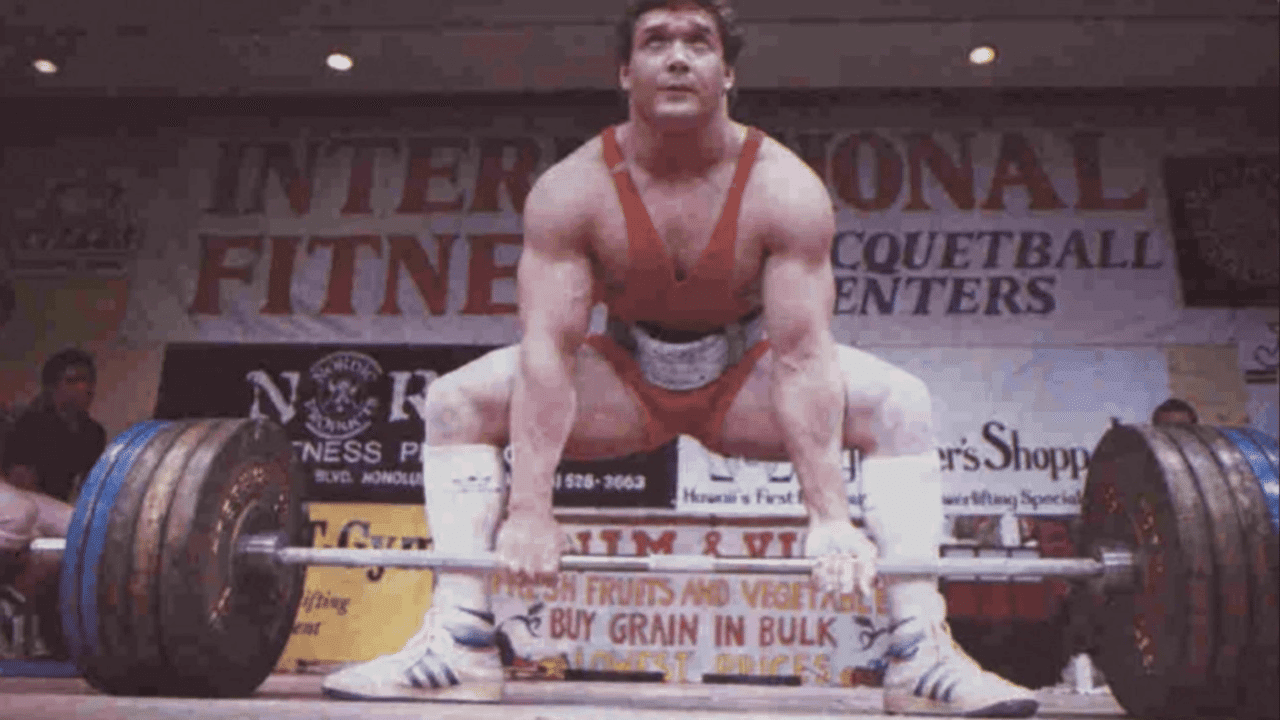
With the meteoric rise of the fitness industry and gym-goer, we’re bombarded with unbelievably hilarious (and dangerous!) content online. I’m so damn glad no one saw me deadlift the first time: hunched back, unbalanced feet, neck craned, pulling with my arms, and holding my breath - a flawlessly terrible technique.
As I honed my craft, read magazines (the actual paper ones before the internet), eventually watched videos online (shoutout Westside Barbell), and consulted with old-heads in the dark annals and damp caverns inside the dusty gyms I trained in, I learned that with proper technique, a concerted and devoted focus on how and where the bar and weight moves, not just what and how much is on the bar, virtually anyone can become a competent powerlifter. Grip, breathing, foot placement, hand placement, rhythm, core stability, tightness of weight belt, and most importantly the mind, must all be in sync before a lift is even attempted.
Don’t get this point confused or twisted. I’m a big believer in just starting and doing. The first step is one of the most important ones. But, if your latter steps look like your first ones, maybe revisit your technique.
We’ve learned a lot of ‘technique’ lessons over the years. How we do things more often supersedes what we do. Being overly concerned about the number of units or territories or how fast we move can be detrimental in long term growth of any company, but especially in the case of a franchise company where families and their life savings are often at stake.
Don’t get caught up in what or how much you’re lifting, first focus on how you’re lifting it.
Ed Coan is the greatest powerlifter of all time. For those unfamiliar with the sport, you’re probably picturing someone akin to Andre the Giant or Hafþór Björnsson (‘The Mountain’ in Game of Thrones). That’s where your inclination is wrong. Ed Coan stood at a towering 5’6” and weighed just 220 lbs at competition weight, yet shattered nearly every powerlifting record in history, in ALL weight classes. Ed Coan is a genetic freak.
For those of us only slightly built like cinder blocks and without the genetics (or me, with some), we must find a balance in what we’re born with and how we choose to train. There are certain aspects of the big three lifts that continually remain difficult for me, despite many years of training; I don’t have the genetics to overcome these difficulties naturally, so I must train them more often.
In business, soft skills and hard skills are equally important. Finding an effective balance of the two as a way forward often serves as an opportunity to identify strengths and weaknesses, and fill in our skill set with others (see point 5) that can effectively maximize areas where we are weak.
Lean into your soft skills, train your hard skills, be cognizant of your weaknesses, and work to improve everything, leveraging the right skillsets.
As a novice lifter in my teens and early 20s, primarily doing bro splits (google it) and eating fast food, I never quite connected the dots on why I was getting stronger, felt different, but looked the same (sleeper build FTW). I wasn’t consistent. I may have been consistent in areas (actually showing up to the gym), but I was badly inconsistent with my diet, the intensity of my training, and my lifestyle choices.
Put simply: partial consistency is inconsistency. When attempting to master any sport, full commitment is a prerequisite. There are certainly times for cheat days and rest days (though rest is a consistently important component of strength gain), but bringing the same intensity, a commitment to caloric intake, and smart life choices are the best way forward.
In franchising, we see a consistency of misleading messaging. Attention and accolades come to those who grow quickly, sell out, chase the dollars, and focus only on growth (not shitting on everyone - there are many of you that do this and do it exceptionally well, with integrity). Undoubtedly, what matters most is the impact of the units and territories that open, how successful they are, how they impact their communities, and the return on investment brought to the franchisees.
A consistent, concerted approach extends beyond what you’re planning - a commitment to all aspects of the business, especially the operations, serves as a pathway to success.
Watch Westside vs. The World on Netflix. You’ll get what I’m saying. I was the only one of my friend group who got really interested in powerlifting. By default, I lifted mostly alone; I depended upon magazines, YouTube, video tapes, and DVDs to work on technique, learn about compound lifting, and prevent injuries. I absorbed as much as humanly possible about the sport. I thought I knew it all.
Then, I got injured.
Injuries aren’t uncommon in powerlifting, they’re a matter of “when,” not “if.” A grade 3 groin strain put me down, out of the gym, for five years. When I decided to return (and this time be a casual powerlifter), I chose a different route. I worked with a trainer to identify weaknesses in my regiment, inconsistencies in my form, and gain general knowledge that I didn’t know that I didn’t know.
What happened next was fairly mind-blowing: I got stronger than ever before. My regiment was consistent, my form was great, and my knowledge base was solid; the primary benefit of the trainer happened in an unexpected way – they made me better just by being there. Within a few months, I no longer paid the trainer, and instead we became training partners (him 16 years my junior). My strength skyrocketed. My raw totals ventured back into elite territory, and I felt the best and was stronger than I’d ever been. He pushed me.
I’ve learned this lesson several times in building businesses. Like any other Type-A, ENTJ, Di, there are plenty of times when I’m sure I have things under wraps and under control. I control my own destiny. I dictate the direction of things. I determine the success. Yet, I don’t.
Surrounding yourself with the right people that push you to your absolute limit, cradled in a deep trust and mission, and back-fill your most glaring weaknesses serves as the absolute best thing you can do for your business. Find others that think differently than you do, approach problems from a different perspective, and require you to be on your A-Game, yet show grace when you just need a “de-load day.”
You can’t do it alone.
I’m no expert. Show up, stack weight, train right, and surround yourself with others who want to do those things, too.
Shuckin' Shack
The Unbreakable Power of Consistent Effort: Essential Lessons Learned in the Weight Room and Applied to the Demands of Building a Thriving Business
This post is going to sound a little influencer-y and expert-y, and for that I don’t apologize. I stumbled across this thought process laying in bed about a week ago. While attempting to dig really deep into my motivations over the last year, I’ve sought to answer the question, “what actually drives me?”
While I’ve always had molten lava in the center of my chest cavity (think firebox of a steam locomotive), I knew that the boiler tubes and forced air had to come from somewhere to power the train.
So, where’s that for me? Simple: it’s the track (both in front and behind).
In other words, it’s the journey. What’s in front is what I’m chasing. And much like my position with Shuckin' Shack Oyster Bar, I find a lot of similarities in my powerlifting journey.
Okay, enough Thomas-talk, here’s the five lessons (and like any good click-bait post, I’ll save the best for last and my train won’t be derailed if you skip past the first four) I’ve learned from half a lifetime of powerlifting:
When I first started lifting weights (7 years old), I remember the sinking feeling of being weak while improperly seated on an 80s era triceps pushdown machine. “I can barely move the top two rectangles, and there’s like 18 more – I’ll never be able to do that,” is what I thought to myself.
Fast forward to when I seriously got into powerlifting, approaching advanced and then elite raw totals (bench press + squat + deadlift) in my weight class, and that sinking feeling reappeared, despite every metric telling me the opposite. Nothing was heavy enough. Everything I lifted left me feeling like I could’ve done more (and should’ve done more).
In business and in franchising, the weight only gets heavier. The stacked plates of units, AUVs, investments, and annual budgets continue to pile onto the barbell of the system, leadership, and support staff.
You’ll always chase the dragon. The victories are short-lived, the failures are remembered, and there’s always more weight in the gym.
With the meteoric rise of the fitness industry and gym-goer, we’re bombarded with unbelievably hilarious (and dangerous!) content online. I’m so damn glad no one saw me deadlift the first time: hunched back, unbalanced feet, neck craned, pulling with my arms, and holding my breath - a flawlessly terrible technique.
As I honed my craft, read magazines (the actual paper ones before the internet), eventually watched videos online (shoutout Westside Barbell), and consulted with old-heads in the dark annals and damp caverns inside the dusty gyms I trained in, I learned that with proper technique, a concerted and devoted focus on how and where the bar and weight moves, not just what and how much is on the bar, virtually anyone can become a competent powerlifter. Grip, breathing, foot placement, hand placement, rhythm, core stability, tightness of weight belt, and most importantly the mind, must all be in sync before a lift is even attempted.
Don’t get this point confused or twisted. I’m a big believer in just starting and doing. The first step is one of the most important ones. But, if your latter steps look like your first ones, maybe revisit your technique.
We’ve learned a lot of ‘technique’ lessons over the years. How we do things more often supersedes what we do. Being overly concerned about the number of units or territories or how fast we move can be detrimental in long term growth of any company, but especially in the case of a franchise company where families and their life savings are often at stake.
Don’t get caught up in what or how much you’re lifting, first focus on how you’re lifting it.
Ed Coan is the greatest powerlifter of all time. For those unfamiliar with the sport, you’re probably picturing someone akin to Andre the Giant or Hafþór Björnsson (‘The Mountain’ in Game of Thrones). That’s where your inclination is wrong. Ed Coan stood at a towering 5’6” and weighed just 220 lbs at competition weight, yet shattered nearly every powerlifting record in history, in ALL weight classes. Ed Coan is a genetic freak.
For those of us only slightly built like cinder blocks and without the genetics (or me, with some), we must find a balance in what we’re born with and how we choose to train. There are certain aspects of the big three lifts that continually remain difficult for me, despite many years of training; I don’t have the genetics to overcome these difficulties naturally, so I must train them more often.
In business, soft skills and hard skills are equally important. Finding an effective balance of the two as a way forward often serves as an opportunity to identify strengths and weaknesses, and fill in our skill set with others (see point 5) that can effectively maximize areas where we are weak.
Lean into your soft skills, train your hard skills, be cognizant of your weaknesses, and work to improve everything, leveraging the right skillsets.
As a novice lifter in my teens and early 20s, primarily doing bro splits (google it) and eating fast food, I never quite connected the dots on why I was getting stronger, felt different, but looked the same (sleeper build FTW). I wasn’t consistent. I may have been consistent in areas (actually showing up to the gym), but I was badly inconsistent with my diet, the intensity of my training, and my lifestyle choices.
Put simply: partial consistency is inconsistency. When attempting to master any sport, full commitment is a prerequisite. There are certainly times for cheat days and rest days (though rest is a consistently important component of strength gain), but bringing the same intensity, a commitment to caloric intake, and smart life choices are the best way forward.
In franchising, we see a consistency of misleading messaging. Attention and accolades come to those who grow quickly, sell out, chase the dollars, and focus only on growth (not shitting on everyone - there are many of you that do this and do it exceptionally well, with integrity). Undoubtedly, what matters most is the impact of the units and territories that open, how successful they are, how they impact their communities, and the return on investment brought to the franchisees.
A consistent, concerted approach extends beyond what you’re planning - a commitment to all aspects of the business, especially the operations, serves as a pathway to success.
Watch Westside vs. The World on Netflix. You’ll get what I’m saying. I was the only one of my friend group who got really interested in powerlifting. By default, I lifted mostly alone; I depended upon magazines, YouTube, video tapes, and DVDs to work on technique, learn about compound lifting, and prevent injuries. I absorbed as much as humanly possible about the sport. I thought I knew it all.
Then, I got injured.
Injuries aren’t uncommon in powerlifting, they’re a matter of “when,” not “if.” A grade 3 groin strain put me down, out of the gym, for five years. When I decided to return (and this time be a casual powerlifter), I chose a different route. I worked with a trainer to identify weaknesses in my regiment, inconsistencies in my form, and gain general knowledge that I didn’t know that I didn’t know.
What happened next was fairly mind-blowing: I got stronger than ever before. My regiment was consistent, my form was great, and my knowledge base was solid; the primary benefit of the trainer happened in an unexpected way – they made me better just by being there. Within a few months, I no longer paid the trainer, and instead we became training partners (him 16 years my junior). My strength skyrocketed. My raw totals ventured back into elite territory, and I felt the best and was stronger than I’d ever been. He pushed me.
I’ve learned this lesson several times in building businesses. Like any other Type-A, ENTJ, Di, there are plenty of times when I’m sure I have things under wraps and under control. I control my own destiny. I dictate the direction of things. I determine the success. Yet, I don’t.
Surrounding yourself with the right people that push you to your absolute limit, cradled in a deep trust and mission, and back-fill your most glaring weaknesses serves as the absolute best thing you can do for your business. Find others that think differently than you do, approach problems from a different perspective, and require you to be on your A-Game, yet show grace when you just need a “de-load day.”
You can’t do it alone.
I’m no expert. Show up, stack weight, train right, and surround yourself with others who want to do those things, too.
Sign up for the 1851 Franchise newsletter to get our biggest stories before everyone else
By signing up, you agree to our user agreement (including class action waiver and arbitration provisions), and acknowledge our privacy policy.
No related articles found