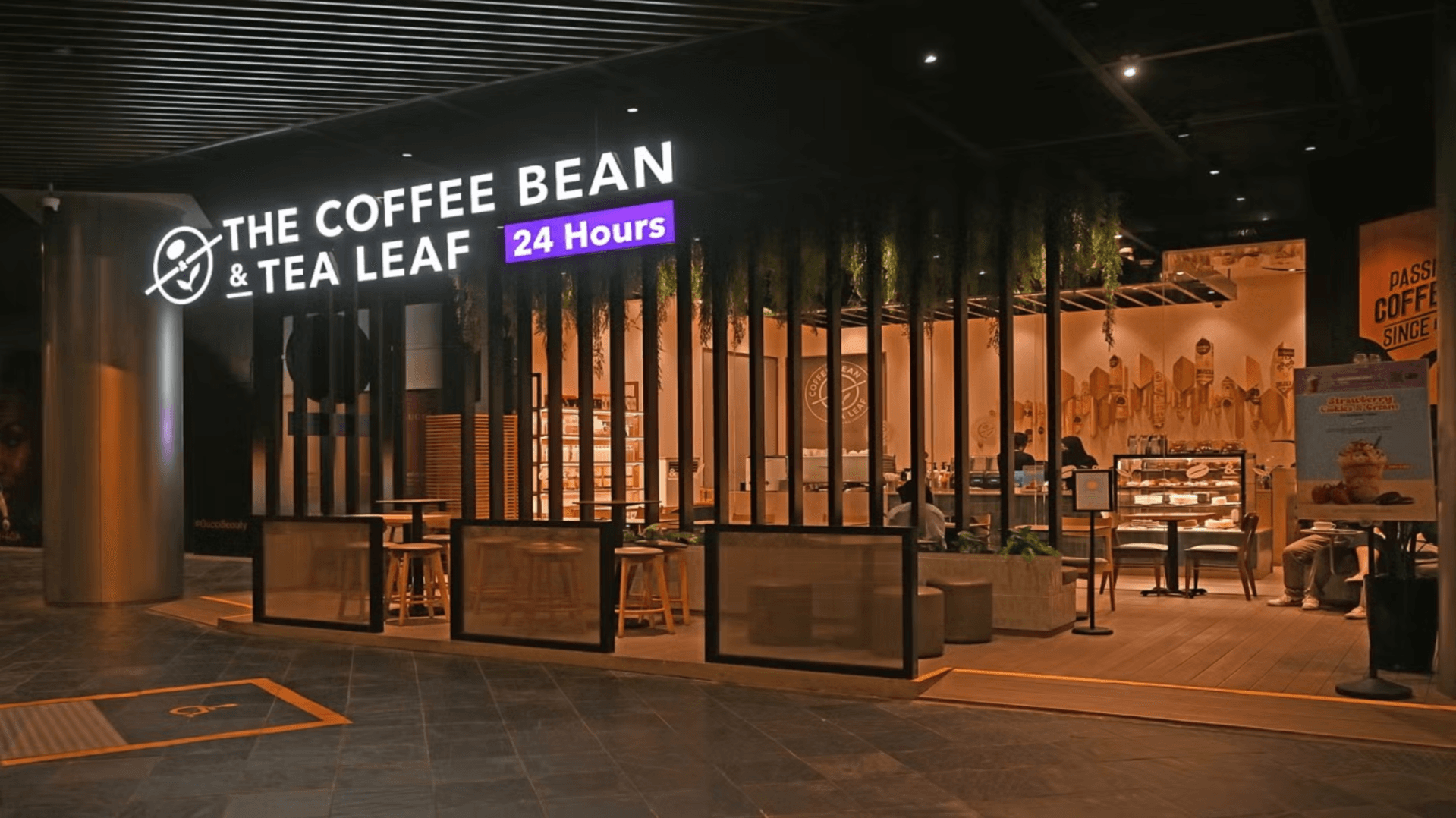
For a growing franchisee, the right real estate opportunity does not always arrive in the form of a perfect prototype. It might be a compact airport concession, an inline shopping center space or a larger freestanding site with room for a drive-thru and patio.
For The Coffee Bean & Tea Leaf, the 1,000-plus-unit coffee and tea franchise, that variety is an advantage.
With more than 60 years of operating experience, the premium coffee and tea brand has developed cafés across a broad spectrum of footprints and venue types. Rather than forcing every location into the same box, the development team works with franchisees to determine how the brand's menu, equipment and operations can be adapted to the realities of a particular site.
"We can open in everything from a small kiosk space up to a large drive-thru location with an oversized patio," said Russ Long, senior manager of construction and design for The Coffee Bean & Tea Leaf. “There are some spaces that can be too big, and some that can be too small, but we can really make most anything work. From a drive-thru with lounge seating to a nontraditional, inline shopping center space, we have solutions for all types of real estate.”
The difference, Long said, is that The Coffee Bean & Tea Leaf is not experimenting with those formats for the first time. The brand has already operated across them, giving its development team a clearer understanding of what each type of café requires.
From Drive-Thrus to 190-Square-Foot Airport Kiosks
That flexibility is especially apparent in The Coffee Bean & Tea Leaf's approach to nontraditional development. Airports, universities and other high-traffic venues can give franchisees access to a large concentration of customers, but they also introduce constraints that traditional cafés may not face. Space can be limited, storage can be scarce and operators may need to serve significant customer volume quickly.
Long pointed to a recently approved franchise location at Seattle-Tacoma International Airport as an example. The proposed footprint was approximately 190 square feet, creating a challenge very different from designing a full-size neighborhood café.
"It was a very small footprint, almost like a kiosk-type location," Long said. “We were able to make it work by working with the operations team and making sure we had everything needed to keep up with the demand.”
At that size, every piece of equipment and every square foot matters. Long described the format as essentially a walk-up coffee bar, where guests can conveniently order and continue through the airport.
The design also creates opportunities to customize the café to its surroundings. For the Seattle airport location, Long said the team incorporated The Coffee Bean & Tea Leaf's branding alongside elements recognizing Seattle's local heritage. Self-ordering kiosks can also be incorporated into certain formats, giving operators another tool for managing ordering and throughput in high-volume environments.
Karen Rawlins, whose family operates three The Coffee Bean & Tea Leaf cafés at Harry Reid International Airport in Las Vegas, has seen that adaptability firsthand. "CB&TL has been an excellent partner," Rawlins said. "With our unique location, CB has been incredibly supportive in helping us meet the needs of an airport location, recognizing that our operational needs vary from a traditional neighborhood café."
Designing Around the Operation, Not Just the Square Footage
Behind each format is an operational equation involving refrigeration, equipment, storage, menu mix and expected customer demand. Over decades of operating experience, Long said The Coffee Bean & Tea Leaf has been able to test those variables and determine what is actually necessary for different footprints.
"We have been around long enough to figure out what works and what doesn't work, and we've been able to focus in on what works with the layout," Long said. “We have determined with the operations team and coffee makers how quickly they can make the product, how much refrigeration we need and what equipment we need to make it work.”
Depending on the location, franchisees may be able to adjust the food program or use off-site dry storage to make a more compact footprint viable. The goal is to preserve the operational essentials without filling a location with equipment or inventory that the café does not need.
That experience can be particularly valuable during development, when mistakes in equipment selection or layout can quickly become costly.
"This gives franchisees that reassurance that we have done this before," Long said. “We have tried it. We know what works, and we also know what doesn't work. They don't have to go out on their own and buy their own equipment. Those things can become very expensive as you start building out these factors, and it can make or break your business.”
The brand can provide franchisees with a framework for determining how much equipment and capacity each location needs. The team also thinks ahead. Whenever possible, Long said layouts leave room for additional equipment so operators have greater flexibility if a café's needs evolve.
Why Airports Showcase the Brand's Nontraditional Advantage
For airport concessionaires, the operational challenges go beyond designing the café itself. Rawlins said her family's locations move through significant quantities of product while working with limited storage, making dependable supply and operational support particularly important.
"With high-volume airport cafés, we go through a significant amount of product and have limited storage space," Rawlins said. “CB has consistently ensured our orders are received in a timely fashion. CB is also very understanding of the special rules and regulations required by airports and willing to adapt the menu, customer pricing and café design to meet airport needs.”
The Coffee Bean & Tea Leaf already has experience in airports including Harry Reid International Airport, Dallas Fort Worth International Airport, John Wayne Airport and Salt Lake City International Airport. Those locations have helped the brand understand what travelers and airport concessionaires need from a premium beverage concept.
"This location has done very well. Terminal D is international, so it's visible to people from all over the country and beyond," said Macy Farr, project manager at Star Concessions, the group that operates the DFW café. “The performance is particularly notable because we're close to two other coffee concepts, and I think one of the reasons we've done so well is because it's a beautiful, well-lit space. It's almost a spectacle. It's maintained strong traffic, especially in the mornings.”
For Rawlins, the product itself also translates well to the travel environment, where a location may serve both longtime Coffee Bean fans and guests experiencing the brand for the first time.
"CB&TL meets our diverse customer needs by providing us with the highest-quality coffee and teas and giving our customers a wide variety of beverage options, including fun seasonal flavors," she said. “CB's product selection team has afforded us the opportunity to offer travelers a one-of-a-kind coffee experience.”
That combination has made Rawlins an advocate for the brand among other airport operators. "Looking back on my experience, I highly recommend airport concessionaires consider CB&TL," she said. "The brand performs well in airport settings because it offers top-quality beverages that exceed customer expectations. Customers who have not had the opportunity to try CB before enjoy our niche coffee experience."
Giving Franchisees a Development Partner From Site to Opening
Whether the opportunity is a compact airport kiosk, an inline café or a full-size drive-thru, The Coffee Bean & Tea Leaf's development support continues throughout the process.
For Long, that means working directly not only with the franchisee, but also with the general contractor, vendors and other parties responsible for bringing the café to life.
"I have worked with several brands before Coffee Bean, and I really pride myself on the relationships with franchisees," Long said. “From the minute the relationship starts until the doors open, I love being able to support them throughout the whole thing.”
That accessibility is intentional. "Construction- and design-wise, I make myself as available as possible," Long said. “There is not a time in the day or night that they can't call or text me. I also engage with the general contractor, vendors and everyone involved throughout the process. Our goal is to ensure the franchisee is set up for success in their specific location.”
For franchisees, that support can turn real estate flexibility from a theoretical benefit into a practical development strategy. Instead of waiting for one specific type of site, operators can evaluate a wider range of opportunities with a team that understands how the concept can function within them.
To find out more information on costs to buy this franchise, please visit https://1851franchise.com/the-coffee-bean-and-tea-leaf.