Growing a Franchise
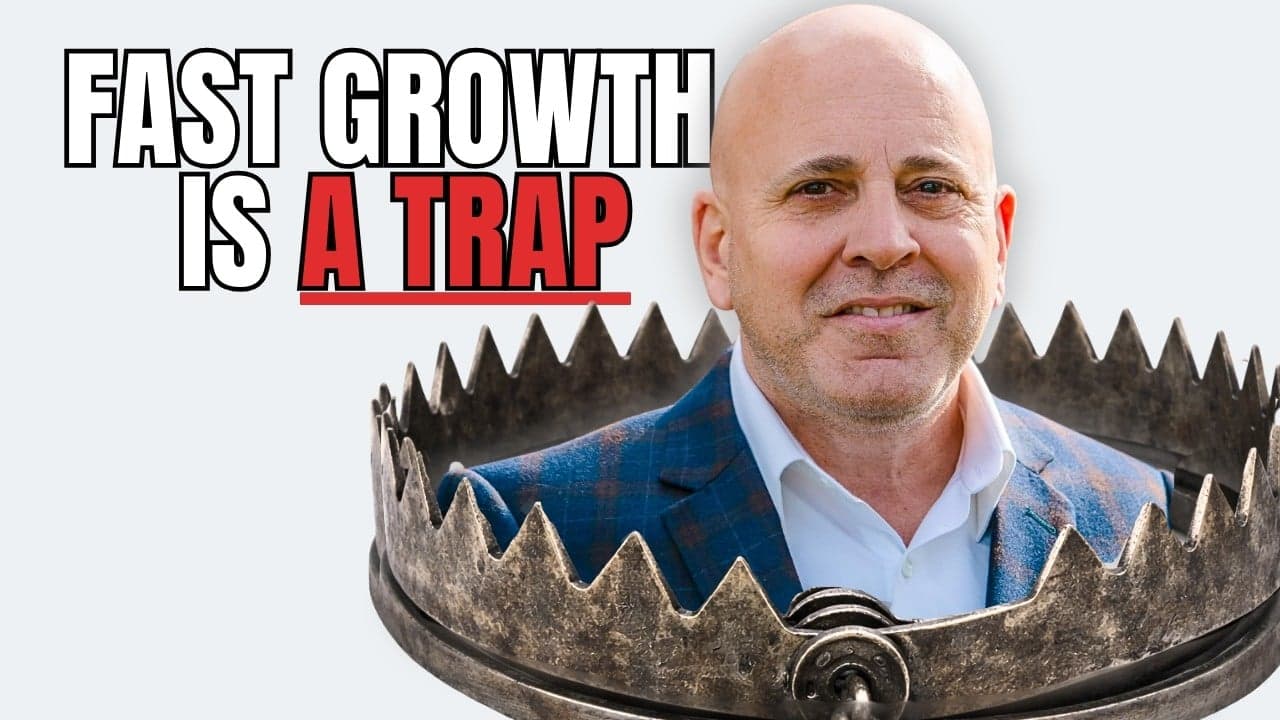
The Hidden Problem With Fast Franchise Growth Strategies
Fast franchise growth can look like success, but without strong support, validation and unit economics, it can create bigger problems later on.
Growing a Franchise
Fast franchise growth can look like success, but without strong support, validation and unit economics, it can create bigger problems later on.
Franchisors often assume that more units, more deals and faster expansion signal success, but in reality, that approach can weaken the very foundation needed to scale. What looks like fast success from the outside usually took time. In many cases, brands spent years refining the model before they ever pushed for broader franchise sales. Early-stage franchisors often skip that part and move into sales before the business is fully proven.
“Franchise growth — it’s not about selling franchises, it’s about creating enterprise value, getting the flywheel spinning,” said Charles Internicola, CEO of GoodSpark Franchise Growth Accelerator, on a recent podcast. “We see franchise brands that scale and grow. We see our clients exit to private equity. We see their vehicles throughout the country. They’re national, and it seems like they grew overnight or had this accelerated, fast franchise growth. But there’s a deeper story there.”
What often goes unnoticed is the work that happens before a brand ever gains traction in the broader market. Early franchisees are used to test systems, refine operations and build a track record of success that can be replicated. Without that validation, any push toward rapid expansion is built on assumptions instead of proven performance.
“There’s a brand that you worked with that had a tremendous exit. The perception was they grew very, very quickly,” said Nick Powills, chief growth officer at Mainland* and chief strategy officer at GoodSpark. “The reality is they got up to about 30 units … They had enough financial wherewithal to support the franchisees.”
At the core of the issue is a misunderstanding of what drives value. Franchise sales generate short-term revenue, but long-term success depends on franchisee performance, strong unit-level economics and the ability to reinvest in support. Without that structure, fast growth can drain capital and create operational strain.
“Selling is one thing. Openings are the next,” Powills said. “The success of those franchisees aligned to expectations is the next one.”
For franchisors, that means shifting the focus from selling more units to building a system that consistently produces successful operators. It requires reinvesting early revenue into support, training and infrastructure rather than accelerating sales too quickly. In the long run, brands that prioritize franchisee success create stronger validation, better performance and more sustainable growth.
A transcript of Internicola’s and Powills’ discussion has been provided below. It has been edited for brevity, clarity and style.
Charles Internicola: Franchise growth — it’s not about selling franchises, it’s about creating enterprise value, getting the flywheel spinning. We’re going to talk about a deep dive: why fast franchise sales growth is fool’s gold. We’re going to discuss a game plan on how to build enterprise value and a valuable franchise system.
Here are the goals for this conversation. Number one, if you’re growing your franchise system or thinking of franchising your business, think long term — a five-year growth strategy, creating enterprise value and honoring your most important goal, which is making your franchisees profitable and helping align their expectations with what your franchise offers.
At a deeper level, in a world with AI, paid marketing, franchise sales organizations and franchise brokers, franchisors have a lot of stress and pressure. You want to sell franchises, but how do you grow the right way? And is fast franchise growth fool’s gold? Is it a pathway for making everyone else profitable, diluting your initial franchise fees, undercapitalizing your franchise system? Of course, the answer is going to be in the middle ground.
Guys, we see franchise brands that scale and grow. We see our clients exit to private equity. We see their vehicles throughout the country. They’re national, and it seems like they grew overnight or had this accelerated, fast franchise growth.
But there’s a deeper story there. People don’t realize the earlier years they franchised their business — years one, two, three, four — low franchise growth, but it’s methodical. They start with pioneering franchisees. They keep building out systems, keep improving systems and performance.
Many times, I’ll be at conferences with our clients at that early stage. Brokers don’t care about them. Franchise sales organizations don’t care. But they tend to their house. They make their pioneering franchisees profitable, they build their systems, they capitalize their company, and then they get discovered as overnight brands — and they’re not. I think too many new franchisors get caught up on the fast franchise growth track, and I think it’s the wrong pathway.
Nick, how would you frame your experiences on this and how you see it? It’s very complex.
Nick Powills: It’s a very complex statement, and there is absolutely a pathway to success. So let me see if I can break this down. There’s a brand that you worked with that had a tremendous exit. The perception was they grew very, very quickly through the broker network. The reality is they got up to about 30 units. They had cash flow that was coming in off of those units. They operated corporate units to build additional cash flow so that when they turned up sales, they had enough financial wherewithal to support the franchisees and do what is the most important part of franchise growth and sales, which is expectation setting.
What happens is, though — I’ve used this example before — we had a client, a franchisor business. I said, “What’s winning?” They said, “We would like to do somewhere in the range of five to 10 units in the next year.”
I said, “OK, you have two or three units now.” They did $1.5 million AUV with net profitability at under 10%. I said, “Well, here’s the issue. It’s great that you guys are able to take $150,000 out of each of these. $150,000 times three is $450,000 — that’s a lot of money. But for a franchisee, if they perform at your numbers with their fees, they’re going to walk away with like $20,000.” So you weren’t ever franchisable.
That’s an example of a brand that had an expectation: we’re going to go on this big, fast growth pattern, but they never perfected their unit-level economics. Growing fast is a great idea if you have two things: capital reserves to support the franchisee and the ability to give the support to drive those AUVs up to above average so that expectations are met.
It’s not that fast growth is wrong. It’s that, unfortunately, fast-growth companies prey on emerging brands that can’t do either one of those. At the end of the day, in a broker network deal, if there’s an FSO and a broker, the only two companies that make money are the brokerage and the FSO. There’s no capital going over to the franchisor, and if they’re undercapitalized, the odds of supporting a franchisee through expectations is next to nothing.
Internicola: A bunch of points here, and I want to break this down into a success framework. I think I have an idea based on some of your comments — and also a warning. I’ve seen brands struggle to sell franchises, and they’re working with other organizations. Behind the scenes, I’m looking under the hood, and I’m like, you may be lucky you haven’t sold because your unit economics don’t make sense for you as a franchisor.
Let’s build a success framework here. My point of view is there’s no such thing as fast franchise sales growth. It’s all about building a foundation. What looks fast is just the end result. One thing we talk to our clients about often is slow growth is fast growth. It’s that building phase when you become a franchisor — the first one, two, three years — building foundations, planting seeds. It takes time to grow. Build a validation base, build the support, and then you can accelerate sales to a certain extent.
From a franchise success framework, I think a couple of fundamentals. A new franchisor enters the franchise world — I strongly recommend looking at your growth phase as an initial five-year growth strategy. Look at the process of becoming a franchisor as the first 24 months, the first two years, building a foundation.
Sure, you have your FDD and you become a franchisor, but take the next 12 to 24 months to build foundation, pioneering franchisees and systems there, versus just jumping into broker networks or spending money randomly on paid advertising.
For me, your first 24 months, you become a franchisor in 90 to 120 days, maybe track those first two or three pioneering franchisees organically, support them, over-support them and build that seasoned foundation over the 24-month period. How do you feel about that?
Powills: I feel great about it. But here’s the thing — how many times did your parents tell you not to do something, and you did it anyway? In this case, what I’ll see typically is even the brand you mentioned that exited at a very high level — that’s what they did. In fact, they did that over four years. Here’s the larger, unspoken issue in franchising. There is a giant lack of integrity by businesses that over-index on taking cash.
This lack of integrity means it might feel like it’s real. Someone tells you, “We can explode your brand. You don’t have to worry about those things. I’ve done this for 26 brands, and I’ve sold $7 billion in franchises.” So we have an integrity issue.
Then the reality is, some of these brands — I could start naming names — didn’t listen to advice, went and sold franchises through the broker network, which also lacks integrity and sells based on who pays the highest commission, not whether the franchisee is a perfect match. Then you have two things: you’ve oversold and you can’t support, and you’ve oversold to the wrong people. It implodes in an ugly way. The broker walks away with money. The FSO walks away with money. We could point to all these stories. But it goes back to that same idea — people still make the same mistake.
Internicola: Well, let me just say this. Let’s assume the intentions are good, or where some initial brands are getting advice — let’s assume everyone has good intentions, but maybe the advice is not the right advice.
For everyone, we’re building our success framework. So here’s the advice. When you do become that initial franchisor, or if you’re already a brand and you’re struggling, a little reset — the knee-jerk reaction is always to reach for the sale. Maybe go to another broker conference, spend more money on certain marketing and try to generate the sale.
We’ve seen from our FranCamp conferences — which, by the way, if you haven’t been to it, the next one’s coming up — but what we’ve seen in the data from FranCamp is when emerging brands, and all of us as business owners, approach growth strategy, we get it wrong.
We get the pyramid wrong. We focus first on sales and then last on leadership and brand. You really need to invert your strategy, which is focus on your leadership goals, focus on that brand story, focus on the right position for the franchisee and those genuine conversations. Only later down the line do you get to that sales activity.
Step number one in the seasoning process: understand what your brand’s about, understand the decisions you’re making to franchisees, make sure you can run it and demonstrate how you deliver on it. You’re going to sell more by that integrity than attending conferences or promoting to more brokers or running more ads or going to portal leads. You agree, Nick?
Powills: I agree. However, that’s not foolproof. I can think of a brand instantly when you’re saying this that did all those elements, then went into the broker network without growing organically, and then ran into cash flow issues in a large way and had to sell a greater percentage than they should have for the valuation — the potential valuation of their business — which put them backwards.
So if I’m creating the best practice, it’s do that, but you have to get beyond five units organically before you go into the broker network.
Internicola: I love that. So far, we’re piecing together the success framework. Number one, you’re going to season your franchise offering over those first 12 months and really solidify what you are and your purpose in a genuine way.
Two, before you think of expanding sales outbound in a very strategic way — brokers and other avenues — Nick’s advice, which I agree with 100%, is build your organic base of franchisees. What sells franchises are existing franchisee validation. Don’t go running around to other sales channels unless you first have demonstrated your proof of concept.
When Nick is saying your first five franchisees organically, meaning people that know you, know your brand, come into contact with it — make them successful before you focus on that fast franchise growth and these other strategies.
So we’ve got seasoning, we have building your validation base — proving your concept and being genuine. What’s next on this growth strategy before you go into fast growth?
Powills: Before whatever someone deems fast — I’ll give you another example. We have a brand — I would still call them a unicorn brand. They’ve not had a sales issue, and they’ve not had an opening issue. They are well capitalized, and they grew very, very quickly.
Last year, we pressure-tested them on openings. It was fascinating. We had a deep discussion about this. Their issue is no longer selling franchises. It’s now turning into supporting and doing it again. So I would say on fast growth — whether you’re a service brand or restaurant brand — there’s a number, whether it’s 10 franchises, whether it’s 25, whether it’s 100, where you have to reset and restart and become a startup again.
Because now you have to onboard a different set of staff for supporting that franchisee. So the next level is, OK, now we’ve turned it on. It’s not about building up your lifestyle yet with the cash. It’s about starting to prep for this next hill, where you deploy the capital to hire the right people to support the infrastructure you’ve now built up because of franchise sales.
Selling is one thing. Openings are the next. The success of those franchisees aligned to expectations is the next one. And then the scale of those franchisees is the final one. Each of those areas requires a different viewpoint to make sure you have a chance of building one of these amazing businesses.
Internicola: If I were going to put a label on this — support infrastructure, sustainable unit economics. We’ve seasoned the franchise offering in terms of positioning and built a validation base, made franchisees successful. Nick, your advice next, which I think is so critical, is really getting the unit economics right and the scalability right. Meaning, number one, are your unit economics as a franchisor scalable? What do they look like when they’re ramping up?
Most important, to Nick’s point, are you going to have the capital to support, open and train your next level of franchisees the right way? So it’s economic and support infrastructure as a franchisor. That’s critical, because that’s where I get nervous as an attorney. We’ve had clients upset with us because they were focused on this rapid growth strategy and working with other organizations.
The fast franchise sales sound interesting, but the problem is you’re actually depleting your cash flow. Money is going out the door to sales organizations, brokers, media, whatever it is. You’re taking on an obligation of a new franchisee. You need the support infrastructure to train them, open them, keep them on track — and you’re now going into a cash flow deficit at a vulnerable stage.
Powills: I think the other big mistake franchisors make along that path is they don’t create separate buckets for B2B and B2C. Selling a franchise has many legs. You have selling a franchise — how you present your business to franchise buyers — and then you have onboarding, marketing and the sales structure on the B2C side.
One point I constantly bring up in FDDs is Item 7, the grand opening amount. I say reshape the grand opening to be the whole first year so that we’re setting expectations and not blindsiding the franchisee when their sales are not performing at system average.
Because when sales aren’t working, the first thing that gets cut is marketing. There’s a construct of an FDD to sell a franchise, and then there’s a construct to create high-performing unit-level economics. Those two elements are often not separated.
Internicola: That gets to an important point you bring up often — the value of a successful franchisee versus the value of the sale. When you get involved in the sales channel, your primary focus becomes selling franchises. You view wins and losses by how many agreements you sign. You may be going into cash deficits because you’re spending more on outbound sales than anything else, but you’re taking on big obligations. You start chasing franchise sales versus focusing on validation and building a winning formula and getting that flywheel spinning.
Powills: Think of a client. Get in your head a client that came to your law firm at a low starting point — product-based or retainer. Then think about that same client scaled and worth more to your business. Why did they scale the relationship?
Internicola: Well, and your support — no question about it. They support the infrastructure.
Powills: You hit their expectations. They start small — that’s opening a franchise. You support them, you perform and do what you said. Franchising is simple. You sell a franchise, you get the franchise fee. Then you get ongoing royalties that grow as the business grows. That depends on franchisee success.
What blows my mind is how many franchisors spend so much energy on selling franchises and so little on supporting franchisees. That leads to poor validation, and the business won’t scale.
Internicola: From the franchisor perspective, some of the best deals are the ones they turn down — franchisees that aren’t a good fit. That gets mixed up in this fast franchise growth mindset. The bigger takeaway is that valuation is being driven by sales and franchise fees versus sustainable, long-term royalty streams.
Powills: I got an email today. A prospective client — they’ve been chasing franchise sales strategies. I had a great conversation with them. They said they found someone who could help them scale and exit. I know who it is. I thought about warning them. Then I realized — they’re going to make the mistake again. You can only help people who want to be helped.
Internicola: I like what we’ve uncovered. Seasoning, building validation, building economic support infrastructure and reverse engineering unit economics — royalty first, franchise fees second. Let’s go through scenarios.
Powills: First question: do your unit economics make sense? How much does it cost? How much can I make? If you can’t answer that, you don’t have a business.
Internicola: Exactly. Do you even have a business?
Powills: If you have some traction, I ask: what’s your lifestyle? Where is the money going? Are you reinvesting or pulling money out? Who was your last hire? What impact did they have? If those aren’t right, you can stay the course, but growth won’t happen.
Internicola: That’s great insight.
Powills: If growth is working, ask: do you have cash to support it? If not, pause. Take the money you’d spend on brokers and invest it into supporting franchisees. Then restart.
Internicola: We’ve seen that work — pausing sales, focusing on support, then accelerating with higher valuation. Franchisors need to shift from unit count to enterprise value and franchisee success.
Powills: Franchise marketing used to be simple. Now it’s more complex, especially with AI. AI is becoming the broker of tomorrow. Brands need to be prepared.
Internicola: The world is changing, and the power is shifting back to the brand. I’ll end with this: fast franchise sales is fool’s gold. Stop wasting energy. Focus on long term.
Watch the full podcast above or on YouTube.
Sign up for the 1851 Franchise newsletter to get our biggest stories before everyone else
By signing up, you agree to our user agreement (including class action waiver and arbitration provisions), and acknowledge our privacy policy.