
The Junkluggers
SPONSORED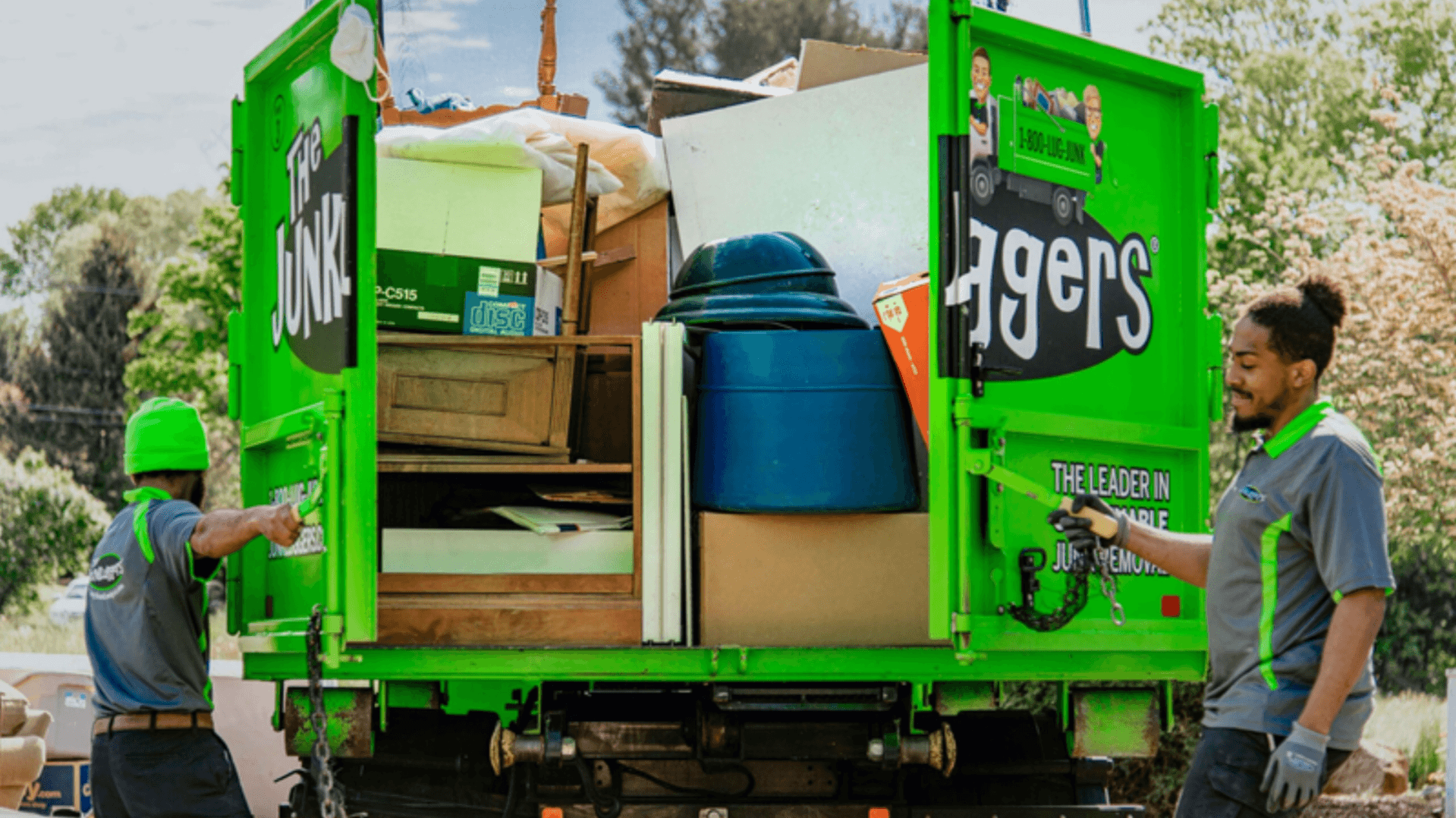
The Eco Edge: How The Junkluggers Give More Items a Second Life
The Junkluggers keeps more usable items out of landfills by finding practical local outlets for donations, recycling and resale in each market it serves.
For many junk removal companies, the job ends when the truck reaches the landfill. At The Junkluggers, that's often where the work is just beginning.
The brand has built its business around an eco-conscious philosophy: hauling unwanted items is only part of the job. The larger challenge is finding a second life for as much material as possible through donation, recycling, resale and creative reuse. That approach has become one of the company’s defining differentiators and a core part of how The Junkluggers approaches junk removal.
That higher diversion rate doesn't happen simply because franchisees care about sustainability. It requires an operational system built around sorting, local partnerships and a willingness to spend more time on every job than many competitors.
Instead of unloading everything at a landfill, crews separate items for donation, recycling and disposal before they ever leave a customer's property. From there, franchise owners rely on relationships with nonprofits, recyclers and specialty organizations that accept specific materials, whether it’s furniture, electronics, textiles or building supplies. Those partnerships are constantly changing as organizations adjust what they can and cannot accept, making local knowledge just as valuable as manpower.
"The logistics of the donation and rehoming process are the hardest part because it's easy to tell the guys, 'Just go to the landfill,'" said Andrew Siegel, owner of The Junkluggers of Greater Dallas. "When you're unloading a truck at a donation center, you're manually touching everything again, and it takes a lot longer. One pickup might have furniture, recyclables, clothing, linens and trash, and now you're making five or six different stops instead of one."
That's what separates The Junkluggers from traditional junk removal businesses.
"I'm Jewish, and there's a Hebrew concept called tikkun olam, which basically means to heal the world," Siegel said. "The idea is that it's every person's responsibility to leave the world a better place than they found it. That's always been a driving force for me. I love the fact that I can take something someone no longer needs, find the right place for it and know it's going to help somebody else."
The results become most visible on large commercial projects, where careful sorting can keep enormous volumes of material out of landfills.
Siegel recently completed a cleanout for a North Texas school district converting a former high school into an operations center. The buildings contained thousands of outdated textbooks and training manuals. After weeks spent locating the right recycling partner, his team diverted 24,000 pounds of books from the landfill in what became a 100% diversion project. On another assignment, The Junkluggers of Greater Dallas helped an architecture firm consolidate 11 storage units into three while donating or recycling roughly 14,000 pounds of metal shelving.
Those projects also highlight a reality customers rarely see. Finding a second life for discarded items isn't simply a matter of dropping them off at the nearest nonprofit. Habitat for Humanity ReStore may accept furniture but reject used hardware. One charity may stop accepting linens while an animal rescue gladly takes blankets and towels. Electronics require certified recyclers, while schools, artists and community groups often create opportunities for items that might otherwise be discarded.
Even after donation opportunities are exhausted, many items still have value. That’s where Remix Market extends the company’s eco-conscious approach by creating another outlet for reusable goods.
Rather than sending quality furniture, home decor and household goods to disposal, participating franchisees can resell them through Remix Market stores while directing a portion of proceeds back to local charitable organizations. Robert Schmitt, owner of The Junkluggers of Chicago NW Suburbs, said the concept creates benefits that extend well beyond keeping usable goods out of the landfill.
"I've said this a thousand times because I've been able to see it firsthand: Remix Market is really an experience, not a store," Schmitt said. "People come in because it's comfortable, because they find something that reminds them of their childhood or because they're looking for a great deal. Every location is different because every community is different. We also partner with local charities, and a percentage of our sales goes back into those organizations, so it becomes another way for us to make a difference."
The resale model has also allowed franchisees to preserve items with personal or historical significance. Schmitt recalls helping return World War II photographs discovered inside a discarded desk to the soldier's daughter and finding a restoration-minded buyer for a family baby grand piano that otherwise would have been dismantled for recycling.
For Schmitt, those stories reinforce why so many customers choose The Junkluggers in the first place. While most people expect junk removal to end at the landfill, many hope their unwanted belongings can continue serving someone else.
"It is very important to a lot of our customers that we take care of their items and that they don't find their way into disposal," Schmitt said. "This is an ecosystem, and it has to stay in balance. We have to offset the costs of donations, sorting, storage and all the work that goes into keeping things out of landfills. That's why Remix Market and The Junkluggers work so well together. They help us fulfill the mission instead of taking the easy route."
That philosophy ultimately defines The Junkluggers' Eco-Edge. Diverting substantially more waste than traditional junk removal companies isn't the result of a single recycling program or resale store. It's the product of hundreds of local partnerships, countless hours spent sorting and rehoming usable goods, and franchise owners willing to do the harder work required to ensure more of what customers no longer need can continue serving a purpose elsewhere.
For more information on franchising with The Junkluggers, please visit https://1851franchise.com/the-junkluggers.
The Junkluggers
SPONSOREDThe Junkluggers keeps more usable items out of landfills by finding practical local outlets for donations, recycling and resale in each market it serves.
For many junk removal companies, the job ends when the truck reaches the landfill. At The Junkluggers, that's often where the work is just beginning.
The brand has built its business around an eco-conscious philosophy: hauling unwanted items is only part of the job. The larger challenge is finding a second life for as much material as possible through donation, recycling, resale and creative reuse. That approach has become one of the company’s defining differentiators and a core part of how The Junkluggers approaches junk removal.
That higher diversion rate doesn't happen simply because franchisees care about sustainability. It requires an operational system built around sorting, local partnerships and a willingness to spend more time on every job than many competitors.
Instead of unloading everything at a landfill, crews separate items for donation, recycling and disposal before they ever leave a customer's property. From there, franchise owners rely on relationships with nonprofits, recyclers and specialty organizations that accept specific materials, whether it’s furniture, electronics, textiles or building supplies. Those partnerships are constantly changing as organizations adjust what they can and cannot accept, making local knowledge just as valuable as manpower.
"The logistics of the donation and rehoming process are the hardest part because it's easy to tell the guys, 'Just go to the landfill,'" said Andrew Siegel, owner of The Junkluggers of Greater Dallas. "When you're unloading a truck at a donation center, you're manually touching everything again, and it takes a lot longer. One pickup might have furniture, recyclables, clothing, linens and trash, and now you're making five or six different stops instead of one."
That's what separates The Junkluggers from traditional junk removal businesses.
"I'm Jewish, and there's a Hebrew concept called tikkun olam, which basically means to heal the world," Siegel said. "The idea is that it's every person's responsibility to leave the world a better place than they found it. That's always been a driving force for me. I love the fact that I can take something someone no longer needs, find the right place for it and know it's going to help somebody else."
The results become most visible on large commercial projects, where careful sorting can keep enormous volumes of material out of landfills.
Siegel recently completed a cleanout for a North Texas school district converting a former high school into an operations center. The buildings contained thousands of outdated textbooks and training manuals. After weeks spent locating the right recycling partner, his team diverted 24,000 pounds of books from the landfill in what became a 100% diversion project. On another assignment, The Junkluggers of Greater Dallas helped an architecture firm consolidate 11 storage units into three while donating or recycling roughly 14,000 pounds of metal shelving.
Those projects also highlight a reality customers rarely see. Finding a second life for discarded items isn't simply a matter of dropping them off at the nearest nonprofit. Habitat for Humanity ReStore may accept furniture but reject used hardware. One charity may stop accepting linens while an animal rescue gladly takes blankets and towels. Electronics require certified recyclers, while schools, artists and community groups often create opportunities for items that might otherwise be discarded.
Even after donation opportunities are exhausted, many items still have value. That’s where Remix Market extends the company’s eco-conscious approach by creating another outlet for reusable goods.
Rather than sending quality furniture, home decor and household goods to disposal, participating franchisees can resell them through Remix Market stores while directing a portion of proceeds back to local charitable organizations. Robert Schmitt, owner of The Junkluggers of Chicago NW Suburbs, said the concept creates benefits that extend well beyond keeping usable goods out of the landfill.
"I've said this a thousand times because I've been able to see it firsthand: Remix Market is really an experience, not a store," Schmitt said. "People come in because it's comfortable, because they find something that reminds them of their childhood or because they're looking for a great deal. Every location is different because every community is different. We also partner with local charities, and a percentage of our sales goes back into those organizations, so it becomes another way for us to make a difference."
The resale model has also allowed franchisees to preserve items with personal or historical significance. Schmitt recalls helping return World War II photographs discovered inside a discarded desk to the soldier's daughter and finding a restoration-minded buyer for a family baby grand piano that otherwise would have been dismantled for recycling.
For Schmitt, those stories reinforce why so many customers choose The Junkluggers in the first place. While most people expect junk removal to end at the landfill, many hope their unwanted belongings can continue serving someone else.
"It is very important to a lot of our customers that we take care of their items and that they don't find their way into disposal," Schmitt said. "This is an ecosystem, and it has to stay in balance. We have to offset the costs of donations, sorting, storage and all the work that goes into keeping things out of landfills. That's why Remix Market and The Junkluggers work so well together. They help us fulfill the mission instead of taking the easy route."
That philosophy ultimately defines The Junkluggers' Eco-Edge. Diverting substantially more waste than traditional junk removal companies isn't the result of a single recycling program or resale store. It's the product of hundreds of local partnerships, countless hours spent sorting and rehoming usable goods, and franchise owners willing to do the harder work required to ensure more of what customers no longer need can continue serving a purpose elsewhere.
For more information on franchising with The Junkluggers, please visit https://1851franchise.com/the-junkluggers.
Sign up for the 1851 Franchise newsletter to get our biggest stories before everyone else
By signing up, you agree to our user agreement (including class action waiver and arbitration provisions), and acknowledge our privacy policy.
No related articles found