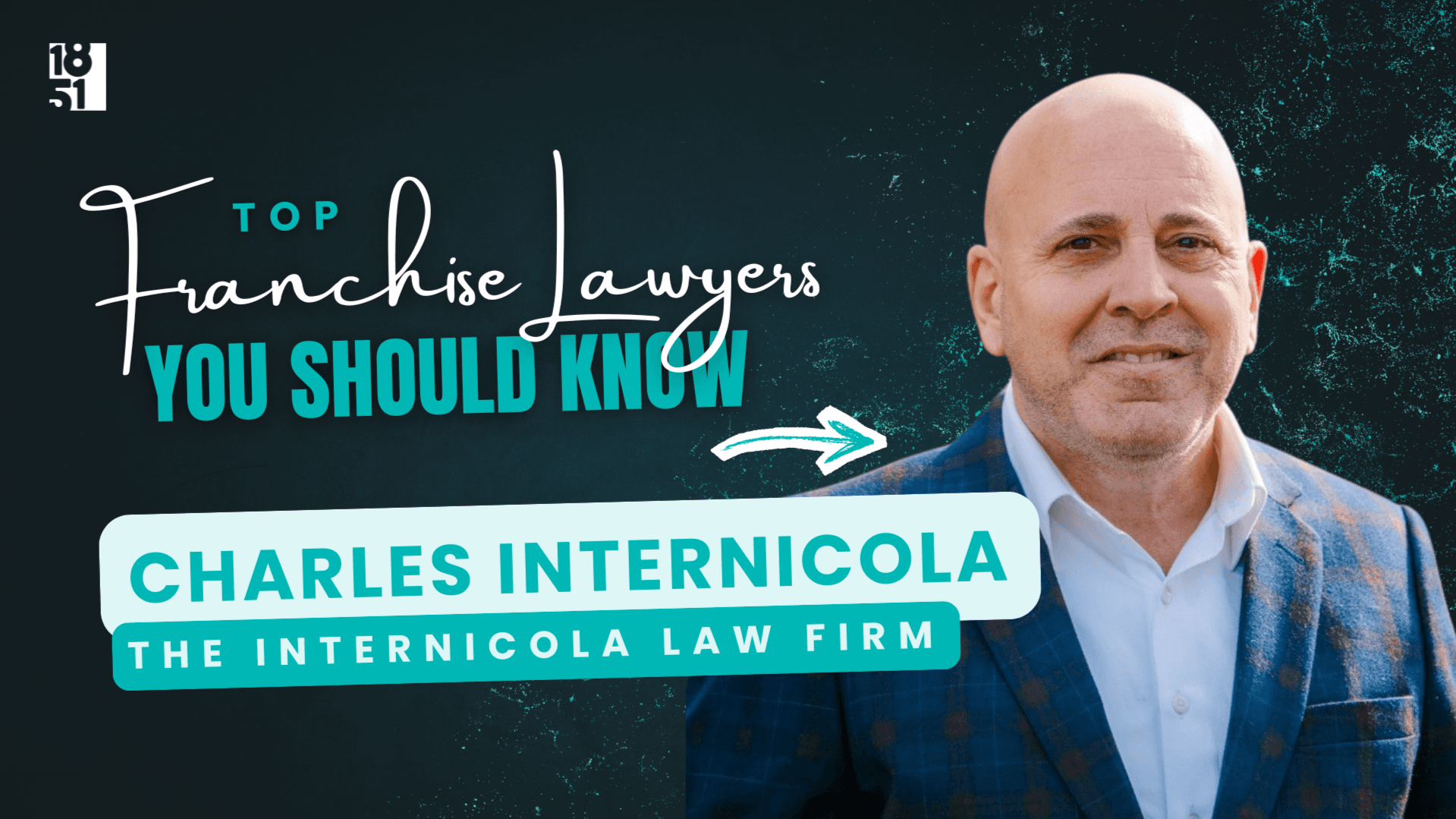
Franchise Legal Player: Charles Internicola
Firm: The Internicola Law Firm
Charles Internicola has built a reputation as a trusted advisor to franchise brands navigating growth, compliance and long-term risk. With experience advising emerging franchisors across multiple industries, including home services, hospitality, education and wellness, Internicola brings a practical, business-minded approach to franchise law. His work focuses on helping brands scale responsibly while protecting both the franchisor and franchisee experience.
1851 Franchise connected with Internicola to discuss what franchisors often overlook, where legal risk hides during expansion, and the lessons that continue to shape his advisory philosophy.
1851 Franchise: What originally drew you to franchise law, and what has kept you engaged in the space over time?
Charles Internicola: I’ve always been focused on business growth and founder-led expansion. Franchising stood out early as one of the most powerful ways to scale — if it’s structured the right way. What keeps me engaged is that franchise law isn’t just legal work — it’s growth architecture. Done right, you’re helping founders turn a good business into a scalable system and a long-term asset.
1851: As franchising continues to evolve, what legal issue do you see brands most often underestimating today?
Internicola: Most brands still underestimate how much legal structure affects growth outcomes. Your FDD, agreements, territory model and Item 19 shape franchisee behavior, deal quality and system performance. Legal isn’t a formality — it’s part of your growth strategy. When the structure is off, growth gets noisy and expensive.
1851: In your experience, where do emerging franchisors tend to get tripped up from a compliance or documentation standpoint?
Internicola: They copy instead of design. Too many emerging franchisors use template documents that don’t match their model. That leads to territory problems, unclear obligations, weak performance disclosures and messy sales compliance. Documentation should be built around how the brand actually plans to grow — not borrowed from someone else’s system.
1851: How should franchisors be thinking about risk management as they scale into new markets or add new unit growth strategies?
Internicola: Risk management should move in step with growth. New markets, broker channels and multi-unit deals all raise the stakes. That means tighter sales compliance, cleaner documentation and clearer disclosures. The best growth brands treat compliance as infrastructure — not friction.
1851: What distinguishes your approach or philosophy when working with franchise clients?
Internicola: We practice franchise law with a growth lens. Legal structure should support expansion, not slow it down. We align FDD design, agreements and compliance systems with how the client actually plans to scale. The goal isn’t just protection — it’s building a franchise platform that performs.
1851: Looking back, what lesson from your legal career has had the greatest impact on how you advise clients today?
Internicola: Structure beats speed. Shortcuts in franchise legal and compliance work almost always show up later as stalled growth or disputes. When the foundation is built right, everything works better — franchise sales, franchisee performance and brand value. Growth moves faster when the structure is solid.
Every great franchisee had help buying a franchise. Want to learn more about how 1851 helps franchisees find the right franchise opportunity? Visit www.1851growthclub.com and start your journey.