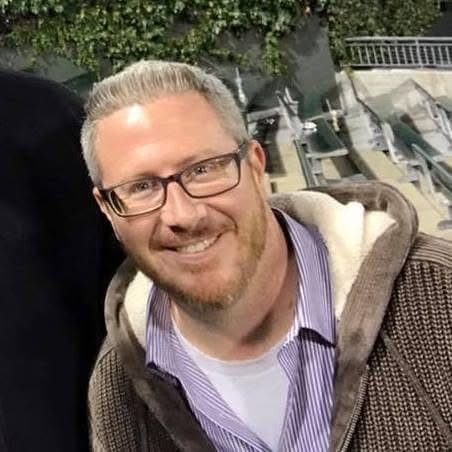
Brandon and Chantel Gawthorp didn’t set out to become franchisors. Long before Urban Bird Hot Chicken even existed, they were actually franchisees themselves. Building a multi-unit Wingstop franchise one location at a time, the couple quickly learned the realities of operations, capital constraints and growing the hard way. From rapid expansion, financial risk and, at one point, a failed restaurant concept that left them paying rent on a closed location for more than a year, the Gawthorps’ franchising experience runs the gamut. But that setback didn’t end their story. It reshaped it. 

Urban Bird Hot Chicken was born out of that moment (initially as a practical solution to a bad lease and later as a concept that proved more than capable of standing on its own). Launched in 2020 amid economic uncertainty and general disruption, the Urban Bird brand was built deliberately. Tested across dozens of corporate locations and refined by two operators with firsthand franchisee experience, the brand proved uniquely scalable. 

Today, as Urban Bird approaches nearly 30 locations in just five years, Brandon and Chantel are stepping into the franchisor role with a rare foundation: deep operational experience, data across multiple markets and a clear point of view shaped by both success and failure.

Brandon and Chantel Gawthorp joined 1851 Franchise Publisher Nick Powills on the “Meet the Franchise” podcast to discuss applying their franchising background to a franchisor pivot as they continue to grow the Urban Bird Hot Chicken brand. A transcript of the interview, edited for length and clarity, has been provided below.

Nick Powills: Chantel and Brandon, thanks for joining me. Looking forward to our conversation. Question one is really the only scripted one. I’ll let both of you take a swing at it. How did you fall into franchising? What’s your franchise backstory?

Brandon Gawthorp: Back when we first met, I had just gotten out of the military. We started waiting tables and going to school. About a year into community college together, I started thinking I really wanted to do a franchise. Instead of going to school, I just wanted to have my own business.

At the time, it was Quiznos, Smoothie King. Those were kind of the big things. Papa John’s was just getting started. I started contacting them. But I was young. I think I was 25. It was always the same questions: “Do you have management experience? What kind of experience do you have?” I didn’t have any management experience other than the military. So, it was always rejection letters.

Chantel said, “Well, my uncle started this thing called Wingstop...” I was like, “What is Wingstop?” I had never even eaten a chicken wing. This was around 2001. She said, “It’s just wings.” I asked if it was a sports bar – burgers, pizza, wings – and she said no. Just wings. I told her that sounded stupid and that it would never work!

She said her uncle was flying in his helicopter to look at a store under construction in Oklahoma and that I could go with him and ask questions. I said, “Flying in a helicopter? I’m in.”

I met him, flew in the helicopter and started hearing about Wingstop. I went and saw the first store. Back then, it was a 1,200-square-foot space that didn’t open until 4 p.m. Well, when I walked in at 4:10, there was already a line out the door and the phone was ringing off the hook. I said, “OK. How do I sign up for this?”

We got signed up and worked with a loan broker. We didn’t even have credit. Everything we bought was with cash. We had to go to the mall and sign up for clothing store credit cards just to show we had credit. Back then, loans were easier to get. But it took about 10 months to open our first location.

We got a second location within about a year because someone wanted out. Sales were low. And we were working every hour of the day. We got to four locations by about 2014. From there, things really took off. We went from four locations to 32 by 2023.

But in 2020, we started Urban Bird. Then we sold the Wingstop franchises in December 2023 so we could focus on Urban Bird.

Nick: Love it. Chantel, what’s your version of falling into franchising?

Chantel Gawthorp: Very similar. As he said, my uncle had Wingstop. And my family had been in the restaurant business since I was a kid. My uncle and aunt had Pizza Patrón. When I was maybe 12, I started working there. I helped my aunt in the kitchen. I worked every summer and I remember when they started franchising Pizza Patrón. I loved the restaurant business and working with people. Years later, they started working on Wingstop. I remember them testing recipes in their backyard. I didn’t understand the full scope at the time.

So, they opened their first Wingstop when I was about 18. I knew the franchisee they sold the first location to in Houston and went to the grand opening. Years later, Brandon and I met. I worked at a car dealership as a customer service manager. He was in the military.

Later, we waited tables and I fell even more in love with the restaurant industry. At the time, we were in community college. He was going to be a plastic surgeon and I was going to be a veterinarian. That changed when he said he wanted to own a business.

He saw long lines at a coffee place and thought about Starbucks – but then realized you couldn’t franchise it. So, I told him about my uncle. He went on that helicopter ride, came back and said, “We should do this.” So we both dropped out of school and focused on the Wingstop.

It took a year to find the location. And we fell in love from there.

Nick: You were both very humble in that. But becoming a 30-plus-unit franchisee takes grit and hustle (and maybe a little bit of crazy). Brandon, you mentioned barely being able to get credit cards at the mall. When you look back does it feel like it went fast?

Brandon: Looking back, it feels like a whole different lifetime. When we opened our first Wingstop, people faxed in orders. We had roll-up fax paper and cash registers with buttons. We handwrote tickets before real POS systems.

It feels like a lifetime ago – but it also went really fast.

Nick: At what point, if ever, did you feel like you’d made it?

Brandon: I never really feel like I’ve made it. When I hit one goal, I’m already on the next. I need purpose and drive. I love building things and that dopamine hit of accomplishment (even though it doesn’t last long). It’s almost like an addiction. For me, it’s building businesses.

Nick: Chantel, do you feel the same?

Chantel: Brandon and I are very similar. We’re not motivated by money. We’re motivated by purpose and work. We’re workaholics. Working makes us happy.

We grew up poor. I saw my aunt hustle. That stuck with me. I wasn’t motivated by money. I was motivated by wanting stability and to take care of my family. I knew I loved working with people and that anything I wanted I’d have to work hard for. That’s what drives me.

Nick: Brandon, how did Urban Bird get started?

Brandon: By trying to fix a bad situation. We opened a pizza concept in 2017 that failed and closed in 2018. The rent was $15,000 a month. And we paid that for over a year while the space sat empty.

I loved chicken and waffles and had tasted hot chicken in Las Vegas. When I got back to Houston, I couldn’t find good hot chicken. Then I saw a space open in the same shopping center and realized it could get us out of the lease.

I pitched the landlord on opening a hot chicken restaurant. He asked for a presentation. I put together a PowerPoint and showed how hot chicken was taking off in places like California. They agreed. That was January 2020. We bought the equipment for $9,000 and started testing recipes. COVID hit, which slowed things down, but we opened in September 2020.

It worked. Each week got better. We realized we had something and started opening more locations.

Nick: What’s the footprint now?

Brandon: By May, we should have 28 open.

Nick: Chantel, what makes you proud of Urban Bird today?

Chantel: The culture. The people. It took grit, pain, tears and resilience to get here. We opened Urban Bird to get out of a lease. We never planned to be franchisors.

COVID created opportunity and we took it. I’m proud of our story and our team. We wouldn’t be here without them.

Nick: Brandon, does your franchisee background shape Urban Bird?

Brandon: Absolutely. Having been a franchisee lets you see things from both sides. We opened a lot of locations before franchising so we could understand what works, what doesn’t and where. That data is important so franchisees don’t have to figure it out themselves.

Nick: Chantel, if someone is watching this and considering Urban Bird, what do you want them to know?

Chantel: We lead with our heart. We care about people (the guests and the team). Quality matters. Everything is fresh and made to order.

I don’t like selling. I want people who are passionate about the restaurant business and culture. Every detail matters to us. I want people to buy because they believe in it and want to own an Urban Bird.

Nick: Brandon?

Brandon: We’ve nailed the business model. We have a proven system, deep experience and a lot of room to grow. In five years, it’s shown tremendous potential. We’re excited about where it’s going.

Nick: I’ll close by saying this: franchisee to franchisor, failure to success, 20-plus units before franchising … I’ve never seen a base like this. I’m grateful you shared your story, and I look forward to seeing where it goes.

Brandon: We’re looking for real operating partners. We’re debt-free, not desperate. And we’re focused on the right relationships.

Chantel: We’re passionate about what we do and want partners who value our culture.

Nick: That’s how you build a spectacular club. Thanks to both of you. For Brandon and Chantel, I'm Nick. This has been another episode of Meet the Franchise.

Watch the complete interview above or on YouTube.

Growing and selling franchises is difficult. Want to learn more about how 1851 helps franchisors grow their franchises with confidence? Visit www.1851growthclub.com and see what we can do for you.

Brandon and Chantel Gawthorp didn’t set out to become franchisors. Long before Urban Bird Hot Chicken even existed, they were actually franchisees themselves. Building a multi-unit Wingstop franchise one location at a time, the couple quickly learned the realities of operations, capital constraints and growing the hard way. From rapid expansion, financial risk and, at one point, a failed restaurant concept that left them paying rent on a closed location for more than a year, the Gawthorps’ franchising experience runs the gamut. But that setback didn’t end their story. It reshaped it. 

Urban Bird Hot Chicken was born out of that moment (initially as a practical solution to a bad lease and later as a concept that proved more than capable of standing on its own). Launched in 2020 amid economic uncertainty and general disruption, the Urban Bird brand was built deliberately. Tested across dozens of corporate locations and refined by two operators with firsthand franchisee experience, the brand proved uniquely scalable. 

Today, as Urban Bird approaches nearly 30 locations in just five years, Brandon and Chantel are stepping into the franchisor role with a rare foundation: deep operational experience, data across multiple markets and a clear point of view shaped by both success and failure.

Brandon and Chantel Gawthorp joined 1851 Franchise Publisher Nick Powills on the “Meet the Franchise” podcast to discuss applying their franchising background to a franchisor pivot as they continue to grow the Urban Bird Hot Chicken brand. A transcript of the interview, edited for length and clarity, has been provided below.

Nick Powills: Chantel and Brandon, thanks for joining me. Looking forward to our conversation. Question one is really the only scripted one. I’ll let both of you take a swing at it. How did you fall into franchising? What’s your franchise backstory?

Brandon Gawthorp: Back when we first met, I had just gotten out of the military. We started waiting tables and going to school. About a year into community college together, I started thinking I really wanted to do a franchise. Instead of going to school, I just wanted to have my own business.

At the time, it was Quiznos, Smoothie King. Those were kind of the big things. Papa John’s was just getting started. I started contacting them. But I was young. I think I was 25. It was always the same questions: “Do you have management experience? What kind of experience do you have?” I didn’t have any management experience other than the military. So, it was always rejection letters.

Chantel said, “Well, my uncle started this thing called Wingstop...” I was like, “What is Wingstop?” I had never even eaten a chicken wing. This was around 2001. She said, “It’s just wings.” I asked if it was a sports bar – burgers, pizza, wings – and she said no. Just wings. I told her that sounded stupid and that it would never work!

She said her uncle was flying in his helicopter to look at a store under construction in Oklahoma and that I could go with him and ask questions. I said, “Flying in a helicopter? I’m in.”

I met him, flew in the helicopter and started hearing about Wingstop. I went and saw the first store. Back then, it was a 1,200-square-foot space that didn’t open until 4 p.m. Well, when I walked in at 4:10, there was already a line out the door and the phone was ringing off the hook. I said, “OK. How do I sign up for this?”

We got signed up and worked with a loan broker. We didn’t even have credit. Everything we bought was with cash. We had to go to the mall and sign up for clothing store credit cards just to show we had credit. Back then, loans were easier to get. But it took about 10 months to open our first location.

We got a second location within about a year because someone wanted out. Sales were low. And we were working every hour of the day. We got to four locations by about 2014. From there, things really took off. We went from four locations to 32 by 2023.

But in 2020, we started Urban Bird. Then we sold the Wingstop franchises in December 2023 so we could focus on Urban Bird.

Nick: Love it. Chantel, what’s your version of falling into franchising?

Chantel Gawthorp: Very similar. As he said, my uncle had Wingstop. And my family had been in the restaurant business since I was a kid. My uncle and aunt had Pizza Patrón. When I was maybe 12, I started working there. I helped my aunt in the kitchen. I worked every summer and I remember when they started franchising Pizza Patrón. I loved the restaurant business and working with people. Years later, they started working on Wingstop. I remember them testing recipes in their backyard. I didn’t understand the full scope at the time.

So, they opened their first Wingstop when I was about 18. I knew the franchisee they sold the first location to in Houston and went to the grand opening. Years later, Brandon and I met. I worked at a car dealership as a customer service manager. He was in the military.

Later, we waited tables and I fell even more in love with the restaurant industry. At the time, we were in community college. He was going to be a plastic surgeon and I was going to be a veterinarian. That changed when he said he wanted to own a business.

He saw long lines at a coffee place and thought about Starbucks – but then realized you couldn’t franchise it. So, I told him about my uncle. He went on that helicopter ride, came back and said, “We should do this.” So we both dropped out of school and focused on the Wingstop.

It took a year to find the location. And we fell in love from there.

Nick: You were both very humble in that. But becoming a 30-plus-unit franchisee takes grit and hustle (and maybe a little bit of crazy). Brandon, you mentioned barely being able to get credit cards at the mall. When you look back does it feel like it went fast?

Brandon: Looking back, it feels like a whole different lifetime. When we opened our first Wingstop, people faxed in orders. We had roll-up fax paper and cash registers with buttons. We handwrote tickets before real POS systems.

It feels like a lifetime ago – but it also went really fast.

Nick: At what point, if ever, did you feel like you’d made it?

Brandon: I never really feel like I’ve made it. When I hit one goal, I’m already on the next. I need purpose and drive. I love building things and that dopamine hit of accomplishment (even though it doesn’t last long). It’s almost like an addiction. For me, it’s building businesses.

Nick: Chantel, do you feel the same?

Chantel: Brandon and I are very similar. We’re not motivated by money. We’re motivated by purpose and work. We’re workaholics. Working makes us happy.

We grew up poor. I saw my aunt hustle. That stuck with me. I wasn’t motivated by money. I was motivated by wanting stability and to take care of my family. I knew I loved working with people and that anything I wanted I’d have to work hard for. That’s what drives me.

Nick: Brandon, how did Urban Bird get started?

Brandon: By trying to fix a bad situation. We opened a pizza concept in 2017 that failed and closed in 2018. The rent was $15,000 a month. And we paid that for over a year while the space sat empty.

I loved chicken and waffles and had tasted hot chicken in Las Vegas. When I got back to Houston, I couldn’t find good hot chicken. Then I saw a space open in the same shopping center and realized it could get us out of the lease.

I pitched the landlord on opening a hot chicken restaurant. He asked for a presentation. I put together a PowerPoint and showed how hot chicken was taking off in places like California. They agreed. That was January 2020. We bought the equipment for $9,000 and started testing recipes. COVID hit, which slowed things down, but we opened in September 2020.

It worked. Each week got better. We realized we had something and started opening more locations.

Nick: What’s the footprint now?

Brandon: By May, we should have 28 open.

Nick: Chantel, what makes you proud of Urban Bird today?

Chantel: The culture. The people. It took grit, pain, tears and resilience to get here. We opened Urban Bird to get out of a lease. We never planned to be franchisors.

COVID created opportunity and we took it. I’m proud of our story and our team. We wouldn’t be here without them.

Nick: Brandon, does your franchisee background shape Urban Bird?

Brandon: Absolutely. Having been a franchisee lets you see things from both sides. We opened a lot of locations before franchising so we could understand what works, what doesn’t and where. That data is important so franchisees don’t have to figure it out themselves.

Nick: Chantel, if someone is watching this and considering Urban Bird, what do you want them to know?

Chantel: We lead with our heart. We care about people (the guests and the team). Quality matters. Everything is fresh and made to order.

I don’t like selling. I want people who are passionate about the restaurant business and culture. Every detail matters to us. I want people to buy because they believe in it and want to own an Urban Bird.

Nick: Brandon?

Brandon: We’ve nailed the business model. We have a proven system, deep experience and a lot of room to grow. In five years, it’s shown tremendous potential. We’re excited about where it’s going.

Nick: I’ll close by saying this: franchisee to franchisor, failure to success, 20-plus units before franchising … I’ve never seen a base like this. I’m grateful you shared your story, and I look forward to seeing where it goes.

Brandon: We’re looking for real operating partners. We’re debt-free, not desperate. And we’re focused on the right relationships.

Chantel: We’re passionate about what we do and want partners who value our culture.

Nick: That’s how you build a spectacular club. Thanks to both of you. For Brandon and Chantel, I'm Nick. This has been another episode of Meet the Franchise.

Watch the complete interview above or on YouTube.

Growing and selling franchises is difficult. Want to learn more about how 1851 helps franchisors grow their franchises with confidence? Visit www.1851growthclub.com and see what we can do for you.

Don’t Miss the Next Big Franchise Story

Sign up for the 1851 Franchise newsletter to get our biggest stories before everyone else

By signing up, you agree to our user agreement (including class action waiver and arbitration provisions), and acknowledge our privacy policy.

Jim Ryan

About the Author

Jim Ryan

Follow

All Articles

No related articles found