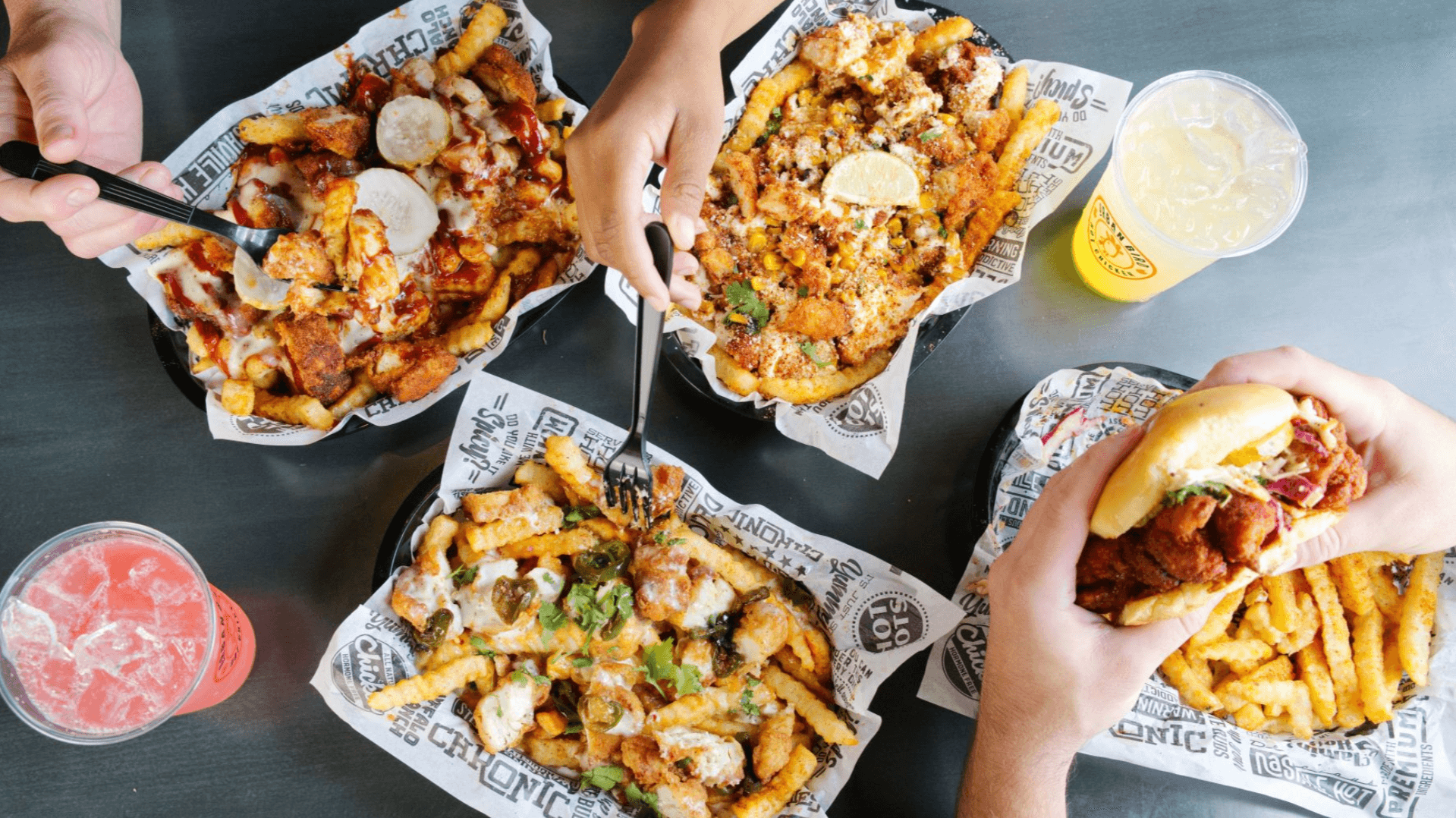
As it has grown, Urban Bird Hot Chicken has held onto many of the same preparation standards that helped build its following in the first place. Fresh, never-frozen chicken remains at the center. Sauces are made in-house, chicken is brined and breaded through a detailed process, and even ingredients such as the kale slaw are prepared with specific timing in mind. For co-founders Brandon Gawthorp and Chantel Fiaschetti, those decisions come down to protecting the food as the company grows.
“Fresh is always going to taste the best,” Gawthorp said. “It travels the best during delivery, too. Food deteriorates every minute it sits under a heat lamp, so we’ve stayed focused on making it fresh.”
The brand has been presented with opportunities to simplify its recipes over the years, including using powdered eggs or bottling ingredients that are currently made in-house. Those options have not made sense when they require Urban Bird to change what goes into its food.
“We want real food,” Fiaschetti said. “It’s important to protect the integrity of the food because that protects the integrity of Urban Bird.”
The Details Behind the Food
Urban Bird's approach goes well beyond using fresh chicken. The menu includes details that may add cost or complexity but ultimately affect what customers receive. The brand works with a bakery for its buns rather than relying on a standard national product. Its kale slaw includes kale, carrots, purple cabbage, green cabbage and real maple. Urban Bird also uses fries designed to remain crispy during delivery and a light chicken breading intended to hold up better after leaving the restaurant.
“We still make all our sauces because we want to keep them fresh,” Gawthorp said. “It would be easier to have a commissary make them, but then you start adding preservatives. Our ranch and our Bird Sauce are made fresh every day, and that makes a difference.”
Consistency also depends on following each recipe closely. Urban Bird's chicken sits in brine for 24 hours before being drained and moved into an egg wash. The brand controls how long the chicken remains at each stage, how many pieces go through its breading equipment and how the finished tenders are placed before cooking.
“Every detail has to be precise to protect the food quality,” Fiaschetti said. “That goes from the way we bread the chicken to the way we make the kale slaw. When you have detailed recipes, you have to be just as detailed with the training.”
Urban Bird has also invested in equipment to remove some of the variation that can come with hand breading. Each location uses a drum roller system that Gawthorp said costs about $15,000. The machine helps apply the light coating the brand wants without employees adding too much breading.
“I noticed it was hard to be consistent with a light breading when you're hand breading because it's very easy to overbread,” Gawthorp said. “The drum roller gets it where we want it, consistent and light. Every one of our locations has one now because it makes a huge difference.”
Fresh Food Comes With an Operational Challenge
Cooking food to order creates a tradeoff that Urban Bird's leadership does not ignore. Customers receive food prepared specifically for them, but the kitchen has less room to rely on food made ahead of time when orders begin stacking up. The brand aims to get orders out in eight to 10 minutes. Busy periods can stretch those times, making speed one of the operational areas Urban Bird continues to work on as it expands. However, that challenge has not convinced the company to change its approach.
“I was doing a store inspection recently, and there were a couple of kids eating who asked who I was,” Fiaschetti said. “They told me, ‘I love this place. I come here every single day.’ They had been coming every day for months. I think the quality and the taste show in the food, even if people don't know everything we're doing behind the scenes.”
Customer reaction is also showing up in franchise development conversations. The founders say that some prospective franchisees have visited several hot chicken concepts while researching the category, giving them a chance to compare the products themselves.
“We don't spend a lot of time looking at the competition and worrying about what they do,” Gawthorp said. “We focus on how we can be better. We hear from prospective franchisees who have tried six or seven other hot chicken concepts, and they come back and tell us Urban Bird is the best. That's why they want to be part of it.”
Protecting Quality as Urban Bird Grows
Expansion makes consistency more difficult. A recipe that works in one restaurant needs to taste the same across a larger system, including franchise locations operated by different teams. Urban Bird is building more structure around that process. The company uses secret shoppers and has added food safety and cleanliness inspections, while brand inspections are being developed to provide another check on restaurant standards. Training remains the main tool for keeping the food consistent from location to location.
Fiaschetti said she recognized the need for a stronger system when she began noticing differences in chicken from one Urban Bird restaurant to another. The company responded by documenting small details through training videos, signage and recipe instructions covering everything from brining chicken to cutting kale and preparing jalapeños.
Urban Bird has since created Urban Bird University, bringing together general managers and members of the training team for more formal instruction. The company has also identified top employees at its restaurants who can assist with new openings and franchise training. Ongoing tune-ups and certifications are intended to keep those standards in place after opening.
“We have the playbook and the recipe card. Nobody has to reinvent anything,” Fiaschetti said. “The key is giving our teams the tools, the training and the right people so they understand why protecting the integrity of the food matters.”
That system becomes increasingly important as Urban Bird adds franchisees. Fresh preparation asks more of restaurant teams than opening a package or reheating a product, but leadership sees that work as part of what separates the concept.
Urban Bird has kept those steps in place as it has grown. The brand still makes its sauces in-house, brines its chicken and prepares ingredients fresh while using specific equipment and training to keep the food consistent across locations. That gives franchisees a system built around the same recipes and preparation methods that have shaped Urban Bird from the start.
To find out more information on costs to buy this franchise, please visit https://1851franchise.com/urban-bird-hot-chicken.