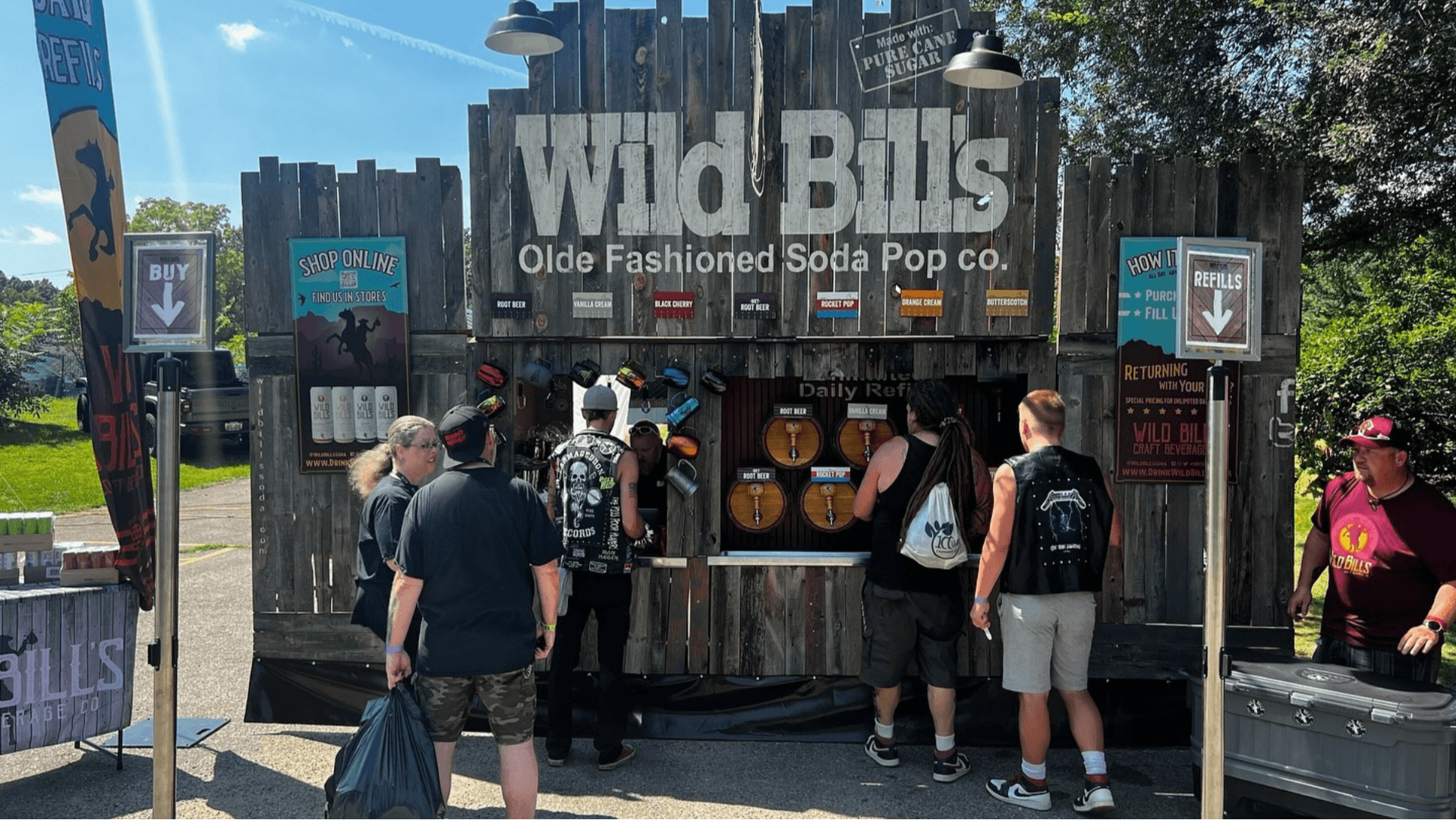
For many food and beverage franchises, fairs, festivals, conventions, and sporting events compete for consumers' time and discretionary spending. For Wild Bill's, those events are the marketplace. 

The brand was built around mobility and event-based selling long before pop-up retail and experiential marketing became common industry buzzwords. Rather than investing heavily in storefront real estate and relying on customers to come to them, franchisees take the business directly to high-traffic events where people are already gathering, spending money and looking for entertainment.

That difference changes how franchisees grow. Rather than depending on more storefronts, Wild Bill’s operators can build revenue by booking more events, entering new venues or adding setups when weekends are especially busy.

Spring Creates the Momentum for the Entire Year

The calendar starts coming together in winter, then picks up once spring events return. For many franchisees, that early activity sets the tone for the year.

“Spring is when our event season really kicks off,” said Michael Russo, chief growth officer of Wild Bill’s. “In many of our seasonal markets, April marks the beginning of the busy event season as outdoor festivals and fairs return. April through October remains the core of the business nationwide, but we've also built a strong lineup of indoor conventions, expos, and sporting events that keep many of our operators active throughout the winter months”.

That momentum builds quickly once outdoor events return in force. Anime conventions, food festivals, equestrian events, county fairs, air shows, and tattoo conventions all become part of the operating calendar. Across the system, that can mean events like Anime Expo in Los Angeles, Picklesburgh in Pittsburgh, the Kentucky Three-Day Event in Lexington, the Middlesex County Fair in New Jersey, the Spirit of St. Louis Air Show and the Villain Arts Tattoo Convention in Chicago. Franchisees often spend consecutive weekends on the road, moving from one event to another as attendance levels increase heading into summer.

The repeat nature of many events helps franchisees build consistency over time. Returning to the same festivals year after year strengthens relationships with organizers and creates a loyal customer base. 

“One of the things we love about this business is seeing customers come back year after year,” Russo said. “At the Oyster Bay Festival on Long Island, I met a customer who was still using the mug she bought in 2007. She told me she'd been attending the festival since she was seven years old and still brings that same mug nearly two decades later.” 

That type of long-term visibility is difficult for many traditional operators to replicate. At events, Wild Bill’s is not simply competing for a single transaction. The brand becomes part of the experience people associate with attending the fair, festival or convention itself.

Built Around Consumer Traffic

The model's mobility changes how franchisees think about customer acquisition and operating costs. Because revenue is tied to the event calendar, operators can keep more of their expenses aligned with weekends, when the stand is actually in use.

“There is lower permanent overhead,” Russo said. “Traditional operators usually have year-round utilities, property maintenance and all of that. We’re a temporary setup. Labor is usually part-time, event-based and seasonal in some cases.”

That flexibility allows franchisees to focus resources on revenue-generating weekends rather than on fixed operating expenses. It also creates opportunities to pursue a wider variety of events throughout the year.

Beyond fairs and festivals, franchisees are also booked for corporate and special events, providing a fun and unique beverage experience. Because many of these bookings take place during the week, they help fill the calendar between traditional weekend events while expanding the brand's reach throughout the year. 

“We've also been booking a growing number of corporate and private events, including employee appreciation days, customer appreciation events, business grand openings, and promotional events for local businesses,“ Russo said.

Whether it's 100,000-plus attendees at a major comic convention, thousands of families at a regional festival, or athletes and parents at a weekend volleyball tournament, franchisees are operating in environments where customer traffic is already built in. That gives franchisees a different starting point than a storefront waiting for traffic to come in.

“You’re at these events, and it’s a buying environment,” Russo said. “It’s like the Disneyland effect or a vacation mindset. People are there to be entertained and spend money. You’re at an event where the crowd has the intent to purchase.”

Scaling Through Events Instead of Storefronts

That range can be useful for new owners. A franchisee can start with a manageable event calendar, learn the rhythm of the business and decide how much more they want to take on from there.

“We have event operators who have one wagon, do 20 or 30 events a year and treat it as a lifestyle business or side hustle,” Russo said. “Then we have more serious operators who turn it into a business, do three or four events a weekend and have multiple stands. You really scale the business by doing more events.”

Franchisees can grow at their own pace, too. Rather than taking on another storefront right away, operators can add more events, test new areas and build a bigger calendar over time.

The company supports that process heavily through operational training and event-booking guidance. Franchisees receive equipment training, live-event preparation and support identifying worthwhile opportunities in their local markets.

“We’ve been doing events for 24 years, longer than we’ve been franchising,” Russo said. “We like to think we know what a good and bad event is, so we help franchisees evaluate and book events.”

New franchisees also receive hands-on operational support before launching into the field.

“We bring most of our new franchisees to our warehouse in Allentown, Pennsylvania,” Russo said. “They stay there for two or three days and learn all the equipment. We run a mock event and break something on purpose, so they have to fix it.”

Timing Matters for Franchisees Entering the System

Because event applications are often submitted months in advance, timing can play a major role in how quickly a new franchisee gains traction.

Operators entering the system ahead of spring have a greater opportunity to build a full event calendar before the busiest season begins. That early momentum can help franchisees maximize exposure, bookings and repeat business during their first full year.

“Because many event applications are submitted months in advance, timing matters,” Russo said. “Franchisees who join the system in the winter have the best opportunity to build out a full event calendar before the busy season begins. Ideally, we'd like operators up and running by January so they can take advantage of spring booking opportunities and maximize their first full year in the business.”

For Wild Bill’s franchisees, event season is not simply a temporary spike in activity. It is the engine that drives customer acquisition, visibility and long-term growth. As spring crowds begin returning to festivals and venues nationwide, franchisees are positioning themselves where demand already exists and building businesses designed to move with it.

To find out more information on costs to buy this franchise, please visit https://1851franchise.com/wild-bills.

For many food and beverage franchises, fairs, festivals, conventions, and sporting events compete for consumers' time and discretionary spending. For Wild Bill's, those events are the marketplace. 

The brand was built around mobility and event-based selling long before pop-up retail and experiential marketing became common industry buzzwords. Rather than investing heavily in storefront real estate and relying on customers to come to them, franchisees take the business directly to high-traffic events where people are already gathering, spending money and looking for entertainment.

That difference changes how franchisees grow. Rather than depending on more storefronts, Wild Bill’s operators can build revenue by booking more events, entering new venues or adding setups when weekends are especially busy.

Spring Creates the Momentum for the Entire Year

The calendar starts coming together in winter, then picks up once spring events return. For many franchisees, that early activity sets the tone for the year.

“Spring is when our event season really kicks off,” said Michael Russo, chief growth officer of Wild Bill’s. “In many of our seasonal markets, April marks the beginning of the busy event season as outdoor festivals and fairs return. April through October remains the core of the business nationwide, but we've also built a strong lineup of indoor conventions, expos, and sporting events that keep many of our operators active throughout the winter months”.

That momentum builds quickly once outdoor events return in force. Anime conventions, food festivals, equestrian events, county fairs, air shows, and tattoo conventions all become part of the operating calendar. Across the system, that can mean events like Anime Expo in Los Angeles, Picklesburgh in Pittsburgh, the Kentucky Three-Day Event in Lexington, the Middlesex County Fair in New Jersey, the Spirit of St. Louis Air Show and the Villain Arts Tattoo Convention in Chicago. Franchisees often spend consecutive weekends on the road, moving from one event to another as attendance levels increase heading into summer.

The repeat nature of many events helps franchisees build consistency over time. Returning to the same festivals year after year strengthens relationships with organizers and creates a loyal customer base. 

“One of the things we love about this business is seeing customers come back year after year,” Russo said. “At the Oyster Bay Festival on Long Island, I met a customer who was still using the mug she bought in 2007. She told me she'd been attending the festival since she was seven years old and still brings that same mug nearly two decades later.” 

That type of long-term visibility is difficult for many traditional operators to replicate. At events, Wild Bill’s is not simply competing for a single transaction. The brand becomes part of the experience people associate with attending the fair, festival or convention itself.

Built Around Consumer Traffic

The model's mobility changes how franchisees think about customer acquisition and operating costs. Because revenue is tied to the event calendar, operators can keep more of their expenses aligned with weekends, when the stand is actually in use.

“There is lower permanent overhead,” Russo said. “Traditional operators usually have year-round utilities, property maintenance and all of that. We’re a temporary setup. Labor is usually part-time, event-based and seasonal in some cases.”

That flexibility allows franchisees to focus resources on revenue-generating weekends rather than on fixed operating expenses. It also creates opportunities to pursue a wider variety of events throughout the year.

Beyond fairs and festivals, franchisees are also booked for corporate and special events, providing a fun and unique beverage experience. Because many of these bookings take place during the week, they help fill the calendar between traditional weekend events while expanding the brand's reach throughout the year. 

“We've also been booking a growing number of corporate and private events, including employee appreciation days, customer appreciation events, business grand openings, and promotional events for local businesses,“ Russo said.

Whether it's 100,000-plus attendees at a major comic convention, thousands of families at a regional festival, or athletes and parents at a weekend volleyball tournament, franchisees are operating in environments where customer traffic is already built in. That gives franchisees a different starting point than a storefront waiting for traffic to come in.

“You’re at these events, and it’s a buying environment,” Russo said. “It’s like the Disneyland effect or a vacation mindset. People are there to be entertained and spend money. You’re at an event where the crowd has the intent to purchase.”

Scaling Through Events Instead of Storefronts

That range can be useful for new owners. A franchisee can start with a manageable event calendar, learn the rhythm of the business and decide how much more they want to take on from there.

“We have event operators who have one wagon, do 20 or 30 events a year and treat it as a lifestyle business or side hustle,” Russo said. “Then we have more serious operators who turn it into a business, do three or four events a weekend and have multiple stands. You really scale the business by doing more events.”

Franchisees can grow at their own pace, too. Rather than taking on another storefront right away, operators can add more events, test new areas and build a bigger calendar over time.

The company supports that process heavily through operational training and event-booking guidance. Franchisees receive equipment training, live-event preparation and support identifying worthwhile opportunities in their local markets.

“We’ve been doing events for 24 years, longer than we’ve been franchising,” Russo said. “We like to think we know what a good and bad event is, so we help franchisees evaluate and book events.”

New franchisees also receive hands-on operational support before launching into the field.

“We bring most of our new franchisees to our warehouse in Allentown, Pennsylvania,” Russo said. “They stay there for two or three days and learn all the equipment. We run a mock event and break something on purpose, so they have to fix it.”

Timing Matters for Franchisees Entering the System

Because event applications are often submitted months in advance, timing can play a major role in how quickly a new franchisee gains traction.

Operators entering the system ahead of spring have a greater opportunity to build a full event calendar before the busiest season begins. That early momentum can help franchisees maximize exposure, bookings and repeat business during their first full year.

“Because many event applications are submitted months in advance, timing matters,” Russo said. “Franchisees who join the system in the winter have the best opportunity to build out a full event calendar before the busy season begins. Ideally, we'd like operators up and running by January so they can take advantage of spring booking opportunities and maximize their first full year in the business.”

For Wild Bill’s franchisees, event season is not simply a temporary spike in activity. It is the engine that drives customer acquisition, visibility and long-term growth. As spring crowds begin returning to festivals and venues nationwide, franchisees are positioning themselves where demand already exists and building businesses designed to move with it.

To find out more information on costs to buy this franchise, please visit https://1851franchise.com/wild-bills.
Don’t Miss the Next Big Franchise Story

Sign up for the 1851 Franchise newsletter to get our biggest stories before everyone else

By signing up, you agree to our user agreement (including class action waiver and arbitration provisions), and acknowledge our privacy policy.

Chris Irby

About the Author

Chris Irby

Follow

All Articles

No related articles found