Growing a Franchise
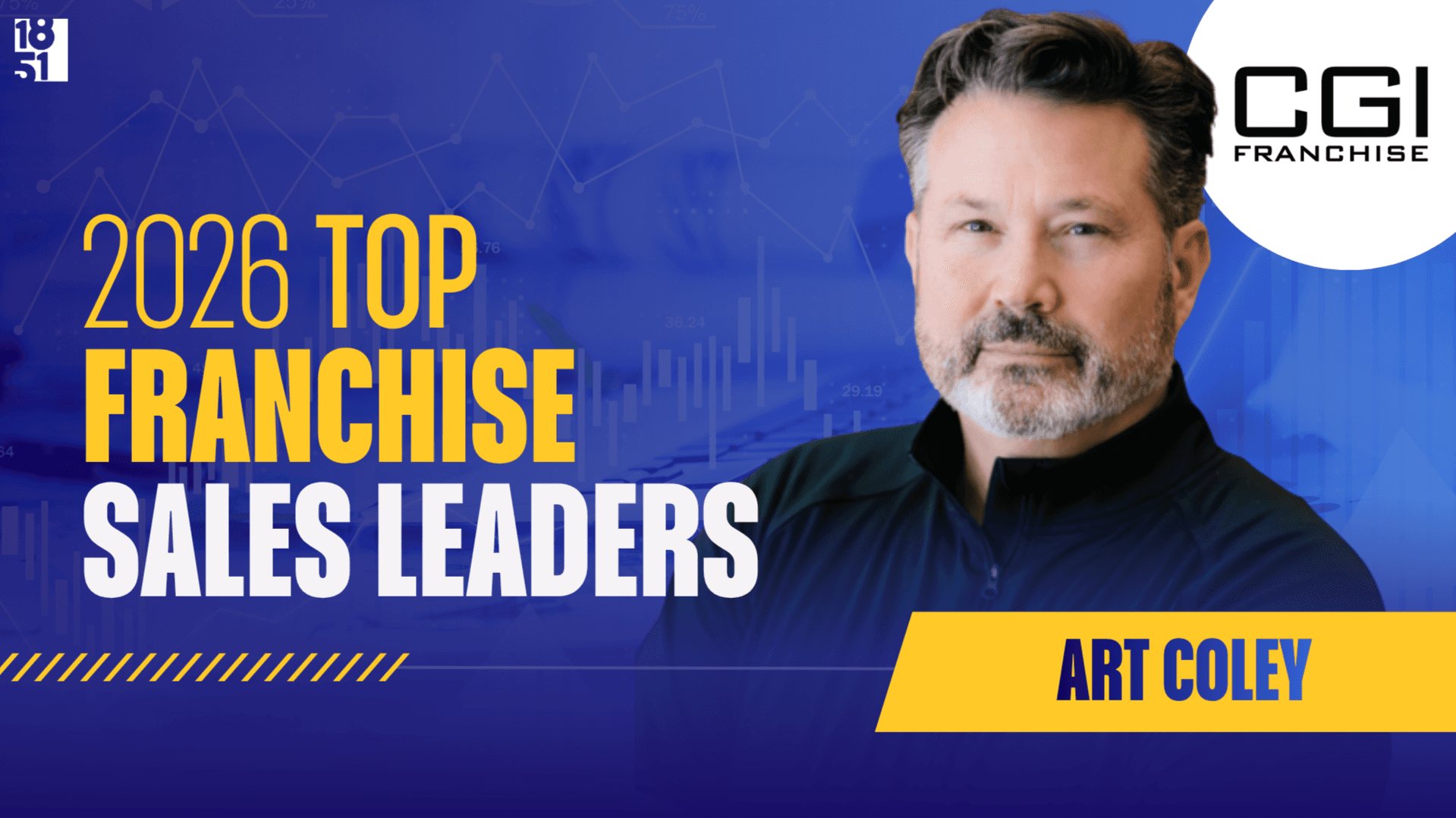
2026 Top Franchise Sales Leaders: Art Coley, CEO of CGI Franchise
With more than three decades in franchising, Coley helps brands scale by focusing on systems, transparency and the people behind every franchise agreement.
Growing a Franchise
With more than three decades in franchising, Coley helps brands scale by focusing on systems, transparency and the people behind every franchise agreement.
Franchise Sales Leader: Art Coley
Brand: CGI Franchise
Art Coley’s perspective on franchise development starts with a simple belief: franchising is not ultimately about selling agreements. It is about helping people build successful businesses.
That philosophy draws on lessons Coley has collected throughout his career, beginning as a teenager working in his family’s burger stand in Temple, Texas. It was there that he first saw how important systems, checklists and repeatable processes were to building a business that could operate without constant owner involvement.
Years later, while working as a freelance business writer, Coley interviewed franchise pioneer Bud Hadfield, founder of Kwik Kopy Printing. What was supposed to be a 30-minute conversation turned into more than two hours, and within 90 days Coley was working for Hadfield. That launched a career that would include leading franchise development across multiple brands, serving as chief development officer of AlphaGraphics, becoming CEO following a private equity acquisition and eventually founding the business that became CGI Franchise.
Today, Coley works with franchise organizations on one central challenge: building systems capable of scaling while creating value for franchisees.
Coley says one of the biggest mistakes franchise brands make is assuming they have a development system simply because they have documented steps for moving candidates through a pipeline.
“The reality is most franchise companies say they have a process, but they really don't,” Coley said during a recent podcast interview. “They've got some steps on a website.”
For Coley, a true system requires proven processes, clear expectations and constant measurement against established benchmarks. That philosophy inspired CGI Franchise's ROS, which was influenced by operating frameworks including EOS, Six Sigma and other quality-management systems.
It is an approach built less around flashy sales tactics and more around consistent execution.
“If everybody operated and committed to being brilliant in the boring basics, there would be no ROS because that's really what we do,” Coley said. “I'd love to tell you that there's some silver bullet, but the truth is it's a ton of little things and a lot of hard work, a lot of elbow grease and just not quitting, showing up every single day, going to work.”
That discipline becomes especially important as brands pursue aggressive expansion goals. Before focusing exclusively on generating more leads, Coley encourages development teams to understand exactly where candidates are dropping out of the funnel and why.
One area Coley believes deserves significantly more attention is appointment setting, or what CGI Franchise calls “pillar two.” It is the critical stage between someone becoming a lead and actually scheduling and keeping their first conversation with the franchise development team.
According to Coley, brands often assume poor development results mean they need better leads. In reality, the problem may be what happens after those leads arrive.
“We've had a number of brands that thought they had a lead generation problem,” Coley said. “Six months later, they realize they don't have a lead generation problem. They've got a sales process problem and they've got an appointment setting problem.”
That is why Coley has become such a strong advocate for data-driven franchise development. Rather than relying on assumptions about which leads, marketing channels or salespeople are performing, brands should know their conversion rates at each stage of the candidate journey.
One of CGI Franchise's core values is “data first.”
“We start with the numbers and get to the emotion after we look at the data,” Coley said. “You can't fix what you can't see.”
That doesn't mean experience and human judgment no longer matter. Instead, Coley argues that franchise leaders should begin with objective evidence and then use their experience to interpret it.
Despite his emphasis on systems and analytics, Coley believes the human side of franchise sales is just as important. One of his biggest pieces of advice for development teams is to stop trying to disqualify candidates before they have even had a meaningful conversation with the brand.
“If somebody raises their hand and they want to talk to you about your brand, that alone has earned them the right to a meaningful conversation,” Coley said.
Buying a franchise can represent an enormous financial and personal decision. Coley believes development professionals should recognize the significance of that decision rather than treating candidates as numbers moving through a CRM.
The same philosophy shapes his advice for the first franchise sales call. Instead of immediately presenting everything impressive about the franchise, Coley encourages salespeople to listen.
“A good step one call is not about you vomiting all your information about yourself and your brand on somebody,” he said. “Really listen to the people. What are they trying to accomplish in their life? Why did they really call you up, and what is it they're trying to change?”
That motivation could be financial independence, professional fulfillment or simply more control over how someone spends their time. Coley gives the example of a father who travels 40 weeks a year and is exploring business ownership because he wants to be home to coach his son's baseball team. A salesperson focused entirely on delivering a pitch may never uncover that motivation.
As franchise development continues to evolve, Coley expects technology and AI to play an increasingly important role. But he views those technologies as tools rather than replacements for the fundamentals of recruitment.
Brands still need to understand what they are measuring, who their ideal franchisee is, what value they offer candidates and how effectively their development process converts interest into meaningful conversations.
Ultimately, Coley's advice to franchise development professionals comes back to a combination of discipline and empathy: Measure what is happening, improve the process and never forget the person considering the opportunity.
“Quit focusing on you and focus on the person on the other end,” Coley said.
For Coley, that may be one of the simplest lessons in franchise sales, but after three decades in the industry, it remains one of the most important.
Want to learn more about how 1851 helps franchisees find the right franchise opportunity? Visit www.1851growthclub.com and start your journey.
Sign up for the 1851 Franchise newsletter to get our biggest stories before everyone else
By signing up, you agree to our user agreement (including class action waiver and arbitration provisions), and acknowledge our privacy policy.