Over the last few years, confidence in the stability of corporate careers has waned. For the thousands of workers affected by layoffs in 2026 and the many more who worry about future layoffs and other disruptions, franchising represents a pathway to stability, fulfillment and the opportunity to build a real financial asset. For Schooley Mitchell, a low-entry business consulting franchise with 360 franchisees and 36,000 clients to date, the skill sets of these corporate escapees pair well with the business model.
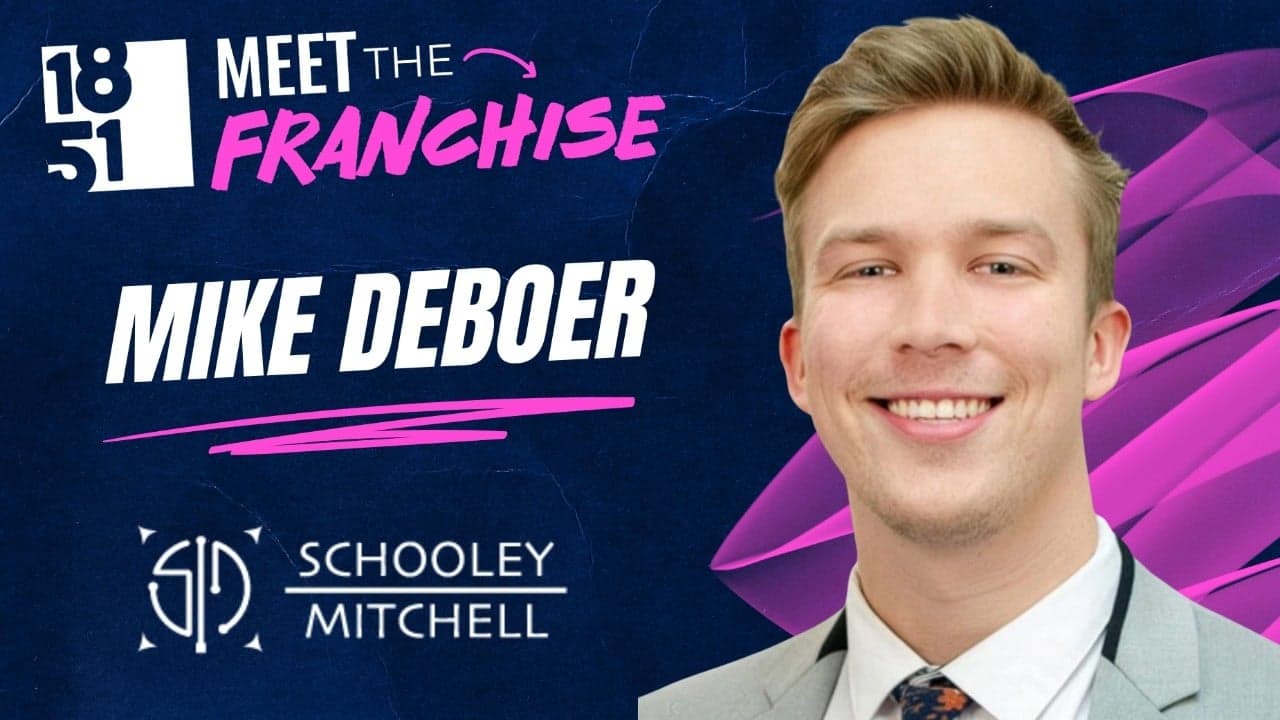
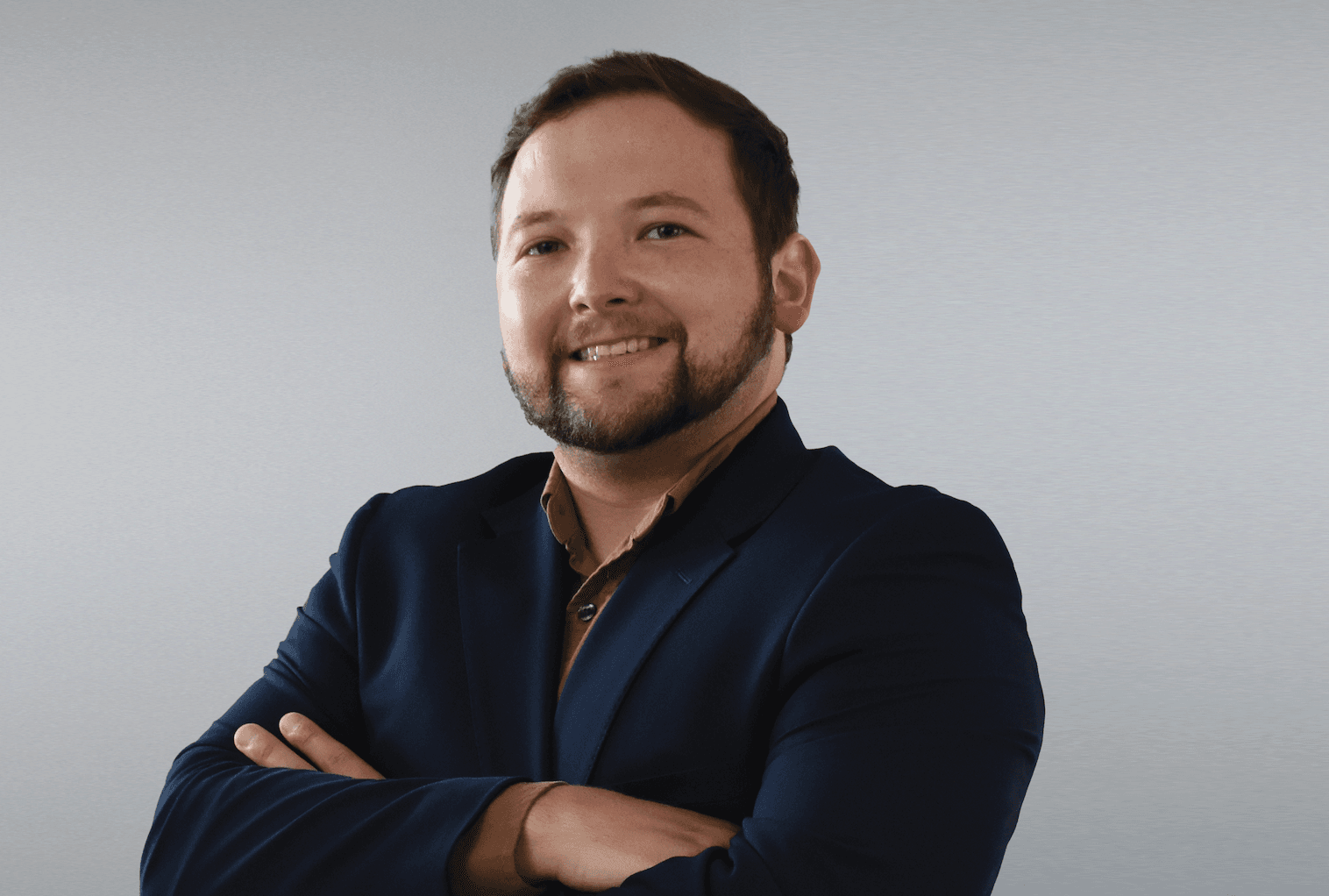
“It is really important that we find the right person,” said Mike Deboer, executive franchise developer at Schooley Mitchell. “A businessperson who is leaving corporate but wants to stay in the B2B space because that is what they know.”
The franchise fee for Schooley Mitchell is $73,000, and the additional costs required to start the business are relatively low, making the opportunity much more accessible than many in the larger franchise industry. There are no staffing requirements, no inventory or equipment to buy, and the business can be entirely home-based, which makes for an attractive model for professionals looking to get into franchising without breaking the bank.
The brand’s growth has also steadily increased, with eight to 10 new franchisees per month over the last five years, a big break from the deliberately slower progress the brand prioritized for its first 25 years. Deboer says this reflects investments in corporate support and new revenue streams.
“Now we have 170 to 180 people at corporate, which lets us support more franchisees,” Deboer said. “We are also adding new revenue streams and service areas, which expands the value we provide clients and offers new revenue opportunities for franchisees.”
At Schooley Mitchell, franchisees focus on acquiring clients, networking, generating referrals and managing client relationships on a day-to-day basis. The brand’s team of 100+ analysts handles most of the analytics and modeling, including auditing, data entry and identifying areas for client savings. While the business is not necessarily as flashy as other opportunities, the model matches many candidates' exact skill sets, and it offers a path for them to provide real value for their clients.
“For a model like ours, it is a painfully unsexy business,” said Deboer. “We are in boardrooms meeting with business owners and helping them save money, which is important, but it is not sexy.”
For someone who wants to employ their skillset managing client relationships and networking, Schooley Mitchell offers a low-cost, recession-resistant business model that can lead to a fruitful life in franchising.
“While no one enters business solely for altruism, it’s rewarding to save a nonprofit or small business money so they can avoid layoffs or keep serving their community,” said Deboer. “You can generate strong revenue while making a genuine impact, partnering directly with clients to help them reach their goals."
Deboer joined 1851 Franchise Publisher Nick Powills on a recent episode of the “Meet the Franchise” podcast where they discussed how Schooley Mitchell is growing with the help of corporate professionals finding a passion in entrepreneurship that aligns with their skill sets. A transcript of his interview with Powills has been provided below. It has been edited for brevity, clarity and style.
Nick Powills: Mike, when I was looking at your LinkedIn, the thing that caught my attention is you and I have very similar backgrounds because we both went from sports reporter into franchising, which is rare. We might be in the 1% that have done that. When I see that, I think back to what I felt when I made that adjustment, which was, "I have no idea what franchising is."
I'm curious what hooked you in? I felt franchisees had rockstar stories. It was fascinating that they were willing to invest their life savings into a business they have little to no control over. I was like, "Are you insane?"
Then I started understanding there was some sort of chip on their shoulder where a corporate America boss said, "No, I'm not promoting you," and they said, "Screw you, I'm going to go do it on my own." So I fell in love with that. What about you? Give me the backdrop on what attracted you to franchising in the first place.
Deboer: I went on your LinkedIn as well to do my counterintelligence, and I saw that too. The sports journalism industry is not the easiest to get into, and my dad telling me, "Hey, you have to get a job when you graduate," also helped me go this direction.
The thing I really loved about sports writing and journalism was asking questions and learning about the people you are talking with to be able to tell your story. I love that I am able to do that in this role. If you are bringing the right people into your franchise model, you have to ask them about their needs, their wants, their story, and why they are looking to take this risk and get into something that is new to them. They want to be really successful, but it is going to take a lot of hard work and sweat equity. They are not obvious carryovers, but I love the fact that you get to ask questions and learn about people. That chip on the shoulder is something every successful franchisee has as well.
Powills: Where do the challenges of franchise development land for you now?
Deboer: I think that my background has allowed me to be good at my job, and I have had a lot of success in this role because ultimately you have to make the candidate the hero of the story. That is all good marketing and communications. Donald Miller has the StoryBrand marketing framework where he says, "In all good marketing and advertising, the customer is the hero of the story." Franchise candidates are not really the customer, but ultimately they are in an investing relationship where I have to make them comfortable with the investment they are going to make.
That marketing mindset has helped me, but there are always challenges. For a model like ours, it is a painfully unsexy business. It is business consulting and cost-reduction consulting. You do not have a storefront, you do not have cool vehicles with decals driving around town, and you are not doing something outward-facing to the consumer. We are in boardrooms meeting with business owners and helping them save money, which is important, but it is unsexy.
It is really important that we find the right person: a businessperson who is leaving corporate but wants to stay in the B2B space because that is what they know. That is always a challenge: to get people to think about how, even though it is not visually or aesthetically appealing, it is a business where you can be successful, make a great impact, and feel a ton of fulfillment. Again, that is our job: to tell them that story and help them see their future in it.
Powills: If I was identifying what I see as your largest competitor, it is AI. But I also see that as your largest opportunity. If I look at threats honestly, you might have a percentage of franchisees willing to be taught new tricks on how to use these systems to save businesses money, but a percentage are probably going to be overwhelmed by the idea of having to learn it.
Deboer: The benefit to our model is that our franchisees, who we call consultants, do not actually have to do any of the analysis or auditing work themselves. A lot of people we speak with have a misconception about that, asking, "Do I have to do business development and then do all the work on those clients once I acquire them?" We are headquartered in Ontario, Canada, and we have about 100 analysts on staff. They are the ones who do all the analysis, handle the auditing, input the data, and identify areas for savings.
It is important that our people learn how to use AI. I get that question from every candidate: "Is this going to replace us, or will it make us less effective with clients?" Ultimately, AI gives you good information, but it relies on publicly accessible information or whatever you plug into the tools. The benefit we have is that we negotiate for every client individually, going directly to vendors to negotiate pricing and services. That is not information the public can access; it is based on our relationships, our leverage with vendors, and the areas in which we consult.
It is an opportunity for us to do our work quicker because our analysis process can be expedited using agents and tools. AI is a bit of a Wild West right now with a ton of investment pouring in. Eventually, the good players will rise, and players that are not really AI or lack a valid business model will go away. Eventually, we want to consult on AI for our clients: identifying the best solution, securing good pricing, and understanding how to use it within business. We want it to be a cost category we evaluate within the next couple of years as it commoditizes.
Powills: Whether franchisees handle the analysis side or not, they have to start training themselves. It is not specific to your business; it applies to every business operator. Microsoft had 30% buyouts yesterday. What are they saying? They are saying to either get on board and understand how AI works, or do not and go figure it out.
If franchisees think about the opportunity, the next evolution of your business is going to be business engineers rather than traditional franchisees.
Deboer: That is 100% right. Even though I can be an AI skeptic sometimes, I see the potential. Doing things at scale that used to require manual, time-consuming work is amazing, whether from a client acquisition, marketing, or content creation perspective. That is not even mentioning our ability to produce client work product quicker and at an even bigger scale.
Powills: Give me the state of the union: How are franchise sales and growth going?
Deboer: It is going really well. We are in a time of economic uncertainty, with inflation, gas prices, midterms coming up in the U.S., and tech layoffs driving job insecurity. Those conditions tend to be good for our model because our value proposition to clients is stronger during uncertainty. When times are good, businesses can tolerate waste without significant harm. But during the 2008 recession, COVID-19, or today, our model performs well. That carries into franchise development because people look for businesses that are as recession-proof as possible.
Almost nothing is truly recession-proof unless you sell an essential good or service, because when disposable income disappears, people stop buying. However, we do not charge up front to do our work; we share in the savings we find for clients. It is risk-free, and clients need us more when times are uncertain.
Over the past couple of years, we have brought in about eight to 10 new franchisees per month. That is newer growth. We have been around for almost 30 years. For the first 25, growth was slower and more methodical while establishing the support infrastructure. Now we have 170 to 180 people at corporate, which lets us support more franchisees. We are also adding new revenue streams and service areas, which expands the value we provide clients and offers new revenue opportunities for franchisees.
We are up to about 360 franchisees and have worked with 36,000 clients to date. With 86 million businesses in the U.S. and Canada, we are excited to continue tapping into the market without oversaturating it.
Powills: Do you lock off territories, or is it open?
Deboer: It is open. We do not have territory restrictions, so franchisees can acquire clients anywhere in the U.S. and Canada. We use a registry system so franchisees can protect their prospects and clients. We do not want to become like a Subway on every corner where no one can get business, so we maintain a ratio of one franchisee for every 200,000 people in a market to ensure there is enough opportunity.
Powills: Does corporate contribute on the business development side, or is that entirely on franchisees?
Deboer: Because corporate handles the analysis, business development is the franchisee's main function. We support them with marketing through a full corporate department that helps with content, email campaigns, and social media marketing. LinkedIn is our primary platform since we are B2B. We partner with appointment-setting programs and AI lead-generation tools, but those are ancillary. A franchisee's main day-to-day focus is acquiring clients, networking, generating referrals, and managing client relationships.
Powills: I imagine the bulk of franchisees come through broker networks.
Deboer: Yes, the vast majority. We are building an organic lead generation platform, and we do get inbound inquiries as brand awareness grows, but roughly 90% come through broker networks.
Powills: As an outsider, the organic path is clear. This concept is positioned to align with their corporate career while putting them back in charge of running their own business.
Deboer: That is 100% right, and it is a lower-investment model. The franchise fee is $73,000, which is not pennies, but that is essentially the only investment. It is a home-based business with no staffing requirements and no inventory or equipment to buy. The model and price point make it attractive because it aligns with a professional background without breaking the bank.
Powills: Franchisees are in charge of how much money they make. If you hustle, network, and meet people, it is not a hard pitch to say, "Let me come in, save you money, and I only get paid if I save you money." It comes down to hustle. If a high-net-worth individual buys in and builds an infrastructure, hires a sales team, hosts workshops, and sets up an office, that is a different mentality than someone treating it like buying themselves a job. A $70,000 franchise fee is an investment, but success is in their control.
Deboer: Absolutely. It is not a crowded marketplace; there are very few cost-reduction consultants focused on the small to midsize companies we serve. You are not dealing with heavy competition, nor are you asking clients to pay out of pocket up front.
We have franchisees who make $1 million a year, and we have people who make nothing. You get out what you put in. In a model without fixed retail hours, you have flexibility, but the downside is that the responsibility rests entirely on you to execute daily. Corporate provides that structure initially, but franchisees must develop that self-discipline on their own.
Powills: If you are someone who constantly pushes yourself internally, this fits, because you are the one driving the engine.
Deboer: High school has built-in accountability where parents are notified if you miss class. In college, professors do not monitor your attendance. While corporate cares about our franchisees, success is ultimately on them to show up, do the training, and execute the activities. Corporate is like high school; entrepreneurship is like college.
Powills: Is there anything else you want prospective candidates to know?
Deboer: There will always be economic instability, and while that can be intimidating, it also breeds opportunity for visionary thinkers. For people who want to make an impact, find fulfillment, and build a successful business without needing an aesthetically flashy concept, we fit that profile.
While no one enters business solely for altruism, it’s rewarding to save a nonprofit or small business money so they can avoid layoffs or keep serving their community. You can generate strong revenue while making a genuine impact, partnering directly with clients to help them reach their goals.
Powills: I have always loved this category. The primary hurdle is educating candidates who do not understand how the sales cycle works. But once you grasp it, earning potential is entirely up to how you approach it. Mike, thanks for sharing your story.
Deboer: Thanks for having me, Nick, and thanks to everyone listening.
Watch the full episode above or on YouTube.