Growing a Franchise
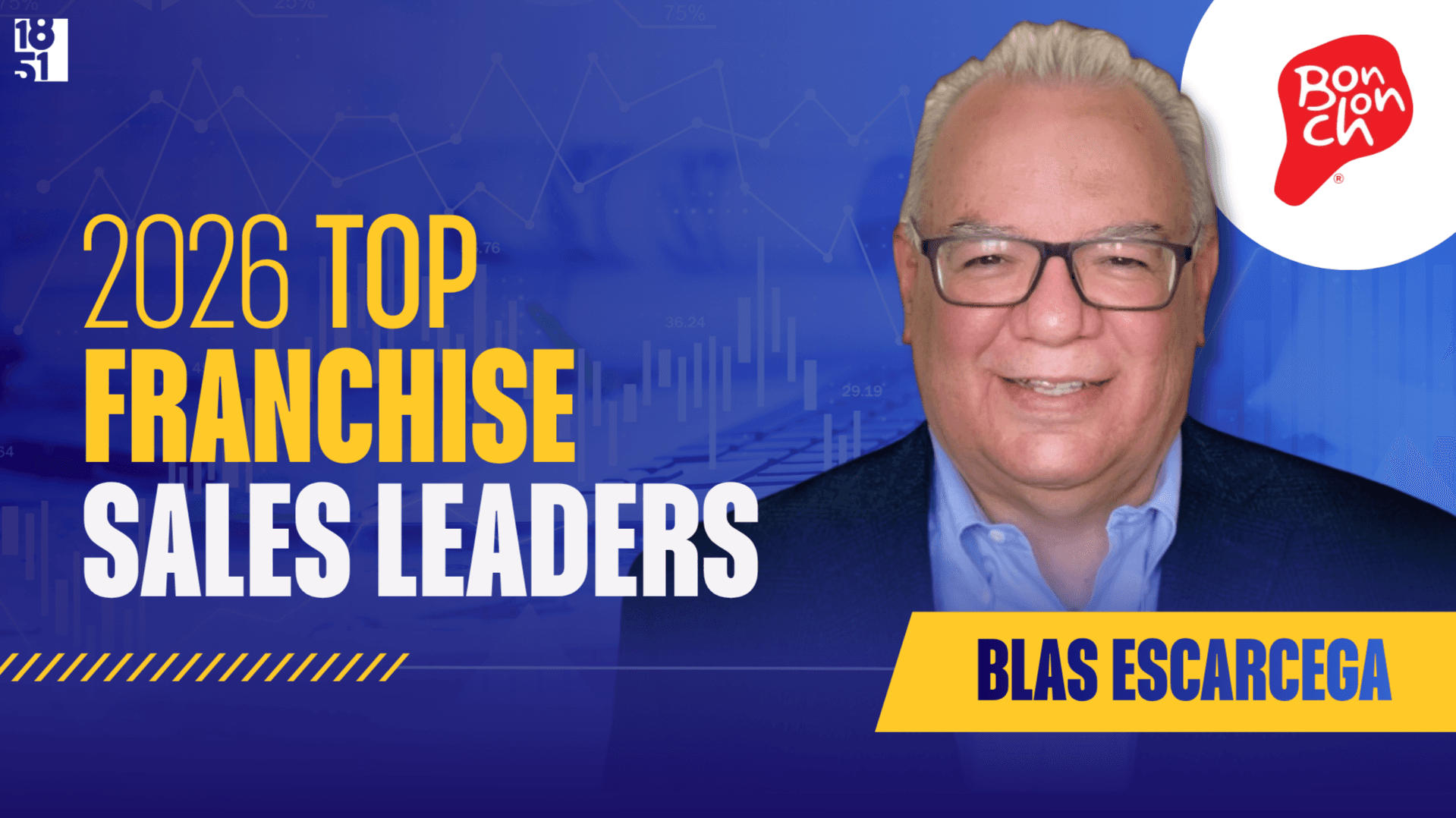
2026 Top Franchise Sales Leaders: Blas Escarcega, CDO for Bonchon
Blas Escarcega says finding the right franchise partner means looking beyond financial qualifications to understand how they operate and fit the brand.
Growing a Franchise
Blas Escarcega says finding the right franchise partner means looking beyond financial qualifications to understand how they operate and fit the brand.
Franchise Sales Leader: Blas Escarcega
Brand: Bonchon
Blas Escarcega’s path to franchise development started on the financial side of the business. Before becoming chief development officer at Bonchon, he spent years as a CPA and later served 15 years as the chief financial officer of a restaurant franchise, gaining a close-up view of what makes a restaurant business work. That experience eventually pulled him into development, where his knowledge of the brand and its economics became an advantage in evaluating prospective owners.
His finance background also influences how he evaluates candidates. Escarcega said today's franchise prospects are younger, more diverse and more data-driven than the buyers he met earlier in his career. Many are also interested in building multi-unit portfolios. But he still sees candidates who underestimate what it takes to run a restaurant.
Escarcega spoke with 1851 Franchise about how he evaluates candidates, what has changed among franchise buyers and what makes a strong franchise partner.
1851 Franchise: Can you tell us about your background and how you entered the franchise world?
Blas Escarcega: I come from a finance background. I was a CPA for many years and did public accounting, then worked in the beverage industry and real estate before moving into the restaurant industry as a CFO. I was there for 15 years, and during that time I evolved into the franchise development role. It happened by accident. It wasn't something I was pursuing. I already knew a lot about franchising. I knew what we needed to do from a strategy standpoint, a development standpoint and a construction standpoint, and I was asked to become the franchise development person simply because I had been there the longest and I knew the brand the most. A lot of selling comes down to how deeply you know the brand. I can speak Bonchon in detail, from the history to how much it costs to what I expect my P&L to look like to what training looks like. I took it upon myself to understand the ins and outs of franchising while I was still in finance, and I ended up reinventing myself in another role. I didn't plan it. It fell into my lap, and I realized it was something I loved and was passionate about. In finance, you can have an impact, but you're behind the desk. It's not the same. I'm a revenue-driving guy now. I'm not looking at what happened last week or last month.
1851: The franchise buyer has changed dramatically over the past few years. What are the biggest shifts you're seeing in today's candidates?
Escarcega: Franchise prospects are more diverse. You have people from all walks of life, different backgrounds, different countries, which is exciting. Competition is also fierce, because it isn't just food that's franchising. You compete with other restaurants, but you're also competing with somebody who sells pet services, home repair or pest control. It's a broad franchise base, not just restaurants. And prospects are more data-driven than I've seen before. In the old days, it was touchy-feely. I love your food; you're great. Now they want to know the return. They want to make sure they're making profits and that it's a good investment. They also have a longer time horizon. They seem to be getting younger, though maybe I'm just getting older. And instead of wanting one or two restaurants, they want multiple. Somebody will tell me they want to be a franchisee of 10 units. They want to be a portfolio franchisee instead of a mom-and-pop with one to three units. Those candidates are more sophisticated, and they need to understand the risk and the capital requirements that come with it.
A segment of the franchise community still needs to understand how difficult it is to run a restaurant. People eat a great meal, they fall in love with the food and the service, and they want to be a franchisee. But it's a different animal. It's 24/7. It's long hours and long work, and then you have the tremendous rewards that come with that if you do it the right way. I thought that gap would have gotten better. It seems to be getting worse, and maybe TV or influencers have something to do with it, because it all looks glamorous. Then you tell somebody they have to go build a restaurant, train people, open it, clean it and order the food, and it's a different mindset.
1851: Trust has become one of the biggest factors in franchise recruitment. How do you build credibility with candidates throughout the discovery process?
Escarcega: In the vetting process, I bring out — for lack of a better phrase — the good, the bad and the ugly of franchising. It's important that people understand that seeking wealth creation is one thing, but there's a way to do it, and it's through hard work and understanding exactly what it takes day to day. It's a commitment. You cannot do it 50%. You have to be 100% in to make sure it works. So the questions are simple. Do you have the capital? Do you have the experience? Do you have the passion? Do you have the commitment? Do you have the drive to want to do all these things? I spend a lot of time on that so they understand, and so we understand as a franchisor that they know what they're getting themselves into. It's kind of like a marriage. When you sign these contracts for 10 to 20 years, you're all in. You can't walk away from something you signed a week ago because all of a sudden you have to go build a restaurant.
The good news is that the experienced multi-unit operators we focus on mostly understand that, but I can't assume they know everything just because their application says they're a multi-unit franchisee. I still visit their restaurants. I visit them where they're located to make sure whatever they provided is accurate. If they say they run five restaurants, I have to go see them in action. I want to visit their operations, talk to their people and talk to them about the markets they're in, because real estate and site selection are so important. They'll be the brand's representative there, and I want to make sure they're good citizens of that market.
1851: What do you believe separates the highest-performing franchise sales organizations from those that struggle to consistently attract qualified franchisees?
Escarcega: It's very simple. Focus on quality versus quantity. Yes, some brands sign multiple units and hundreds of units, but are they really signing the right partner? There are different types of franchisees. The mom-and-pop can do one to three. The multi-unit operator can do three to 10. The sophisticated operator can do 10 to 100. Within each category, there's good and bad. I don't try to bring in the right type of franchisee. I try to bring in the right franchisee. I don't want to put people in buckets, because you can be successful in all three. If I decide I only want the operator in the middle and that's all I go recruit, I might miss out on a good mom-and-pop who can do one to three and fill in a certain market, and I might pass on somebody sophisticated because I've decided they're too big for me. The right franchise partner matters, not the right type. If that means 10 in a year or 100 in a year or 1,000, so be it. That's what we're focused on.
Want to learn more about how 1851 helps franchisees find the right franchise opportunity? Visit www.1851growthclub.com and start your journey.
Sign up for the 1851 Franchise newsletter to get our biggest stories before everyone else
By signing up, you agree to our user agreement (including class action waiver and arbitration provisions), and acknowledge our privacy policy.