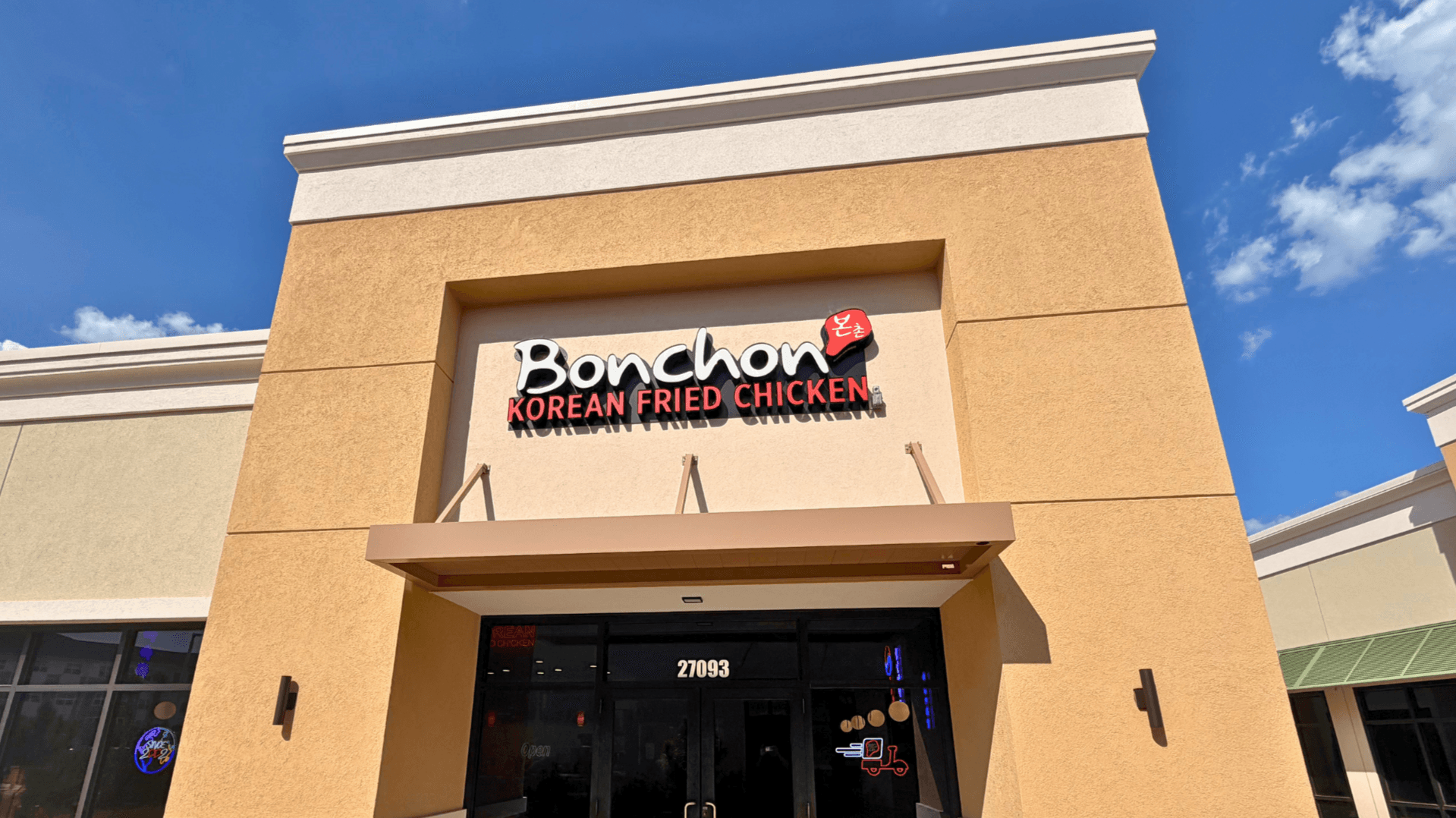
As Korean food continues to gain popularity across the U.S., Bonchon Korean Fried Chicken, the globally celebrated brand known for its double-fried chicken and signature sauces, is embracing the future of the brand and looking toward national growth. Part of this process has been an evolution of the restaurant prototype and the rollout of a new standardized model.
“Our objective was simple: improve the economics of opening a Bonchon without diminishing the guest experience,” said Blas Escarcega, Chief Development Officer. “By reducing the footprint, standardizing the prototype, leveraging preferred vendors and creating a more efficient kitchen, we can lower the capital required to open while creating a restaurant that is easier to operate. Ultimately, it’s about improving the sales-to-investment ratio and creating stronger potential returns for our franchisees.”
Engineering the Prototype for Better Unit Economics
Bonchon considered all aspects of the restaurant when developing the new prototype. While a lower cost of entry was a key focus, that goal could not come at the expense of the restaurant’s design or the team and guest experience.
“Previously, our build-outs were over $1 million,” said Michel Haddad, Senior Director of Construction. “Now, our build-outs are under $800,000, and if a franchisee gets a tenant improvement budget, they can be under $700,000, which is great. The fascinating part is that we added a lot more color, nicer finishes, better lighting and more streamlined workspaces, and we still reduced the cost of the build-out.”
One of the key shifts present in the new prototype is an evolved kitchen design. Each Bonchon has a kitchen that’s about 850 square feet with an open, single-line design. The streamlined, single-line kitchen reduces unnecessary movement, improves workflow and allows team members to work across multiple stations more efficiently, particularly during peak periods.
Updating the kitchen also allowed Bonchon to rethink its target spaces. Now, restaurants fit best in 1,700 to 2,000 square feet, which can seat between 30 and 60 guests. The leadership team is also leaning into inline and end-cap spaces to reduce the time and costs associated with drive-thrus and freestanding builds.
While these changes do inherently impact the guest experience, allowing for quicker and better service, Haddad also paid attention to the visual details that make the restaurant pop.
“We focused very heavily on the graphics,” he said. “We brought in the Korean nightlife feel where you have the tight streets that are full of light. Our dining room light fixtures look like chopsticks holding globes. I’ve added tile rather than wainscoting, for example, so the surfaces last longer. It’s very vibrant, but it’s also very high quality.”
Case Study: Early Prototype Wins in Des Moines
A new restaurant in Des Moines is a prime example of the prototype’s success. Haddad described the restaurant as a narrow 1,760-square-foot building that can accommodate 32 seats.
The standardized prototype also helps shorten the development timeline by reducing design complexity, creating greater vendor consistency and eliminating many of the decisions that previously had to be made on a project-by-project basis.
“Des Moines was the first build-out we did with the new prototype,” Haddad said. “The construction was completed in approximately 60 days, with build-out costs below $700,000 despite starting from a cold, dark shell.
“The new prototype allows us to grow efficiently in the markets we’re focused on,” Escarcega said.“The first locations using the prototype have validated what we were trying to accomplish: attractive restaurants, smaller footprints, more efficient operations and significantly lower development costs.”
Protecting Franchisees’ Capital and Partnership Quality
The new prototype isn’t where the process stops. Bonchon’s build-out process is largely overseen and facilitated by the leadership team to further streamline the process for franchisees.
Haddad has developed partnerships with approved vendors and negotiated advantageous prices to protect franchisees’ capital and ensure the teams have what they need to continue the build-out without any delays.
“We guide franchisees through the process from A to Z,” Haddad said. “Our goal is to anticipate potential gaps early, coordinate the right resources and help keep each project moving toward opening.”
Bonchon’s new prototype represents more than a design refresh. It reflects a broader development strategy focused on protecting franchisee capital, reducing development complexity and improving restaurant-level economics. By combining a smaller footprint, more efficient kitchen, standardized design and stronger vendor partnerships, Bonchon is creating a more scalable model for its next phase of U.S. growth.
To find out more information on costs to buy this franchise, please visit https://1851franchise.com/bonchon.