For an event rental company, adding another product can look like an easy way to create another revenue stream. A customer asks for something new, the business buys it and suddenly there is another service to sell.
For Busy Bee Jumpers founder Sal Longo, more than 25 years in the event rental industry taught him the equation isn't always that simple.
“Being in business for over 25 years, it took us some time to figure out who our target client was, and that meant a lot of trial and error,” Longo said. “We would get requests for mechanical bulls, ice cream trucks, movie screens and all these different things. They were exciting, and we thought they could create additional revenue streams, but we realized we were doing the business a disservice by getting away from our core products. Our resources were being stretched very thin.”
Eventually, Longo realized Busy Bee didn't need more products to grow. It needed to get exceptionally good at the right products. That realization ultimately helped Busy Bee simplify its inventory, improve its economics and build a model that was ready to franchise.
When More Revenue Doesn't Mean a Better Business
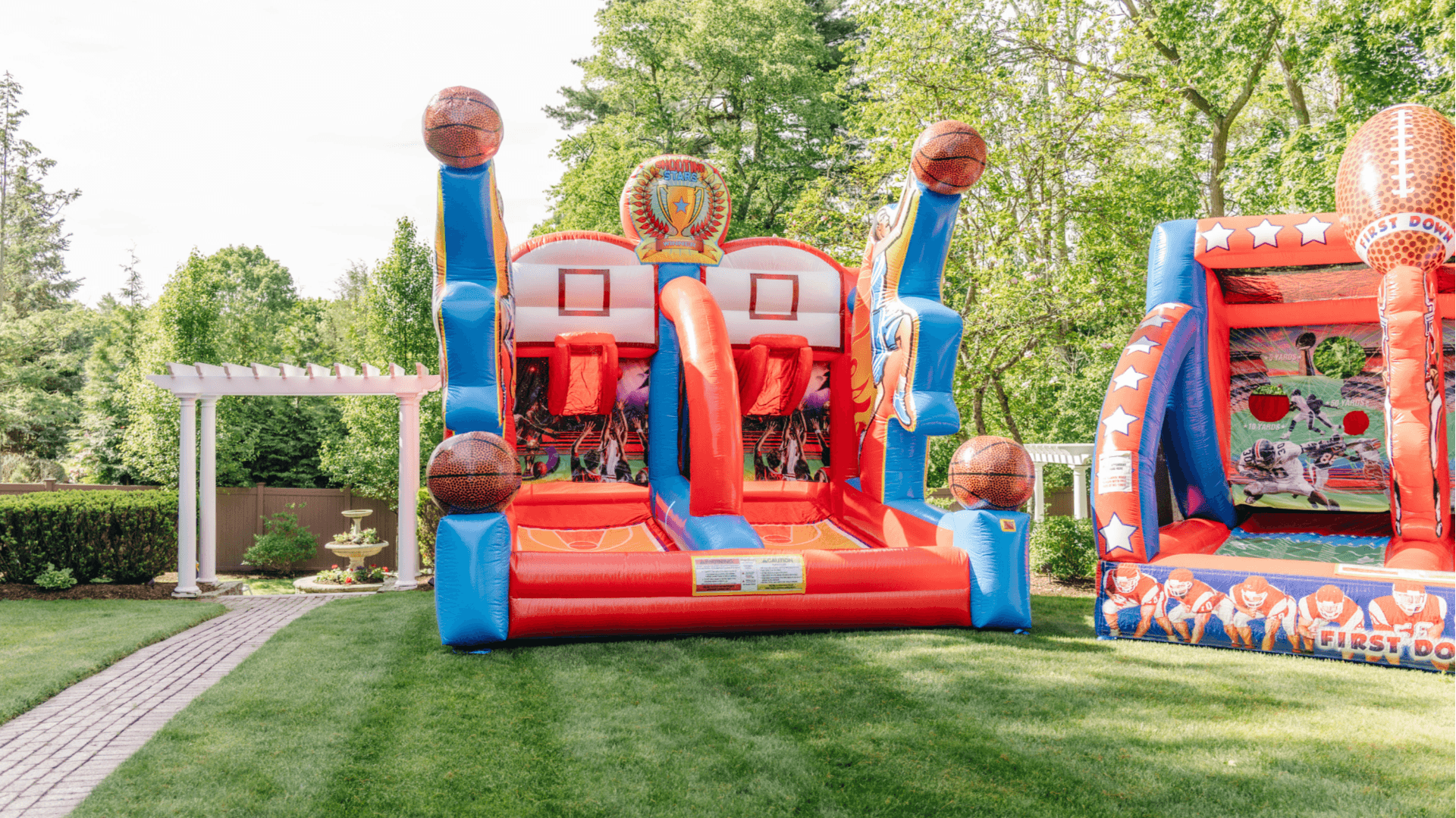
Busy Bee started with a relatively straightforward offering centered on bounce houses, water slides and other event rentals. As the company grew, however, its inventory expanded along with customer requests.
The problem was that each additional SKU added complexity. Different products required specialized handling, which meant more employee training and added demands on storage and transportation. Some attractions also came with higher insurance costs or greater operational risk.
Before COVID-19, Longo said that complexity had reached the point where only a small group of experienced employees knew how to properly handle the company’s full range of products. Then the pandemic forced the company to reassess.
“COVID was really what made us get back to our foundation,” Longo said. “Once we simplified the model and focused on our core products like water slides, bounce houses, tents, tables and chairs, it became much more plug-and-play. We can handle a much higher volume because the system is streamlined and our staff knows how to handle everything.”
That meant saying no to products that could generate sales but did not necessarily strengthen the overall business. Longo has previously pointed to an $80,000 ice cream truck that Busy Bee ultimately sold for $10,000 as an example. Despite the revenue the truck could produce, he said the operational headaches surrounding it outweighed its value to the larger model.
How Fewer SKUs Helped Busy Bee Grow Revenue
The decision to reduce SKUs was not simply about making Busy Bee easier to operate. Longo said it also improved the economics of the business.
“We started the business with simple bounce houses and water slides, so when we got back to focusing on those products, our margins started to increase pretty dramatically,” he said. “Additionally, our insurance premiums dropped tremendously, and insurance is one of our main costs. We started to see some strong efficiencies flow to the bottom line.”
Rather than spreading capital, labor and management attention across an increasingly complicated catalog, Busy Bee could concentrate those resources on products customers wanted and that its team could deliver efficiently.
According to Longo, the company has nearly tripled its revenue since simplifying the model. “That has allowed us to grow and become more profitable,” he said. “The simpler the business model became, the easier it was to replicate. That really led us down the path toward franchising and scaling the business.”
Simplicity Becomes a Franchise Advantage
What Busy Bee learned at the corporate level is now being carried into its franchise system. Franchisees aren't being asked to recreate more than two decades of trial and error. Instead, they start with a curated inventory strategy built around the categories Busy Bee has already identified as central to the business.
The brand can also tailor inventory packages based on local demand. Busy Bee has worked with its supplier to understand which products perform well in different regions based on factors like climate and seasonality. That approach can help owners put their capital into inventory more likely to stay in demand, rather than buying equipment for occasional customer requests.
“In our first season with our franchisees, they are seeing incredible growth and already want to expand into new territories,” Longo said. “They like that they can have bigger weekends with bigger events, but they are still renting out the same products. They can get staff up to speed much more easily on how we do things.”
Busy Bee has paired that inventory discipline with centralized customer service, proprietary technology and an onboarding program that Longo said continues to improve as the young franchise system grows.
Building a Business That Can Be Replicated
Busy Bee’s experience illustrates an important distinction between building revenue and building a scalable business.
Over the last 25 years, the company had plenty of opportunities to become a one-stop shop for virtually anything a customer might request. Instead, Longo eventually learned that specialization could create greater value.
Today, the company services more than 13,000 events annually, and its corporate operation has grown to nearly $7 million in annual revenue, Longo said. But the model Busy Bee is bringing to franchisees is not simply a smaller copy of everything the corporate operation has ever done. It comes from stripping away much of that complexity and identifying what worked best.
For franchisees, that means entering the business with a playbook shaped by years of experimentation rather than having to learn those lessons independently.
To find out more information on costs to buy this franchise, please visit https://1851franchise.com/busy-bee-jumpers.