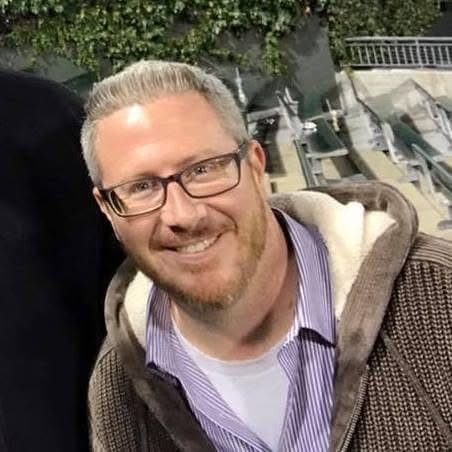
Every franchise brand has a day zero. It’s the pivotal moment when a founder’s vision is finally validated by the first partner willing to step into the unknown. For Dillas Quesadillas, that partner was Pete John.
While most prospective business owners obsess over spreadsheets and supply chain logistics, John walked into the room with a different set of priorities: alignment and integrity. Leaving a stable career with a national chicken brand, he chose to become a pioneer for a brand-new concept in a category that didn't even really exist. For John, it wasn't about buying a business; it was about investing in a shared vision with people he trusted implicitly.
From a global pandemic to regional ice storms, John has navigated the challenging early days of any franchised business with remarkable success. Eight years later, the brand’s first franchisee has broken into the elite 1 percent of restaurant operators who successfully scaled past the five-unit mark.
In this “Meet the Franchisee” podcast, 1851 Franchise’s Nick Powills sat down with John to discuss the blind faith required to be the first franchisee, the psychological grit needed to scale toward 20 units, and the patience he believes is the ultimate competitive advantage in a crowded market.
A transcript of John’s interview with Powills has been provided below. It has been edited for style, brevity and clarity.
Nick Powills: All right, Pete. First, you, and then we’ll get into the business. I have only one scripted question. I ask it at the front end of every conversation: How did you accidentally fall into franchising? What’s your franchise backstory?
Pete John: Kyle Gordon suckered me into it. I was in the restaurant business for a while and wanted to do my own thing. Kyle and I had known each other a long time and he was just starting Dillas Quesadillas. That’s really how it was.
It was a partnership that I knew was going to happen. Kyle and I had worked a lot together in the past. I don’t have a long history in franchising. My history is with Dillas.
Powills: You said you always wanted to own your own thing. So, you’re going through your career, working at a big chicken brand and you’re thinking about this. Then it transitioned to not being franchised, so that’s off the table. When you’re starting to really take action, are you thinking, “What would it look like for me to start my own thing?” Is it, “I know Kyle’s doing this. I want to look at Dillas?” Did you look at other brands? Talk me through that process at the very beginning stages of even pulling the trigger.
John: I did not look at other brands. What was really important to me when searching for the next thing after leaving Raising Cane’s was the cultural piece of it.
I don’t mean culture necessarily inside the four walls. I mean who I was going to be doing business with. I was very cautious about who I would do business with. You hear a lot of horror stories about franchises. A lot of people talk about it and I gather that information.
But knowing Kyle and Maggie Gordon prior to Dillas, it was really a no-brainer for me. Then going to visit their location really sealed the deal: “Oh man, this is something special.” The initial checking the box of good people, Kyle and Maggie being good people, was probably the number one priority for me. So, I didn’t even look at other brands. This is what I wanted to do. When Kyle and I connected and really started talking about it, it just made sense.
Powills: It’s interesting for you to be the first franchisee. Every brand can only have the first franchisee once. At that point, if we flash forward, unit-level performance is phenomenal for a category that’s being created and hasn’t been owned by anybody else. But, early on, you’re taking a larger gamble. You don’t know what this is going to do out of state from a supply chain standpoint. You know operations. But you don’t know how it’s going to operate. There are so many unknowns.
What I hear you indexing on is, “I knew I had to do this with good people.” Most franchisors tout their big, fancy numbers, which we’ll get into. But you totally bought into the people.
John: I felt like if you have the people alignment, and if everybody within the brand is aligned culturally, then doing the right thing when it’s sometimes not the easy thing, those cliché things, I just knew it would work.
I went back to what I said was important. Then I went and saw what the product was and how it was delivered to the customer. Then it was a slam dunk.
There were tons of unknowns, yes. But I knew that if you put the right people in the right room and you’re all rowing in the same direction, then it will work. There was a lot of blind faith with it. I’m just such a strong believer in you should do the right thing. You should stay true to your values in the business and out of the business. I knew I was partnering with people that did. Kyle and Maggie have continued to show that over the last seven or eight years with me and that’s never changed. I credit a lot of our success to that.
You can have a great product and lose sight of your original core focus. We haven’t. I knew it would be very strong. That’s why I was willing to take that risk with a brand-new sector. We didn’t know anything about how successful it was going to be outside of, at the time, playing in Texas.
Powills: How many years ago was this?
John: About eight. Between seven and eight.
Powills: How many units do you have now?
John: Five.
Powills: Even to go from eight years ago, unit one, to unit five, and for you to say the product was phenomenal and you could see it that long ago. Now I’m sure you look at where you are operationally today and from a product standpoint, it’s night and day. It’s only gotten better.
Proof of concept for you to go from one to five. There’s been a lot of magic. I don’t want to swing it negative. But during this journey of going one to five, being a business owner, what has kept you up at night? How have you talked yourself off that ledge as more of an entrepreneur?
John: A lot has kept me up at night. But I think the biggest thing that has kept me up, and probably continues to, is the things we can’t control.
I feel very confident in our structure. I feel very confident in what I already mentioned about our core values and what we believe. What keeps me up is COVID, or the ice storm that shut us down recently for four days.
I do not stay up at night worried about whether people are going to still eat quesadillas tomorrow. I believe we’re doing the right thing and that we’re growing. I coach our teams and our director of operations and everybody within our restaurant group’s organization and say that you control what you control.
Now, you might say, “Pete, you’re letting something you can’t control keep you up.” But I think that’s a positive. I try to think about, “If this happens, what’s our approach to conquering it?” I preach all the time. And people who know me know I always say you control your attitude, your energy and your effort. I know we control those three things.
To tell you the truth, Nick, not a lot keeps me up. Obviously, you want to make payroll. That’s typical entrepreneurial restaurateur stuff. But it’s really the things we can’t control that I worry about. I think any business owner worries about that.
Powills: So, five units. Do you take a moment to pinch yourself? You’re already in the top 1 percent of restaurant franchisees when you break past the five-unit mark. Ninety-nine percent never get there.
John: I do. I run a lot. That’s kind of my zen. I’ll be running and I’ll think, “Golly, we did it. We got to this point.”
We opened our second and third within six months of one another. Then we opened our fourth and fifth within six months of one another. We opened very quickly, back-to-back. I could probably talk for an hour about the pros and cons of doing that.
But it happened so fast that we were just working. We were seeding the markets, hiring, training and working with Kyle and Maggie on how we scale. But I do think about it. And we’re so blessed. It’s just such a great brand.
It doesn’t surprise me that we grew and that we’re continuing to grow. It really doesn’t. It’s a shock sometimes that it’s going so fast. You look up and you have 200 employees. You’re like, “Wow, how did we even get here?” Sometimes that keeps me up at night!
Powills: If you painted a simple dream, how many locations is the dream right now?
John: The target’s 20. I think that’s a realistic number to fulfill our agreement and commitment to Kyle, Maggie and Dillas franchising as a whole: to grow the state of Louisiana and East Texas.
I believe 20 is a fair and realistic number. Ideally, I’d love to have 10,000 of these. But I think 20 is that mark. It might even be 10 and then things change. Then we get to 20 and it changes again.
But if you’re asking in short, 20 is that target number that’s on my board.
Powills: Historically, especially in food, at the six, seven or eight unit marker, what happens is the economies of scale fail for the first time. Your infrastructure gets you there but then the bottom falls out and you look at your profitability and think, “What just happened?”
If you panic, the dream stops at six, seven or eight. If you power through, 20 is not an issue because you’ve figured out what it felt like to go through that dip. Any comments on that? Have you thought about preparing for that mentally?
John: I have. Our office here with Primeaux Restaurant Group, it will change. I know that.
I think the biggest thing is I’m so used to being uncomfortable that I don’t even think about it. I tell people all the time, and it sounds arrogant, but most people couldn’t handle that uncomfortability of daily life. That’s why I don’t worry about it.
I know we’re going to face challenges. But I have a wonderful support team in Dallas and a wonderful support team here in Shreveport. I focus on it. But it’s more of a, “I know it’s coming and I’m going to be mentally ready.”
We’ve run into some walls. We opened our first location in October 2018. You know what happened less than a year and a half later. We faced those walls. But we stay true to supporting each other. We put the customer first. We put the commitment to our product first. We focus on doing the right thing. If we continue to do that, it’ll work out.
If I was sitting on a panel and someone asked the biggest strength we have as a brand, it wouldn’t be brisket or steak. I would say what makes us good and attractive is that we are better together. We work together very well.
Powills: When I oversimplify what franchisees bought at the beginning, it’s business model and culture. Nobody gets into franchising to lose money. But culture can make or break whether a buyer ends up with that brand.
As I think about Dillas, it shocks me that it hasn’t exploded. But maybe that’s part of the magic. It’s allowed more time for the brand to build a moat around it operationally. Is that part of the magic?
John: I think Kyle and Maggie are doing it the correct way. It would be very easy to sign up every Susie and Tom who comes up. But it’s the right people. It’s not just about money. It’s about the right people who are committed, just like I am, to growing it, going through the heartburns and celebrating together.
I love your analogy of the moat. We’re building it. It’s like building a car. And when the car’s ready to race, it’s going to be ready to race. There will be tweaks. But we’re not going to have to totally redo anything. I believe we’re pretty close. We’re ready to ride.
Now it’s just a matter of getting people on board and seeing what we have to offer.
Powills: If I oversimplify a tremendous business opportunity, I go brand, real estate and operations. Anything else you’d add?
John: I think the community impact piece. It can go with brand and operations. But I think you have a community impact piece that shows the community you are their restaurant and you’re going to give back.
It's loyalty. We’re actively involved in the community. We’re doing things that are helping people. I always say, “You eat quesadillas and I’ll continue to support your organization.” We always say we want to be the community’s restaurant, not just another restaurant in the community. I believe that gets you top-line sales as well. Because people are loyal to you.
Powills: Let’s close on this. Say something to your future self five years down the line. What do you want your future self to know about what this next ride is going to be?
John: The patience is worth it.
Looking back, I’d say, “The patience, the struggles, the battles. You were patient. You didn’t give up. You stayed true to yourself, your family, your business partners and the community.”
It’s very easy to get discouraged and say, “I’ve got five, everything’s good!” But that’s not the vision. The vision is to keep growing it. We have something that can keep growing.
So I’d say the patience is worth it. And not overextending. Doing things the right way.
Powills: You’re clearly a good dude. As much as you’re supportive of Kyle and Maggie and what they give to you, what you give to them is tremendous too. Brands don’t sell brands. People do. You’re part of that magic. Congratulations. I’m very impressed by you and grateful you shared some of your story today.
John: I’m happy to do it. I tell Kyle and Maggie “yes” a lot. I’m such a big fan of the brand. Anytime I can talk about it, I will talk about it. It’s been a ride. And this is just the beginning.
Powills: I love it. I look forward to seeing where the story goes. Thanks for doing this, Pete.
John: Absolutely. Thanks for having me.
Powills: For Pete, I’m Nick. This was another episode of “Meet the Franchisee.”
Watch the full interview here.