Selling used entertainment gear isn't as simple as it sounds. Say a consumer has three bins full of old video games, consoles, DVDs, electronics and collectibles taking up space in a closet. They're generally left with two options, and neither one is quick. They can list everything themselves on a platform like Facebook Marketplace: photographing individual items, writing descriptions, answering messages, negotiating price and coordinating a time and place to meet a stranger for the handoff. Or they can ship everything to an online reseller, which means finding boxes, packing orders, shipping everything and waiting days for the items to arrive and be evaluated — only to learn, more often than not, that some items got rejected. From there, the seller is stuck either donating the leftovers or paying to ship them back. Either path means a lot of effort and several days before any money shows up.

At Disc Replay, that same customer can bring those three bins into a store, hand them over and walk out with cash in a fraction of the time. That simple difference is more than a consumer convenience: it's a fundamental part of what makes the growing, 34-unit specialty resale franchise's business model work.

That speed isn't an accident. It's built into the technology behind the counter.

"Our proprietary point-of-sale system is specifically designed to make the customer experience as swift and transparent as possible," said Nick Leja, brand president and Disc Replay franchise owner. "No matter how many items someone brings in, we can move through them quickly, with very little wait time, and get people cash on the spot. Our core focus is empowering people to thrive and discover joy through world-class buying and selling experiences. We help people thrive by paying more than competitors when we buy and sell secondhand items for great prices. And we deliver that joy with the sheer amount of stock we have."

Making Disc Replay the Easy Choice for Sellers

Online marketplaces have expanded consumers' ability to sell virtually anything, but they've also transferred much of the work onto the seller.

That might be manageable for someone trying to maximize the price on one rare collectible. It becomes far less appealing when someone is cleaning out a basement, moving, downsizing a collection or simply looking to turn years of accumulated entertainment products into extra cash.

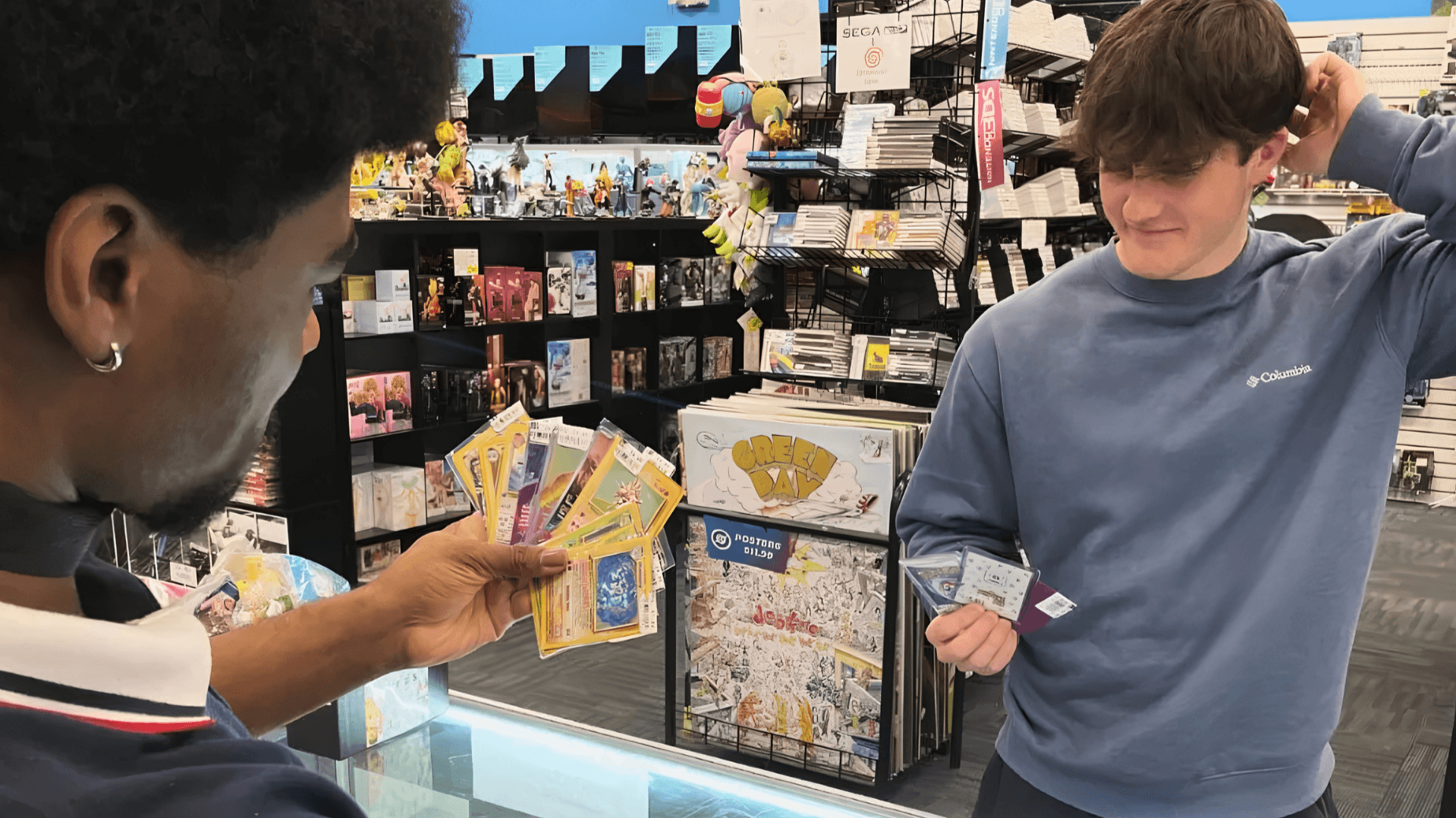
Disc Replay eliminates much of that work. Customers can bring in video games, consoles, electronics, movies, music, vinyl, collectibles, trading cards and more in a single visit. The store evaluates the merchandise and makes an offer on the spot. Customers can take cash immediately or choose store credit and receive a 30% bonus.

Disc Replay also strives to buy as much as possible. If a console is missing a power cord or another item has a correctable defect, stores can often account for the replacement cost rather than simply turning the seller away.

Customers Supply the Inventory That Keeps Other Customers Coming Back

Disc Replay's resale model creates a powerful cycle: the easier the brand makes it for people to sell, the more merchandise comes through the door. The more merchandise franchisees acquire, the larger and more interesting their selection becomes. And the more frequently inventory changes, the more reasons shoppers have to return.

Unlike a traditional retailer ordering the same standardized products from a distributor, Disc Replay's inventory is constantly evolving based on what customers bring in. One day, that could mean a collection of retro Nintendo games. The next, it could be vinyl records, Pokémon cards, vintage consoles, electronics or hard-to-find movies.

"We have tons of stuff that competitors don't," Leja said. "It's a treasure hunt every time you visit. A customer may go into one of our competitors' stores looking for a laptop and leave with a laptop. At Disc Replay, you can find that same laptop along with several other cool surprises you didn’t plan on discovering."

That unpredictability becomes an advantage for franchisees because customers have a reason to visit repeatedly. The merchandise that wasn't there last week could be sitting on the shelf today.

And because sellers who choose store credit receive 30% more value, a customer coming in to sell can immediately become a buyer. Instead of cash leaving the four walls, that value can circulate back through the store as the customer trades old entertainment for something new to them.

Proprietary Technology Helps Franchisees Buy Smarter

A resale model only works if franchisees know what to pay for products and what those products can realistically sell for, and that's where Disc Replay's proprietary technology matters most.

Rather than relying solely on public pricing websites or generic third-party retail software, Disc Replay owns its point-of-sale system and has built up years of transaction data across its stores.

"We own decades of data that show the actual market value of products based on real transactions across our stores," Leja said. "That gives us a real edge on knowing when we should adjust our buy prices or our sell prices, because we're working off marketplace information we actually own."

"Because we own the technology, we control our own roadmap. We're not waiting on a third-party vendor to build the pricing tools we need," Leja said. "A smaller, independent competitor simply can't afford to build or maintain that kind of infrastructure."

For a franchisee, that means the brand isn't simply telling owners to buy whatever walks through the door. Disc Replay has built technology around determining what inventory is worth and helping stores make informed purchasing decisions.

A Consumer Advantage That Strengthens the Franchise Model

Ultimately, Disc Replay's cash-in-hand convenience illustrates why the brand's consumer proposition and franchise opportunity are so closely connected.

The customer who doesn't want to spend two weeks listing and shipping three bins of entertainment gear gets an easier alternative. The franchisee gets access to inventory. Another customer gets the chance to discover something they couldn't find at a traditional retailer. And the cycle starts again.

That dynamic helps Disc Replay compete not only against other resale stores, but also against online marketplaces and highly specialized independent shops. It also creates an inventory model that's difficult to replicate at scale: one that combines a broad range of product categories, physical stores, proprietary pricing technology, and a buying experience built to make selling easy.

But building that kind of model takes more than smart technology. It takes a leadership team that keeps franchisee economics at the center of every decision, rather than optimizing for the numbers that matter most to the franchisor.

"Our decisions at the leadership level are made with the franchisee bottom line as a priority," Leja said. "As we're making decisions about new product lines or tweaking the business model, we're constantly thinking about our franchisees — not just top-line revenue, but their profitability and their cash flow."

For franchisees, the value of that convenience is ultimately very tangible. When Disc Replay makes selling easier for consumers, it gives more people a reason to walk through the door carrying the very inventory that keeps the business moving.

To find out more information on costs to buy this franchise, please visit discreplay.com/franchising.

Selling used entertainment gear isn't as simple as it sounds. Say a consumer has three bins full of old video games, consoles, DVDs, electronics and collectibles taking up space in a closet. They're generally left with two options, and neither one is quick. They can list everything themselves on a platform like Facebook Marketplace: photographing individual items, writing descriptions, answering messages, negotiating price and coordinating a time and place to meet a stranger for the handoff. Or they can ship everything to an online reseller, which means finding boxes, packing orders, shipping everything and waiting days for the items to arrive and be evaluated — only to learn, more often than not, that some items got rejected. From there, the seller is stuck either donating the leftovers or paying to ship them back. Either path means a lot of effort and several days before any money shows up.

At Disc Replay, that same customer can bring those three bins into a store, hand them over and walk out with cash in a fraction of the time. That simple difference is more than a consumer convenience: it's a fundamental part of what makes the growing, 34-unit specialty resale franchise's business model work.

That speed isn't an accident. It's built into the technology behind the counter.

"Our proprietary point-of-sale system is specifically designed to make the customer experience as swift and transparent as possible," said Nick Leja, brand president and Disc Replay franchise owner. "No matter how many items someone brings in, we can move through them quickly, with very little wait time, and get people cash on the spot. Our core focus is empowering people to thrive and discover joy through world-class buying and selling experiences. We help people thrive by paying more than competitors when we buy and sell secondhand items for great prices. And we deliver that joy with the sheer amount of stock we have."

Making Disc Replay the Easy Choice for Sellers

Online marketplaces have expanded consumers' ability to sell virtually anything, but they've also transferred much of the work onto the seller.

That might be manageable for someone trying to maximize the price on one rare collectible. It becomes far less appealing when someone is cleaning out a basement, moving, downsizing a collection or simply looking to turn years of accumulated entertainment products into extra cash.

Disc Replay eliminates much of that work. Customers can bring in video games, consoles, electronics, movies, music, vinyl, collectibles, trading cards and more in a single visit. The store evaluates the merchandise and makes an offer on the spot. Customers can take cash immediately or choose store credit and receive a 30% bonus.

Disc Replay also strives to buy as much as possible. If a console is missing a power cord or another item has a correctable defect, stores can often account for the replacement cost rather than simply turning the seller away.

Customers Supply the Inventory That Keeps Other Customers Coming Back

Disc Replay's resale model creates a powerful cycle: the easier the brand makes it for people to sell, the more merchandise comes through the door. The more merchandise franchisees acquire, the larger and more interesting their selection becomes. And the more frequently inventory changes, the more reasons shoppers have to return.

Unlike a traditional retailer ordering the same standardized products from a distributor, Disc Replay's inventory is constantly evolving based on what customers bring in. One day, that could mean a collection of retro Nintendo games. The next, it could be vinyl records, Pokémon cards, vintage consoles, electronics or hard-to-find movies.

"We have tons of stuff that competitors don't," Leja said. "It's a treasure hunt every time you visit. A customer may go into one of our competitors' stores looking for a laptop and leave with a laptop. At Disc Replay, you can find that same laptop along with several other cool surprises you didn’t plan on discovering."

That unpredictability becomes an advantage for franchisees because customers have a reason to visit repeatedly. The merchandise that wasn't there last week could be sitting on the shelf today.

And because sellers who choose store credit receive 30% more value, a customer coming in to sell can immediately become a buyer. Instead of cash leaving the four walls, that value can circulate back through the store as the customer trades old entertainment for something new to them.

Proprietary Technology Helps Franchisees Buy Smarter

A resale model only works if franchisees know what to pay for products and what those products can realistically sell for, and that's where Disc Replay's proprietary technology matters most.

Rather than relying solely on public pricing websites or generic third-party retail software, Disc Replay owns its point-of-sale system and has built up years of transaction data across its stores.

"We own decades of data that show the actual market value of products based on real transactions across our stores," Leja said. "That gives us a real edge on knowing when we should adjust our buy prices or our sell prices, because we're working off marketplace information we actually own."

"Because we own the technology, we control our own roadmap. We're not waiting on a third-party vendor to build the pricing tools we need," Leja said. "A smaller, independent competitor simply can't afford to build or maintain that kind of infrastructure."

For a franchisee, that means the brand isn't simply telling owners to buy whatever walks through the door. Disc Replay has built technology around determining what inventory is worth and helping stores make informed purchasing decisions.

A Consumer Advantage That Strengthens the Franchise Model

Ultimately, Disc Replay's cash-in-hand convenience illustrates why the brand's consumer proposition and franchise opportunity are so closely connected.

The customer who doesn't want to spend two weeks listing and shipping three bins of entertainment gear gets an easier alternative. The franchisee gets access to inventory. Another customer gets the chance to discover something they couldn't find at a traditional retailer. And the cycle starts again.

That dynamic helps Disc Replay compete not only against other resale stores, but also against online marketplaces and highly specialized independent shops. It also creates an inventory model that's difficult to replicate at scale: one that combines a broad range of product categories, physical stores, proprietary pricing technology, and a buying experience built to make selling easy.

But building that kind of model takes more than smart technology. It takes a leadership team that keeps franchisee economics at the center of every decision, rather than optimizing for the numbers that matter most to the franchisor.

"Our decisions at the leadership level are made with the franchisee bottom line as a priority," Leja said. "As we're making decisions about new product lines or tweaking the business model, we're constantly thinking about our franchisees — not just top-line revenue, but their profitability and their cash flow."

For franchisees, the value of that convenience is ultimately very tangible. When Disc Replay makes selling easier for consumers, it gives more people a reason to walk through the door carrying the very inventory that keeps the business moving.

To find out more information on costs to buy this franchise, please visit discreplay.com/franchising.
Don’t Miss the Next Big Franchise Story

Sign up for the 1851 Franchise newsletter to get our biggest stories before everyone else

By signing up, you agree to our user agreement (including class action waiver and arbitration provisions), and acknowledge our privacy policy.

Luca Piacentini

About the Author

Luca Piacentini

Follow

1851 Managing Editor

All Articles

No related articles found