
Escapology
SPONSORED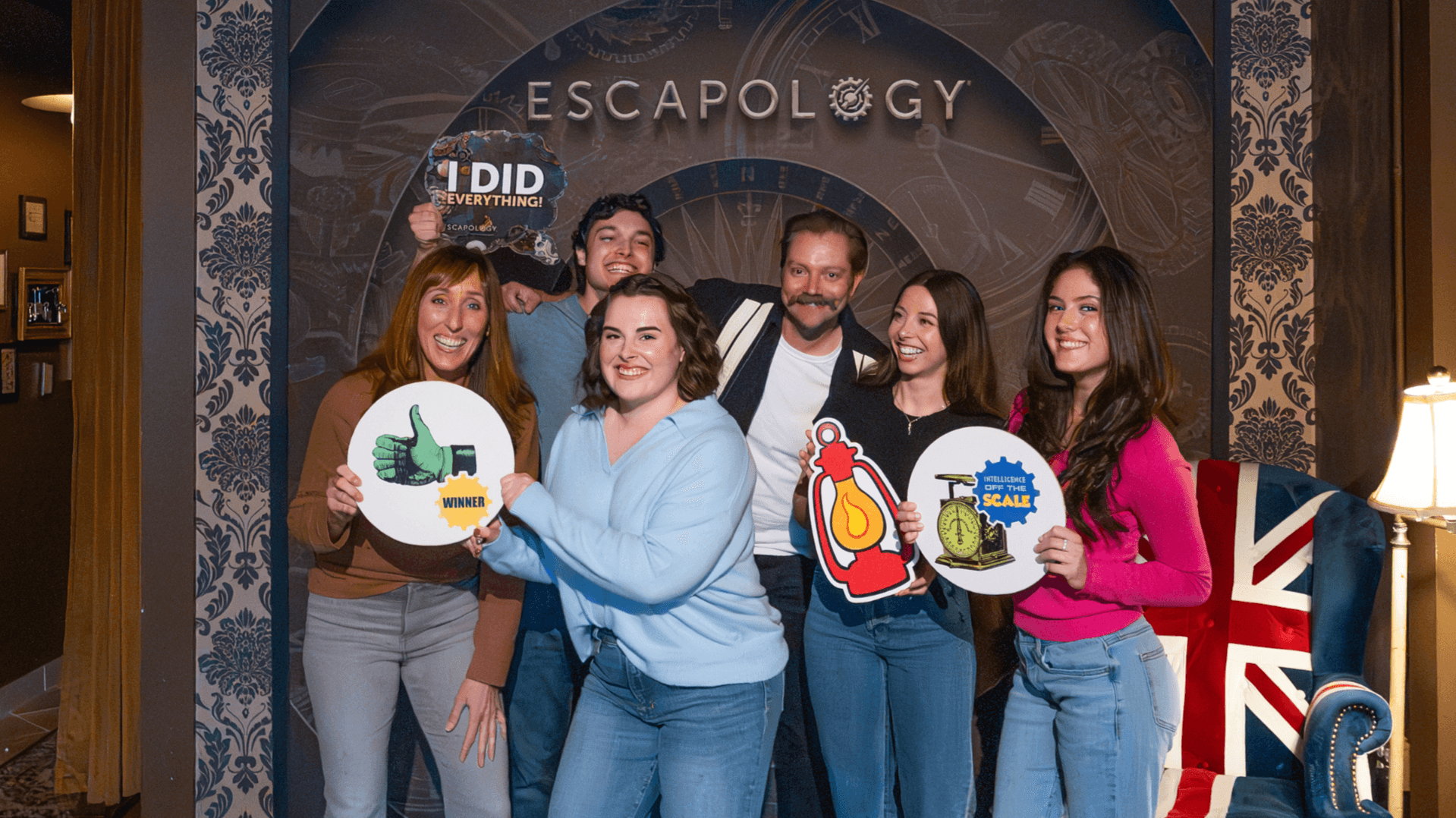
Inside Escapology's Marketing Playbook for Franchise Owners
From grand openings to local partnerships, Escapology gives franchisees the tools to build brand awareness and drive traffic from day one.
For an entertainment franchise, national brand recognition can help get a customer’s attention. But people don’t search for something to do nationally. They search for an escape room, birthday party, corporate outing or weekend activity in their own community.
That is why Escapology, the world’s largest escape room franchise, has built a marketing strategy that pairs the resources and recognizable intellectual property of a growing national brand with a highly localized approach to customer acquisition.
“We have a strong franchisor-supported digital marketing program,” said Emma Fee, Vice President of Marketing for Escapology. “We handle much of the complexity centrally, creating approved assets franchisees can use to market their games locally and supporting owners across search, social media, reviews, email, grand openings and community outreach.”
The result is a marketing playbook designed to give franchisees the infrastructure of a national brand without losing the local connection that drives repeat business.
Digital marketing begins well before a customer reaches the booking page. A potential guest might search for an “escape room near me,” look for birthday party ideas, browse Google reviews or discover a location through social media or online videos.
Escapology positions its franchisees across all those touchpoints. “We manage the franchisees’ websites internally, both content and SEO,” Fee said. “We structure each site to be localized so it shows up for specific searches in each market.”
That support extends beyond the website. Escapology manages business listings across platforms including Google Business Profile and Apple Maps.
“We also sync each location’s basic location information to all of the GPS networks, so customers can find venues as soon as they open,” Fee said. “It helps their organic presence, too.”
Escapology also helps franchisees establish their presence on review platforms, including Google, Yelp and Tripadvisor, with structured guidance on delivering the kind of guest experience that earns authentic, high scores from opening week on. For an experience-based business, those reviews can be particularly important, because first-time customers want to know what to expect before they book.
Escapology’s paid digital strategy centers on three primary channels: search, social media, and online video and display advertising.
The structure behind those campaigns is as much a part of the franchisee value proposition as the channels themselves. Rather than collecting a broad marketing contribution and spending it across the entire system, Escapology lets franchisees decide how much they want to allocate to marketing locally. Those dollars are then directed toward advertising for their specific venue and market.
That means an Escapology franchisee’s marketing strategy can reflect the needs of their individual market. “We don’t put all of the ad spend into a big national marketing fund — everything is allocated at the local level,” Fee said. “Instead of paying into a national brand marketing fund based on a percentage of revenue, the way some franchise systems collect it, 100% of the media dollars a franchisee contributes go to that venue’s local market, and it is customizable by location.”
Escapology’s partnerships with major entertainment properties are another major piece of its marketing engine. The brand has developed games around recognizable IP including Batman, Scooby-Doo and Star Trek, giving franchisees something most independent escape room operators cannot easily replicate.
Those partnerships can be powerful traffic drivers, but licensed properties also come with strict requirements around how imagery, characters and branding can be used.
Escapology’s corporate team handles that process centrally. “We work with the partners to build approved assets and roll them out across the system,” Fee said. “It is primarily digital, but it also extends to things like A-frame signage outside the venue. These IPs are a big pull — people come in and ask about them.”
Instead of requiring individual franchisees to create campaigns around complex licensing guidelines, Escapology provides a library of approved creative assets that owners can put to work in their markets.
That support extends to email marketing and creative development, with hundreds of branded templates available to franchisees, plus help setting up with ticket resellers.
The local marketing strategy becomes especially important when an Escapology venue first enters a market.
“We have a grand opening playbook, which is a collection of different ideas, informed in part by what we’ve learned opening our corporate-owned venues,” Fee said. “Most venues don’t do every single option, but everyone picks the events from the playbook that will resonate best in their market and make a splash in their community.”
One of those strategies is an open house. Despite the growth of escape rooms, Fee said one of the category’s challenges is still convincing people who have never played one to give the experience a try.
“One of the biggest barriers to entry in the escape room world is that people are scared or unsure of what the games will entail — being locked in, stuck in the dark, having someone jump out at them,” Fee said. “So we often do open houses, where we give people a reason to come in and walk through all the game rooms, see the set design and see what makes us stand out from other escape rooms.”
Escapology also recommends content creator nights, inviting local creators into the venue to play the games and share them with their audiences.
The playbook doesn’t end when the grand opening banners come down. Escapology encourages franchisees to establish relationships with the organizations, schools and businesses that can turn an entertainment venue into a fixture of the community.
“Even though we are an international brand, we like to have individual ties to each community,” Fee said.
Schools are one major opportunity. Franchisees can build relationships through fundraisers, PTAs, field trips and other events. Summer camps can become recurring partners as organizers look for activities and outings for their groups.
The same national-and-local split runs through social media. Escapology manages organic social content from the brand level while giving individual locations their own local pages and the ability to showcase partnerships, events and community-specific content.
“Social media can be hands-off for the franchisee, or, if an owner wants to be more visible locally, they can build on the branded posts,” Fee said.
That flexibility is intentional. Some franchisees prefer to lean heavily on corporate resources, while others want to become highly visible local ambassadors. Escapology’s infrastructure accommodates both.
Escapology has grown to more than 115 locations by offering a premium version of a category that remains relatively young. That creates an opportunity for franchisees, but it also means marketing isn’t simply about competing with other escape rooms. It is about introducing more consumers to the category in the first place.
“Our goal is really to introduce the escape room concept to new people,” Fee said. “It is meant to be approachable and easy, and our marketing lends itself to that.”
For franchisees, that means the brand’s national scale and local marketing strategy work together. Escapology provides the recognizable IP, digital infrastructure, creative assets, paid advertising capabilities and proven grand opening strategies. Franchisees can then build on those resources through the relationships and community engagement that only a local owner can create.
That combination helps Escapology operate as both a growing national entertainment brand and a neighborhood destination, giving franchisees the tools to build awareness from day one while developing the local connections that can keep customers coming back.
To find out more information on costs to buy this franchise, visit 1851franchise.com/escapology.
Escapology
SPONSOREDFrom grand openings to local partnerships, Escapology gives franchisees the tools to build brand awareness and drive traffic from day one.
For an entertainment franchise, national brand recognition can help get a customer’s attention. But people don’t search for something to do nationally. They search for an escape room, birthday party, corporate outing or weekend activity in their own community.
That is why Escapology, the world’s largest escape room franchise, has built a marketing strategy that pairs the resources and recognizable intellectual property of a growing national brand with a highly localized approach to customer acquisition.
“We have a strong franchisor-supported digital marketing program,” said Emma Fee, Vice President of Marketing for Escapology. “We handle much of the complexity centrally, creating approved assets franchisees can use to market their games locally and supporting owners across search, social media, reviews, email, grand openings and community outreach.”
The result is a marketing playbook designed to give franchisees the infrastructure of a national brand without losing the local connection that drives repeat business.
Digital marketing begins well before a customer reaches the booking page. A potential guest might search for an “escape room near me,” look for birthday party ideas, browse Google reviews or discover a location through social media or online videos.
Escapology positions its franchisees across all those touchpoints. “We manage the franchisees’ websites internally, both content and SEO,” Fee said. “We structure each site to be localized so it shows up for specific searches in each market.”
That support extends beyond the website. Escapology manages business listings across platforms including Google Business Profile and Apple Maps.
“We also sync each location’s basic location information to all of the GPS networks, so customers can find venues as soon as they open,” Fee said. “It helps their organic presence, too.”
Escapology also helps franchisees establish their presence on review platforms, including Google, Yelp and Tripadvisor, with structured guidance on delivering the kind of guest experience that earns authentic, high scores from opening week on. For an experience-based business, those reviews can be particularly important, because first-time customers want to know what to expect before they book.
Escapology’s paid digital strategy centers on three primary channels: search, social media, and online video and display advertising.
The structure behind those campaigns is as much a part of the franchisee value proposition as the channels themselves. Rather than collecting a broad marketing contribution and spending it across the entire system, Escapology lets franchisees decide how much they want to allocate to marketing locally. Those dollars are then directed toward advertising for their specific venue and market.
That means an Escapology franchisee’s marketing strategy can reflect the needs of their individual market. “We don’t put all of the ad spend into a big national marketing fund — everything is allocated at the local level,” Fee said. “Instead of paying into a national brand marketing fund based on a percentage of revenue, the way some franchise systems collect it, 100% of the media dollars a franchisee contributes go to that venue’s local market, and it is customizable by location.”
Escapology’s partnerships with major entertainment properties are another major piece of its marketing engine. The brand has developed games around recognizable IP including Batman, Scooby-Doo and Star Trek, giving franchisees something most independent escape room operators cannot easily replicate.
Those partnerships can be powerful traffic drivers, but licensed properties also come with strict requirements around how imagery, characters and branding can be used.
Escapology’s corporate team handles that process centrally. “We work with the partners to build approved assets and roll them out across the system,” Fee said. “It is primarily digital, but it also extends to things like A-frame signage outside the venue. These IPs are a big pull — people come in and ask about them.”
Instead of requiring individual franchisees to create campaigns around complex licensing guidelines, Escapology provides a library of approved creative assets that owners can put to work in their markets.
That support extends to email marketing and creative development, with hundreds of branded templates available to franchisees, plus help setting up with ticket resellers.
The local marketing strategy becomes especially important when an Escapology venue first enters a market.
“We have a grand opening playbook, which is a collection of different ideas, informed in part by what we’ve learned opening our corporate-owned venues,” Fee said. “Most venues don’t do every single option, but everyone picks the events from the playbook that will resonate best in their market and make a splash in their community.”
One of those strategies is an open house. Despite the growth of escape rooms, Fee said one of the category’s challenges is still convincing people who have never played one to give the experience a try.
“One of the biggest barriers to entry in the escape room world is that people are scared or unsure of what the games will entail — being locked in, stuck in the dark, having someone jump out at them,” Fee said. “So we often do open houses, where we give people a reason to come in and walk through all the game rooms, see the set design and see what makes us stand out from other escape rooms.”
Escapology also recommends content creator nights, inviting local creators into the venue to play the games and share them with their audiences.
The playbook doesn’t end when the grand opening banners come down. Escapology encourages franchisees to establish relationships with the organizations, schools and businesses that can turn an entertainment venue into a fixture of the community.
“Even though we are an international brand, we like to have individual ties to each community,” Fee said.
Schools are one major opportunity. Franchisees can build relationships through fundraisers, PTAs, field trips and other events. Summer camps can become recurring partners as organizers look for activities and outings for their groups.
The same national-and-local split runs through social media. Escapology manages organic social content from the brand level while giving individual locations their own local pages and the ability to showcase partnerships, events and community-specific content.
“Social media can be hands-off for the franchisee, or, if an owner wants to be more visible locally, they can build on the branded posts,” Fee said.
That flexibility is intentional. Some franchisees prefer to lean heavily on corporate resources, while others want to become highly visible local ambassadors. Escapology’s infrastructure accommodates both.
Escapology has grown to more than 115 locations by offering a premium version of a category that remains relatively young. That creates an opportunity for franchisees, but it also means marketing isn’t simply about competing with other escape rooms. It is about introducing more consumers to the category in the first place.
“Our goal is really to introduce the escape room concept to new people,” Fee said. “It is meant to be approachable and easy, and our marketing lends itself to that.”
For franchisees, that means the brand’s national scale and local marketing strategy work together. Escapology provides the recognizable IP, digital infrastructure, creative assets, paid advertising capabilities and proven grand opening strategies. Franchisees can then build on those resources through the relationships and community engagement that only a local owner can create.
That combination helps Escapology operate as both a growing national entertainment brand and a neighborhood destination, giving franchisees the tools to build awareness from day one while developing the local connections that can keep customers coming back.
To find out more information on costs to buy this franchise, visit 1851franchise.com/escapology.
Sign up for the 1851 Franchise newsletter to get our biggest stories before everyone else
By signing up, you agree to our user agreement (including class action waiver and arbitration provisions), and acknowledge our privacy policy.

No related articles found