Franchisor Stories
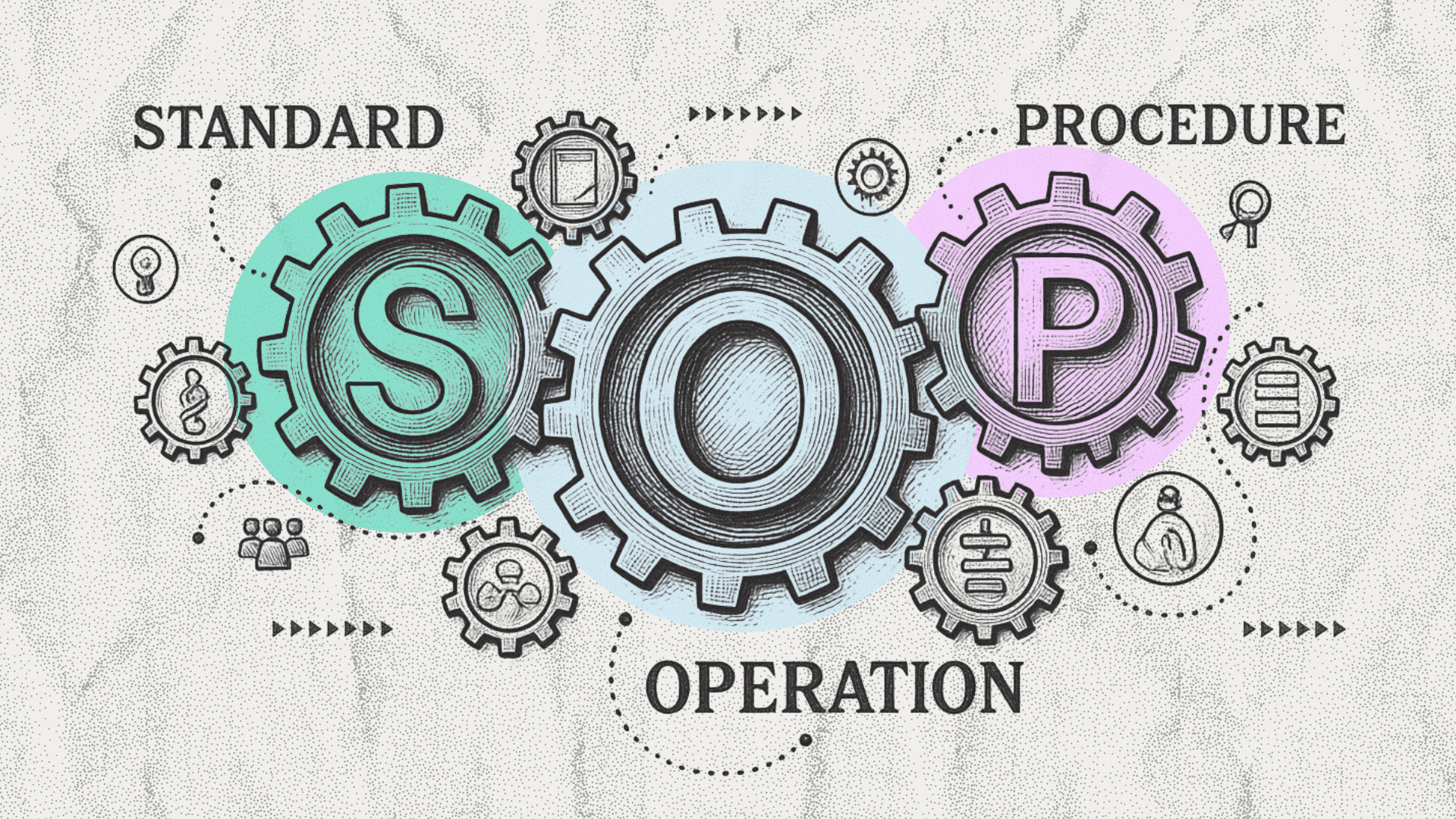
Creating an Ops Manual: From Tribal Knowledge to SOPs
As you prepare to franchise your business, compiling your instincts and insights into a clear document and creating repeatable processes is key to early franchisee success.
Franchisor Stories
As you prepare to franchise your business, compiling your instincts and insights into a clear document and creating repeatable processes is key to early franchisee success.
When preparing to transition from founder to franchisor, building your operations playbook and documenting SOPs is a crucial step. Franchises are built on systems, and your own instincts as the person who built the business cannot be the backbone of franchisees’ businesses across multiple markets. So, taking what’s in your head and getting it on paper in a clear, actionable way should be one of the first things you consider when you think of franchising.
For Amy Addington, founder and president of Woofie’s, considering the playbooks and SOPs was top of the list after she decided franchising would be the way to grow.
“It became very clear that franchising was the right way to scale the Woofie’s model, so we started putting everything together,” she said. “When we knew we were going to franchise, we made a real effort to document all of our processes because we knew, if we’re going to franchise, we literally need to document every single scenario. Every single thing. And it’s a much bigger task than you realize when you think about all the day-to-day things that you do!”
Once you decide to begin the documentation process, it can be easy to take a “brain dump” kind of approach, writing down everything that comes to mind, maybe in no particular order. This is a starting point, but it can’t be the backbone of the operations playbook.
For Addington, the choice to franchise came from organic demand as clients moved away from Northern Virginia and wanted a Woofie’s location in their new neighborhoods. Meeting that demand meant making the Woofie’s experience repeatable, even without her on-site. This is true for any franchised business.
It’s not enough to just document what needs to be done. You have to detail the “how,” and maybe even the “why.” Providing brand standards with this level of detail ensures franchisees in markets nationwide can not only execute on the basic promises of the business, but they’ll also be positioned to deliver the key differentiators and intangibles that make people love the brand.
Providing this additional layer of context in a clearly documented format can also give franchisees guidance that will help them navigate potentially unexpected scenarios over the lifetime of their business.
“Having almost 22 years of running a Woofie’s, we have so much anecdotal experience. It’s rare to find a scenario that I haven’t seen before, but the key is documenting everything and constantly updating,” Addington said. “Owners need that guidance. They’re going to encounter situations that they haven’t seen before, and it’s really critical that, as the franchisor, we prepare our owners as best we can.”
Staring down the demand of creating an operations playbook and set of SOPs can be intimidating, but Addington recommends the strategic use of AI when building out the operations manual.
“I think of how many hours and months we spent documenting… manually writing everything for the operations manual,” she said. “Today, people have such an advantage with the advancement of technology. You’ve got to use it. It’ll make things much more efficient and much more thorough for you.”
There are also a few key points to consider as you begin to gather the information you’ll include in the manual.
Use your history to understand what your franchisees’ futures may look like. Addington relied on her boots-on-the-ground experience when developing the Woofie’s operations playbook, and this allowed her to document guidelines for scenarios that a new franchisee might not even know are possible.
Even if a mistake happened a decade ago, there’s an opportunity to document it. Provide a protocol in the manual to prevent it from happening again next year.
Part of creating the operations manual and SOPs is deciding where the brand should be rigid and where franchisees may have some flexibility.
“There are some things where franchisees absolutely have to adhere to the brand standards, no matter what,” Addington said. “Woofie’s should always be that premium, upscale, highly professional image. But one thing that’s unique to our brand is that each of our franchisees has the van wrap. When you see it, you see Woofie’s, but we give owners the option to swap out the picture of the dog on the van. Most of our owners put their own dog on their first van!”
Outlining these expectations clearly from the start ensures franchisees understand the standards they must uphold and that there’s no overreach by local owners looking to use their discretion.
The aspects of the operations manual that will help a franchisee be more efficient or understand a bit more of the “why” behind business operations are crucial, but in many cases, the ops manual represents so much more.
Especially in service industries, SOPs can be a crucial risk management tool. For Addington, this comes in the form of taking care of people’s beloved pets, but a similar sentiment can be applied to child care and home services brands, too.
“When you’re taking care of someone’s baby, a live animal, there is so much responsibility and liability,” Addington said. “So it’s really critical that, as the franchisor, we prepare our owners as best we can.”
One of the most dangerous traps for a new franchisor to fall into is viewing the operations manual as a “one-and-done” kind of project. Putting together the first iteration is a lot of work, and it’s an important step in your franchising journey, but it can’t be the only time you think about operations or documentation. Realistically, the manual should consistently evolve as franchisees encounter unexpected scenarios and ask new questions, and it should also be updated as new tools and processes become available.
“We have our core ops manual, but we also use FranConnect, which houses all the documents for our franchise owners,” Addington said. “We’re constantly updating, creating new SOPs and putting everything in there.”
Operations manuals should look different from how they have in the past. Rather than a physical binder, for example, using digital hubs allows franchisors to make real-time updates to the manual and consistently push new resources out to the network as needed.
Moving from tribal knowledge to clear SOPs is the only way to ensure your brand’s quality stays consistent as you grow. While it requires a heavy lift, it’s the best way to turn a successful local business into a national franchise. By treating your manual as the source of truth and maintaining a consistent feedback loop and update cadence, you ensure the expertise in your head can become standard for each new location opened.
Growing and selling franchises is difficult. Want to learn more about how 1851 helps franchisors grow their franchises with confidence? Visit www.1851growthclub.com and see what we can do for you.
Sign up for the 1851 Franchise newsletter to get our biggest stories before everyone else
By signing up, you agree to our user agreement (including class action waiver and arbitration provisions), and acknowledge our privacy policy.