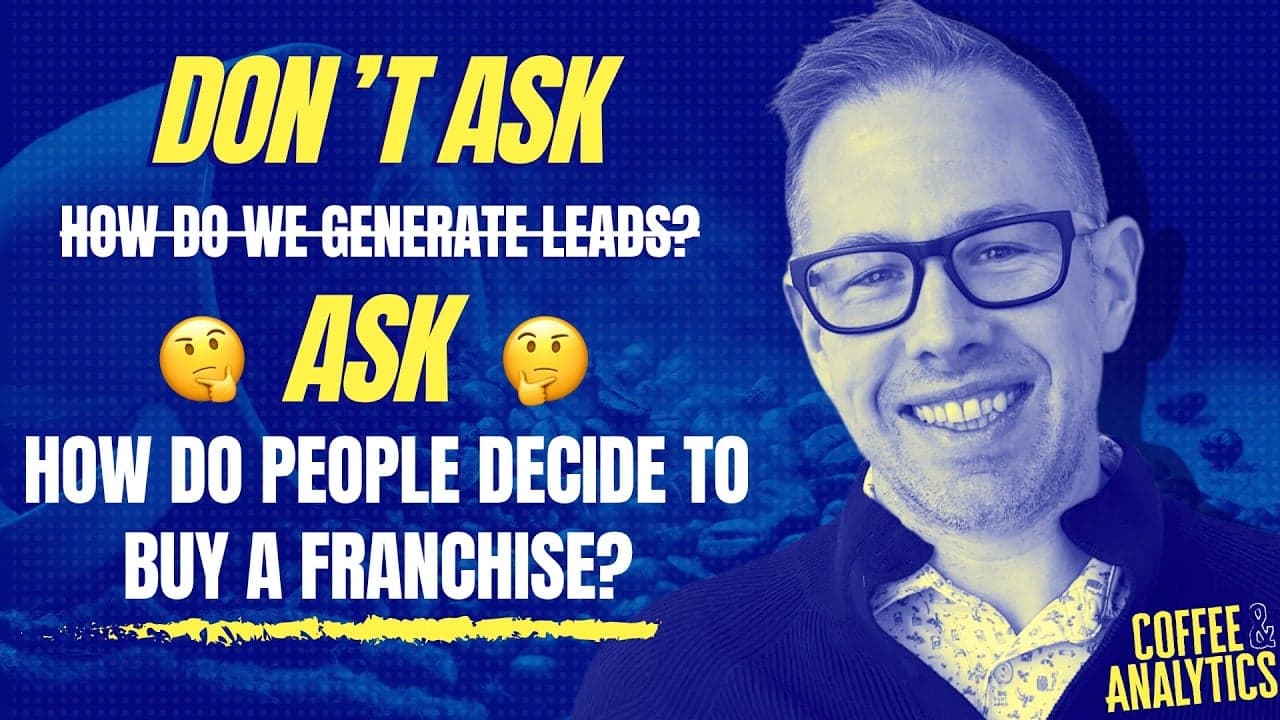
In a recent FranCamp Live webinar, 1851 Founder and Chief Growth Officer Nick Powills sat down with Charles Internicola, CEO of GoodSpark Franchise Growth Accelerator, to break down what works, what doesn’t and what franchisors need to focus on to attract and convert high-quality franchise candidates.
The Franchise Sales Website: Your Most Important Lead Generation Tool
Internicola and Powills emphasized that a franchise sales website is not just a digital brochure — it’s the engine that drives franchise growth. “If potential franchisees don’t understand what they’re buying when they land on your website, the odds of them filling out a form are slim,” Internacola said.
Internicola also highlighted a recent conversation with Shaina Denny, founder of Dogdrop, who compared building a franchise sales website to designing an Apple Store experience — structured, informative and immersive.
“She said, ‘Don’t undersell what you provide,’ and that really stuck with me,” Internicola said. He praised Dog Drop’s site for clearly showcasing the brand’s tech-driven approach, membership model and key performance indicators.
However, both Internicola and Powills pointed out that even well-designed sites often miss essential elements. “A lot of brands focus on making their websites beautiful, but they don’t always make it clear that they’re selling a franchise,” Powills said. “Some franchise websites feel more like a tech company or a consultancy rather than a business opportunity.”
Key Components of an Effective Franchise Sales Website
Throughout the discussion, Powills and Internicola identified several must-have elements for a high-converting franchise sales website:
- Clear Messaging: The website should immediately communicate what the franchise offers and why it’s an attractive opportunity. Powills pointed out that vague headlines like “Beautiful Opportunity” don’t tell a prospective franchisee what the business actually is. “You need a transformative headline that explains what the brand does and how it benefits franchisees.”
- Founder Story: “Franchisees buy into people, not just brands,” said Internicola. “A founder video is essential. If you have a strong founder story, showcase it front and center.”
- Business Model Clarity: The website should break down the investment, operational model and unique differentiators. “If a brand has built its franchise with a small footprint and recurring revenue in mind, that needs to be explicitly stated,” Powills said.
- Financial Transparency: Franchise buyers want to see numbers. “Don’t just list royalty fees and development fund contributions,” Internicola said. “Explain the investment and potential returns.” He pointed to Floyd’s Barbershop as an example of a brand that effectively highlights its revenue model.
- Team and Culture: Many franchise sales websites lack a section introducing the leadership team. “Candidates want to know who they’ll be working with,” said Powills. “Showcasing the team and their expertise adds credibility.”
- Frequently Asked Questions (FAQs): Using Google’s “People Also Ask” feature, Powills demonstrated how franchise brands can uncover and answer real-world questions on their website. “If people are searching ‘How much does it cost to start a dog daycare franchise?’ that should be a prominent FAQ on your site.”
The Future of Franchise Websites: A Shift Toward Web Footprint
As digital marketing evolves, Powills predicted that the importance of a traditional franchise website will shift toward a broader “web footprint.”
“Websites are important, but they don’t operate in a vacuum,” Powills said. “The totality of your web presence — YouTube, social media, PR, expos — all feed into your site. The website is the final step before a prospect fills out the form.”
Internicola agreed, adding that an evolving website reflects an evolving brand. “The biggest mistake I see is brands letting their franchise sales website remain static for years. If your website still looks the same two years after launching, you’re not learning and adapting.”
Final Thoughts: What Franchisors Should Do Next
Both Internicola and Powills encouraged franchisors to continuously evaluate and refine their franchise sales websites. “It’s not just about design — it’s about clarity,” said Internicola. “If a franchise candidate doesn’t quickly understand your value proposition, they’ll move on.”
For franchisors looking to take their website to the next level, Powills recommended attending FranCamp. “These are the kinds of deep-dive conversations we have at FranCamp — helping brands pinpoint their weaknesses and build stronger growth strategies.”
A full transcript of Powills’ interview with Internicola has been provided below. It has been edited for clarity, brevity and style.
Nick Powills: I feel like this is old-school FranX. It just has that feel. Today, do you know what we’re talking about, Charles?
Charles Internicola: Selling more franchises.
Powills: It’s always about selling more franchises! The topic today is franchise sales website essentials. That’s why I said it feels like FranX, because back in the day, you never knew what the topic was going to be until you jumped in.
Internicola: We’re going to talk about what makes a great franchise sales website. I just did a podcast with Shaina Denny from Dog Drop, and I think her website is amazing.
Powills: We had a great conversation, and for anyone watching, definitely check out the YouTube video. She comes from a tech background, so she approaches her website like an Apple Store — focusing on megahertz, memory and a clear user experience. I love her website, so let’s dig in.
For anybody watching live, this is your opportunity. If you want us to look at your website and give feedback, put a comment in the chat and we’ll check it out live.
Internicola: The goal here is to analyze branding, identify opportunities and optimize your website as the most important part of lead generation. If potential franchisees don’t understand what they’re buying when they land on your website, the odds of them filling out a form are slim.
Powills: Also, just a reminder — we’re closing registration soon for FranCamp Dallas. We have 50 franchisors attending, and if you can’t make Dallas, we have New Jersey in June, Chicago in September and Miami in December. Each camp is different, so register soon before spots fill up.
Internicola: I spoke with Shaina Denny on our podcast, and I’ve always admired what she’s doing. Dog Drop is an emerging franchise brand, and she has a very thoughtful approach. One of her key insights was: “Don’t undersell what you provide.”
Powills: Their website is very clear on their mission and goals. They aren’t just saying, “We’re in the dog daycare business.” You can see that they’re tech-driven, with a custom technology stack and a focus on KPIs like membership and recurring revenue.
Internicola: However, I think the site is missing the founder’s story. A well-placed founder video would be powerful here. Also, while the structure is beautiful, there’s a gap in clearly communicating that this is a franchise. Right now, it feels more like a tech or consultancy business.
Powills: A better headline might be: “A Dog Daycare Built Specifically for Franchising.” That clarifies that they started with franchising in mind and designed their model for scalability.
Let’s look at another example — Floyd’s Barbershop. Their website is bold, and they highlight their financial performance compared to competitors. If they can back up those revenue numbers, it’s a strong selling point.
Internicola: Many franchisors don’t showcase financials on their website, but brands like Floyd’s use data to create transparency and build trust. It’s a great way to show differentiation.
Powills: Now, let’s review Mane & Mani. Their branding is beautiful, but the headline “A Beautiful Opportunity” doesn’t say much. There’s no immediate clarity on what the business is.
Internicola: A more effective approach would be to provide a one-liner about what the brand offers and why it’s unique. If they’re disrupting the manicure and blowout industry, they should say so explicitly.
Powills: Additionally, there’s no founder video or team section. People buy franchises based on culture and leadership, so showcasing the team is crucial.
From reviewing franchise sales websites, three common gaps emerged. Firstly, many sites lacked a founder story or team section, depriving potential franchisees of insights into the brand's leadership and culture. Secondly, there was often a lack of clarity regarding the franchise model itself, leaving visitors who may not be familiar with franchising confused about the opportunity. Lastly, websites often neglected to showcase the brand's culture and community, which is a significant selling point for franchise brands.
One simple way to improve your website is to use Google’s suggested questions. Type in “Dog Drop Franchise” and see what comes up. Common questions like “How much does it cost to start a dog daycare franchise?” should be addressed directly on your site.
Internicola: Adding an FAQ section with these insights can improve your SEO and answer key buyer concerns upfront.
Powills: Let’s take a look at Franchise Law Solutions’ website.
Internicola: The branding is strong, but the messaging could be clearer. The headline “Win at Franchising” sounds like a consultancy rather than a law firm. A clearer version might be: “National Franchise Law Firm Specializing in Compliance and Growth.”
Powills: The testimonials are great, but they all talk about the value of the team. However, the team isn’t prominently featured on the site. Since clients rave about the team, that should be front and center.
Internicola: Additionally, to make the website more comprehensive, the process of franchising should be highlighted by breaking it down into three distinct phases: “Learn Franchising” for brands considering franchising, “Scale from 1 to 100 Units” for growing brands and “Go From 100 to Exit” for mature brands.
Powills: A well-structured website guides visitors through their journey, addressing their needs at each stage.
Internicola: Websites are just one part of your digital footprint. Franchise brands also need YouTube content to build authority, franchise expos to create in-person touchpoints, email marketing to nurture leads and podcasts or interviews to establish credibility.
Powills: All these elements work together to drive traffic to the website. A great website alone won’t grow your franchise — it needs to be supported by a strong marketing ecosystem.
At FranCamp, we’ll focus on helping franchisors identify their X-factor — the biggest challenge they need to overcome in 2025 to unlock growth.
Internicola: Each brand will develop an actionable plan to address branding clarity, lead generation strategy and franchisee recruitment process.
Powills: Your franchise sales website is a crucial piece of your growth strategy. By focusing on clear messaging, a strong founder story and a cohesive marketing strategy, you can drive better leads and conversions. For those attending FranCamp, we’ll dive deeper into these topics and help you refine your approach. See you there!
Watch the full webinar here.
Want to stay up to date on the latest advice and insights for home owners, home buyers and real estate industry insiders? Visit estatenvy.com/subscribe to subscribe to ESTATENVY and never miss another story!