Growing a Franchise
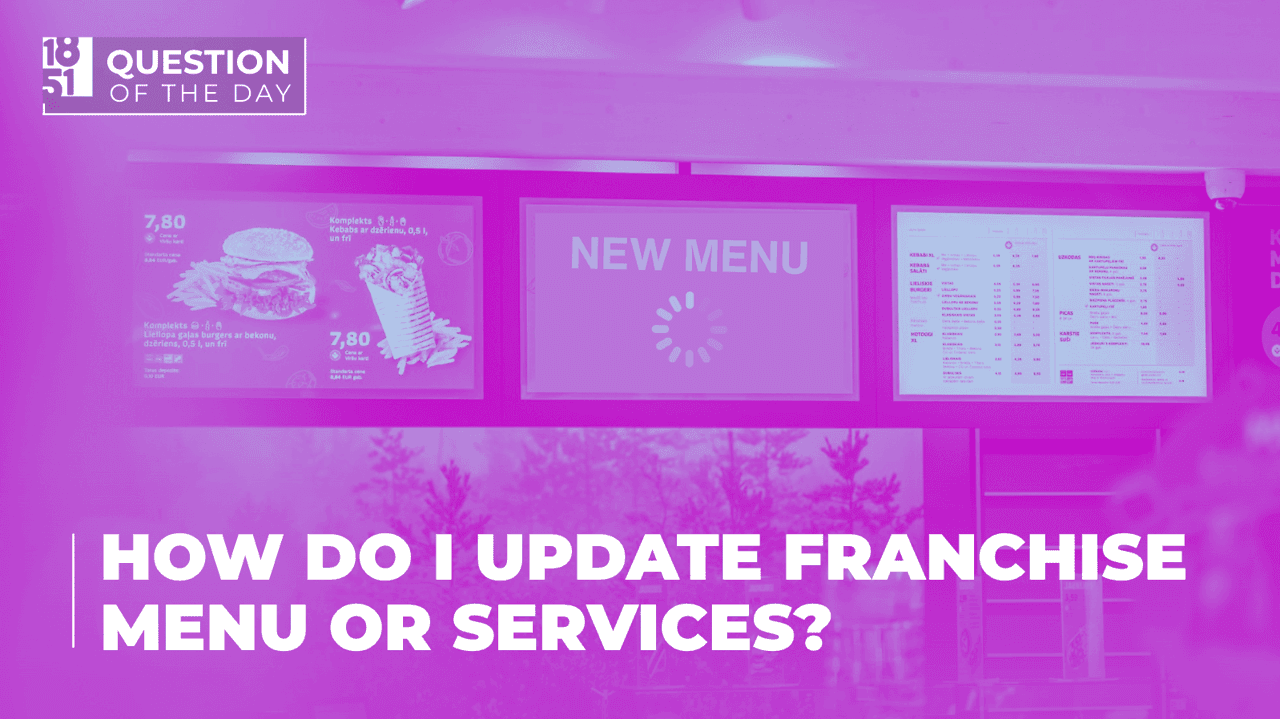
How Do I Update My Franchise Menu or Service Offerings?
The best menu and service updates are driven by data, tested carefully and rolled out with franchisee buy-in, not by trends or competitor activity.
Growing a Franchise
The best menu and service updates are driven by data, tested carefully and rolled out with franchisee buy-in, not by trends or competitor activity.
Whether you're operating a restaurant franchise, home services concept, fitness brand or any consumer-facing business, there comes a point when franchise leaders begin asking an important question: Is it time to update what we offer? The answer isn't always obvious. While trends come and go quickly, successful franchisors know that menu and service changes should be based on measurable performance indicators, operational realities and guest behavior, not impulse.
According to Justin Pridon, vice president of consulting services at Revenue Management Solutions (RMS), the decision to update offerings should start with the numbers.
Many brands feel pressure to react to competitors or social media trends. Pridon advises taking a more disciplined approach.
"The signal almost always shows up in the data first," Pridon said. "When traffic, average check, product mix or item level profitability start trending the wrong way, that's the trigger. So is a shift in how guests are ordering. You should also always take into account being proactive to pressures you see coming to the menu. How can you stay ahead of product cost shifts or supply availability while staying true to your guests? We tell brands to resist updating the menu because a competitor did or because a trend is loud on social.”
Before introducing entirely new products or services, many franchisors can improve performance through optimization. “The question is whether your own performance data says that something needs to change. If it does, the next step is menu engineering: looking at how items are laid out, where they sit on the page or screen, how they're priced relative to each other and which ones are actually carrying the margin," Pridon said. “Our eye-tracking research shows most guests scan menus rather than read them, so structure and placement can have a significant impact on profitability.”
Once a brand identifies an opportunity for change, the next step is testing. Pridon recommends establishing a clear objective before introducing any new menu item, service offering or operational change.
"Is the goal to increase traffic, improve average check, drive attachment or protect margins? Without that, you can't tell whether the test worked,” he said. “We also advise brands to test more than just the item itself. Pricing, menu placement, the photo, the description and the promotional messaging can all influence guest purchasing behavior."
In many cases, success has less to do with the product than with how it's presented.
"We've seen items succeed or fail purely on where they sit on the menu, not on the food itself," he said. “Run test and control groups and look at operational impact alongside guest response. A new item may resonate with consumers, but if it slows throughput or adds labor complexity in the restaurant, it can become difficult to sustain long-term. The most effective innovations improve the guest experience while still supporting operational efficiency and profitability across the system.”
One common mistake franchisors make is introducing too many new offerings too quickly. According to Pridon, innovation works best when it strengthens the brand's existing foundation. In fact, brands may discover that optimization produces stronger results than expansion.
"In many cases, optimizing an existing menu through better pricing, placement or simplification can drive stronger results than adding multiple new items," Pridon said. “Using transaction data and consumer insights helps brands understand which menu items and pricing strategies are driving traffic, check growth and profitability across the system.”
A new menu item or service change has a better chance of working when franchisees understand the reasoning behind it. Pridon said operators should be involved early and shown what the numbers indicate for sales, operations and profitability.
"Franchisee buy-in improves when brands can demonstrate measurable impact on traffic, average check, labor efficiency or profitability through pilot testing and performance data," Pridon said. "Franchisees are more likely to make changes if they see results and trade-offs are clear. A new menu item that increases complexity without improving profitability or guest engagement may not create long-term value for operators."
Objective data gives franchisors a clearer way to evaluate ideas before they reach the field, helping teams separate what sounds promising from what can actually work across the system.
"Margins, labor and pricing strategy are under constant pressure in today's environment, so brands need to ensure that menu and operational decisions are intentional and financially sustainable," Pridon said.
The work doesn't stop once a new item or service launches. Pridon recommends closely monitoring a range of performance indicators to determine whether the update is delivering the intended results.
"Brands should, most importantly, monitor metrics such as product mix, contribution margin, average check, attachment rates, traffic impact and repeat purchase behavior," he said. “Other post-launch factors are worth tracking too, including how long guests spend navigating the menu and qualitative shifts in how they interact with it.”
It's also important to understand how new offerings affect the broader business. "Some products may sell well individually but negatively impact higher-margin items or menu mix,” he said. “Brands that continuously measure, refine and optimize based on guest behavior and operational performance will win.”
If you're asking, "How do I update my franchise menu or service offerings?" keep these considerations in mind:
For more information on franchise menu strategy and operations, check out these related articles on 1851 Franchise:
Sign up for the 1851 Franchise newsletter to get our biggest stories before everyone else
By signing up, you agree to our user agreement (including class action waiver and arbitration provisions), and acknowledge our privacy policy.