Franchisor Stories
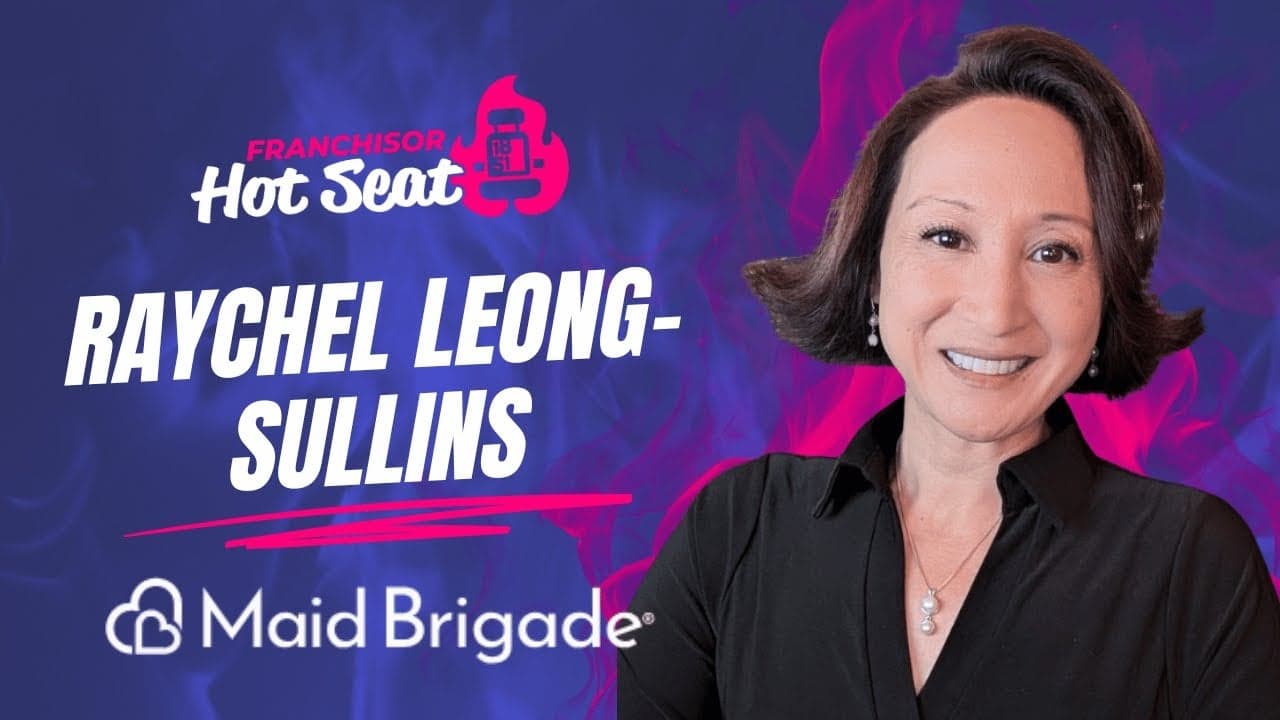
How Maid Brigade Built a Franchise System That Keeps Owners For Decades
Maid Brigade President Raychel Leong-Sullins shares how workplace culture, customer experience and thoughtful growth drive long-term franchise success.
Franchisor Stories
Maid Brigade President Raychel Leong-Sullins shares how workplace culture, customer experience and thoughtful growth drive long-term franchise success.
Raychel Leong-Sullins didn’t start her career in franchising. She was a professional ballet dancer who trained at the Royal Academy in London. But when she decided to make a change in 1999, she started at the front desk of Maid Brigade, worked her way through nearly every department, earned her MBA and eventually became president. Today, she leads a brand known for keeping franchisees for decades by fostering strong relationships, providing strategic support and helping owners build businesses that last.
“My passion for ballet was fading, and I knew I needed to be passionate about whatever I did next,” said Leong-Sullins. “I saw a newspaper ad for Maid Brigade, met with founders Don Hay and Bart Puett, and immediately clicked with them. I was intrigued by the industry, liked the people in the office and decided to give it a try. It’s worked out well — I’ve been empowered and fortunate in my journey here.”
In a recent episode of 1851 Founder and Chief Growth Officer Nick Powills’ “Franchisor Hot Seat” podcast, Leong-Sullins discussed what makes Maid Brigade stand out, why competition isn’t a threat but a sign of industry strength, and how prioritizing people — both employees and customers — drives long-term success.
A transcript of Powills’ conversation with Leong-Sullins has been provided below. It has been edited for brevity, clarity and style.
Nick Powills: Raychel, how did you accidentally fall into franchising? What’s your franchise backstory?
Raychel Leong-Sullins: I went from a career in ballet and decided to make a change in 1999, joining Maid Brigade at the front desk. While working here, I went back to school, got my MBA and worked through nearly every department until I became president. It’s been a fulfilling journey.
Powills: So in 1999, you were a professional dancer?
Leong-Sullins: Yes, I graduated from the Royal Academy in London.
Powills: That’s a big shift. Many franchise owners start in one career, realize it’s not their dream and pivot. What made you decide to start from the bottom in a cleaning business?
Leong-Sullins: My passion for ballet was fading, and I knew I needed to be passionate about whatever I did next. I saw a newspaper ad for Maid Brigade, met with founders Don Hay and Bart Puett, and immediately clicked with them. I was intrigued by the industry, liked the people in the office and decided to give it a try. It’s worked out well — I’ve been empowered and fortunate in my journey here.
Powills: After 26 years, if someone at a cocktail party asks what you do, do you mention your dance background? Or do you describe yourself as a franchisor — a cleaning business owner?
Leong-Sullins: I tell people I support business owners in building their own businesses and achieving the lifestyles they want. That’s why people get into franchising — autonomy. My team and I facilitate that.
Powills: Now that you're president, what’s changed under your leadership, and what’s the vision for the business?
Leong-Sullins: The industry itself hasn’t changed dramatically — dust will always exist, and people will always need cleaning services. What has changed is infrastructure and automation. Some people think robots will take over, but what sets us apart is human connection. Our cleaning teams remember homeowner preferences, engage with customers and build relationships. Franchisees often go the extra mile — sending flowers to a customer recovering from surgery, for example. That personal touch differentiates us from competitors and automation.
Powills: You’re deeply focused on experience, both for franchisees and their employees. How do you balance prioritizing franchisees while ensuring their teams create the customer experience you expect?
Leong-Sullins: It’s a multi-pronged approach. We support franchisees in building businesses they’re proud of, but we also emphasize workplace culture. It’s not just about hiring people who show up — it’s about hiring people who fit our culture. Happy employees create happy customers. We teach franchisees how to cultivate a great work environment through webinars and training.
Powills: Joint employer laws in franchising can be complex. Franchise owners often transition from being specialists in one area to suddenly managing an entire business, including employees. How do you support them in handling these challenges?
Leong-Sullins: Finding the right franchisees is key. The best candidates enjoy working with people — employees and customers alike. As a franchisor, we provide education and guidance, but ultimately, franchisees must apply it. Most of our franchisees want to create a great workplace because it benefits them — lower employee turnover means lower customer turnover. We even have a director of strategic talent and recruitment, which is rare in our industry. While hiring is done at the local level, we assist franchisees as much as possible.
Franchisees want both autonomy and structure. We tell them, “You have creative freedom, but we’ve been doing this for nearly 40 years — let us help you avoid pitfalls.”
Powills: That’s why franchisees pay fees — for expertise and guidance.
Leong-Sullins: Exactly. We’ve already made mistakes so they don’t have to.
Powills: My family recently switched cleaning services. The first company marketed cleanliness and efficiency, but their employees didn’t align with that. The second company delivered on those promises. In franchising, when service doesn’t meet expectations, franchisees blame the franchisor. How do you ensure consistency?
Leong-Sullins: Maid Brigade has a proven cleaning system, but beyond that, we emphasize customer connection. Our franchisees engage with customers through Google reviews, text surveys and — most importantly — phone calls. Proactive outreach strengthens relationships and improves retention.
Powills: That same communication philosophy applies to franchisee relationships, right?
Leong-Sullins: Absolutely. If a franchisee emails me with a complex question, I often say, “Let’s talk.” Emails can lead to miscommunication. Real-time conversations provide clarity and ensure concerns are addressed effectively.
Our entire team operates this way. If a franchisee needs help with HR, they can call our HR expert for a one-on-one Zoom meeting. We provide personalized support, and I expect that level of availability from everyone in our company.
Powills: That sets the standard. If you lead with strong communication, franchisees will replicate that with employees and customers. How many franchisees do you currently have?
Leong-Sullins: We have 76 franchise owners servicing over 380 territories across the U.S. and Canada.
Powills: How do you approach growth? What’s your franchise development strategy?
Leong-Sullins: We aim to add 10 new locations this year, but only if the right candidates come along. We won’t bring in franchisees who aren’t a fit. Our franchisees stay with us for decades because we’ve cultivated the right environment.
Powills: That’s the right approach. Some franchisors set arbitrary sales goals without considering fit, but matching culture to franchisee leads to better performance, which benefits everyone.
Leong-Sullins: We’re not selling widgets — we’re building long-term partnerships.
Powills: Competition has grown since 1999. How do you maintain differentiation?
Leong-Sullins: When I started, the four major brands were Maid Brigade, Molly Maid, Merry Maids and The Maids. Now there are more, which signals industry growth and demand. Competition is healthy. We even evaluate markets based on whether other cleaning franchises are present — if they are, it’s a sign of strong customer demand.
Powills: That’s a valuable insight. Many see competition as a threat, but you see it as validation.
Leong-Sullins: I also participate in a mastermind group with other maid service franchises. We share best practices and work together to elevate industry standards. By educating consumers about professional cleaning services, we all benefit.
Powills: That collaborative mindset also applies to labor relations. Senior care is another industry where differentiation is more about people than processes. If you raise industry standards, improve labor conditions and maintain strong demand, everyone wins.
Leong-Sullins: Exactly. This is tough work, but we have employees in Miami in their 60s and 70s who love their jobs. They may not be the fastest cleaners, but they do excellent work and customers adore them. We prioritize their well-being — if someone struggles physically, we find other roles for them, like folding laundry. Keeping dedicated employees benefits everyone.
Powills: Most people don’t want to clean their own homes, which is why this service exists. Finding and retaining people willing to do it is key. Respect and flexibility create a positive culture.
I always say, “Bet on the jockey, not the horse.” Franchise buyers invest in leadership, not just a business model.
Leong-Sullins: Thank you for the conversation — I appreciate the opportunity.
Powills: Thanks, Raychel. This was another “Franchisor Hot Seat.”
Sign up for the 1851 Franchise newsletter to get our biggest stories before everyone else
By signing up, you agree to our user agreement (including class action waiver and arbitration provisions), and acknowledge our privacy policy.