Founded on a profound belief in the power of early childhood education, KLA Schools emerged from the success of Roberto Ortega's initial corporate-owned schools established in the late 2000s. Witnessing the transformative impact of their innovative curriculum, inspired by the renowned Reggio Emilia approach, Ortega and his wife recognized an opportunity to empower others to fulfill their entrepreneurial dreams while making a meaningful difference in children's lives. This led to the strategic decision to franchise the KLA Schools model, allowing passionate individuals to replicate their success in nurturing young minds.
KLA Schools distinguishes itself through its unwavering commitment to a child-initiated and child-led curriculum.
“Children’s wants and interests need to be aligned with the academics,” Ortega said. “That's the challenge of the educator, right? It's aligning the academics and what they need to learn with their interests, with what's going to keep them with a light and a fire.”
Rooted in the philosophy that children are capable and curious learners, KLA Schools has built a welcoming, empowering educational environment and strong, supportive franchise system, encouraging entrepreneurs with similar passions to bring the holistic education model to their own communities.
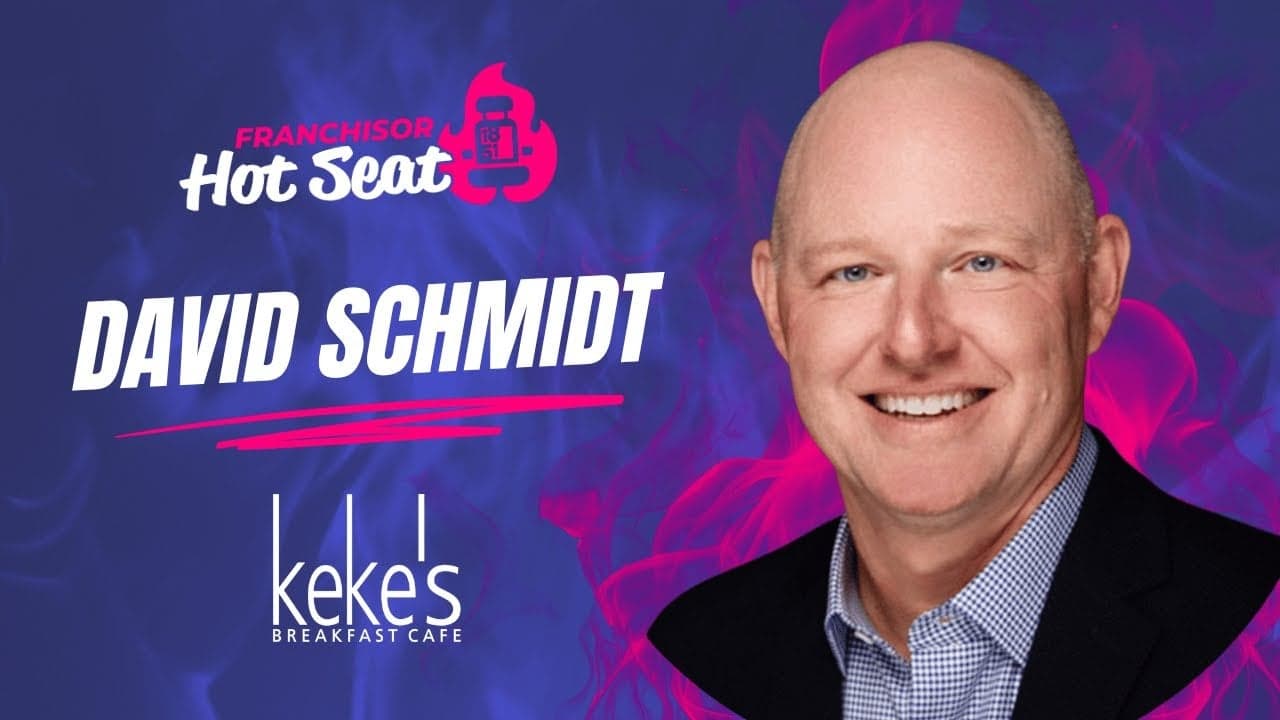
Ortega was recently featured in a webisode of “The Franchisor Hot Seat” with 1851’s Nick Powills. A transcript of the interview has been provided below. It has been edited for brevity, clarity and style.
Nick Powills: All right, Roberto, this is going to be a good one. How did you accidentally fall into franchising? What's your franchise backstory?
Roberto Ortega: I had a beautiful concept in KLA schools. We opened the first few schools back in 2008, 2009 and 2010, and they were very successful. Parents really loved the concept, and my wife and I were really thrilled seeing what was happening with the openings of those schools and how much of an impact we were creating with the children and the staff that we were employing. So we said, “Well, there must be people just like you and me whose dream is to own their own school, but they don't know how,” and that's when we started looking into putting together a franchise concept. We used the recipe for our success so that they could replicate it and be in business for themselves, doing something that they would love, which is educating and preparing children for elementary education.
Powills: Did you look at becoming a franchisee of anything else? How did you even create the business?
Ortega: Well, being a franchisee of a different brand was never an option for me. I think I have the entrepreneur spirit within me, and I felt like we could do this by ourselves. My wife had already had experience in the child care industry and a love for children, so she had really the most important thing you need to have to be able to do something in this industry. Then she had the experience of having her own little preschool and then working for other operators, and that's when she saw an opportunity in the field. By coming with an innovative and different type of curriculum — something that would be more child-initiated, something focused really on the children's interest.
Powills: I think back to starting our business in 2008, and when I told people that I was doing it, they looked at me like I was nuts, given the economy. Did you have the same reaction from people in your inner circle?
Ortega: I made the best deals at that time. I think we are in an industry where, even in downturns, the last thing that you want to cut is the investment in your children's education.
So the opportunity is to be able to showcase more than ever what makes you unique and your proposition and what you're doing for the benefit of children. Because you want to make sure that you're investing in the right place.
Powills: You said, “I made the best deals.” If I think about now, to be a franchisee in your space, you have to have built up a little bit of wealth in your life. It's not a “Chuck-in-a-truck” business. Oftentimes, especially in the last six months, I've heard, “Well, the economy or tariffs or whatever new politicians say.” But if there's turbulence, doesn't that open up the opportunity for better deals?
Ortega: Absolutely. I'm in agreement with you on that. For brands that are very highly specialized, like the case of KLA is, the market niche is very specific. In a business like this you're getting into right now, but it can take you a year, a year and a half to two years to be open with a school. You shouldn't be too much too concerned about the right now because you'll be opening into the future.
We do depend on the state of the commercial real estate market. I think that right now it's a buyer's or tenant's market right now, which creates a whole another set of opportunities.
Powills: Another thing that I've seen you guys do with the business model — it's not one size fits all real estate. Is that bendability part of the magic in helping franchisees actually get open?
Ortega: We target the best market and then find creative real estate solutions. A great school doesn't require a specific building type. It can be a custom facility or a retrofitted space. The key is the interior environment that allows children to thrive. This flexibility is crucial, and franchisees appreciate our creative approach. We provide standards for what goes inside a KLA school but also allow franchisees to add their unique touches.
Powills: A wealthy neighbor once told me the best financial advice is to invest in your children's education while you're alive. It resonated. Why wait to leave an inheritance when you can invest in their foundation now? You're saying, “We'll figure out the real estate and focus on the core product for the children and families.” Why do you think bigger brands have lost sight of this?
Ortega: Perhaps their focus shifts to the organization itself. Bigger size and consistent appearance might be seen as increasing enterprise value for a future sale. There might also be a perception that it's easier to scale with everything being uniform. However, today's parents and franchisees value uniqueness, innovation and creativity, which is hard to achieve with hundreds of identical schools.
Powills: Thinking back to the founder's journey, even in tough times like 2008, entrepreneurial bootstrapping involves finding shortcuts to deliver a superior product. In franchising, excessive rigidity can lead to "sold not open" situations or long development times, stifling that entrepreneurial spirit. This bootstrapping mentality is often critical for overcoming challenges, as you did in 2008/2009 and during COVID. Removing that flexibility in the operational process can lead to a rigid business.
Ortega: Absolutely. I agree with that 100 percent.
Powills: What's your vision for the business now?
Ortega: Our vision has been consistent: KLA Schools is a hybrid of corporate-owned schools and a franchisor. We award franchises while simultaneously opening our own corporate locations. This parallel growth strategy allows us to stay connected to the field and understand franchisee experiences and consumer needs firsthand.
Our curriculum, inspired by the Reggio Emilia approach, is central to KLA. This hands-on approach emphasizes observing children's interests and aligning the curriculum accordingly. Maintaining direct involvement through corporate schools is crucial for supporting franchisees and demonstrating the practical application of our philosophy.
Powills: It might sound obvious, but when franchisors continue to expand their corporate locations alongside franchising, doesn't that inherently signal a strong underlying business model?
Ortega: Absolutely. Why would we invest in more corporate locations if the model wasn't sound? Additionally, when I approve a site for a franchisee, I use the same strict criteria as I would for my own schools. Thankfully, no KLA school has ever closed, but I underwrite each location as if it were going to be a corporate school one day. This means if a franchisee ever wants to sell, there's a high likelihood KLA will take over the location.
Powills: That's only the second time I've heard that in my franchise career. The other time, the franchisor said they sign off on every lease as if it were their own, expecting to take it over if it ever closed. Conversely, this also protects the franchisee, as you wouldn't approve a location for them that you wouldn't want yourself. It creates a fantastic built-in control for real estate selection. Do franchisees truly grasp the significance of that commitment? Do they understand how much you have their back?
Ortega: I think so, and I hope so. If I were in their position, that's exactly what I'd want to hear from a franchisor. When entering a business, things usually go well initially. But you truly understand who you're dealing with during challenging times. Before committing to a franchise relationship, I'd want to know the franchisor's plan if I ever needed to exit the business. Knowing there's a strong possibility the franchisor would take over operations would provide significant peace of mind. I think that's huge.
Powills: It's huge. Roberto, what's the bigger dream? Beyond the financial success, is there a north star — perhaps giving back, coaching or building a lasting legacy for your family — that drives you?
Ortega: Our ultimate goal is for our corporate schools to become not just support tools for franchisees, but also educational beacons for the wider community. We want to demonstrate how education should be at KLA schools.
We have schools that go up to fifth grade, allowing us to prove the effectiveness of our early childhood approach by observing our students' performance as they progress and the schools they enter after graduating. Our north star is to educate as many people as possible about this type of education and its importance. While many acknowledge the critical nature of the zero-to-five years for development, knowing how to best facilitate that development is key. We believe our interpretation and application of the Reggio Emilia approach is unique and powerful, and we want to share it widely. Some will become franchisees, but even those who don't can benefit from understanding and incorporating the principles of child-initiated and child-led learning, which I believe is the future of education. We're already seeing elements of this approach in higher education, a departure from the more traditional methods many of us experienced in our early years.
Powills: So the traditional formula is quite rigid, a different mindset. What keeps you up at night? Is it the race against time, given your north star of educating as many people as possible through continued franchise and corporate growth, which naturally takes time?
Ortega: It's not a race against time. It's more about the ability to implement it effectively. Whether we reach a thousand or a million people, I'll be content knowing we did our best to reach as many as possible. The focus is on connecting with people and building their confidence in this educational approach, ensuring they understand that this type of education achieves the necessary milestones by the end of the school year.
Powills: What's the breakthrough moment? It feels like education became too rigid, a one-size-fits-all model. The expectation is set, and children who learn differently risk being dismissed, lacking the necessary flexibility. In today's world, education isn't just about the early grades; it's about developing well-rounded adults who can find their place and achieve their goals.
Ortega: Yes, absolutely. And it's connecting the social emotional piece with academics. Yeah, it's not one without the other; the two work together. Academics are very important.
But children’s wants and interests need to be aligned with the academics. That's the challenge of the educator, right? It's aligning the academics and what they need to learn with their interests, with what's going to keep them with a light and a fire.
Watch the full interview above or on Youtube.