
Pet Wants
SPONSORED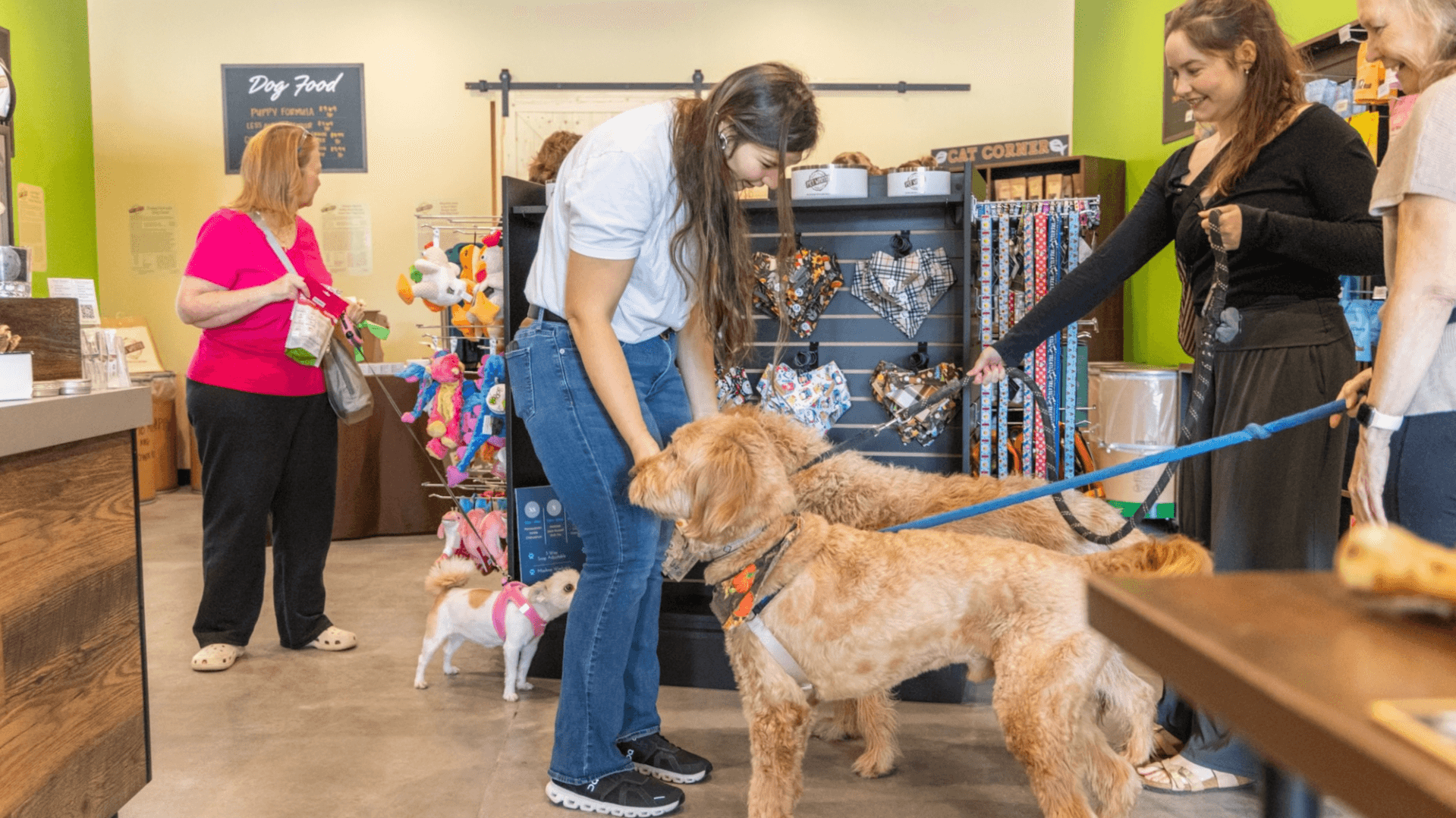
How Pet Wants Keeps Franchisees Ahead of Pet Industry Trends
Through daily monitoring, feedback, visits and education, Pet Wants proactively identifies trends to help franchisees better serve pet parents.
The pet industry moves quickly. New ingredients gain attention, feeding preferences evolve, niche products reach mainstream shelves and pet parents continue to become more thoughtful about what they buy for their animals.
For an individual business owner, keeping track of all that change can be a job in itself. At Pet Wants, the goal is to do much of that work at the brand level, giving franchisees access to insights that can help them stay relevant without forcing them to chase every new trend that appears.
“There are several different ways that we stay on top of trends at Pet Wants,” said Kevin Dugan, vice president of marketing. “That is a major part of our strategy.”
Pet Wants’ approach is not about being first to follow every new idea. It is about gathering information from multiple sources, identifying patterns and determining which developments fit the brand’s larger focus on pet health and wellness.
One of the ways Pet Wants keeps its finger on the pulse is through a daily industry newsfeed. “We use AI to scan industry news and pull from sources we’ve curated, including industry trade publications and social media,” Dugan said. “That is sent to us every day.”
Rather than relying on someone to occasionally search for new developments, the system gives the Pet Wants team an ongoing view of what is happening across the industry. That could include changing consumer preferences, emerging product categories or broader conversations around pet health and nutrition.
But Pet Wants does not rely on technology alone. Dugan says some of the brand’s most useful information comes from conversations happening throughout the franchise system.
“We also do a lot of networking and store visits,” he said. “We are always visiting the stores, talking to vendors and talking to owners. What are they seeing? Sometimes that comes out of the small talk you have with customers while you are doing your daily work.”
Those conversations give the Pet Wants team another perspective: what pet parents are actually asking for at the local level.
That is especially valuable for a brand like Pet Wants, where franchisees are encouraged to build close relationships with customers. Owners are not simply ringing up transactions. They are talking with pet parents about nutrition, allergies, sensitivities, treats, wellness and the challenges they are trying to solve.
Pet Wants has also found another valuable source of market research hiding in plain sight. “We recently analyzed all of our owners’ customer reviews,” Dugan said. “That is a great way to help us see what we are great at and where there are opportunities to be even better.”
For Dugan, reviews are particularly powerful because they provide customers’ experiences in their own words.
Looking across reviews from the franchise system can help Pet Wants identify common themes that might not be obvious when looking at a single store. It provides another way to understand what customers value, where expectations may be changing and which parts of the Pet Wants experience are resonating most strongly.
Pet retail has become increasingly centered on education and personalized service. Pet Wants has taken that approach into its stores, training franchisees to talk with customers about their pets' nutritional needs and help them choose from the available options.
Competitive research is another part of the equation. A couple of times each year, Dugan said Pet Wants takes a closer look at what other businesses in the space are doing.
The purpose, however, is not imitation. “If you don’t know what your competitors are doing, you don’t know how to be different,” Dugan said. “It’s not about chasing their success. It’s about using that information strategically to stand out.”
That philosophy is particularly relevant in a crowded pet marketplace. Pet Wants competes not only with traditional pet stores but also with large retailers, e-commerce businesses, subscription services and an expanding number of specialty health and nutrition concepts.
For Pet Wants, differentiation starts with its focus on dogs and cats and its larger emphasis on wellness. The brand has built its model around fresh, small-batch pet food, nutrition education and relationships between local owners and pet parents.
Its proprietary dry food formulas, for example, are slow-cooked at low temperatures and produced in small batches. Food is manufactured every six to eight weeks and shipped to franchisees with an emphasis on freshness. Pet Wants has also expanded its offerings as consumer preferences have evolved, including the introduction of freeze-dried raw food.
“The world of pet food is always changing. There is always new research coming out, and there is a large demand for fresh food,” said Max Zugan, a franchise owner in Hilton Head, South Carolina.
Expanding the product mix gives franchisees more ways to respond to changing customer preferences while maintaining the brand’s focus on pet health and wellness.
The final piece of Pet Wants’ trendspotting strategy is continuing education. Pet Wants team members attend major pet industry conferences, where they can interact directly with manufacturers, vendors, retailers and other professionals while learning about new developments in the space.
“Any conference is an investment of time and money, but when an entire industry gets under one roof for a few days, that is really worth it,” Dugan said. “You are meeting vendors, meeting owners, continuing your education and learning about the latest in the industry. It’s nonstop trendspotting.”
Those events give the team an opportunity to see emerging products and ideas firsthand, but they also provide context. A new product generating buzz online may look very different once the team speaks with vendors, retailers and other industry professionals about what they are actually seeing in the market.
Gathering information is only the first step. “We use all of this to determine what is noise and what are some actual trends that we need to discuss and think about moving forward,” Dugan said. “For the ones that warrant our attention, we collaborate and talk about what we should do.”
That collaborative process helps protect franchisees from one of the challenges of operating in a fast-moving consumer industry: figuring out which developments deserve their time, money and attention.
Pet Wants franchisees can remain focused on building relationships, growing their local presence and serving pet parents while the larger organization continually watches what is changing around them.
Ready to build a business rooted in purpose, passion and pet health and wellness? Visit https://1851franchise.com/petwants to learn more about franchising with Pet Wants.
Pet Wants
SPONSOREDThrough daily monitoring, feedback, visits and education, Pet Wants proactively identifies trends to help franchisees better serve pet parents.
The pet industry moves quickly. New ingredients gain attention, feeding preferences evolve, niche products reach mainstream shelves and pet parents continue to become more thoughtful about what they buy for their animals.
For an individual business owner, keeping track of all that change can be a job in itself. At Pet Wants, the goal is to do much of that work at the brand level, giving franchisees access to insights that can help them stay relevant without forcing them to chase every new trend that appears.
“There are several different ways that we stay on top of trends at Pet Wants,” said Kevin Dugan, vice president of marketing. “That is a major part of our strategy.”
Pet Wants’ approach is not about being first to follow every new idea. It is about gathering information from multiple sources, identifying patterns and determining which developments fit the brand’s larger focus on pet health and wellness.
One of the ways Pet Wants keeps its finger on the pulse is through a daily industry newsfeed. “We use AI to scan industry news and pull from sources we’ve curated, including industry trade publications and social media,” Dugan said. “That is sent to us every day.”
Rather than relying on someone to occasionally search for new developments, the system gives the Pet Wants team an ongoing view of what is happening across the industry. That could include changing consumer preferences, emerging product categories or broader conversations around pet health and nutrition.
But Pet Wants does not rely on technology alone. Dugan says some of the brand’s most useful information comes from conversations happening throughout the franchise system.
“We also do a lot of networking and store visits,” he said. “We are always visiting the stores, talking to vendors and talking to owners. What are they seeing? Sometimes that comes out of the small talk you have with customers while you are doing your daily work.”
Those conversations give the Pet Wants team another perspective: what pet parents are actually asking for at the local level.
That is especially valuable for a brand like Pet Wants, where franchisees are encouraged to build close relationships with customers. Owners are not simply ringing up transactions. They are talking with pet parents about nutrition, allergies, sensitivities, treats, wellness and the challenges they are trying to solve.
Pet Wants has also found another valuable source of market research hiding in plain sight. “We recently analyzed all of our owners’ customer reviews,” Dugan said. “That is a great way to help us see what we are great at and where there are opportunities to be even better.”
For Dugan, reviews are particularly powerful because they provide customers’ experiences in their own words.
Looking across reviews from the franchise system can help Pet Wants identify common themes that might not be obvious when looking at a single store. It provides another way to understand what customers value, where expectations may be changing and which parts of the Pet Wants experience are resonating most strongly.
Pet retail has become increasingly centered on education and personalized service. Pet Wants has taken that approach into its stores, training franchisees to talk with customers about their pets' nutritional needs and help them choose from the available options.
Competitive research is another part of the equation. A couple of times each year, Dugan said Pet Wants takes a closer look at what other businesses in the space are doing.
The purpose, however, is not imitation. “If you don’t know what your competitors are doing, you don’t know how to be different,” Dugan said. “It’s not about chasing their success. It’s about using that information strategically to stand out.”
That philosophy is particularly relevant in a crowded pet marketplace. Pet Wants competes not only with traditional pet stores but also with large retailers, e-commerce businesses, subscription services and an expanding number of specialty health and nutrition concepts.
For Pet Wants, differentiation starts with its focus on dogs and cats and its larger emphasis on wellness. The brand has built its model around fresh, small-batch pet food, nutrition education and relationships between local owners and pet parents.
Its proprietary dry food formulas, for example, are slow-cooked at low temperatures and produced in small batches. Food is manufactured every six to eight weeks and shipped to franchisees with an emphasis on freshness. Pet Wants has also expanded its offerings as consumer preferences have evolved, including the introduction of freeze-dried raw food.
“The world of pet food is always changing. There is always new research coming out, and there is a large demand for fresh food,” said Max Zugan, a franchise owner in Hilton Head, South Carolina.
Expanding the product mix gives franchisees more ways to respond to changing customer preferences while maintaining the brand’s focus on pet health and wellness.
The final piece of Pet Wants’ trendspotting strategy is continuing education. Pet Wants team members attend major pet industry conferences, where they can interact directly with manufacturers, vendors, retailers and other professionals while learning about new developments in the space.
“Any conference is an investment of time and money, but when an entire industry gets under one roof for a few days, that is really worth it,” Dugan said. “You are meeting vendors, meeting owners, continuing your education and learning about the latest in the industry. It’s nonstop trendspotting.”
Those events give the team an opportunity to see emerging products and ideas firsthand, but they also provide context. A new product generating buzz online may look very different once the team speaks with vendors, retailers and other industry professionals about what they are actually seeing in the market.
Gathering information is only the first step. “We use all of this to determine what is noise and what are some actual trends that we need to discuss and think about moving forward,” Dugan said. “For the ones that warrant our attention, we collaborate and talk about what we should do.”
That collaborative process helps protect franchisees from one of the challenges of operating in a fast-moving consumer industry: figuring out which developments deserve their time, money and attention.
Pet Wants franchisees can remain focused on building relationships, growing their local presence and serving pet parents while the larger organization continually watches what is changing around them.
Ready to build a business rooted in purpose, passion and pet health and wellness? Visit https://1851franchise.com/petwants to learn more about franchising with Pet Wants.
Sign up for the 1851 Franchise newsletter to get our biggest stories before everyone else
By signing up, you agree to our user agreement (including class action waiver and arbitration provisions), and acknowledge our privacy policy.

No related articles found