
ServiceMaster Restore
SPONSORED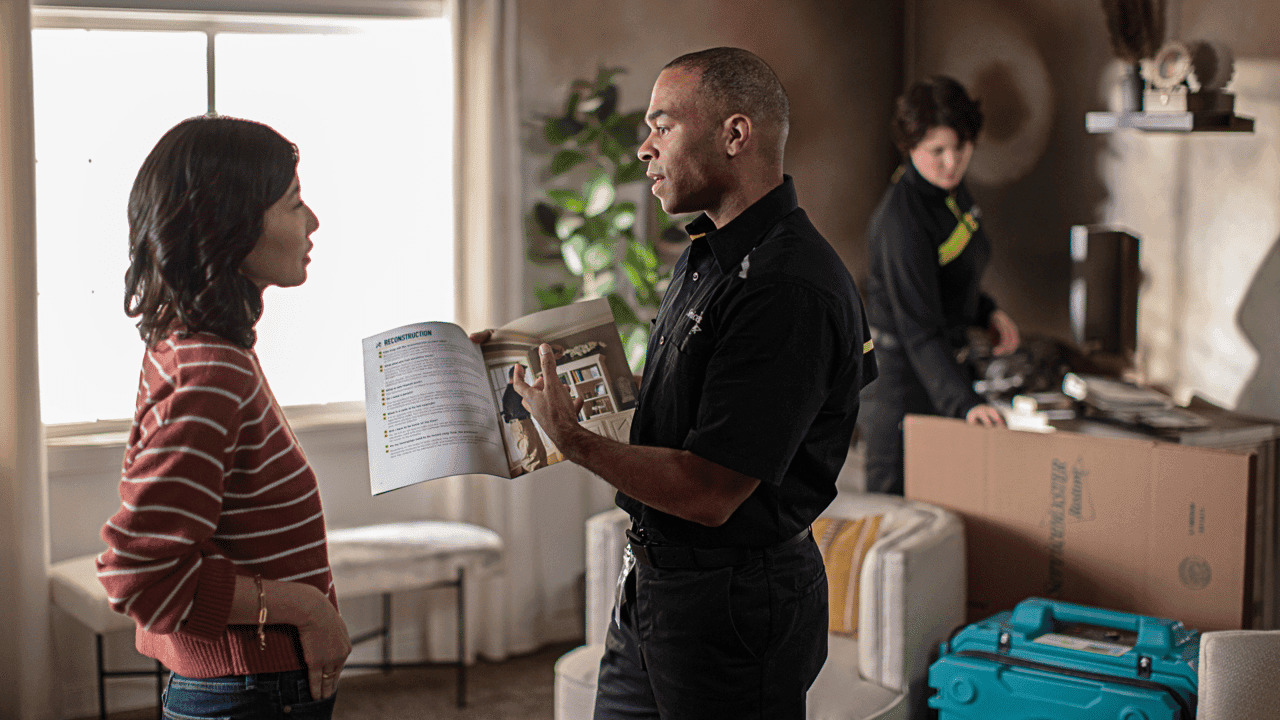
When Disaster Strikes, ServiceMaster Restore Moves
ServiceMaster Restore’s catastrophe response combines systems, speed and strategy to protect communities while strengthening local franchise owners.
When a hurricane barrels toward the coast or a flood sweeps through a neighborhood, ServiceMaster Restore is already in motion. The company’s nationwide network of franchises and its centralized catastrophe (CAT) response team are built to react quickly, strategically and in sync — a model that has been tested time and again by some of the country’s most devastating disasters.
At the center of those efforts is Carmen Coleman, manager of operations for ServiceMaster Restore. Coleman leads the residential CAT response team. The team coordinates with the commercial CAT team, other departments within ServiceMaster Brands, forecasting partners, mobilizers, and local franchises into a cohesive force.
“We have forecasting partners that include Monarch and AccuWeather,” Coleman said. “With one partner, we have a Teams chat channel where they can update us as they see changes in storm predictions. With the other, we receive email updates every morning, and when there are significant events, those emails increase throughout the day.”
Several days before a storm is expected to make landfall, Coleman’s team begins pulling the levers of a massive operation. “We begin meeting as the CAT leadership team, and we start solidifying our action plan,” she said. “Are we going to start sending out a mobilizer registration to get mobilizers interested? At least give them a heads up — this is what’s brewing. If you’re interested, go ahead and register, and we’ll call you and update you.”
That preparation includes dispatching and staging our equipment rental trailers from Kansas City, rallying our field operations and other staff, and keeping communication flowing around the clock. “When we’re in a large CAT event like a hurricane, it’s an all-hands experience. I like to say my CAT team is a volunteer army,” Coleman said.
Disaster response doesn’t just depend on planning. It also requires speed and agility. Forecasts shift and storms change course, which means decision-making can feel like a mix of strategy and instinct.
“I often say it’s almost a combination of chess and poker because things can always change,” Coleman said. “Sometimes your gut comes into play, but technology is helpful.”
She points to Hurricane Ian, when forecasts predicted landfall in Tampa before the storm veered south and hit Fort Myers. “By then, we’d had our internal teams and mobilizers staged within a couple of hours of Tampa,” she said. “After landfall and once areas opened, they had to migrate south and find accommodations.”
On the residential side, field sales teams are typically deployed within 48 to 72 hours of landfall. Their goal is to get into local franchise offices quickly to help manage the overwhelming influx of calls. “They have a lot of calls and need organization and coordination. That’s where our field teams step in,” Coleman said. “The sooner they can get there after the area clears, the better. Regardless of the size of your business, it’s stressful.”
Once the storm clears, ServiceMaster Restore operates like a command center without walls. Coleman likens it to “sitting in a big conference room with a whiteboard — only we’re on Teams.”
Her team tracks leads by county and ZIP code, reallocating work in real time. “It’s boom, boom, boom all day, sometimes 12 hours a day, seven days a week,” she said.
That support is invaluable for local franchisees, who may not have the capacity to manage the sudden surge in demand. “Having someone there who can say, ‘We are here to help you. We’re going to get this managed,’ makes a huge difference,” Coleman said.
Coleman has been with ServiceMaster for 13 years, and she has seen the system evolve from spreadsheets and patchy cell service to a technology-driven operation that integrates real-time forecasting, digital communication, and satellite internet.
“When I started, it was a lot of spreadsheets and chasing people down on the phone. Cell phone reception wasn’t good. It was a little chaotic,” she said. “Each year, the processes improve. Every event provides a chance to refine and improve.”
ServiceMaster’s corporate team runs commercial training at its Kansas City facility, and with residential mobilization, Coleman emphasizes the importance of easing franchisees into mobilization.
“For first-time mobilizers, we start them out with localized flooding events,” she said. “We prefer to helicopter our new mobilizers because we want them to succeed. It’s almost like graduating to larger events. We don’t encourage brand-new franchisees to uproot and head across the country for a hurricane event right away. It’s better to start locally, get comfortable, and build confidence.”
For franchisees, being part of a brand with a national disaster response reputation is more than a safety net — it’s a business builder.
“When a local event hits and the town is yellow with ServiceMaster trucks, that brings a sense of pride,” Coleman said. “At large-scale events, when you’re the local franchise and a hurricane has blown through, having trucks everywhere means you have support. It’s a morale boost.”
Carriers and homeowners notice too. “Homeowners often say, ‘What? You can get here tomorrow? Every other company says two weeks,’” Coleman said. “That makes an impression.”
She points to the Pentagon cleanup after 9/11 as the ultimate example of the network’s strength. “Sixty franchises mobilized, more than 300 employees, all passing extensive background checks. They sanitized 17 miles of surfaces in nine and a half weeks — record time,” Coleman said. “That shows the power of the network. It was an honor to be part of that.”
For Coleman and the ServiceMaster system, the formula is clear: preparation, speed and unity. “If you don’t prepare, you might as well not participate,” she said.
To find out more information on costs to buy this franchise, please visit https://1851franchise.com/servicemaster-restore.
ServiceMaster Restore
SPONSOREDServiceMaster Restore’s catastrophe response combines systems, speed and strategy to protect communities while strengthening local franchise owners.
When a hurricane barrels toward the coast or a flood sweeps through a neighborhood, ServiceMaster Restore is already in motion. The company’s nationwide network of franchises and its centralized catastrophe (CAT) response team are built to react quickly, strategically and in sync — a model that has been tested time and again by some of the country’s most devastating disasters.
At the center of those efforts is Carmen Coleman, manager of operations for ServiceMaster Restore. Coleman leads the residential CAT response team. The team coordinates with the commercial CAT team, other departments within ServiceMaster Brands, forecasting partners, mobilizers, and local franchises into a cohesive force.
“We have forecasting partners that include Monarch and AccuWeather,” Coleman said. “With one partner, we have a Teams chat channel where they can update us as they see changes in storm predictions. With the other, we receive email updates every morning, and when there are significant events, those emails increase throughout the day.”
Several days before a storm is expected to make landfall, Coleman’s team begins pulling the levers of a massive operation. “We begin meeting as the CAT leadership team, and we start solidifying our action plan,” she said. “Are we going to start sending out a mobilizer registration to get mobilizers interested? At least give them a heads up — this is what’s brewing. If you’re interested, go ahead and register, and we’ll call you and update you.”
That preparation includes dispatching and staging our equipment rental trailers from Kansas City, rallying our field operations and other staff, and keeping communication flowing around the clock. “When we’re in a large CAT event like a hurricane, it’s an all-hands experience. I like to say my CAT team is a volunteer army,” Coleman said.
Disaster response doesn’t just depend on planning. It also requires speed and agility. Forecasts shift and storms change course, which means decision-making can feel like a mix of strategy and instinct.
“I often say it’s almost a combination of chess and poker because things can always change,” Coleman said. “Sometimes your gut comes into play, but technology is helpful.”
She points to Hurricane Ian, when forecasts predicted landfall in Tampa before the storm veered south and hit Fort Myers. “By then, we’d had our internal teams and mobilizers staged within a couple of hours of Tampa,” she said. “After landfall and once areas opened, they had to migrate south and find accommodations.”
On the residential side, field sales teams are typically deployed within 48 to 72 hours of landfall. Their goal is to get into local franchise offices quickly to help manage the overwhelming influx of calls. “They have a lot of calls and need organization and coordination. That’s where our field teams step in,” Coleman said. “The sooner they can get there after the area clears, the better. Regardless of the size of your business, it’s stressful.”
Once the storm clears, ServiceMaster Restore operates like a command center without walls. Coleman likens it to “sitting in a big conference room with a whiteboard — only we’re on Teams.”
Her team tracks leads by county and ZIP code, reallocating work in real time. “It’s boom, boom, boom all day, sometimes 12 hours a day, seven days a week,” she said.
That support is invaluable for local franchisees, who may not have the capacity to manage the sudden surge in demand. “Having someone there who can say, ‘We are here to help you. We’re going to get this managed,’ makes a huge difference,” Coleman said.
Coleman has been with ServiceMaster for 13 years, and she has seen the system evolve from spreadsheets and patchy cell service to a technology-driven operation that integrates real-time forecasting, digital communication, and satellite internet.
“When I started, it was a lot of spreadsheets and chasing people down on the phone. Cell phone reception wasn’t good. It was a little chaotic,” she said. “Each year, the processes improve. Every event provides a chance to refine and improve.”
ServiceMaster’s corporate team runs commercial training at its Kansas City facility, and with residential mobilization, Coleman emphasizes the importance of easing franchisees into mobilization.
“For first-time mobilizers, we start them out with localized flooding events,” she said. “We prefer to helicopter our new mobilizers because we want them to succeed. It’s almost like graduating to larger events. We don’t encourage brand-new franchisees to uproot and head across the country for a hurricane event right away. It’s better to start locally, get comfortable, and build confidence.”
For franchisees, being part of a brand with a national disaster response reputation is more than a safety net — it’s a business builder.
“When a local event hits and the town is yellow with ServiceMaster trucks, that brings a sense of pride,” Coleman said. “At large-scale events, when you’re the local franchise and a hurricane has blown through, having trucks everywhere means you have support. It’s a morale boost.”
Carriers and homeowners notice too. “Homeowners often say, ‘What? You can get here tomorrow? Every other company says two weeks,’” Coleman said. “That makes an impression.”
She points to the Pentagon cleanup after 9/11 as the ultimate example of the network’s strength. “Sixty franchises mobilized, more than 300 employees, all passing extensive background checks. They sanitized 17 miles of surfaces in nine and a half weeks — record time,” Coleman said. “That shows the power of the network. It was an honor to be part of that.”
For Coleman and the ServiceMaster system, the formula is clear: preparation, speed and unity. “If you don’t prepare, you might as well not participate,” she said.
To find out more information on costs to buy this franchise, please visit https://1851franchise.com/servicemaster-restore.
Sign up for the 1851 Franchise newsletter to get our biggest stories before everyone else
By signing up, you agree to our user agreement (including class action waiver and arbitration provisions), and acknowledge our privacy policy.

No related articles found