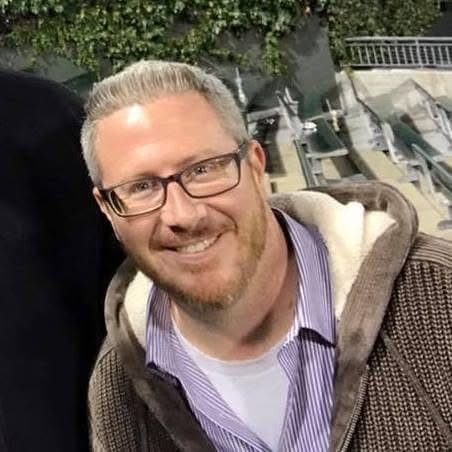
For Brad Butterworth, senior executive director of franchise development for Shoot 360, a life spent immersed in the sport of basketball paved an unexpected path to success in the word of franchising.
Following a stint in the Coast Guard, Butterworth found himself entering the world of franchising almost by accident. Using knowledge gained as a lifelong fan and coach, he came to Shoot 360 following a stint at 94Fifty, where he embraced analytics in the creation of a smart basketball equipped with internal sensors that measures skills like dribbling and shooting, delivering an array of sporting data.
Drilling down deeper on the analytics, Shoot 360 is a basketball training facility that appeals to all ages of basketball enthusiasts, utilizing patented technology to deliver an analytics-driven experience that’s suitable for any skill level.
Offering an array of services ranging anywhere from virtual competitions to integrated coaching, Shoot 360 touts investment from a number of NBA and WNBA stars, with its technology on full display in 29 NBA team facilities.
“We compare ourselves a little to Topgolf because what they’ve done is make golf accessible to the masses, people who enjoy the sport or just want a fun experience. Pickleball, too,” Underwood said. “That’s what Shoot 360 is. It’s opened the opportunity to participate in something where sports, entertainment and social experience all combine. These are opportunities for people of all ages and all skill levels to come in and enjoy the game of basketball in a completely new way. I just tell people: if you’ve ever been to Topgolf — or if you’ve ever played pickleball — just add technology to that experience. That’s what we are.”
Founded by former basketball coach Craig Moody in 2012, nearly 60 Shoot 360 franchises dot the globe, with the company eyeing explosive long-term growth as they push to open 300 locations in the next three years.
Brad Butterworth joined 1851 Franchise Publisher Nick Powills on the “Meet the Franchise” podcast to discuss his entry into franchising, lessons learned from a life in basketball and how Shoot 360 channels the Topgolf model to deliver an immersive basketball experience to fans of any age or skill level. A transcript of Butterworth’s interview with Powills, edited for length and clarity, has been provided below.
Nick Powills: All right, Brad. We’re going to start with your story and then we’ll get into the business. How did you accidentally fall into franchising and what’s your franchise backstory?
Brad Butterworth: I was in the Coast Guard and, after I got out, I started coaching high school and college basketball. I didn’t really enjoy my time as a college basketball coach, especially the recruiting aspect. All I really wanted to do was be around kids and help coach.
At that time, I was lucky. Basketball technology — sports analytics — was really hitting the market in a big way. I got on with a group that took a piece of technology to market called 94Fifty. It was a small, sensored basketball that tracked a bunch of measurements.
We went on a big speaking circuit. Once you get into that world, especially something as niche as basketball, it gets pretty small.
I met the original four founders of Shoot 360. After we packaged up and sold 94Fifty, I jumped on board with Shoot 360. They were in the early stages: conceptual design, trying to figure out how to scale. They brought me in to help scale operations.
That would’ve been around 2014. We opened three locations: Beaverton, Vancouver and L.A. — all with different square footage and offerings — but the same core membership and training product based on proprietary technology.
Then we opened a location in Indiana. We wanted to be in a basketball state but also stretch our support to see what it would be like to manage a location that far away. Corporate growth is expensive, so we decided on the franchise model.
The way I describe it: we’re just a bunch of idiot basketball coaches who created some awesome technology. And now we’re drinking through the firehose of the FTC and franchise compliance laws. We’re really learning by doing.
Our president and founder, Craig Moody, was the first to navigate the franchise world. After he blazed a trail through the thick brush, he said, “Butter, go and conquer.”
I learned a lot from him — and I’m still learning. We launched our first franchise location in late 2019 or early 2020. Now we operate 57 locations worldwide.
COVID was actually good to us. Everyone else was shutting down. But we were the perfect COVID model: one player, one hoop, one skill court. I think we opened 16 or 18 locations during that time, and it just took off from there.
We’re at 57 now with about 12 more to open this year.
Powills: I hear tremendous technology and sound business. You weren’t thinking about franchising at the start — you were building solid infrastructure. Then you leveraged franchisees and their investment to scale. Because of that early work, did that change who your ideal candidate was? Were you more protective in the early stages or just excited to have buyers come in?
Butterworth: I love this question. I’d like to say we were more protective — but we didn’t know what we didn’t know. The good news is we ended up opening a lot of locations with really good partners. But, yeah, there were definitely challenges. Supporting franchisees for one. There were also challenges with the franchisees themselves — from an operational standpoint and in terms of getting the right type of operator versus owner.
The really good thing about our executive leadership and ownership is their willingness to get around other franchisors, pick their brains and learn from them. That’s one thing about basketball coaches; we’re not trying to reinvent the wheel. We just want to sit in the film room with another coach and get better.
Through that, we learned a ton. Getting our legacy franchises successful was a long road — but we’ve done a great job with it. Along the way, we defined our three ideal operator avatars and now we point our marketing efforts toward finding those people.
Powills: I love the phrase “for the love of the game.” When there’s good business involved, the love of the game might not always be the true driver (even though a candidate says it is). You said a bunch of coaches sat around trying to figure this out. Has that mindset translated to the franchisees? Or has it opened up a risk where if people look at this only as a business, not a passion, you have to be more protective in the sales process?
Butterworth: Navigating to the right avatar is huge. You’d think former college basketball coaches would be our best owners and operators — but there are challenges there. Coaches are philosophers. We tend to die on the hill of philosophy. But, at the end of the day, we want our operators to teach back to the technology and rely on it. Because that’s what makes the business scalable.
When I came into this through 94Fifty, I saw the market — these massive basketball facilities. You have them in Chicago: 60,000, 80,000, even 120,000 square feet. They open, spike and then die because there’s no backbone of predictable revenue.
Basketball coaches still operate like it’s been experienced for 120 years. But we’re flipping that paradigm. It’s about experiencing basketball and managing basketball operations in a completely new way.
So, our best operators usually have a passion for basketball but also come from finance, tech or real estate. They’ve made some money, they’ve got kids who play and they’re looking for a passion project — but they also know how to read P&Ls, develop talent, invest in staff and think long-term.
Being a basketball coach only gets you so far.
Powills: That combination of business acumen and passion, when paired with a great offering, drives stronger revenue. On that front, what’s the cost to get in and what do you report in Item 19?
Butterworth: Our best locations show 25% to 32% EBITDA. Those are the operators we’re targeting. Many of them are also development agreement holders. We’re excited about what that future looks like.
Powills: And what’s the build-out cost?
Butterworth: You’re probably opening doors at around $1 million. That’s what I tell prospects to expect: plan to finance a $1 million loan.
Powills: Has anyone also owned the land as part of their investment?
Butterworth: No question. That’s a smart move. Hedging the bet.
Powills: Have any former professional athletes looked at this brand?
Butterworth: Oh yeah. Our technology sits in 29 of the 30 NBA facilities. Teams use it all the time for training and course correction.
We have 15 to 17 WNBA and NBA investors, ambassadors or direct owners. Rodney Stuckey owns one of our best locations in Kirkland, Washington. He paved the way for us in franchising. Thaddeus Young in Memphis has a successful location. Peyton Siva, whose jersey hangs in the Yum! Center in Louisville, had a solid pro career and is now an owner. Breanna Stewart is also a huge supporter.
Powills: What scares you about this business?
Butterworth: Great question. The niche. We’re athletics tech — more specifically basketball tech. Even more specifically, elite basketball tech. That’s how people can perceive us.
But our founder is always looking at those challenges and thinking about how the market views us. We’re constantly introducing new ways to engage with basketball.
So, while we’re designed for ages 7 to 17, we’re now way beyond that. Our products are for people like you and I — people who just love the game and want to shoot, compete, have a beer in between and then get back out there. We call it “7 to 70.”
Millions of people have aged out of competitive basketball but still love to play. That’s a massive opportunity.
Powills: Incredible growth ahead. What’s the dream now?
Butterworth: The Brooklyn Nets opening a location across from Barclays Center — one of the busiest intersections in the world — was huge. The Warriors opened the first NBA-branded franchise location. Then we partnered with the Clippers and Jazz in Southern California. But the Nets were a big dream for us.
We held off on the five boroughs and the Island because we wanted a heavy hitter in the number one media market. That was a smart call by our team. Once our NBA partners proved the model, the Nets jumped in.
We also installed our tech in Intuit Arena as a fan experience. That helped open the door too.
So, now, we’re aiming for 100 open locations by the end of next year. That’s huge considering the challenge of finding commercial and light industrial space.
Our long-term goal: 300 locations in three years.
Nick Powills: Is this an opportunity to move basketball into more of a Topgolf-type world, where it becomes a social experience? Even in what you said about placing locations in front of stadiums — is that opening up doors? And are the massive investments in pickleball also creating opportunities to drive candidates toward you?
Brad Butterworth: 100%. We compare ourselves a little to Topgolf because what they’ve done is make golf accessible to the masses, people who enjoy the sport or just want a fun experience.
Pickleball, too. Pickleball is kind of the corrective action that happened when people didn’t want to play tennis anymore. Maybe they got a little older or it was too hard on the body. So, what do you do? You lighten the ball, make it a little bigger and shorten the court. It’s not so bad on the joints. You can play doubles, it’s fast-paced and it’s a little easier to play than tennis.
I’m sure there are some pickleball fans who’ll light me up for saying that. But the fact is it opened up that kind of game to a lot of people.
That’s what Shoot 360 is. It’s opened the opportunity to participate in something where sports, entertainment and social experience all combine.
We have products like Shooting Games, Shooting League and Shoot 360 Fit. These are opportunities for people of all ages and all skill levels to come in and enjoy the game of basketball in a completely new way.
I just tell people: If you’ve ever been to Topgolf — or if you’ve ever played pickleball — just add technology to that experience. That’s what we are.
Powills: I can see what you’re doing and my excitement is there. I think it’s awesome. Clearly, you’ve got the right personality to push this forward, and I’m grateful that you gave me some of your time today.
Butterworth: I appreciate that, Nick.
Watch the full interview here.