
Tide Services
SPONSORED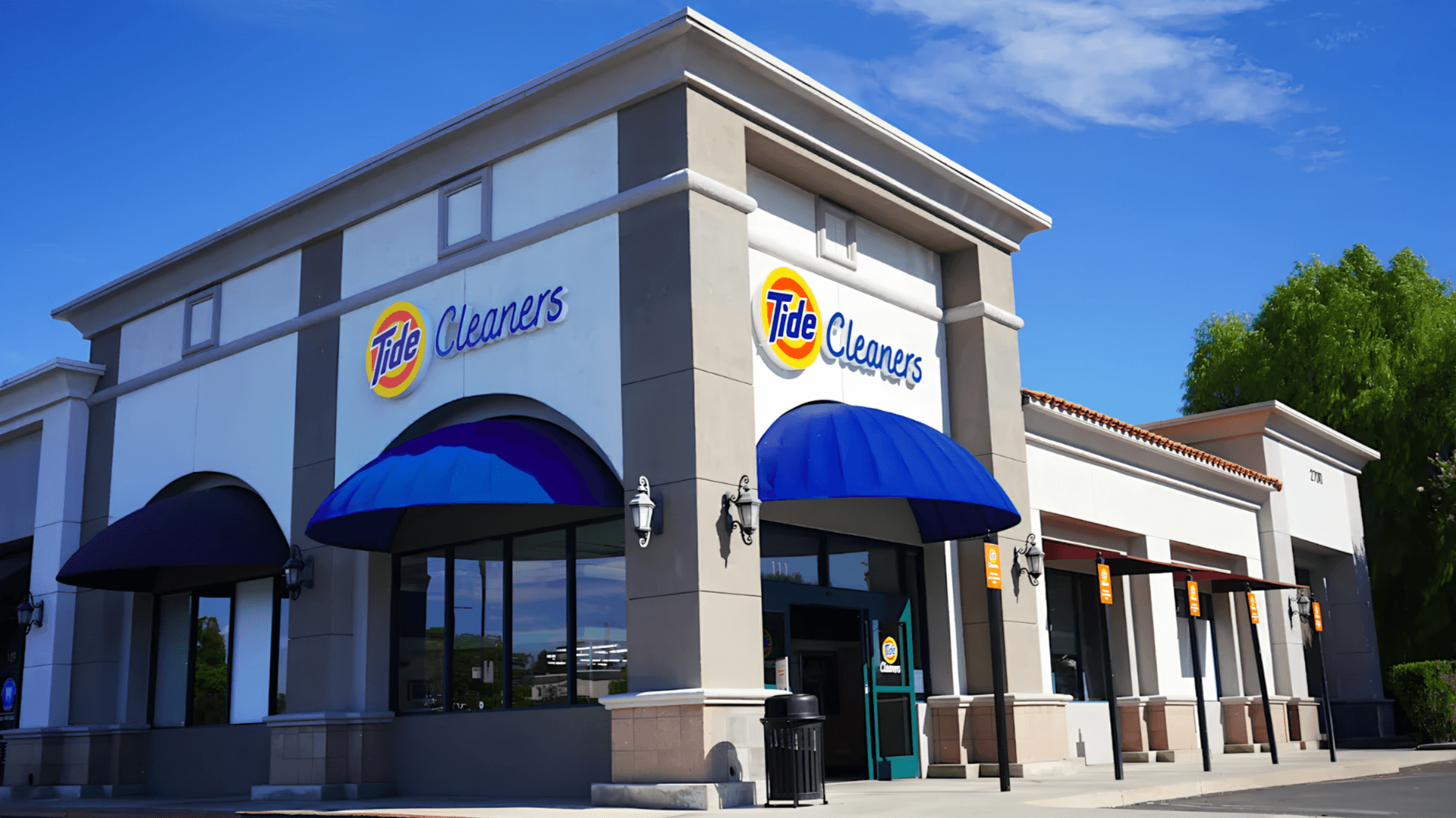
Why Multi-Unit Operators Are Choosing Tide Over Their Next Restaurant Deal
With recurring demand and lower complexity than foodservice, Tide Services helps experienced restaurant franchisees diversify their portfolios.
For experienced restaurant franchisees, growth has traditionally meant opening another location, entering a neighboring market or adding a complementary food concept to the portfolio. But as labor pressures, product complexity and rising operating costs continue to shape the restaurant industry, more multi-unit operators are exploring opportunities beyond foodservice.
Increasingly, they are looking at laundry.
Tide Services, the franchisor behind Tide Cleaners and Tide Laundromat, offers many of the same operational fundamentals that restaurant operators already understand. Franchisees must select strong real estate, recruit and develop teams, follow standardized systems, protect the customer experience and build leadership capable of overseeing multiple locations.
The difference is that laundry comes with fewer ingredients, less spoilage, fewer inventory variables and an essential service consumers need repeatedly. “When you compare it to restaurants, there are significantly fewer SKUs to manage,” said Todd Laabs, chief operating officer of Tide Services. “There are fewer moving pieces, less product complexity and fewer day-to-day operational headaches.”
Operating a restaurant and running a laundry business may seem fundamentally different, but from an owner’s perspective, the management disciplines are remarkably similar. Both businesses depend on location visibility, customer service, employee training and strong general managers, for example. Both require franchisees to translate brand standards into reliable local experiences, and both reward operators who can create repeatable systems and develop leaders from within.
“We’re looking for multi-unit operators from the start,” said Andrew Gibson, president and CEO of Tide Services. “We want that fire in the belly.”
Tide’s qualification process goes beyond financial capacity or the number of locations a candidate has operated. Leadership wants to understand how prospective franchisees make decisions, respond to adversity, manage conflict and interact with employees and customers.
“You can have someone with $25 million in liquidity and 30 years of franchise experience and still have them be the wrong fit if they don’t have the fire and energy to build the brand in their market,” Gibson said. “The day those doors open, they become the face of a multibillion-dollar brand. We take that responsibility very seriously.”
Restaurant franchises can generate attractive growth, but they also demand constant attention to food costs, safety standards, inventory levels, delivery platforms, kitchen throughput and a host of other factors.
Laundry does not eliminate the need for engaged ownership or disciplined operations. It does, however, remove many of the variables that make restaurants especially complicated.
There is no perishable food inventory. Operators do not have to manage hundreds of ingredients or worry that an incorrect order could disrupt an entire day’s menu. Laundry businesses also tend to operate with fewer employees per location than many restaurant concepts, reducing some of the scheduling and staffing pressure associated with foodservice.
Customer demand is also recurring. Clothing, bedding, uniforms and household laundry continually need to be cleaned, regardless of broader consumer trends.
“It’s all laundry. It never ends,” Gibson said. “They don’t care if it’s done in water. They don’t care how it’s done. They just want it done for them.”
That recurring need can create a different customer relationship from the one found in restaurants. Consumers often rotate between multiple restaurants depending on cuisine, price, convenience or mood. Laundry customers are more likely to stay with a provider once they have confidence in the quality and service.
Gibson compares dry cleaning more closely to choosing a trusted barber than selecting a place to eat. Once customers find a provider they trust, they generally have little incentive to switch.
“Once we’ve got you, we’ve got you,” Gibson said. “You build up that cohort of consumers, and it becomes an annuity stream.”
Tide Services also offers multi-unit operators several ways to expand rather than requiring every location to follow one format.
Tide Cleaners franchisees can build a hub-and-spoke network that includes plant stores, drop stores, delivery routes, lockers, acquisitions and conversions of independent cleaning businesses. Tide Laundromat offers another growth path, serving a different customer base through modern self-service laundry facilities.
“We want franchisees to own that space locally,” Laabs said. “That could mean cleaners, laundromats, delivery, acquisitions or some combination of all of it.”
The ability to layer multiple formats across a territory may be especially appealing to restaurant franchisees who already think in terms of market development rather than individual units. Instead of evaluating one location in isolation, they can build infrastructure, leadership and brand awareness that support an entire regional operation.
That strategy is already being demonstrated by Robert Lyons and his partners at Consolidated Cleaners, Inc. Lyons began with one Tide Cleaners location in Naples, Florida, more than 13 years ago. Today, the group operates 42 Tide Cleaners locations across Florida, North Carolina, South Carolina, Ohio and Kentucky and employs approximately 550 people.
“The story of the brand really resonated with us, and we felt it was a market that was ripe for growth,” Lyons said.
Now, after building one of the largest Tide Cleaners portfolios in the system, Lyons is expanding into the Tide Laundromat category with a location in Fort Lauderdale.
“The laundromat serves a different customer base than our dry-cleaning business, and we saw it as a great opportunity to diversify while remaining within a category we understand well,” Lyons said. “Given the market opportunity, we believe it’s an excellent fit.”
One of the greatest challenges restaurant franchisees face when entering a new concept is building customer awareness. Tide Services begins with an advantage few emerging franchises can replicate. Consumers already know Tide.
“What appealed to us was that Tide wasn’t starting from scratch,” Lyons said. “The store concept was new, but the product brand already had decades of trust behind it. People grew up with Tide. Their parents and grandparents used Tide. That brand recognition was incredibly powerful.”
That familiarity is particularly valuable in laundry because customers are handing over personal belongings and trusting the operator to return them clean and properly cared for.
At the same time, the dry-cleaning and laundromat industries remain highly fragmented. Independent businesses continue to dominate many markets, and customer experiences can vary significantly from location to location.
Tide Services is working to bring greater consistency, technology and modernization to both categories. Tide Laundromat locations are designed to be bright, clean, safe and welcoming, with modern machines and detergent automatically included in the wash process. Tide Cleaners combines professional garment care with conveniences such as mobile technology, drive-thru service, pickup and delivery and locker access.
“The dry-cleaning industry hadn’t changed much in the last 50 years,” Lyons said. “There wasn’t a major national player or any real consolidation happening in the industry. There were larger regional brands, but nothing with the national recognition that Tide brought to the table.”
That fragmentation also creates acquisition opportunities. Franchisees may be able to purchase established independent cleaners, preserve their existing customer relationships and improve the businesses through Tide’s brand, technology, service offerings and operating systems.
Although laundry may involve fewer operational variables than a restaurant, Tide Services does not position the business as passive. Franchisees must be prepared to learn the model, establish strong local operations and develop capable leaders.
“This requires patient money,” Laabs said. “This is not a quick ramp like some restaurant concepts. But if you build it the right way, it can become a very nice long-term cash-flow business.”
Lyons attributes much of his organization’s success to developing employees internally. Nearly all of the company’s managers have been promoted from within, and five of the original 10 employees hired at the first location remain with the organization.
Lyons’ Florida director of operations began working with the company at age 18. The general manager of the group’s first Tide Laundromat began as a customer service representative in a Tide Cleaners store. “We really believe in creating opportunities for our people,” Lyons said. “We value our team members, invest in their development and help them grow their careers.”
That focus closely mirrors what successful restaurant operators already know. A franchisee cannot personally run every shift in every location. Multi-unit scale requires a leadership pipeline, clear expectations and employees who understand the business from the ground up.
“It’s all about the people,” Lyons said. “You have to build the team from the ground up. Get to know your customers from day one, and bring your managers along with you throughout the process. When people learn the business from the ground up, they become stronger leaders.”
For restaurant franchisees evaluating their next deal, the question may no longer be which food concept to add. It may be whether adding another restaurant provides enough diversification at all.
To find out more information on costs to buy this franchise, please visit https://1851franchise.com/tide-services.
Tide Services
SPONSOREDWith recurring demand and lower complexity than foodservice, Tide Services helps experienced restaurant franchisees diversify their portfolios.
For experienced restaurant franchisees, growth has traditionally meant opening another location, entering a neighboring market or adding a complementary food concept to the portfolio. But as labor pressures, product complexity and rising operating costs continue to shape the restaurant industry, more multi-unit operators are exploring opportunities beyond foodservice.
Increasingly, they are looking at laundry.
Tide Services, the franchisor behind Tide Cleaners and Tide Laundromat, offers many of the same operational fundamentals that restaurant operators already understand. Franchisees must select strong real estate, recruit and develop teams, follow standardized systems, protect the customer experience and build leadership capable of overseeing multiple locations.
The difference is that laundry comes with fewer ingredients, less spoilage, fewer inventory variables and an essential service consumers need repeatedly. “When you compare it to restaurants, there are significantly fewer SKUs to manage,” said Todd Laabs, chief operating officer of Tide Services. “There are fewer moving pieces, less product complexity and fewer day-to-day operational headaches.”
Operating a restaurant and running a laundry business may seem fundamentally different, but from an owner’s perspective, the management disciplines are remarkably similar. Both businesses depend on location visibility, customer service, employee training and strong general managers, for example. Both require franchisees to translate brand standards into reliable local experiences, and both reward operators who can create repeatable systems and develop leaders from within.
“We’re looking for multi-unit operators from the start,” said Andrew Gibson, president and CEO of Tide Services. “We want that fire in the belly.”
Tide’s qualification process goes beyond financial capacity or the number of locations a candidate has operated. Leadership wants to understand how prospective franchisees make decisions, respond to adversity, manage conflict and interact with employees and customers.
“You can have someone with $25 million in liquidity and 30 years of franchise experience and still have them be the wrong fit if they don’t have the fire and energy to build the brand in their market,” Gibson said. “The day those doors open, they become the face of a multibillion-dollar brand. We take that responsibility very seriously.”
Restaurant franchises can generate attractive growth, but they also demand constant attention to food costs, safety standards, inventory levels, delivery platforms, kitchen throughput and a host of other factors.
Laundry does not eliminate the need for engaged ownership or disciplined operations. It does, however, remove many of the variables that make restaurants especially complicated.
There is no perishable food inventory. Operators do not have to manage hundreds of ingredients or worry that an incorrect order could disrupt an entire day’s menu. Laundry businesses also tend to operate with fewer employees per location than many restaurant concepts, reducing some of the scheduling and staffing pressure associated with foodservice.
Customer demand is also recurring. Clothing, bedding, uniforms and household laundry continually need to be cleaned, regardless of broader consumer trends.
“It’s all laundry. It never ends,” Gibson said. “They don’t care if it’s done in water. They don’t care how it’s done. They just want it done for them.”
That recurring need can create a different customer relationship from the one found in restaurants. Consumers often rotate between multiple restaurants depending on cuisine, price, convenience or mood. Laundry customers are more likely to stay with a provider once they have confidence in the quality and service.
Gibson compares dry cleaning more closely to choosing a trusted barber than selecting a place to eat. Once customers find a provider they trust, they generally have little incentive to switch.
“Once we’ve got you, we’ve got you,” Gibson said. “You build up that cohort of consumers, and it becomes an annuity stream.”
Tide Services also offers multi-unit operators several ways to expand rather than requiring every location to follow one format.
Tide Cleaners franchisees can build a hub-and-spoke network that includes plant stores, drop stores, delivery routes, lockers, acquisitions and conversions of independent cleaning businesses. Tide Laundromat offers another growth path, serving a different customer base through modern self-service laundry facilities.
“We want franchisees to own that space locally,” Laabs said. “That could mean cleaners, laundromats, delivery, acquisitions or some combination of all of it.”
The ability to layer multiple formats across a territory may be especially appealing to restaurant franchisees who already think in terms of market development rather than individual units. Instead of evaluating one location in isolation, they can build infrastructure, leadership and brand awareness that support an entire regional operation.
That strategy is already being demonstrated by Robert Lyons and his partners at Consolidated Cleaners, Inc. Lyons began with one Tide Cleaners location in Naples, Florida, more than 13 years ago. Today, the group operates 42 Tide Cleaners locations across Florida, North Carolina, South Carolina, Ohio and Kentucky and employs approximately 550 people.
“The story of the brand really resonated with us, and we felt it was a market that was ripe for growth,” Lyons said.
Now, after building one of the largest Tide Cleaners portfolios in the system, Lyons is expanding into the Tide Laundromat category with a location in Fort Lauderdale.
“The laundromat serves a different customer base than our dry-cleaning business, and we saw it as a great opportunity to diversify while remaining within a category we understand well,” Lyons said. “Given the market opportunity, we believe it’s an excellent fit.”
One of the greatest challenges restaurant franchisees face when entering a new concept is building customer awareness. Tide Services begins with an advantage few emerging franchises can replicate. Consumers already know Tide.
“What appealed to us was that Tide wasn’t starting from scratch,” Lyons said. “The store concept was new, but the product brand already had decades of trust behind it. People grew up with Tide. Their parents and grandparents used Tide. That brand recognition was incredibly powerful.”
That familiarity is particularly valuable in laundry because customers are handing over personal belongings and trusting the operator to return them clean and properly cared for.
At the same time, the dry-cleaning and laundromat industries remain highly fragmented. Independent businesses continue to dominate many markets, and customer experiences can vary significantly from location to location.
Tide Services is working to bring greater consistency, technology and modernization to both categories. Tide Laundromat locations are designed to be bright, clean, safe and welcoming, with modern machines and detergent automatically included in the wash process. Tide Cleaners combines professional garment care with conveniences such as mobile technology, drive-thru service, pickup and delivery and locker access.
“The dry-cleaning industry hadn’t changed much in the last 50 years,” Lyons said. “There wasn’t a major national player or any real consolidation happening in the industry. There were larger regional brands, but nothing with the national recognition that Tide brought to the table.”
That fragmentation also creates acquisition opportunities. Franchisees may be able to purchase established independent cleaners, preserve their existing customer relationships and improve the businesses through Tide’s brand, technology, service offerings and operating systems.
Although laundry may involve fewer operational variables than a restaurant, Tide Services does not position the business as passive. Franchisees must be prepared to learn the model, establish strong local operations and develop capable leaders.
“This requires patient money,” Laabs said. “This is not a quick ramp like some restaurant concepts. But if you build it the right way, it can become a very nice long-term cash-flow business.”
Lyons attributes much of his organization’s success to developing employees internally. Nearly all of the company’s managers have been promoted from within, and five of the original 10 employees hired at the first location remain with the organization.
Lyons’ Florida director of operations began working with the company at age 18. The general manager of the group’s first Tide Laundromat began as a customer service representative in a Tide Cleaners store. “We really believe in creating opportunities for our people,” Lyons said. “We value our team members, invest in their development and help them grow their careers.”
That focus closely mirrors what successful restaurant operators already know. A franchisee cannot personally run every shift in every location. Multi-unit scale requires a leadership pipeline, clear expectations and employees who understand the business from the ground up.
“It’s all about the people,” Lyons said. “You have to build the team from the ground up. Get to know your customers from day one, and bring your managers along with you throughout the process. When people learn the business from the ground up, they become stronger leaders.”
For restaurant franchisees evaluating their next deal, the question may no longer be which food concept to add. It may be whether adding another restaurant provides enough diversification at all.
To find out more information on costs to buy this franchise, please visit https://1851franchise.com/tide-services.
Sign up for the 1851 Franchise newsletter to get our biggest stories before everyone else
By signing up, you agree to our user agreement (including class action waiver and arbitration provisions), and acknowledge our privacy policy.

No related articles found