While customers are looking for unique dining experiences, the traditional restaurant model faces even more pressure from high overhead costs, high employee turnover and aggressive competition. Premium experiences like a steakhouse or coastal seafood boil often come with high restaurant markups and lengthy waits. Topsail Steamer, a take-home seafood boil brand based in North Carolina, bridges this gap with its unique solution: experiential offsite dining.
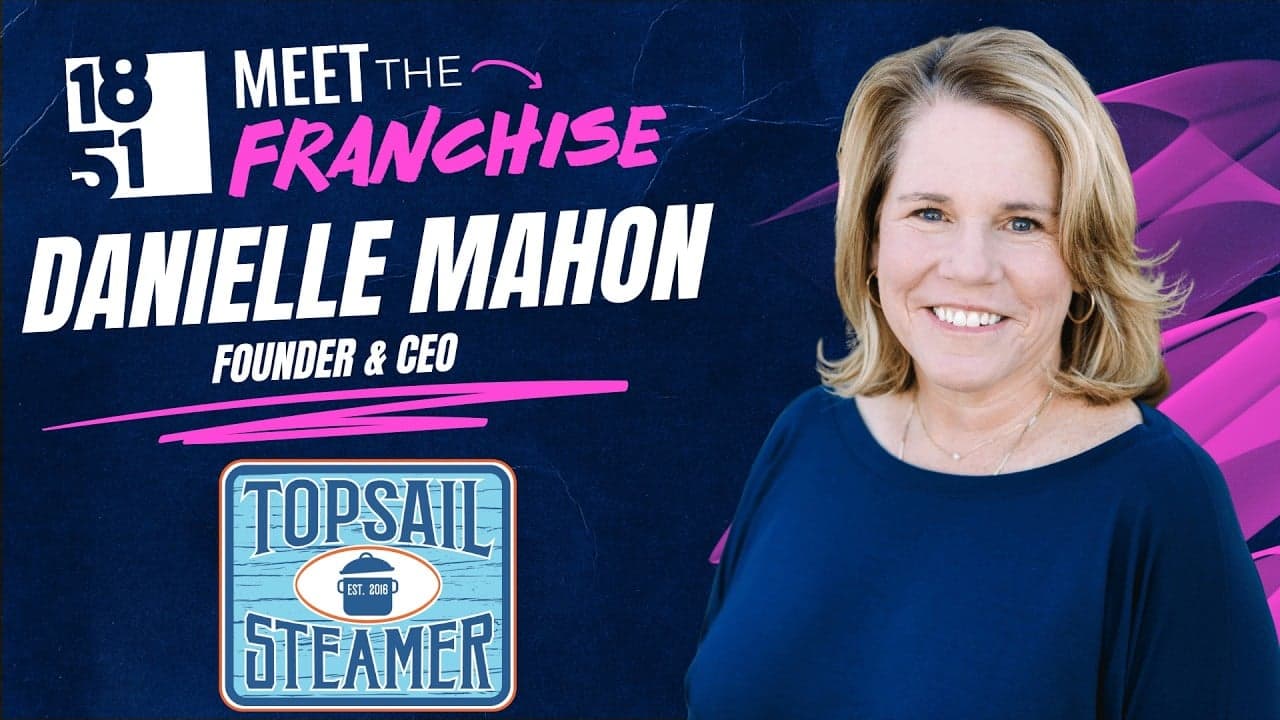
"Where the consumer is looking for and willing to spend their dollars post-COVID is in experiential offsite dining, and that's what we are," said Danielle Mahon, CEO and founder of Topsail Steamer. "While it's quality seafood and a wonderful taste experience, we give you the brown paper, you're cooking it in the pot we give you, and you're pouring it out on the table."
With 12 locations open and sales up 11% across all stores, according to Mahon, Topsail Steamer is having a strong 2026, proving its concept. The model has several advantages. There is little need for large real estate footprints, expensive proprietary technology or large labor teams to execute. There is no dine-in, and inventory is minimal and used quickly, so storage and waste are rarely issues.
As a new concept compared to traditional restaurants, the main focus for Mahon and the team behind Topsail Steamer is explaining the concept.
“Because we're not a pizza shop or a familiar name, you have to go out and educate the customer on exactly what we are and when they would be purchasing and utilizing our product,” said Mahon. “We stress that you want to make sure that you have the money and the time to invest in that local marketing.”
As a top priority, Mahon emphasized explaining the concept as a key part of the franchise development plan. In 2024, she appeared on "Shark Tank," where she explained the experience from beginning to end, including the "pick your pot"-style menu, ticket pricing expectations and why she chose the franchise model as a vehicle for expansion.
"Most of our franchisees for the first few years were customers. They experienced it, loved it and wanted to be a part of it and grow it themselves."
Mahon joined 1851 Franchise Publisher Nick Powills on a recent episode of the "Meet the Franchise" podcast, where they discussed the unit economics of the business, the unique industry of take-home experiential dining, and the future of Topsail Steamer in franchising. A transcript of the interview has been provided below. It has been edited for brevity, clarity and style.
Nick Powills: What's going on with the business today?
Danielle Mahon: We currently have 11 locations open. We are just about to open up number 12 next week in Raleigh, North Carolina, so super excited about that. Overall, we've had a great performance so far in 2026 for all of our stores. All our same-store sales are up over 11%, which we're super excited about. 2026 has been a great year for Topsail Steamer.
Powills: All right, so you've been doing this for almost 10 years. At what point did you franchise the business?
Mahon: We started pursuing the ability to be a franchise in 2022. That's when we decided that was the growth path that we were going to take.
Powills: How does it come into the picture? And the second that you make the decision to do this, what are your expectations against the realities?
Mahon: I've been doing it almost 10 years. We opened up the first location in 2017, and it was a brand new concept, brand new for me. I stepped out of corporate America and just decided to take the jump and go. We knew pretty much right away that this concept had momentum, and it definitely had the ability to grow and scale. For the first couple years, I just bootstrapped that and continued to do it myself with our small team. But then we realized that the opportunity was there to grow outside of the two states that we're in and continue to grow and open brick-and-mortar stores.
At that point, as a young brand, you have to make a decision. Either you need to bring in investors because there's a lot of costs associated with continuing to open up locations, or the other way to do it is through franchising. I spent some time really looking at both of those options. In the beginning, I might have even been a little biased against franchising because I just didn't know. There are just some misconceptions out there about brands that are franchised. But what I really liked the most about that model itself was having the opportunity to partner with other entrepreneurs. Anybody who wants to be a franchisee is an entrepreneur. They want to open up their own business. I really liked the idea of scaling a new concept. We're almost like a new category in what we do. I loved the idea of partnering with other like-minded, successful people who wanted to grow and scale a business. That's really what took me that route.
Powills: So you start the franchise. In your mind, are you thinking, "Boy, we're going to have 100 units in the next year?" Or are you like, "It's going to be slow and methodical and we understand that?"
Mahon: I am definitely a seeker of advice and information, so I spent a lot of time with people in the industry and trying to weed through a lot of the recommendations and books and all of that. One of the things that definitely was something that I heard time and time again was making sure that you're growing and scaling responsibly. That has always been something that's been at the forefront as we think about growth. We're not going to go out there and say, "Hey, let's sell 100 units." Let's make sure that we're opening stores in the right places with the right people and that we're learning. There are a lot of things you learn, things that work, and things that don't. You really need to be able to get those things in place before you start putting the foot on the pedal.
Powills: How many different franchisees do you have now?
Mahon: We have eight franchisees right now.
Powills: So a few of them have multiple locations, or they all have one?
Mahon: We have two franchisees that have multiple locations.
Powills: Okay, that's what is the indicator in my opinion of whether expectations were set or not, franchisees continuing to scale.
Mahon: Continue to scale, that's exactly right.
Powills: Where does winning go from here? What does 2027 look like?
Mahon: 2027 looks like opening three stores successfully. Initially, our concept started in coastal vacation towns. So we have a unique mix of franchisees, too. We have stores that are open year-round, 12-month stores, and then we also have stores that are open three to four months in coastal vacation towns. That's a great option for some. The three stores that we will be opening this year will be outside of the coastal towns. They'll be more in metro markets. For us, winning is making sure that we've got the playbook and we give those franchisees the support to make sure that they've got a good, solid opening in their first year.
Powills: What are you reporting in Item 19?
Mahon: In Item 19, we report a couple of different ways because we're reporting year-round stores and we're reporting seasonal stores. The system-wide AUV is $620,000, but year-round stores are $869,000, and seasonal stores, which are less than four months, are $433,000.
Powills: What's the investment on either of those right now?
Mahon: $242,000 to $398,000 for our 2025 FDD.
Powills: One thing that you said was, "I left corporate America and I bootstrapped this thing." Can someone still bootstrap to get into the business?
Mahon: Definitely. It depends. You can bootstrap it depending on what kind of money that you can bring to it. That initial investment is on the lower side for a brick-and-mortar food concept, right? What's the why behind that? It's because we don't cook anything, and we can operate in a very small footprint.
Probably our number two store in revenue is in about 550 square feet. It's not ideal, but you can operate in that because we really are just assembling the seafood, so it's really just sinks and refrigeration. There's no dine-in, so we really don't need the space. We move through our inventory so quickly that we don't even need the space to store a lot of inventory. It's a very simplistic model in many ways, and that allows us to operate in a smaller footprint, lower labor, and ultimately a lower overall investment.
Powills: How frequent would a guest come back for a second pot?
Mahon: It depends on the market. In our seasonal markets, we're a tradition every year that they come to the seasonal market, and we're seeing more and more where we're getting them two and three times the week that they're here. In the seasonal markets, it's every year or every couple of weekends if that's their vacation home. In the year-round markets, the goal is to have them come in four times a year. That's what we've modeled out to be a successful return rate for us. Our average order value as of last week was running about $176. While it is a quick experience, that's why we have a tough time fitting it into a category, because we're not QSR where our average ticket price is. We're also not trying to get you in once a week. For us, it's just a couple times a year, and it's successful. Those numbers work because of our average order volume.
Powills: That is super fascinating about the business model. I was thinking about real estate and where I would go. One of our clients is Papa Murphy's, where you're going and buying a pizza, and you take it home and bake it.
Mahon: In the beginning, I was like, "I think I'm the Papa Murphy's of seafood."
Powills: That's exactly what you are. Obviously the price point changes it, but it's more than a regular meal at home, but less than a seafood tower at a steakhouse.
Mahon: Absolutely. It's less than a seafood meal in most restaurants that you go to, for sure. Where the consumer is looking for and willing to spend their dollars post-COVID is in experiential offsite dining, and that's what we are. While it's quality seafood and a wonderful taste experience, we give you the brown paper, you're cooking it in the pot we give you, and you're pouring it out on the table. The experience of the meal as well really drives customer demand.
Because we're not a pizza shop or a familiar name, you have to go out and educate the customer on exactly what we are and when they would be purchasing and utilizing our product. Local, boots-on-the-ground marketing and awareness are really important. We stress that you want to make sure that you have the money and the time to invest in that local marketing.
When I got the great opportunity to go on Shark Tank, people asked me why I did that. One of the main reasons, obviously, was that it would have been wonderful to have a strategic partner, but what a great way to get that type of exposure to introduce and explain the concept so people could understand it. You have to look for your own Shark Tank in your local markets to have that type of platform to talk about the concept and Topsail Steamer.
Powills: Did they put an investment in?
Mahon: I had two Sharks bite, so I got a deal on Shark Tank with two of them, but we ultimately did not wind up closing. There are a couple reasons, and there are things I can and can't say. One of the Sharks in that deal was Todd Graves from Raising Cane's, and he is really not a fan of the franchise model.
Powills: They did make a change at Raising Cane's.
Mahon: Yes, so it just wasn't the right partner fit for where we were heading.
Powills: If I was looking at a Jersey Mike's, it's going to cost call it $800,000 to build out, or even $600,000. At $600,000, I could get two of these. At your AUVs, two of these put me at $1.6 million, whereas Jersey Mike's does $1.4 million AUV. Now I've actually protected my investment because I can scale to two. In case one fails, I still have one.
I can see it. I'm not in food, I don't have high turnover, I have low labor, and I don't have to worry about competition in a strip center because it's not going to exist. All the whys are there. The more that you extract your story and put it outbound, the more it's going to help you tell your story. Very rarely has a brand figured out a true point of differentiation in the marketplace, and you have. Push down the pedal where you can and see what you can do with this business.
Mahon: That's really great insight. Most of our franchisees for the first few years were customers. They experienced it, loved it, and wanted to be a part of it and grow it themselves. For us, the shift is getting into that franchise development sales area where we're really making sure that we're doing that.
Powills: I love what you're doing, I love the journey, and I love that you're taking a responsible approach to this. I look forward to seeing where the story goes, and I'm glad that you shared some of it with me today.
Mahon: Absolutely. It was wonderful. Thanks, Nick, appreciate the time.
Watch the full episode above or on YouTube.