With emerging franchises, there is often an unspoken reality: early franchisees are helping the brand figure things out.
They become the testing ground for operational systems, real estate strategies, training programs and restaurant economics. While many concepts franchise after proving just a handful of locations, Urban Bird Hot Chicken took a very different path.
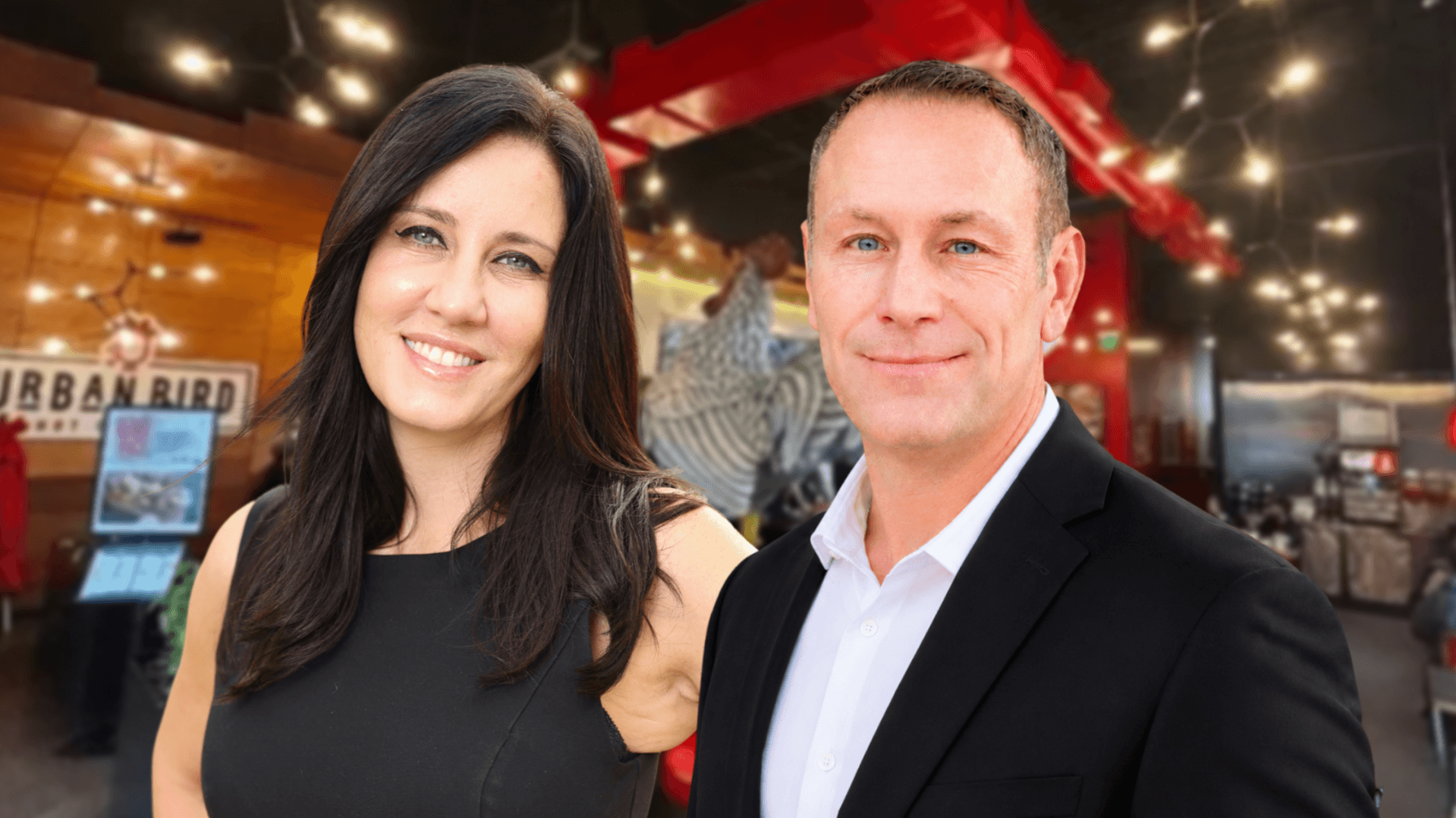
Co-founders Brandon Gawthorp and Chantel Fiaschetti invested their own money, built nearly 30 company-owned restaurants across Texas and spent years refining every aspect of the business before inviting franchisees into the system.
"We've opened all of these restaurants in different types of areas so we could pressure test everything and see what was working and what wasn't," Gawthorp said. "We opened in higher-income areas, lower-income areas, medium-income areas. With all of the restaurants, we have all this data now to see what is working for us."
For Fiaschetti, that operating foundation stretches back even further. She grew up around restaurants, working in her aunt and uncle’s Pizza Patrón restaurants from the time she was about 12 and later watching her family become involved with Wingstop in its earliest days. When she and Gawthorp eventually became Wingstop franchisees themselves, they built their business from the ground up, ultimately scaling to 32 locations before selling the portfolio in 2023 to focus on Urban Bird.
“I loved the restaurant business and working with people,” Fiaschetti said. “Years later, Brandon and I met. We waited tables, and I fell even more in love with the restaurant industry.”
Fiaschetti’s experience gave her a firsthand understanding of what franchisees need from a franchisor, including proven systems, strong training and a business model that has already been tested before an operator puts their own capital behind it.
Building the Playbook Before Selling It
Urban Bird did not begin with an immediate push into franchising. Gawthorp and Fiaschetti first focused on proving the concept themselves by opening company-owned restaurants, testing different prototypes and refining operations and the guest experience before bringing franchisees into the system.
"Before we started selling franchises, I wanted to open up a lot of these locations because I needed to see what worked," Gawthorp said. "Now with nearly 30 open, we're really able to dig in, see the data, see the demographics and not leave it up to the franchisee to figure that out."
Today, that work continues. "It's a constant work in progress," Gawthorp said. "Every time we get to new levels, we adjust. But everything starts with good training and trying to perfect that process."
Instead of assuming operations will naturally improve over time, Urban Bird continues investing in systems that make execution easier for franchisees and restaurant teams alike. The company recently upgraded its digital training platform, is rebuilding its entire video library and is implementing QR codes throughout each restaurant that link employees directly to instructional videos at every workstation.
"The goal is to really just make it easy for franchisees, managers and staff," Gawthorp said. "We're working on training systems where we're certifying trainers in the store, and they have to certify everybody before getting out of the training station. We have somebody that we hired only for training, and they are going to help roll it out in the stores."
For Gawthorp, operational consistency starts long before a customer ever tastes the food.
"It all starts there," he said. "You want everything to taste the same and that consistency."
Consistency, however, is about more than following an operating manual. One of Fiaschetti’s priorities has been protecting the culture that helped Urban Bird grow from an unexpected solution to a failed restaurant lease into a nearly 30-unit brand.
“The culture. The people,” Fiaschetti said when asked what makes her most proud of Urban Bird. “It took grit, pain, tears and resilience to get here.”
That people-first mentality also influences how she thinks about the customer experience franchisees will ultimately be responsible for delivering.
“We lead with our heart,” Fiaschetti said. “We care about people, the guests and the team. Quality matters. Everything is fresh and made to order.”
Nearly 30 Restaurants Generated Something More Valuable Than Growth: Data
Building a large corporate system gave Urban Bird something many emerging brands lack: operating data from dozens of locations and multiple market types.
One of the biggest surprises, for example, was that the concept doesn't necessarily perform best where many restaurant brands expect. "High income and high density doesn't work great for us, actually," Gawthorp said. "We don't want to be in the heart of the city. We do better in the suburban-type areas."
Those insights are now shaping franchise development.
"We are also using a new system called Placr, which tracks how many times people go in and out of a business," Gawthorp said. "I can see the location I have and where all the people are coming from in the city. You can see competition and the demand."
Instead of asking franchisees to discover successful site-selection criteria through trial and error, Urban Bird is building a development strategy backed by years of corporate experience.
Learning Every Real Estate Strategy First
Urban Bird's rapid growth was also made possible because the founders understood how to capitalize on unique market conditions.
"I was a Wingstop franchisee and we had 32 stores," Gawthorp said. "When we opened the first Urban Bird, my goal was to build them with second-generation locations. There were a ton of second-generation restaurants that just weren't making it during COVID. We were scooping up locations, and most of them were chain restaurants that already had a lot of equipment. We could do a really light remodel and get it open."
That strategy dramatically reduced development costs while allowing the founders to expand quickly using their own capital. "When that started making money, we felt more confident building out," he said. "Our 16th was the first we built from the ground up.”
Because Urban Bird has successfully executed both strategies, franchisees benefit from guidance regardless of which type of real estate becomes available in their market.
Looking for Operators, Not First-Time Experimenters
Because Urban Bird has already invested heavily in refining its model, the company is equally intentional about who joins the system. Rather than targeting first-time business owners, the founders are seeking experienced restaurant operators capable of scaling across multiple locations.
"We are looking for somebody with restaurant experience," Gawthorp said. "There are a lot of moving parts in Urban Bird. It's not difficult, but it's not easy either."
Fiaschetti is equally focused on finding franchisees who connect with Urban Bird beyond the economics of the opportunity. Having spent much of her life in restaurants, from working in her family’s businesses as a child to building a 32-unit Wingstop portfolio and now Urban Bird, she knows how important genuine enthusiasm for hospitality can be.
“I don’t like selling,” Fiaschetti said. “I want people who are passionate about the restaurant business and culture. Every detail matters to us. I want people to buy because they believe in it and want to own an Urban Bird.”
That selectivity is possible in part because Urban Bird is not relying on franchise sales to support the underlying company. The founders built the corporate system first, giving them the ability to prioritize fit over speed as they choose franchise partners.
“We’re passionate about what we do and want partners who value our culture,” Fiaschetti said. “We’re not motivated by money. We’re motivated by purpose and work. I was motivated by wanting stability and to take care of my family. I knew I loved working with people and that anything I wanted I’d have to work hard for. That’s what drives me.”
Years of opening restaurants with their own capital gave the founders time to work through operational challenges, learn from different markets and refine Urban Bird’s systems before bringing franchisees into the business.
That approach put much of the early risk on the founders and gave future franchisees a model informed by what they learned across nearly 30 restaurants. For restaurant operators evaluating emerging brands, that distinction may be one of Urban Bird's greatest competitive advantages.
To find out more information on costs to buy this franchise, please visit https://1851franchise.com/urban-bird-hot-chicken.