Growing a Franchise
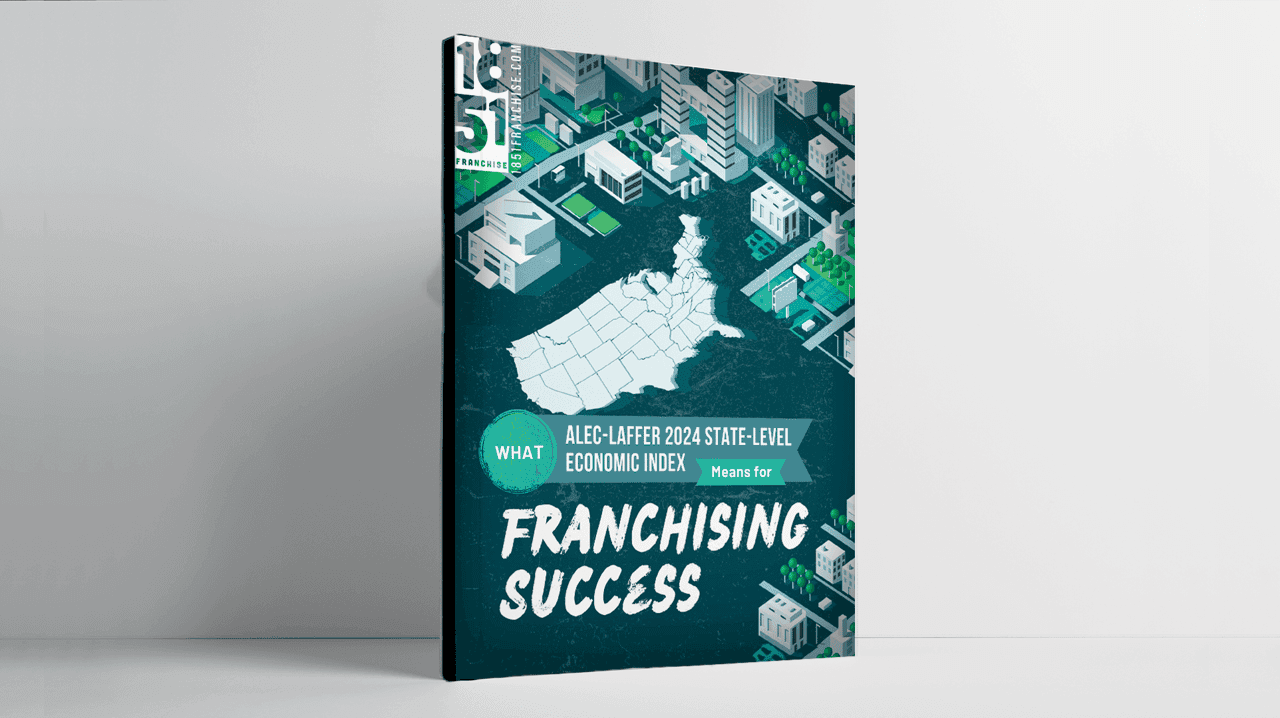
What ALEC-Laffer's 2024 State-Level Economic Index Report Means for Franchising
Franchise owners and franchisors can harness regional economic data to forecast financial success and make strategic decisions on where to expand.
Growing a Franchise
Franchise owners and franchisors can harness regional economic data to forecast financial success and make strategic decisions on where to expand.
The 2024 ALEC-Laffer “Rich States, Poor States” Economic Competitiveness Index is particularly valuable for franchisors seeking to optimize their growth plans. This report, now in its 17th year, provides a detailed look at economic performance and outlook rankings for each state based on 15 key economic factors, including tax rates, public policy and employment growth. These indicators help businesses determine which states have a robust economy, positioning them for franchise success.
The ALEC-Laffer report offers two critical rankings — Economic Performance and Economic Outlook. The Economic Performance ranking is backward-looking, reflecting state GDP, domestic migration and payroll employment over the past decade. Economic Outlook, on the other hand, is forward-looking and is based on current factors such as tax rates, minimum wage levels and recent legislative changes.
“Our latest edition of ‘Rich States, Poor States’ demonstrates how states competing for the right to prosper have emerged as beacons to workers and businesses alike,” said ALEC CEO Lisa B. Nelson in a press release. “They follow the jobs, the freedoms and the opportunity to achieve. ALEC proudly highlights this competition and congratulates the winners.”
For franchisors, the Economic Outlook ranking is particularly useful in predicting future business success. Generally speaking, according to the report, states that spend less (especially on income transfer programs) and states that tax less (particularly on productive activities such as working or investing in business) experience higher growth rates than states that tax and spend more.
Once again, Utah claimed the top spot in Economic Outlook, holding this position for 17 consecutive years. Utah’s flat income tax, pension reforms and property tax strategies continue to attract businesses and residents alike.
“There’s a reason we’re called the ‘Beehive State,’” Utah State Senate President J. Stuart Adams told ALEC. “We continue to emulate our pioneer ancestors’ industrious nature and strategic foresight that transformed our state into the economic powerhouse it is today. This past year marked the fourth consecutive tax cut, allowing Utahns to keep a cumulative $1.3 billion of their hard-earned money, providing them more financial freedom and directing more funds back into Utah businesses. We also successfully balanced our state budget while amply funding education, transportation and more to maintain Utah’s high quality of life.”
Idaho made a significant leap to second place, benefiting from its 2022 tax cuts, while Texas jumped to 6th place, marking its best performance in 17 years thanks to “record tax cuts and strong domestic migration.”
At the other end of the spectrum, New York remained at the bottom, ranking 50th due to “high taxes on personal income, corporations and property.” Other states with poor outlook rankings include California, Illinois and Vermont, all of which have “high tax burdens and face challenges in retaining businesses and workers.”
Top 10 States:
Bottom 10 States:
For franchisors, states with a higher economic outlook may provide fertile ground for expansion, thanks to a combination of pro-business policies, tax cuts and growing populations. States like Utah, Texas and Arizona present strong opportunities for franchisors to establish and grow their footprint. Conversely, low-ranking states may still offer opportunities, but they require more strategic planning and careful consideration of factors such as tax structures and market entry costs.
The 2024 report reinforces the importance of understanding state-level economic conditions in order to maximize franchise success. While a state’s overall performance can signal growth potential, entrepreneurs should look closely at specific factors like tax rates and migration trends to ensure they’re making data-informed decisions when choosing where to launch or expand their franchises.
This month, 1851 Franchise will be outlining key takeaways from the 2024 ALEC-Laffer “Rich States, Poor States” Economic Competitiveness Index and what it means for the franchising world.
Download the full report here.
Growing and selling franchises is difficult. No great franchise did it alone. Want to learn more about how 1851 helps franchisors grow their franchises with confidence? Visit www.1851growthclub.com and see what we can do for you.
Sign up for the 1851 Franchise newsletter to get our biggest stories before everyone else
By signing up, you agree to our user agreement (including class action waiver and arbitration provisions), and acknowledge our privacy policy.