Franchisee Stories
SPONSORED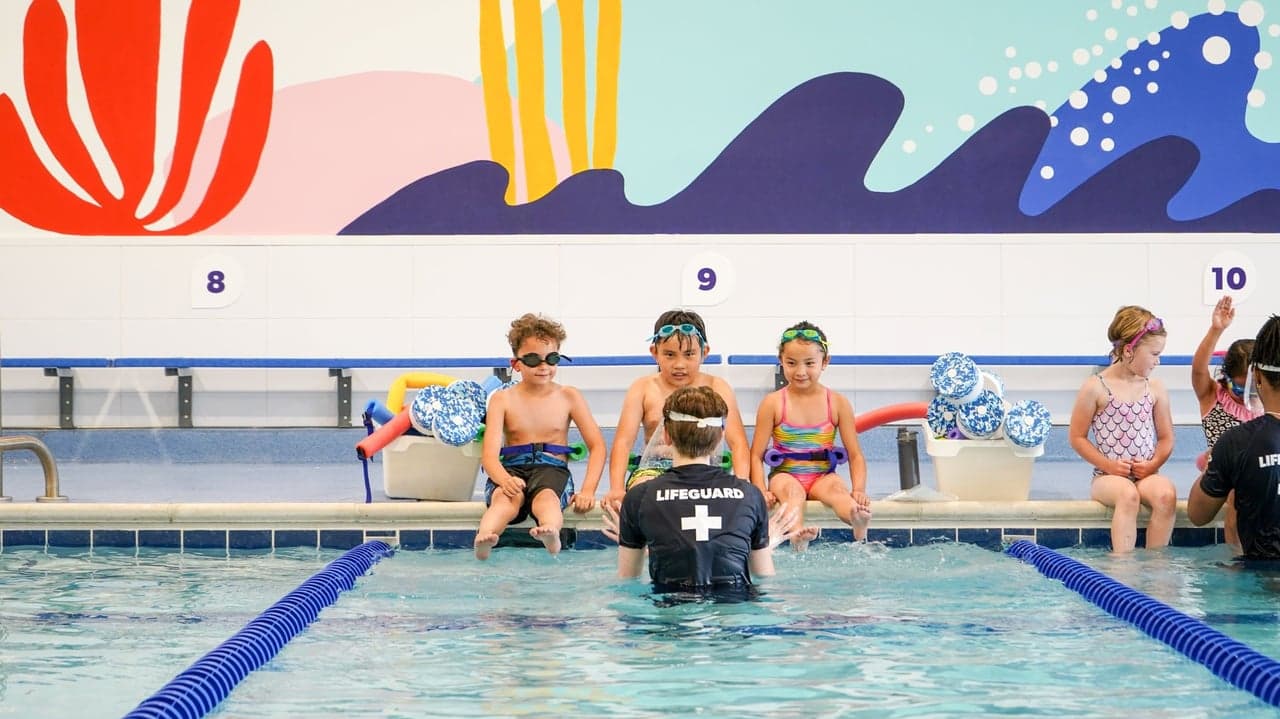
Why Fitness Franchise Owners Looking to Diversify Capital Should Pay Attention to Big Blue Swim School
The growing swim school franchise offers an investment opportunity perfectly suited for portfolio diversification.
Franchisee Stories
SPONSOREDThe growing swim school franchise offers an investment opportunity perfectly suited for portfolio diversification.
Since national champion swimmer Chris DeJong founded Big Blue Swim School in 2009, the brand has carved out a space for itself as one of the leading names in the $3 billion learn-to-swim category. In 2018, Big Blue Swim School launched its franchise opportunity, which quickly proved appealing to experienced, multi-unit franchise partners who were looking to maximize their capital and diversify their portfolio — particularly for those with experience owning fitness franchises.
While Big Blue may be a swim school franchise, it has attracted fitness franchise owners thanks in large part to its membership-based business model, comparable real estate requirements, and exceptional consumer offering that cannot be automated or outsourced.
“A swim school business model is similar to a fitness model in that it is all about building great relationships with customers and producing great experiences day in and day out,” Big Blue Swim School CEO Scott Sanders said. “If you are experienced at operating a fitness franchise, you’ll understand the daily responsibilities of a Big Blue franchise partner.”
One example of fitness franchise owners who diversified their portfolio with Big Blue is the Denver-based entrepreneur team Wendy and Erik Skaalerud, who previously owned several Orangetheory Fitness gyms.
The Skaaleruds signed a five-unit deal in March 2019, becoming Big Blue’s first franchise partners. Last year, the husband-and-wife pair signed a lease for their first pool, which opened in spring 2021 at the intersection of Himalaya and Smoky Hill Roads in Centennial, Colorado. Now, with their first location having opened with record-breaking enrollments, the Skaaleruds are continuing to scout real estate for their additional Big Blue pools in the surrounding areas.
Big Blue shares a number of similarities with fitness franchises, including a staff that is trained to offer a membership-based service model and a focus on health and wellness.
“My experience as a Big Blue owner has been very similar to my experience with gym ownership,” Erik said. “For one, we are focused on providing a similar, recurring, experiential service and that means a lot of my duties around providing that service — training, recruiting, providing customer service, marketing — have been easy to get the hang of because of my previous background.”
Sanders agrees that the monthly subscription model is a primary parallel between fitness and swim lessons, as it is a habitual service as opposed to a once-off occasion. “The great thing is that these models create recurring revenue for the franchise partner,” he said. “Customers get in the habit of coming to the site every week, and gym owners know how to nurture those client relationships.”
Erik also notes that Big Blue’s larger facilities and optimized capacity planning offer a strong ROI.
“When we were with Orangetheory, we were catering to the 24 to 44 age demographic, now we are focusing on six months to 12 years,” he said. “While the staffing numbers are similar for overall instructors, the actual ratio of swim associates to students with Big Blue is much smaller. This, along with specialization, lends itself to smaller class sizes, happier guests and optimized capacity planning.”
In terms of how their past experience has helped the Skaaleruds prepare for Big Blue ownership, Erik says they are better equipped to manage volume and maintain a high quality of services across all of their clientele. Particularly, Erik says his fitness background taught him how to effectively train staff and successfully manage operations despite a high capacity of clients. Since depending on the size of the pools, Big Blue may offer up to 2,860 lessons a week — a size and scope much larger than most concepts — Erik says that fitness experience allowed him to easily transition into Big Blue ownership.
With the consumer offering, Wendy notes that both concepts are focused on creating a positive impact for their customer base.
“As a fitness concept owner onboarding your guests, the kind of culture you build is really similar to what you need when transitioning into owning a swim school,” she said. “It is essential that you create a welcoming safe space where people, who may be feeling intimidated walking in the door, feel an immediate sense of relaxation and comfort.”
Big Blue’s facilities are designed to maximize comfort for both children and their parents. “With 90-degree, ultra-clean water, we provide a very different experience from the neighborhood YMCA or community pool, and it’s likely a radical departure from what the parents experienced in their own swim lessons,” DeJong said. “Plus, our relaxing viewing area comes with free WiFi, is carpeted, and regularly cleaned, making it an enjoyable 30 minutes for parents.”
Additionally, boutique fitness brands often include an app that clients can use to sign in, and Big Blue is no different. Through LessonBuddy™, the brand’s proprietary enterprise system and app, Big Blue offers total convenience for the family with a breadth of scheduling options for busy calendars. With up to 2,860 lessons offered per week, multi-kid parents can easily schedule all their children to swim in the same 30–45 minute window. Plus, Big Blue has the capacity to track each swimmer’s progress in real time while keeping parents updated.
And like many fitness concepts, swim lessons can only be delivered one way — on site. Big Blue is an experiential brand that teaches a vital life skill that can’t be replicated online and is largely recession-resistant. Nothing that arrives at a customer’s front door can effectively substitute for a live swimming lesson.
Although Big Blue’s real estate requirements are similar to those of many fitness concepts, Erik notes that the Big Blue real estate team played a big part in educating him on what would be the best demographic for the store.
“The brand is very diligent and analytically-focused when it comes to choosing a site,” he said. “The teams that Big Blue has put together, especially on the real estate side, are so good that you know you are in good hands, even if the terrain is unfamiliar.”
With plans to bring five pools to the Denver metropolitan area, the Skaaleruds are taking advantage of Big Blue’s industry-leading approach to real estate. Big Blue leverages its team of real estate professionals to assist in site selection, construction, and facilities management. The team uses market knowledge and a data-driven real estate assessment methodology to identify prime locations in trade areas across the country. Each location is analyzed to fit the brand’s member profile. This approach allows franchise partners to scale quickly across multiple units and, ultimately, contributes to Big Blue’s rapid growth.
With 161 pools already planned across 22 states, Big Blue’s data-driven real estate strategy, proven business model, and best-in-class consumer offerings, position former fitness franchise partners, like Erik and Wendy, for long-term success as the brand aims to reach its goal of 170 pools signed by the end of 2021.
Multi-unit franchise opportunities are available for qualified candidates looking for their next big opportunity, and veterans can receive a 10 percent discount on the $80,000 franchise fee. The total investment necessary to begin operation of a new Big Blue Swim School is $2,334,223 to $3,641,998 (refer to item 7 in FDD) To learn more or inquire about Big Blue Swim School, visit https://www.bigblueswimschool.com/franchising/.
Sign up for the 1851 Franchise newsletter to get our biggest stories before everyone else
By signing up, you agree to our user agreement (including class action waiver and arbitration provisions), and acknowledge our privacy policy.