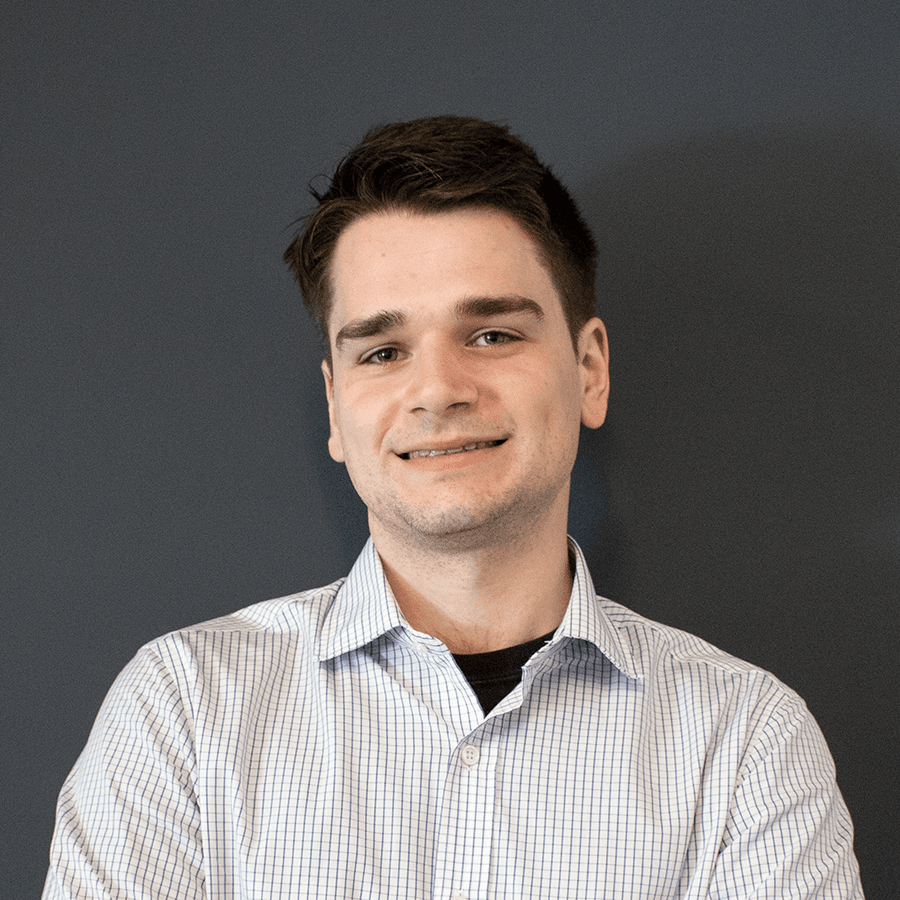
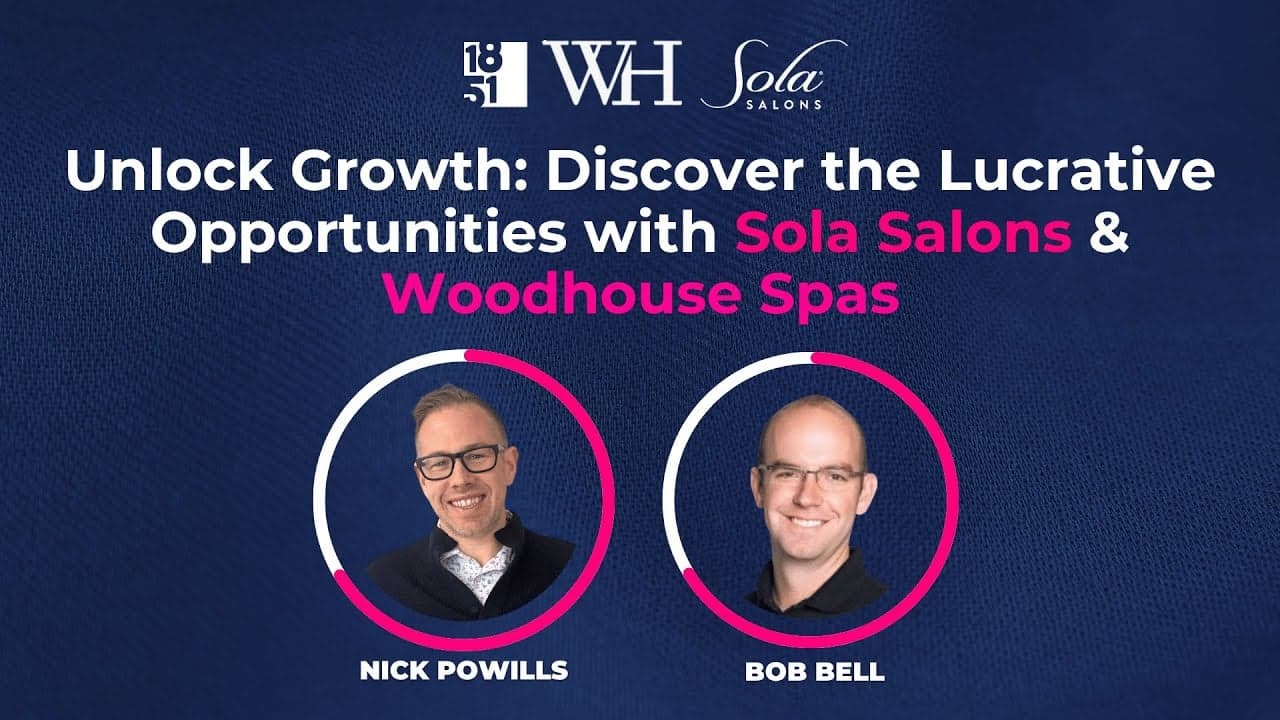
In a recent “Meet the Franchisor” webinar, hosted by 1851 Franchise publisher Nick PowillsBob Bell, chief financial officer at Radiance Holdings, offered an insider’s view into what makes Sola Salons and Woodhouse Spas stand out in the world of franchise investing. Bell, a seasoned finance leader with a background in brands like Smashburger, broke down everything from unit economics to franchisee support, all while driving home one key message: Both brands are built to maximize franchisee success.

The Accidental Franchisor-Turned-Finance Leader

Like many in the industry, Bell “accidentally” fell into franchising early in his career through Smashburger, where he quickly realized the power of working alongside franchisees. “I learned to love the business and realized that while corporate growth has its advantages, there's a lot of value in growing with franchisees — learning from those partners about how businesses really work, seeing the different ways they operate, and just growing together,” he said. “Having a bunch of partners going on that journey with you — it just makes all of us better.”

That mindset continues to shape his work at Radiance Holdings, the parent company of Sola Salons and Woodhouse Spas.

Bell explained that while many finance professionals come in focused purely on data, franchising requires an EQ/IQ balance. “You really do have to use both sides of your brain. I like to say it’s part analytics and part heart — emotion and sentiment,” he said. “Understanding both the numbers and the ‘why’ behind why franchisees got into the business is key.”

The Financial Blueprint: Smarter Spending, Faster Returns

During the webinar, Bell offered a detailed explanation of how Radiance helps franchisees de-risk their investment. “At Radiance, with both Sola and Woodhouse, I spend a lot of time thinking about: How do we build business intelligence tools? Dashboards? How do we make data easy for franchisees to access — not just hand them a spreadsheet and say, ‘Figure it out’?”

Both Sola Salons and Woodhouse Spas offer strong unit-level economics and well-developed site selection processes. “When franchisees are putting millions of dollars to work, we owe it to them to give the most attention possible,” Bell said. “We have to say, ‘Hey, we think this is going to work, and here’s why — the rent is right, the economics are right, the trade area is right.’”

Decision Day: Finding Franchisees with Grit

Radiance Holdings takes candidate vetting seriously. “We go through a comprehensive process to vet each candidate — checking net worth, background, and making sure they have the capacity to survive a few missteps, recover and ultimately grow the business and build wealth,” Bell said. “It’s important not just for them, but for us — and for the rest of the system. We owe it to our existing franchisees to not dilute the pool by bringing in underqualified operators who might require disproportionate attention later on.” 

Culture is central to the success of both brands, and the franchisor evaluates whether candidates are ready to champion it. “It’s like going home with a newborn — you’re going to have to figure out how to feed it,” Bell said.

Franchisee Support as a Competitive Advantage

Radiance’s approach is deeply collaborative — from a sophisticated onboarding process to strong operational and marketing support. “We tell franchisees: You think you’re ready, but when you’re juggling the GC who didn’t fix the toilet, hiring challenges, a community event and digital marketing? That’s a lot of spinning plates,” Bell said. “Let us help you balance one of those.”

A Long-Term, Brand-First Growth Strategy

Radiance doesn’t believe in rapid-fire franchise sales. “If you sell just to sell and dilute the franchisee pool, the next sale gets a lot harder because validation goes down,” Bell said. “Great people do well. People who do well validate the system. That drives the flywheel — you get referrals, your sales process becomes more efficient. If I call 10 franchisees and eight of them give a thumbs up? That makes the next sale a whole lot easier.”

Why Now?

Between Sola Salons’ flexible, low-labor model and Woodhouse’s elevated wellness experience, both brands offer unique ways to tap into booming segments. And with a leadership team that understands the nuances of franchise success, new investors aren’t going it alone.

“Everyone at Radiance, at Woodhouse and Sola — that’s what we work for,” Bell said. “We wake up every day asking: How do we drive profitability and build a better business for our franchisees?”

A transcript of Bell’s interview with Powills appears below. It has been edited for brevity, clarity and style.

Nick Powills: All right, Bob. I'd like to frame you, and then we'll get into the meat of the discussion. I know this answer is going to be spectacular, because anybody who wants to can go look at your LinkedIn — but how did you accidentally fall into franchising? What’s your franchise backstory?

Bob Bell: Yeah, I think it's exactly that — I fell into franchising as a young professional without even really knowing what franchising was. My first adventure into franchising was with a restaurant company called Smashburger here in Denver, Colorado. They had a pretty blended mix of locations — about half were corporate-owned, and half were franchised.

I learned to love the business and realized that while corporate growth has its advantages, there's a lot of value in growing with franchisees — learning from those partners about how businesses really work, seeing the different ways they operate and just growing together. Having a bunch of partners going on that journey with you — it just makes all of us better.

Powills: When you fall into franchising, do you immediately understand that you're in franchising, or are you just taking a job in corporate finance and later you’re like, “Oh — this is more complex than I thought it would be”?

Bell: In that specific example, it was a private equity-backed company. Each Smashburger cost about a half a million dollars to build. So when you've got 100 corporate units and that kind of capital, your first focus is the corporate side. Then, as you learn more about franchising, you start to see the differences — the pros and cons of both models.

There are definitely nuances. You really do have to use both sides of your brain. I like to say it’s part analytics and part heart — emotion and sentiment. Understanding both the numbers and the “why” behind why franchisees got into the business is key.

Frankly, when you come into finance as a professional, your instinct is to run the world through data and analytics. But franchising taught me you need both sides — the hard data and the EQ, the emotional intelligence — to really bring people along for the ride.

Powills: So I’ll preface this by saying: my wife is a CPA and CFO, so whatever I say here is going to get criticized if I say it wrong — but I think I’ve got some credibility. I actually think your job in franchising is incredibly complex, and yet, if I’m a franchisee, your expertise isn’t used nearly as much as it should be. You hold so much valuable information.

On the complexity side: you have the franchisor and the franchisees paying fees and royalties into a structure. Some of that goes to the brand fund, some to support. You’re trying to allocate those funds effectively. And ultimately, as much as a franchisor wants to be a single company, they’re not — not if they have corporate units. Then they’re running a corporate business and also servicing franchisees.

That’s super complex. On the franchisee side, you can help understand all these different elements, like benchmarks within a P&L. And when I zoom out across all of franchising, I don’t think CFOs or finance leaders are leveraged enough — especially in two places.

One, in franchise development — because you can use data points to help assess a candidate’s viability based on their financial profile. And two, for the franchisees already in the system — just getting on your calendar to find the gaps and opportunities to offset royalties or fees. It’s a game of pennies to get to profitability — especially in food. Food is much harder than a model like Sola or Woodhouse. Would you agree with the complexity — and the fact that finance leaders like you are under-leveraged in franchisee support and development?

Bell: Yeah, I think that’s a great point. It really depends on how finance is positioned within the organization. I've been unbelievably fortunate in my career that finance hasn’t been seen as the “bean counters” — the folks in the back office with the lights off, closing the books.

In most of the franchising businesses I've worked in, they recognized what you just said. This isn’t just a scorekeeping role — it’s a position that can see across the landscape of both the corporate and franchise businesses and distill insights.

Growing up in the restaurant space taught me to find every last penny in a P&L. That’s how you drive profitability when margins are tight. I’ve built my career around not being a back-office function — but a partner to operations and marketing, helping them drive the right insights so we can win together.

At Radiance, with both Sola and Woodhouse, I spend a lot of time thinking about: How do we build business intelligence tools? Dashboards? How do we make data easy for franchisees to access — not just hand them a spreadsheet and say, “Figure it out”?

We focus on the nine or 10 KPIs that move the business. I want franchisees to be able to log into a portal every morning and see red, yellow, green — so they know: “Okay, today I need to go high-five myself over here, or I need to fix something over there.”

Providing that kind of insight and partnership — that’s the name of the game. That’s what I’ve been lucky to do in my career.

And to your point about development: When franchisees are putting millions of dollars to work, we owe it to them to give the most attention possible. We have to say, “Hey, we think this is going to work, and here’s why — the rent is right, the economics are right, the trade area is right.”

Without data, Nick, I’ve found our ops team and finance team can start acting more like therapists — just talking in hypotheticals: “If we had only done this or that…”

But let’s take out the guesswork. There are nine paths. Pick your two and go. That’s how I like to work — and thankfully, how I’ve been positioned within organizations. I'm very grateful for that.

Powills: If I think through some of what you’re saying — if I’m a franchise buyer, I believe I should also qualify the depth of the franchisor’s finance team. That green-yellow-red approach you described? That becomes vital once you’re in operations.

I vividly remember a brand back in 2008. They were closing stores left and right. I asked their head of finance — who was also a co-founder — “Shouldn’t you have qualified these candidates better? You qualified them so thinly that, when things got rough, they didn’t have the means to weather the storm, let alone scale.”

My view is every franchisee should be financially qualified to own three units. That doesn’t mean awarding them three, but they should have enough to open one, enough for a rainy day and enough to scale.

So, to me, franchise buyers should be qualifying the finance team because they’re critical — even more essential to the franchisee’s business than most people realize. And on the franchisor side, finance leaders should be setting those standards so we don’t end up in situations where people’s life savings are lost due to underqualification. Thoughts on that?

Bell: I totally agree. That’s one of the key reasons we have a Decision Day process here at Radiance for both Sola and Woodhouse. We go through a comprehensive process to vet each candidate — checking net worth, background, and making sure they have the capacity to survive a few missteps, recover and ultimately grow the business and build wealth.

It’s important not just for them, but for us — and for the rest of the system. We owe it to our existing franchisees to not dilute the pool by bringing in underqualified operators who might require disproportionate attention later on.

A few bad decisions in a few markets can really impact the entire brand. So we see it as our responsibility — to the candidate, to ourselves and to the rest of the system — to think long-term about the health of the brand.

When we bring candidates in, we hear their stories. There’s the financial piece — the “back of the baseball card,” so to speak: Do you have enough money? But then we look deeper. What’s your background? Can you operate in hospitality? Can you work with service providers from all walks of life? Can you drive a people-first culture — which is essential in both of our brands?

If you’re just a left-brain thinker focused on numbers, you’re not going to win here. This business is all about people and culture. If you’re not driving that culture, you’re not going to reach your full potential.

So we’re very upfront about that. These are beautiful businesses and great models, but if you're not a champion for your culture, you're not going to succeed. We take a holistic view when qualifying candidates to make sure it all lines up.

And that’s why they have me speak at Decision Day — not just as a “bean counter,” but as a partner. I want to help franchisees grow. I want them to know there's an insights-driven function in this organization that’s here to support them.

So when it gets tough, I’m a resource. We’ll talk through their P&L, find opportunities and figure out how to move the business forward. I think that’s a difference-maker for franchisors who take a data-driven, insights-first approach — and play offense with their franchisees instead of saying, “Figure it out and good luck.”

Powills: Obviously there’s the fact-based side — how much money a candidate has. You can uncover some of that through net worth statements, but ultimately it comes down to liquid capital and how they’ll get financing.

But how have you, in your role, valued the currency of grit and hustle? Because that’s not always visible in a spreadsheet. How do you measure that?

Bell: It’s at the top of my list.

When our leadership team meets to evaluate candidates — thumbs up or thumbs down — the number one thing I’m looking for is whether they have that X factor.

Can they win the day in their first three to six months? Can they build the right culture? Put the right processes in place? Do they have a background that suggests they’ll get to breakeven and profitability quickly?

Because, let’s be honest — the six months before opening and the three months after are some of the most stressful in a franchisee’s life. You’re learning so many new things. And there are some things we can’t teach you — like how to be a good person, how to build culture, how to attract and retain great people.

If you have that DNA, everything else we can teach. But we’re very clear with candidates: We don’t have someone who’s going to run your front desk. We’re not going to be in your location every day. It’s like going home with a newborn — you’re going to have to figure out how to feed it.

I literally say that at Decision Day: “If I had figured out how to put half a million or a million dollars to work and get rich doing nothing, I would’ve done it already.” But I haven’t — because it’s hard work.

Powills: Right — human qualities. Some of that stuff just can’t be trained.

Bell: Exactly. And listen, we’ve got a lot of industry veterans on our team. We’ve learned to recognize the cues. We can spot a strong candidate — and we can spot a tough one.

When there’s a red flag, we address it. We’ve declined candidates. Sometimes people want to live in Europe and manage their U.S. location from afar — that’s not going to work. Not today. It’s just not the right fit.

And approving the wrong person? That’s the gift that keeps on giving — in a painful way.

Powills: There’s a program we do — a franchise assessment called the Business Viability Study. I was working with one client who gave me this huge goal — they wanted to sell some ridiculous number of franchises.

And I said, “Sure, we can sell that many. But what if, instead, we got fatter before we got taller?” Meaning: let’s focus on franchisee profitability first. Maximize the top-line potential at the unit level. Because if we do that, the franchisees will scale naturally. And when new franchisees come in, they’ll be the right people.

It seems like Radiance follows that same mindset. Focus on unit-level profitability, get the right people in the door, and then let growth happen the right way. Too often, franchise sales becomes a numbers game — leads, leads, leads — instead of finding the right buyers.

Bell: Totally. And we’re fortunate. Yes, our salespeople want to sell — they want to earn, that’s how they make their living. But I think if you asked them, they’d tell you the same thing: if you sell just to sell and dilute the franchisee pool, the next sale gets a lot harder because validation goes down.

And that leads to whispers like, “Is something off with the brand?” So our sales team has realized that, to protect the brand, we need to bring in great people. Great people do well. People who do well validate the system. That drives the flywheel — you get referrals, your sales process becomes more efficient.

If I call 10 franchisees and eight of them give a thumbs up? That makes the next sale a whole lot easier. So our sales team has taken a longer-term view. They understand it’s really hard to sell through negative validation if you’ve brought in the wrong people.

Powills: I’ve probably worked with 700 brands. And I’d say only a fraction of a percentage of them really understand what we’re talking about here. Because if validation goes down, everything stalls. If franchisees aren’t making the money reflected in Item 19, growth stalls. 

I always tell franchise sales teams, “Qualify people to own three units.” And they say, “But that limits the pool of candidates.” And I say, “Right — but it builds enterprise value for your business.”

Something else I’ve been looking at lately, specifically in Item 7, are two benchmarks I don’t love: grand opening marketing and operating capital.

Operating capital, to me, sets the tone for the candidate. How much would they typically make in three months? That’s how much they should have in reserve — so they’re not stressed.

And then marketing — franchisors are still treating “grand opening” as a single day or week. But really, it should cover the whole first year. Once you understand your cost of customer acquisition and the expected return, it’s clear: it’s a race to break even.

I’ve been telling franchisors that grand opening marketing should be 10% of the total investment. And some say, “10%?!” But that investment sets expectations. If things go slower than expected, you’re not scrambling for more marketing dollars. That drives higher unit sales, faster break even, and ultimately more royalty revenue. Positive, positive, positive. Are there any gaps in what I’m saying?

Bell: No, I think you're thinking about it the right way — and that’s how we think about it, too.

That early liquidity is about saying, “Look, we think things will go well, but things happen.” Your manager might quit in the first month. Your trade area might need more ramp-up. You need to have some working capital to navigate that first year safely. Don’t blow it all on fancy signage. Keep some dry powder.

And on the grand opening side, yes — it’s marketing, but also capability. We’ve been doing this a long time. We’ve figured out what works. So we put our own dollars — $10,000, $15,000, $20,000 — to work on the franchisee’s behalf, because we know we’ll spend it more efficiently than someone doing it for the first time.

We tell franchisees: You think you’re ready, but when you’re juggling the GC who didn’t fix the toilet, hiring challenges, a community event, and digital marketing? That’s a lot of spinning plates. Let us help you balance one of those.

Now, if you’re a 10-unit franchisee and you already know the marketing playbook? We’re not going to force the $20,000 spend on you. But if you’re new to Sola, new to Woodhouse, new to the industry — let us help you skip to the end.

It’s both an investment lever and a capability advantage.

Powills: I think about franchisees who question royalties — “Why am I paying this percentage? Is it negotiable?”

And I say, “Let’s take $2 million at 5% — that’s $100,000 a year. Show me how you’d hire a CFO, a CMO, a COO — and the entire infrastructure underneath — for that amount.”

It’s not a fee. It’s an investment in infrastructure. That’s how you skip the line. Whoever invented the term “royalty” probably should’ve called it “infrastructure cost.” That’s what it really is.

And even high-net-worth individuals get tripped up on this.

Bob Bell: Yeah, you typically see that early on. In those first few months, franchisees feel the value. They’re getting support, advice, guidance — and it’s tangible. But by years eight, nine, ten? They’ve figured out the model, and they start to forget what that support looked like early on.

That’s the tension of franchising.

So we do everything we can — with our brand-focused marketing and ops teams, sentiment tracking, constant communication — to keep that tension at bay. We evolve with our franchisees, bring them along for the ride, and keep that “Why am I paying this royalty?” question from becoming toxic.

Everyone at Radiance, at Woodhouse and Sola — that’s what we work for. We wake up every day asking: How do we drive profitability and build a better business for our franchisees?

Powills: Bob, I’m grateful for this conversation. Now I can officially say I’ve met two CFOs with great personalities — my wife and you. You’re clearly in it to win it. Thanks again for your time.

Bell: I appreciate it. Look forward to future conversations.

Powills: Love it. For Bob, I’m Nick. This was another episode of “Meet the Franchise.”

Watch the full webinar here.

To learn more about the costs and benefits of owning a Sola Salons or Woodhouse Spas franchise, visit https://1851franchise.com/sola-salons or https://1851franchise.com/woodhouse-spas.

In a recent “Meet the Franchisor” webinar, hosted by 1851 Franchise publisher Nick PowillsBob Bell, chief financial officer at Radiance Holdings, offered an insider’s view into what makes Sola Salons and Woodhouse Spas stand out in the world of franchise investing. Bell, a seasoned finance leader with a background in brands like Smashburger, broke down everything from unit economics to franchisee support, all while driving home one key message: Both brands are built to maximize franchisee success.

The Accidental Franchisor-Turned-Finance Leader

Like many in the industry, Bell “accidentally” fell into franchising early in his career through Smashburger, where he quickly realized the power of working alongside franchisees. “I learned to love the business and realized that while corporate growth has its advantages, there's a lot of value in growing with franchisees — learning from those partners about how businesses really work, seeing the different ways they operate, and just growing together,” he said. “Having a bunch of partners going on that journey with you — it just makes all of us better.”

That mindset continues to shape his work at Radiance Holdings, the parent company of Sola Salons and Woodhouse Spas.

Bell explained that while many finance professionals come in focused purely on data, franchising requires an EQ/IQ balance. “You really do have to use both sides of your brain. I like to say it’s part analytics and part heart — emotion and sentiment,” he said. “Understanding both the numbers and the ‘why’ behind why franchisees got into the business is key.”

The Financial Blueprint: Smarter Spending, Faster Returns

During the webinar, Bell offered a detailed explanation of how Radiance helps franchisees de-risk their investment. “At Radiance, with both Sola and Woodhouse, I spend a lot of time thinking about: How do we build business intelligence tools? Dashboards? How do we make data easy for franchisees to access — not just hand them a spreadsheet and say, ‘Figure it out’?”

Both Sola Salons and Woodhouse Spas offer strong unit-level economics and well-developed site selection processes. “When franchisees are putting millions of dollars to work, we owe it to them to give the most attention possible,” Bell said. “We have to say, ‘Hey, we think this is going to work, and here’s why — the rent is right, the economics are right, the trade area is right.’”

Decision Day: Finding Franchisees with Grit

Radiance Holdings takes candidate vetting seriously. “We go through a comprehensive process to vet each candidate — checking net worth, background, and making sure they have the capacity to survive a few missteps, recover and ultimately grow the business and build wealth,” Bell said. “It’s important not just for them, but for us — and for the rest of the system. We owe it to our existing franchisees to not dilute the pool by bringing in underqualified operators who might require disproportionate attention later on.” 

Culture is central to the success of both brands, and the franchisor evaluates whether candidates are ready to champion it. “It’s like going home with a newborn — you’re going to have to figure out how to feed it,” Bell said.

Franchisee Support as a Competitive Advantage

Radiance’s approach is deeply collaborative — from a sophisticated onboarding process to strong operational and marketing support. “We tell franchisees: You think you’re ready, but when you’re juggling the GC who didn’t fix the toilet, hiring challenges, a community event and digital marketing? That’s a lot of spinning plates,” Bell said. “Let us help you balance one of those.”

A Long-Term, Brand-First Growth Strategy

Radiance doesn’t believe in rapid-fire franchise sales. “If you sell just to sell and dilute the franchisee pool, the next sale gets a lot harder because validation goes down,” Bell said. “Great people do well. People who do well validate the system. That drives the flywheel — you get referrals, your sales process becomes more efficient. If I call 10 franchisees and eight of them give a thumbs up? That makes the next sale a whole lot easier.”

Why Now?

Between Sola Salons’ flexible, low-labor model and Woodhouse’s elevated wellness experience, both brands offer unique ways to tap into booming segments. And with a leadership team that understands the nuances of franchise success, new investors aren’t going it alone.

“Everyone at Radiance, at Woodhouse and Sola — that’s what we work for,” Bell said. “We wake up every day asking: How do we drive profitability and build a better business for our franchisees?”

A transcript of Bell’s interview with Powills appears below. It has been edited for brevity, clarity and style.

Nick Powills: All right, Bob. I'd like to frame you, and then we'll get into the meat of the discussion. I know this answer is going to be spectacular, because anybody who wants to can go look at your LinkedIn — but how did you accidentally fall into franchising? What’s your franchise backstory?

Bob Bell: Yeah, I think it's exactly that — I fell into franchising as a young professional without even really knowing what franchising was. My first adventure into franchising was with a restaurant company called Smashburger here in Denver, Colorado. They had a pretty blended mix of locations — about half were corporate-owned, and half were franchised.

I learned to love the business and realized that while corporate growth has its advantages, there's a lot of value in growing with franchisees — learning from those partners about how businesses really work, seeing the different ways they operate and just growing together. Having a bunch of partners going on that journey with you — it just makes all of us better.

Powills: When you fall into franchising, do you immediately understand that you're in franchising, or are you just taking a job in corporate finance and later you’re like, “Oh — this is more complex than I thought it would be”?

Bell: In that specific example, it was a private equity-backed company. Each Smashburger cost about a half a million dollars to build. So when you've got 100 corporate units and that kind of capital, your first focus is the corporate side. Then, as you learn more about franchising, you start to see the differences — the pros and cons of both models.

There are definitely nuances. You really do have to use both sides of your brain. I like to say it’s part analytics and part heart — emotion and sentiment. Understanding both the numbers and the “why” behind why franchisees got into the business is key.

Frankly, when you come into finance as a professional, your instinct is to run the world through data and analytics. But franchising taught me you need both sides — the hard data and the EQ, the emotional intelligence — to really bring people along for the ride.

Powills: So I’ll preface this by saying: my wife is a CPA and CFO, so whatever I say here is going to get criticized if I say it wrong — but I think I’ve got some credibility. I actually think your job in franchising is incredibly complex, and yet, if I’m a franchisee, your expertise isn’t used nearly as much as it should be. You hold so much valuable information.

On the complexity side: you have the franchisor and the franchisees paying fees and royalties into a structure. Some of that goes to the brand fund, some to support. You’re trying to allocate those funds effectively. And ultimately, as much as a franchisor wants to be a single company, they’re not — not if they have corporate units. Then they’re running a corporate business and also servicing franchisees.

That’s super complex. On the franchisee side, you can help understand all these different elements, like benchmarks within a P&L. And when I zoom out across all of franchising, I don’t think CFOs or finance leaders are leveraged enough — especially in two places.

One, in franchise development — because you can use data points to help assess a candidate’s viability based on their financial profile. And two, for the franchisees already in the system — just getting on your calendar to find the gaps and opportunities to offset royalties or fees. It’s a game of pennies to get to profitability — especially in food. Food is much harder than a model like Sola or Woodhouse. Would you agree with the complexity — and the fact that finance leaders like you are under-leveraged in franchisee support and development?

Bell: Yeah, I think that’s a great point. It really depends on how finance is positioned within the organization. I've been unbelievably fortunate in my career that finance hasn’t been seen as the “bean counters” — the folks in the back office with the lights off, closing the books.

In most of the franchising businesses I've worked in, they recognized what you just said. This isn’t just a scorekeeping role — it’s a position that can see across the landscape of both the corporate and franchise businesses and distill insights.

Growing up in the restaurant space taught me to find every last penny in a P&L. That’s how you drive profitability when margins are tight. I’ve built my career around not being a back-office function — but a partner to operations and marketing, helping them drive the right insights so we can win together.

At Radiance, with both Sola and Woodhouse, I spend a lot of time thinking about: How do we build business intelligence tools? Dashboards? How do we make data easy for franchisees to access — not just hand them a spreadsheet and say, “Figure it out”?

We focus on the nine or 10 KPIs that move the business. I want franchisees to be able to log into a portal every morning and see red, yellow, green — so they know: “Okay, today I need to go high-five myself over here, or I need to fix something over there.”

Providing that kind of insight and partnership — that’s the name of the game. That’s what I’ve been lucky to do in my career.

And to your point about development: When franchisees are putting millions of dollars to work, we owe it to them to give the most attention possible. We have to say, “Hey, we think this is going to work, and here’s why — the rent is right, the economics are right, the trade area is right.”

Without data, Nick, I’ve found our ops team and finance team can start acting more like therapists — just talking in hypotheticals: “If we had only done this or that…”

But let’s take out the guesswork. There are nine paths. Pick your two and go. That’s how I like to work — and thankfully, how I’ve been positioned within organizations. I'm very grateful for that.

Powills: If I think through some of what you’re saying — if I’m a franchise buyer, I believe I should also qualify the depth of the franchisor’s finance team. That green-yellow-red approach you described? That becomes vital once you’re in operations.

I vividly remember a brand back in 2008. They were closing stores left and right. I asked their head of finance — who was also a co-founder — “Shouldn’t you have qualified these candidates better? You qualified them so thinly that, when things got rough, they didn’t have the means to weather the storm, let alone scale.”

My view is every franchisee should be financially qualified to own three units. That doesn’t mean awarding them three, but they should have enough to open one, enough for a rainy day and enough to scale.

So, to me, franchise buyers should be qualifying the finance team because they’re critical — even more essential to the franchisee’s business than most people realize. And on the franchisor side, finance leaders should be setting those standards so we don’t end up in situations where people’s life savings are lost due to underqualification. Thoughts on that?

Bell: I totally agree. That’s one of the key reasons we have a Decision Day process here at Radiance for both Sola and Woodhouse. We go through a comprehensive process to vet each candidate — checking net worth, background, and making sure they have the capacity to survive a few missteps, recover and ultimately grow the business and build wealth.

It’s important not just for them, but for us — and for the rest of the system. We owe it to our existing franchisees to not dilute the pool by bringing in underqualified operators who might require disproportionate attention later on.

A few bad decisions in a few markets can really impact the entire brand. So we see it as our responsibility — to the candidate, to ourselves and to the rest of the system — to think long-term about the health of the brand.

When we bring candidates in, we hear their stories. There’s the financial piece — the “back of the baseball card,” so to speak: Do you have enough money? But then we look deeper. What’s your background? Can you operate in hospitality? Can you work with service providers from all walks of life? Can you drive a people-first culture — which is essential in both of our brands?

If you’re just a left-brain thinker focused on numbers, you’re not going to win here. This business is all about people and culture. If you’re not driving that culture, you’re not going to reach your full potential.

So we’re very upfront about that. These are beautiful businesses and great models, but if you're not a champion for your culture, you're not going to succeed. We take a holistic view when qualifying candidates to make sure it all lines up.

And that’s why they have me speak at Decision Day — not just as a “bean counter,” but as a partner. I want to help franchisees grow. I want them to know there's an insights-driven function in this organization that’s here to support them.

So when it gets tough, I’m a resource. We’ll talk through their P&L, find opportunities and figure out how to move the business forward. I think that’s a difference-maker for franchisors who take a data-driven, insights-first approach — and play offense with their franchisees instead of saying, “Figure it out and good luck.”

Powills: Obviously there’s the fact-based side — how much money a candidate has. You can uncover some of that through net worth statements, but ultimately it comes down to liquid capital and how they’ll get financing.

But how have you, in your role, valued the currency of grit and hustle? Because that’s not always visible in a spreadsheet. How do you measure that?

Bell: It’s at the top of my list.

When our leadership team meets to evaluate candidates — thumbs up or thumbs down — the number one thing I’m looking for is whether they have that X factor.

Can they win the day in their first three to six months? Can they build the right culture? Put the right processes in place? Do they have a background that suggests they’ll get to breakeven and profitability quickly?

Because, let’s be honest — the six months before opening and the three months after are some of the most stressful in a franchisee’s life. You’re learning so many new things. And there are some things we can’t teach you — like how to be a good person, how to build culture, how to attract and retain great people.

If you have that DNA, everything else we can teach. But we’re very clear with candidates: We don’t have someone who’s going to run your front desk. We’re not going to be in your location every day. It’s like going home with a newborn — you’re going to have to figure out how to feed it.

I literally say that at Decision Day: “If I had figured out how to put half a million or a million dollars to work and get rich doing nothing, I would’ve done it already.” But I haven’t — because it’s hard work.

Powills: Right — human qualities. Some of that stuff just can’t be trained.

Bell: Exactly. And listen, we’ve got a lot of industry veterans on our team. We’ve learned to recognize the cues. We can spot a strong candidate — and we can spot a tough one.

When there’s a red flag, we address it. We’ve declined candidates. Sometimes people want to live in Europe and manage their U.S. location from afar — that’s not going to work. Not today. It’s just not the right fit.

And approving the wrong person? That’s the gift that keeps on giving — in a painful way.

Powills: There’s a program we do — a franchise assessment called the Business Viability Study. I was working with one client who gave me this huge goal — they wanted to sell some ridiculous number of franchises.

And I said, “Sure, we can sell that many. But what if, instead, we got fatter before we got taller?” Meaning: let’s focus on franchisee profitability first. Maximize the top-line potential at the unit level. Because if we do that, the franchisees will scale naturally. And when new franchisees come in, they’ll be the right people.

It seems like Radiance follows that same mindset. Focus on unit-level profitability, get the right people in the door, and then let growth happen the right way. Too often, franchise sales becomes a numbers game — leads, leads, leads — instead of finding the right buyers.

Bell: Totally. And we’re fortunate. Yes, our salespeople want to sell — they want to earn, that’s how they make their living. But I think if you asked them, they’d tell you the same thing: if you sell just to sell and dilute the franchisee pool, the next sale gets a lot harder because validation goes down.

And that leads to whispers like, “Is something off with the brand?” So our sales team has realized that, to protect the brand, we need to bring in great people. Great people do well. People who do well validate the system. That drives the flywheel — you get referrals, your sales process becomes more efficient.

If I call 10 franchisees and eight of them give a thumbs up? That makes the next sale a whole lot easier. So our sales team has taken a longer-term view. They understand it’s really hard to sell through negative validation if you’ve brought in the wrong people.

Powills: I’ve probably worked with 700 brands. And I’d say only a fraction of a percentage of them really understand what we’re talking about here. Because if validation goes down, everything stalls. If franchisees aren’t making the money reflected in Item 19, growth stalls. 

I always tell franchise sales teams, “Qualify people to own three units.” And they say, “But that limits the pool of candidates.” And I say, “Right — but it builds enterprise value for your business.”

Something else I’ve been looking at lately, specifically in Item 7, are two benchmarks I don’t love: grand opening marketing and operating capital.

Operating capital, to me, sets the tone for the candidate. How much would they typically make in three months? That’s how much they should have in reserve — so they’re not stressed.

And then marketing — franchisors are still treating “grand opening” as a single day or week. But really, it should cover the whole first year. Once you understand your cost of customer acquisition and the expected return, it’s clear: it’s a race to break even.

I’ve been telling franchisors that grand opening marketing should be 10% of the total investment. And some say, “10%?!” But that investment sets expectations. If things go slower than expected, you’re not scrambling for more marketing dollars. That drives higher unit sales, faster break even, and ultimately more royalty revenue. Positive, positive, positive. Are there any gaps in what I’m saying?

Bell: No, I think you're thinking about it the right way — and that’s how we think about it, too.

That early liquidity is about saying, “Look, we think things will go well, but things happen.” Your manager might quit in the first month. Your trade area might need more ramp-up. You need to have some working capital to navigate that first year safely. Don’t blow it all on fancy signage. Keep some dry powder.

And on the grand opening side, yes — it’s marketing, but also capability. We’ve been doing this a long time. We’ve figured out what works. So we put our own dollars — $10,000, $15,000, $20,000 — to work on the franchisee’s behalf, because we know we’ll spend it more efficiently than someone doing it for the first time.

We tell franchisees: You think you’re ready, but when you’re juggling the GC who didn’t fix the toilet, hiring challenges, a community event, and digital marketing? That’s a lot of spinning plates. Let us help you balance one of those.

Now, if you’re a 10-unit franchisee and you already know the marketing playbook? We’re not going to force the $20,000 spend on you. But if you’re new to Sola, new to Woodhouse, new to the industry — let us help you skip to the end.

It’s both an investment lever and a capability advantage.

Powills: I think about franchisees who question royalties — “Why am I paying this percentage? Is it negotiable?”

And I say, “Let’s take $2 million at 5% — that’s $100,000 a year. Show me how you’d hire a CFO, a CMO, a COO — and the entire infrastructure underneath — for that amount.”

It’s not a fee. It’s an investment in infrastructure. That’s how you skip the line. Whoever invented the term “royalty” probably should’ve called it “infrastructure cost.” That’s what it really is.

And even high-net-worth individuals get tripped up on this.

Bob Bell: Yeah, you typically see that early on. In those first few months, franchisees feel the value. They’re getting support, advice, guidance — and it’s tangible. But by years eight, nine, ten? They’ve figured out the model, and they start to forget what that support looked like early on.

That’s the tension of franchising.

So we do everything we can — with our brand-focused marketing and ops teams, sentiment tracking, constant communication — to keep that tension at bay. We evolve with our franchisees, bring them along for the ride, and keep that “Why am I paying this royalty?” question from becoming toxic.

Everyone at Radiance, at Woodhouse and Sola — that’s what we work for. We wake up every day asking: How do we drive profitability and build a better business for our franchisees?

Powills: Bob, I’m grateful for this conversation. Now I can officially say I’ve met two CFOs with great personalities — my wife and you. You’re clearly in it to win it. Thanks again for your time.

Bell: I appreciate it. Look forward to future conversations.

Powills: Love it. For Bob, I’m Nick. This was another episode of “Meet the Franchise.”

Watch the full webinar here.

To learn more about the costs and benefits of owning a Sola Salons or Woodhouse Spas franchise, visit https://1851franchise.com/sola-salons or https://1851franchise.com/woodhouse-spas.
Don’t Miss the Next Big Franchise Story

Sign up for the 1851 Franchise newsletter to get our biggest stories before everyone else

By signing up, you agree to our user agreement (including class action waiver and arbitration provisions), and acknowledge our privacy policy.

Luca Piacentini

About the Author

Luca Piacentini

Follow

1851 Managing Editor

All Articles

No related articles found