Franchisor Stories
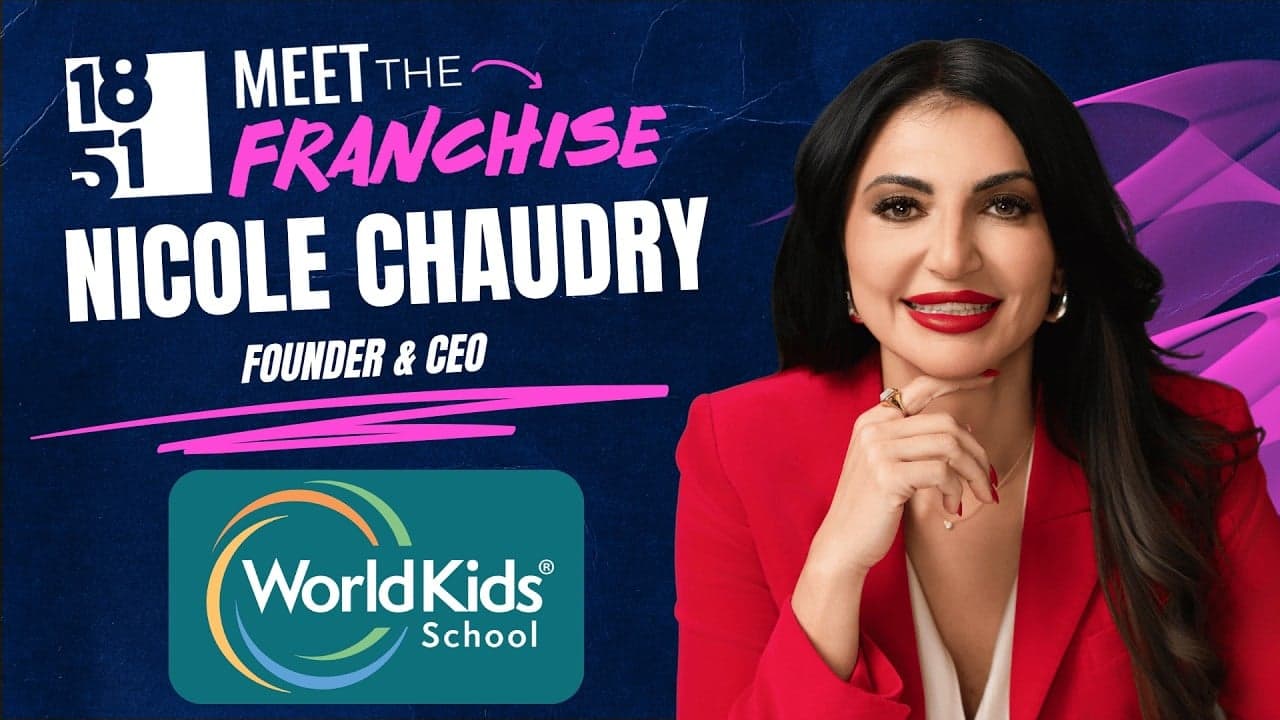
WorldKids School Founder Nicole Chaudry on Growing a Franchise With Purpose
The founder and CEO discusses the brand’s rapid franchise growth, commitment to multilingual early childhood education and plans for expansion in 2027.
Franchisor Stories
The founder and CEO discusses the brand’s rapid franchise growth, commitment to multilingual early childhood education and plans for expansion in 2027.
When Nicole Chaudry moved to the United States from Europe, she struggled to find an early childhood education program that offered the multilingual experience she had enjoyed growing up. She eventually created her own program, which became WorldKids School, a franchise that combines early childhood education with Spanish and Mandarin language immersion.
Today, Chaudry is focused on expanding the brand while making sure its franchisees have the training and support they need to succeed. WorldKids School began franchising in 2024 and has already signed approximately 15 to 16 franchise agreements across nine states, including area development agreements.
"My happiness is measured by how happy my franchise partners are, how these first franchisees who are opening WorldKids Schools around the country are doing, and whether we have the right partners," Chaudry said. "Growth comes with that. I'm not concerned about signing agreements. I'm concerned about growing healthy and spreading WorldKid School in a way that represents the purpose for which it started."
On a recent episode of 1851 Franchise's “Meet the Franchise” podcast, publisher Nick Powills spoke with Chaudry about her journey from opening a home-based educational program to leading a growing franchise system. She also discussed how the company is incorporating artificial intelligence into its operations while maintaining the personal connections that are central to early childhood education.
"We have a comprehensive support team, so the franchisee won't solely rely on AI," Chaudry said. "We use it and evolve with it, but we are also very much a human business with boots on the ground. This is education. Even calling it a business or calling our parents 'clients' sounds a little uncomfortable. We're dealing with children here, so we will be boots on the ground. We will provide curriculum training, and AI is something we implement to help and refine our processes."
Looking ahead to 2027, Chaudry said her priority is helping franchisees secure locations, open their schools and serve more families. Some of the brand's earliest franchise partners are already interested in opening additional locations, while the company is also considering opportunities to expand into Canada over the next several years.
A transcript of Chaundry’s interview with Powills has been provided below. It has been edited for brevity, clarity and style.
Nick Powills: All right, Nicole. We'll get into the business, but I'd like to start with some of the leadership things that are going through your mind. With this line of "what keeps you up at night," I don't think a lot of people are up at night worrying about it. They worry about it during the day. So what keeps you up during the day? What are some of the problems you're trying to solve in business?
Nicole Chaudry: I'm really passionate about WorldKid School, obviously. So what's on my mind during the day is how to support the franchisees who have joined our emerging brand over the last year or so. We're very excited that we're in nine states now. My priority is figuring out how to make them successful. How do we pick the right partners to represent WorldKid School and our brand?
Powills: Nine franchisees, is that right?
Chaudry: Nine states.
Powills: How many franchisees?
Chaudry: I think we have 15 or 16 agreements signed in this short time, and some of them are area development agreements, like in the Bay Area.
Powills: How do they get into your system? How do they find out about the opportunity?
Chaudry: Typically, we work with a lot of consultant networks. They vet the franchisees. They're the matchmakers for us and for franchise partners. It needs to be a win-win. They present the brand, send them to us, and then we start our discovery process from there.
Powills: Let's back out of that a little bit, because the buyer who comes to the broker network tends to come to the table and say, "Here's how much money I have. I don't know what to buy." Now they get to you. You guys are obviously solving tremendous educational gaps at the local level. How do you start vetting their alignment of passion when a relationship starts as "I'm looking for a business to buy" versus "I'm super passionate about children's education, and I need to get into this category"? How do you make sure there is alignment on that passion piece?
Chaudry: That's very important to think about. Typically, the franchisees who are introduced to us are already somewhat vetted by the consultant. We take our time to get to know our consultants and present our brand to them before they take it to a franchisee. I would say a lot of the franchise partners who enter the discovery process have already had a great career. Maybe they were a tech executive and they're looking for a business that gives them joy, one that can make a difference in the community. They're really passionate about the difference we're making all over the country by offering high-quality early childhood education and multilingual immersion in those child care deserts.
Powills: When the candidate is in your funnel, let me put it this way: We worked with Sylvan Learning for almost 20 years until their exit. I think about all the obstacles we had to overcome from a franchise growth standpoint, and AI was not in the conversation. Within the last three years, it's entered. What was interesting during COVID was that kids definitely fell behind in education, so what existed to pull them back up? Franchisees, because they were solving all these issues for children, were concerned about the value of a college education down the line and what was going to change there. And obviously, there's always been the question of what the disruptor is to the way we learn, one-size-fits-all versus individual learning. Now AI has popped in there. Does that come up with franchisees? Are they asking questions? And how are you answering any of these potential hurdles that could happen to the business in the future?
Chaudry: The question comes up: Is our industry AI-safe? Is AI going to take over the child care industry? I don't think so. The human connection really matters in our industry, so that is a plus.
The second question is: How are you implementing and evolving with AI? And we very much are doing that. We are implementing AI into our curriculum software for the teacher-facing and parent-facing parts, not for the children. Young children need human connection. But how do we communicate to the parents what we're learning in the classroom? We're a multilingual immersion program, so it helps us translate books for the parents in the software so they can read the books or the curriculum at home in any language their child is learning. Keep in mind, most of our children don't speak Mandarin or Spanish at home. Their parents want to take advantage of that opportune window in the first seven years when they can learn languages like sponges or native speakers.
Powills: That's interesting. If I'm oversimplifying part of what you're solving with AI, it's closing the gap in building up the confidence of the parent so that with what's happening from an education standpoint with the student, they can feel engaged versus out of place.
Chaudry: Correct. And also for the franchisee, from the business point of view, using AI for their lead management system helps them save time so they can dedicate their valuable time to operations and training the director. Also, if they hire a director or head of school, they now have AI that can help with operational tasks they would typically do, so they can be more in the classroom and provide high-quality care for their teachers, their families and ultimately the children.
Powills: I love that you said that. I often think about the challenge of becoming a franchisee. Most of the time, you've been in a career, so you're going from having all the resources: HR is there, ops is there, sales is there, marketing is there, and supply chain is all in-house. Now you go into business, and it is there from a franchisor standpoint, but it's a little different. The franchisor is not down the hall. So if you can use AI tools to help the franchisee fill in the gaps they're most uncomfortable with, they can focus on their business, and their business should grow. That seems to make sense.
Chaudry: Exactly right, Nick. And we as a franchisor will always be there. We have a comprehensive support team, so the franchisee won't solely rely on AI. We use it and evolve with it, but we are also very much a human business with boots on the ground. This is education. Even calling it a business or calling our parents "clients" sounds a little uncomfortable. We're dealing with children here, so we will be boots on the ground. We will provide curriculum training, and AI is something we implement to help and refine our processes.
Powills: Do you think about 15 or 16 agreements and pinch yourself? Do you look at it and say, "I want more"? How are you balancing your happiness with where you're at as a business from a leadership standpoint?
Chaudry: My happiness is measured by how happy my franchise partners are, how these first franchisees who are opening WorldKid Schools around the country are doing, and whether we have the right partners. Growth comes with that. I'm not concerned about signing agreements. I'm concerned about growing healthy and spreading WorldKid School in a way that represents the purpose for which it started. We have a lot of inquiries. We started franchising [in 2024], and we're in eight or nine states. We have meet-and-greets all the time with prospective franchise partners, but it's important that we find the right partners, that they're doing well, and that we're supporting them where they need our support. Growth will come with that.
Powills: So if I'm hearing correctly, you are living the dream. What you wanted to accomplish is there. You know that the problem you need to continue to solve as a leader is: How do you provide support at scale? Because you've added a lot of units in a year. How do you continue to make them feel excited about being part of the system?
Chaudry: Correct, and also keep the quality up at the schools that are open. The child is always the main focus, because if we put the mission first and support our students, our families and our franchise partners, then we'll grow healthy and ultimately achieve our goal.
Powills: It sounds like you've also mastered patience as a leader, because you're not saying we have to go sell a billion of these tomorrow. You obviously want to have as much impact in as many communities as possible, but you have patience in this process, too.
Chaudry: I think it's a requirement, and I have a great team behind me as well. I have a business background and an education background, and we have very experienced people on our team, like our vice president, who has more than 20 years of franchise experience. I think we have a good team supporting each other, and we are all practicing patience, but it doesn't feel exhausting in any way. Actually, it feels very exciting. We're excited every day to be boots on the ground in some of the locations and connect with our franchisees. Yes, patience, but also a lot of excitement, Nick.
Powills: Did you build this thinking you were going to franchise it? Or what made you decide to franchise it?
Chaudry: That's a great question. When I started this, I had moved here from Europe and grew up in a multilingual, multicultural household. I have a business and corporate background where I received some management training, which was great. I became a mom about 21 years ago, and I was looking for a program where I could offer my son a high-quality curriculum that would immerse him in two languages and cultures. I didn't find anything that met my expectations, so I looked into what it would take to create my own program.
Believe it or not, I ran my first program out of my home. I got licensed, and I was the teacher. I am still good friends with my first families and students. Over time, we expanded as my son was growing up, and I created WorldKid School. So we've been around for a long time, over a decade. Parents who had their children enrolled in our program, or teachers who moved into different communities where a program like WorldKid School didn't exist, asked me, "When are you going to franchise this out?" The first couple of times, I brushed it off. I was a single mother raising my son. When he went to college, I felt like that was the time to invest in franchising because I would be able to dedicate myself to it and travel. So to answer your question, it was definitely not something on my mind when I started this. It has evolved into that now, and as an empty nester, I have the time to help other entrepreneurs fulfill their dreams and make an impact on their communities.
Powills: I think your magic piece before franchising is time, because there are so many franchise brands that are built to franchise, meaning from day one, everything is built around how to duplicate it. With yours, it was, "I'm going to build a good business model. I'm going to build up relationships with my customers and my parents." Then they came back and said, "OK, we see the problem that you solved. How do we do this, too?" Which is awesome.
Chaudry: It's well known that we have child care deserts all over the United States, so we're combining the need for quality child care with immersing those children in two languages and preparing them for kindergarten. Every community has young families, and there's a high demand for child care. We're solving these problems, spreading global awareness and taking advantage of that window in a child's life when they will learn languages faster than they ever will later in life.
Powills: You're almost on your second dream with the business because you dreamed of creating something for your child, built up a successful business, and now you're franchising. What does the next year look like? What is winning for 2027?
Chaudry: Winning for 2027 is seeing these franchisees who are building their facilities, renovating and looking for properties be successful in their search. It's being there with them when they open their doors and seeing their excitement when they welcome their first families. And then supporting our first franchisees who are already doing great and asking to open their second and third locations. We're now at that point where our first franchisees are saying, "We want to expand. We have a waitlist. We want to spread this even further in the community. We cannot fit siblings or our existing students anymore."
Powills: Let's close on this. That's the next year: getting the franchisees open, excited, connected and growing. What's the bigger vision with the business? What's the big goal?
Chaudry: I think the big picture is to spread what we're doing, which everybody believes in wholeheartedly, into as many communities and states across the country as possible. We've also been approached by consultants who work in the Canadian market, so maybe in the next two or three years, we will venture into the Canadian market as well. I think there's a high demand there for a multilingual program like ours.
Powills: Great. Kudos to your success. I love when a success story has its second mountain, and you're going through it now. Obviously, you're trying to find a point of differentiation in a crowded marketplace, and you found that through solving issues when it comes to learning languages. I think you're progressive in thinking about how to translate all this success back to your parents. It seems like you're doing a lot of the right things, so I'm grateful that you shared your story with us, and I look forward to seeing where it goes.
Chaudry: Nick, thank you so much for having me on. It's been such a pleasure chatting with you today, and I appreciate the opportunity.
Powills: Of course. For Nicole, I'm Nick. This was another episode of “Meet the Franchise.”
Watch the full episode above or on YouTube.
Sign up for the 1851 Franchise newsletter to get our biggest stories before everyone else
By signing up, you agree to our user agreement (including class action waiver and arbitration provisions), and acknowledge our privacy policy.