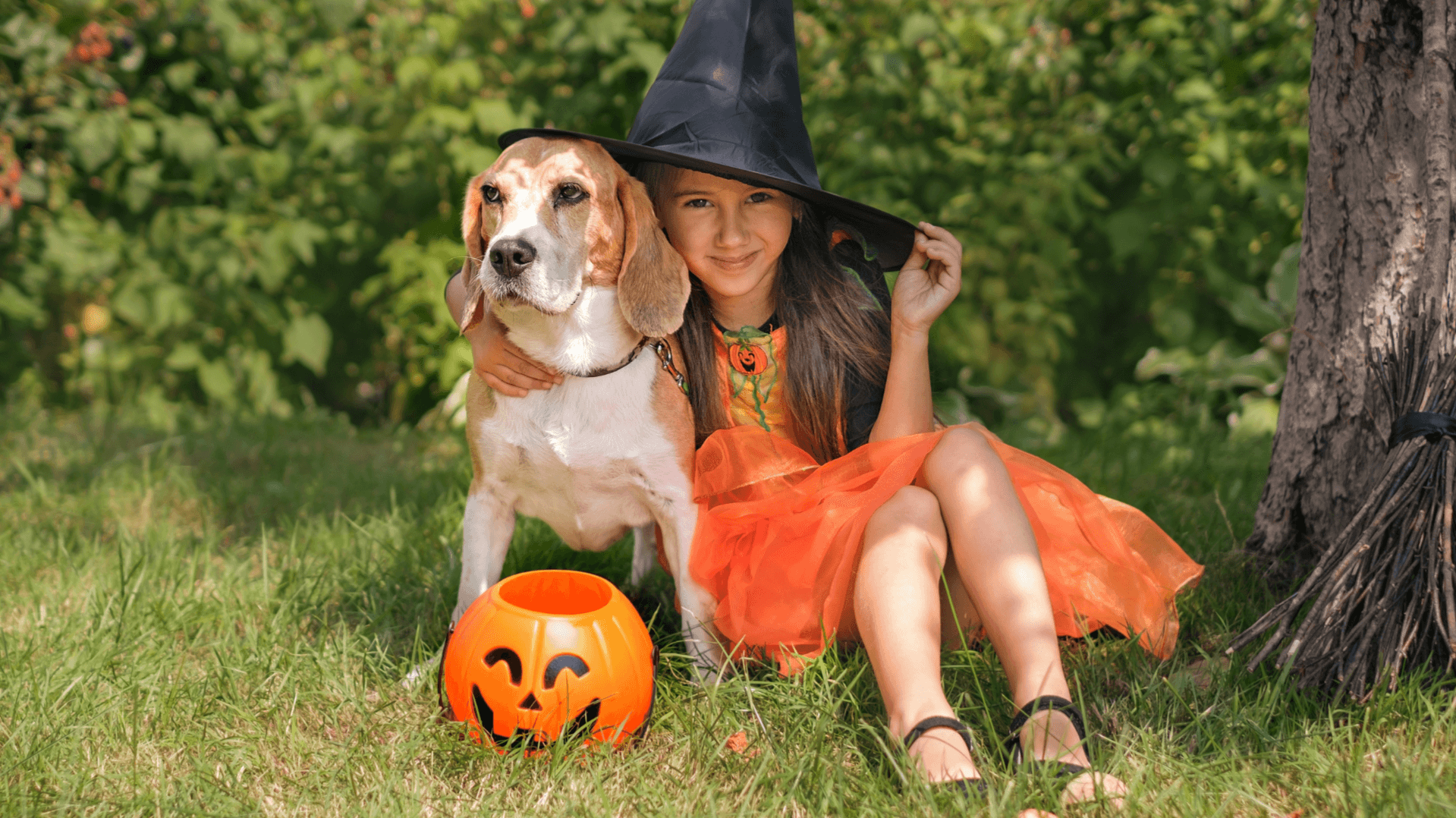
For people, Halloween means costumes, candy and a steady stream of trick-or-treaters. For dogs, the same night can mean unfamiliar faces, strange silhouettes, unexpected noises and strangers repeatedly approaching their home.
While some owners may see Halloween as a convenient opportunity to socialize their dog, trainers say that approach can backfire, particularly for dogs that are already fearful, anxious or reactive. Instead of helping a dog become more comfortable around unfamiliar people and situations, too much stimulation at once can push them beyond their behavioral threshold and reinforce the fear owners are hoping to overcome.
Dog Training Elite, one of the leading dog obedience and specialized training franchises in the country, provides guidance for pet parents preparing for the holiday season.
For Joe and Marlene Spencer, veteran franchise owners with Dog Training Elite Kentuckiana, the key is understanding the difference between productive exposure and simply overwhelming a dog.
“It’s never a good time to socialize a dog during Halloween because there are so many stressors, like unknown faces, unknown sounds and costumes, especially if you have a dog that is already afraid or reactive,” Marlene said. “The best time to socialize a dog is in a more isolated location where you can gradually introduce them to triggering events.”
Halloween Isn't the Same as Socialization
Proper socialization is about gradually introducing a dog to different people, environments, sounds, smells and experiences in a way that allows them to remain comfortable and build confidence.
Desensitization, meanwhile, comes into play when a dog has already developed an adverse response to something. If a dog reacts to bicycles, cars, strangers or a doorbell, for example, owners can work gradually to reduce that response and help the dog become more neutral toward the trigger.
Neither process should involve throwing a dog into an overwhelming environment and hoping they eventually get used to it.
“‘Flooding’ is when a dog is exposed to so many stimuli that they don’t know what to do,” Marlene said. “A dog can focus on one thing, but when you have a lot of things around, it can trigger a fight-or-flight response.”
For a dog that is already uncomfortable with strangers, sounds or activity around the front door, there may be little opportunity to recover before the next trigger arrives. “If you’re going to have a ton of people knocking on the door and kids shouting ‘trick or treat,’ that is going to constantly keep that dog in an elevated state,” Marlene said.
That doesn't mean every dog needs to be separated from Halloween festivities. “If you’ve got a dog where you’ve already done a good job socializing, it is not necessarily a bad thing for dogs that are already used to people and don’t get stressed,” Joe said. “It’s just important to watch the dog during this time and understand how they are reacting.”
Watch for Trigger Stacking
One reason Halloween can become so challenging is a phenomenon trainers call “trigger stacking.”
“Trigger stacking is when you have multiple small events happening back to back, one thing right after another, such as the knocking on the door or people approaching the house,” Marlene said. “If the dog is reactive, you want to be careful because it could send them right into that fight-or-flight mode.”
Owners shouldn't wait for barking, lunging, growling or hiding to decide their dog has had enough. Dogs often communicate discomfort much earlier through their body language.
A tucked tail or raised hackles may be obvious signs, but Marlene said owners should also watch for excessive licking or drooling, lifting a front paw, widened eyes that expose more of the whites and a body that suddenly becomes stiff rather than loose and relaxed.
“Their eyes tell a huge story,” she said. “If their eyes get big and you see more whites of the eyes, it means they are overstressed or really focused on something.”
Recognizing those earlier signals gives owners an opportunity to intervene before discomfort turns into a larger behavioral response. “A lot of dog owners don’t know how to read their dogs or understand dog language,” Joe said. “They may notice their dog is doing something different, but it is usually too late to react to it. The dogs give owners the clues, but sometimes owners don’t know what to do about it.”
Not Every Dog Needs to Greet Trick-or-Treaters
One of the easiest ways to help a nervous or reactive dog on Halloween is to let them sit out the festivities. If strangers make a dog uncomfortable or approaching visitors trigger a reaction, there's no reason to have them near the front door. Keeping them away from the activity can prevent repeated stressful encounters without interfering with their training.
For some households, Marlene recommends greeting trick-or-treaters from a table outside so visitors never need to approach or knock on the front door. Closing the blinds can reduce visual stimulation, while a television, fan or other familiar background noise can help mask sounds outside.
Owners who don't plan to participate in trick-or-treating can turn off their porch light to discourage visitors.
Inside, a dog that has already been properly crate-trained can spend the busiest part of the evening in their kennel or another familiar, quiet space away from the action.
“By putting a dog in a kennel and getting them accustomed to it, it makes them feel safer and better because they instinctively are used to sleeping in caves or small spaces,” Marlene said. “That way they can feel safe and content.”
The goal isn't to isolate a dog as punishment. It's to give them an environment where they can decompress instead of spending hours on alert.
“We have to advocate for our dogs,” Joe said. “People often forget that these are still animals at the end of the day. They are not designed to greet trick-or-treaters. We need to prep them for these things and teach them what is appropriate and what is not appropriate.”
Use Halloween to Prepare for the Rest of the Holiday Season
Halloween can also provide useful information about how a dog may respond when the calendar moves into Thanksgiving, Christmas and other holiday gatherings.
“Halloween can give people a good indication of the dog’s comfort with more people coming in,” Marlene said. “Maybe have the neighbor come over and knock on the door to get some practice runs in so you can see how they will react before the holiday comes. If your dog is getting too excited or too stressed out, then the other holidays might be too much for the dog.”
That preparation can happen at any age. While early socialization can help dogs develop confidence, Marlene stressed that owners of older dogs haven't necessarily missed their opportunity to work on behavioral challenges.
Know the Dog in Front of You
Ultimately, Halloween shouldn't become a test a dog has to pass. A dog doesn't need to greet every child at the door, wear a costume or participate in every family tradition to be successfully trained. For owners, the more important skill is learning what their dog is communicating and responding before stress becomes a larger behavioral problem.
“Don’t worry so much about putting the cute costume on the dog. Know your dog and read your dog,” Marlene said. “Dogs are always communicating with us with their body language. Just sit down and watch them. How are they playing with their toys? How are they reacting to a certain noise? Watch what your dog is doing with their body.”
Learning those signals can help owners intervene earlier on Halloween and throughout the year.
“They are really a puzzle, and you need to put all the pieces together,” Marlene said. “A lot of times, you can prevent bad behaviors or triggers before they even happen.”
For owners who aren't sure how to interpret those behaviors or how to safely work through fear and reactivity, professional training can provide a structured approach tailored to the individual dog.
“If people feel like they don’t know what to do, reach out to a professional trainer like Dog Training Elite,” Marlene said. “We are here to help bring harmony back to people’s homes and make owners’ lives better so they can be a happy pet family.”
To find out more information about franchising with Dog Training Elite, please visit https://1851franchise.com/dogtrainingelite.