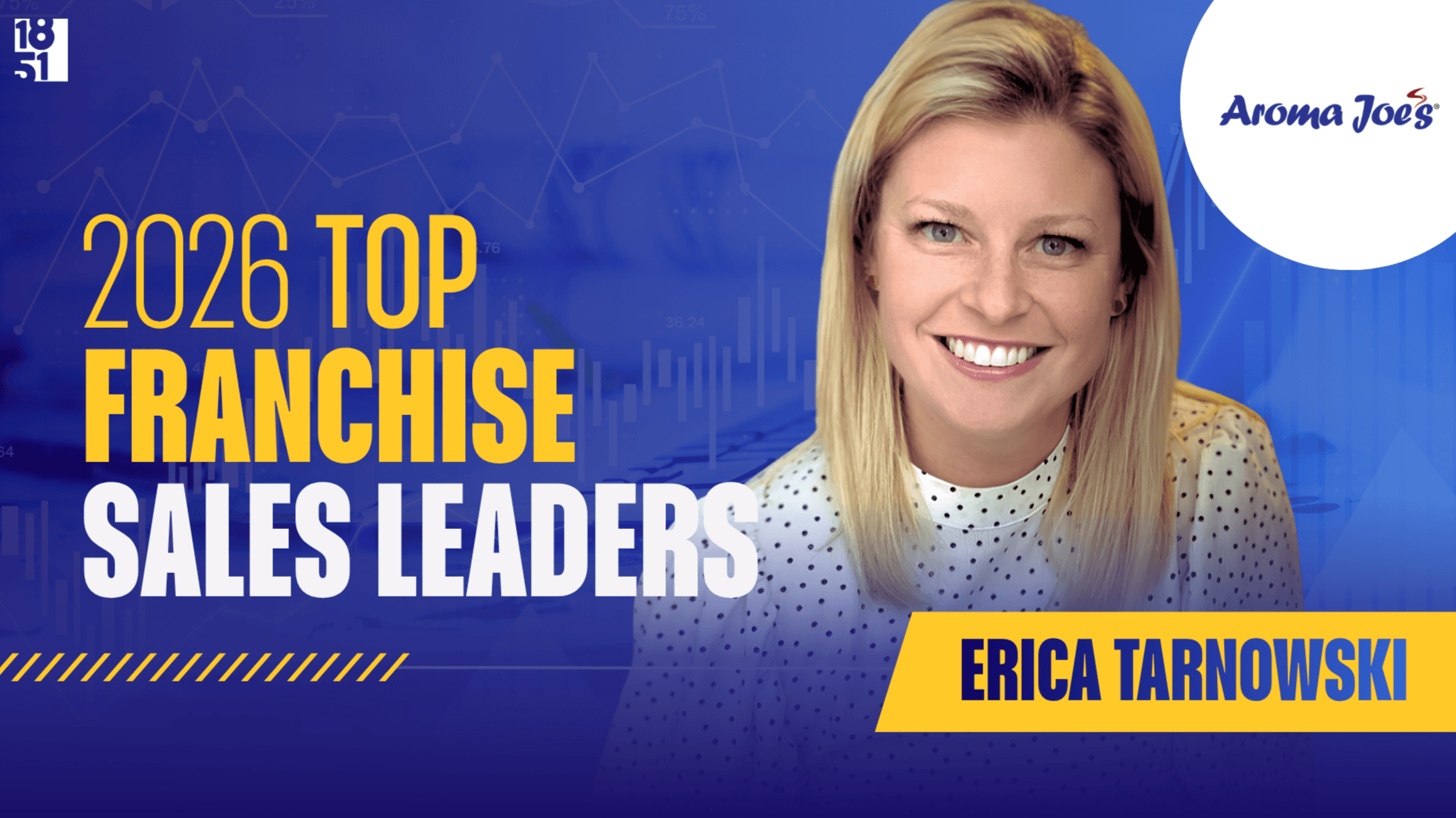
Franchise Sales Leader: Erica Tarnowski
Brand: Aroma Joe’s
Like many franchise professionals, Erica Tarnowski did not plan on building a career in franchising. Before entering the industry, she spent five years living in Brazil, where she worked as a teacher and translator. After returning to the U.S., a connection led Tarnowski to a business development coordinator position.
She quickly discovered that franchising offered something she had been missing in her previous career: an industry that was constantly evolving and centered on people.
“I got into it and absolutely fell in love,” Tarnowski said. “I really enjoyed it a lot more than I expected, so I felt very fortunate to have fallen into it.”
Today, as franchise development director for Aroma Joe’s, Tarnowski brings that same curiosity to her conversations with prospective franchisees. Rather than treating development as a race to close deals, she sees her role as helping candidates understand a complicated business model, determine whether Aroma Joe’s fits their goals and enter ownership with realistic expectations.
Education Comes Before the Franchise Sale
One of the most important lessons Tarnowski has learned throughout her career is just how complicated franchising can be, particularly for someone encountering the model for the first time.
Even after years in the industry, she rejects the idea that anyone can know everything about franchising. Regulations change, technology evolves and every brand operates differently. For a prospective franchisee preparing to invest significant capital, the learning curve can be even steeper.
That is why Tarnowski believes franchise development needs to begin with education.
“Look around the ballroom at an IFA convention. These people know franchising,” she said. “The people we’re talking about outside of that room, they don’t know what brands are franchised and what brands are not. I would much rather spend the human capital having valuable conversations with people who are educated, not only about our brand, but about other brands.”
For Tarnowski, a candidate considering competitors is not necessarily a negative. In fact, it can make for a better conversation. Understanding what someone likes and dislikes about Aroma Joe’s, another coffee concept or even a completely different franchise category can reveal what they actually want from business ownership.
Transparency Creates Better Franchise Relationships
Tarnowski’s educational approach also means being upfront about the realities of ownership.
If a prospect is coming from another business model, for example, she wants them to understand that Aroma Joe’s is an operationally involved concept. Likewise, she believes candidates deserve realistic information about development and construction timelines rather than an artificially optimistic picture designed to move them through the sales process.
“I want to create not only value for people who may buy us, but people who may not buy us,” Tarnowski said. “There’s inherent value in providing information about realistic build-out timelines. This is how long it’s going to take, and if you don’t want to wait that long or you don’t want to do that, then this isn’t for you.”
That transparency benefits both sides. A candidate who enters the system with unrealistic expectations can create challenges long after the franchise agreement is signed. For Tarnowski, development cannot operate independently from construction, operations, marketing and the other teams responsible for supporting owners.
Instead, the franchise sale should establish the expectations those teams will ultimately be responsible for delivering.
Franchise Development Starts With the Customer Experience
Tarnowski also believes franchise sales begin long before someone submits an inquiry.
“The customer is where franchise development begins,” Tarnowski said. “Everything that everybody in this office is doing every day — operations, marketing, research, innovation, procurement — all of that impacts how successful we are. Then we get to build upon that.”
That relationship between consumer experience and franchise development has been particularly important as Aroma Joe’s expands beyond its New England roots.
The brand has grown through loyal customers, word of mouth and franchisees who have continued opening locations. But as Aroma Joe’s enters markets where consumers may not yet recognize the name, Tarnowski knows it must build awareness deliberately.
One simple initiative helped illustrate the opportunity. Aroma Joe’s began placing signs underneath drive-thru pickup windows informing customers that locations were locally owned and operated and that franchise opportunities were available. Tarnowski said traffic to the franchise website, measured through QR codes on the signs, increased significantly.
“We have to get the word out to people who don’t know who we are, but more importantly, we have to get the opportunity awareness out there,” she said. “You build brand awareness, but you build franchise opportunity awareness, which is almost a completely different animal.”
Finding Franchisees Who Believe in People and Community
While financial qualifications and business acumen matter, Tarnowski says Aroma Joe’s ultimately looks for franchisees who understand the brand's people-first nature.
Community involvement is not an accessory to the model. Tarnowski says the company has repeatedly seen a connection between owners who become embedded in their communities and their stores' performance.
“If you are not in this for the people that you’re serving, then this is not for you,” she said. “Your community involvement, your willingness to give back and involve yourself directly translates to an increase in revenue. We’ve seen it over and over.”
That local focus has helped Aroma Joe’s establish a strong base in New England, where existing franchisees have grown from taking an initial chance on the concept to operating sizable portfolios.
“Maine and New Hampshire are essentially sold out at this point because of the growth of existing franchisees who got into this saying, ‘Sure, I’ll try it,’ and now they’re up to 10 locations or 15 locations,” Tarnowski said. “That’s how we’ve done it. We build with good people and grind and do our thing.”
Building Franchise Development Around Real Conversations
Technology is changing how prospective owners research franchises. Tarnowski believes candidates now have more information at their fingertips before ever speaking with a development representative, which may ultimately mean fewer inquiries but better-informed ones.
She welcomes that shift. By the time someone gets on the phone with Tarnowski, she wants to have a substantive conversation about their background, expectations and reasons for considering the business. Sometimes, that means the first conversation has very little to do with coffee.
“I love having those conversations with people,” she said. “It’s one of my favorite parts of my job, that initial call and learning about somebody. When you love what you do, I’m not going to say you don’t work a day in your life, because we work hard. But I love having those conversations with people.”
Want to learn more about how 1851 helps franchisees find the right franchise opportunity? Visit http://www.1851growthclub.com and start your journey.