Franchisor Stories
How Freshslice Pizza Is Rethinking the Franchise Model
Freshslice Pizza is growing fast without royalties or advertising fees. Here’s how the brand is putting franchisees first and making expansion work.
Franchisor Stories
Freshslice Pizza is growing fast without royalties or advertising fees. Here’s how the brand is putting franchisees first and making expansion work.
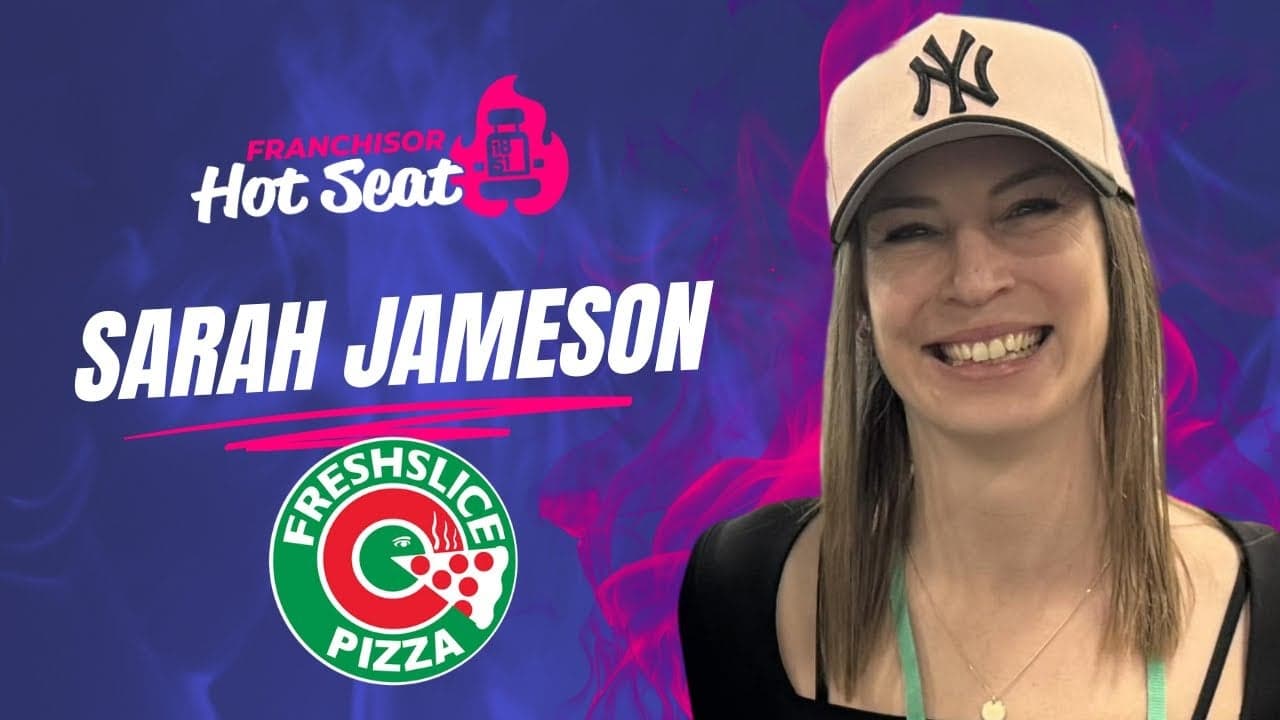
Franchising can be tough, and finding the right business model is key to long-term success. On this episode of the “Franchisor Hot Seat” podcast, 1851 Founder and Chief Growth Officer Nick Powills talks with Freshslice Pizza National Director of Franchise Sales Sarah Jameson about how the brand is taking a different approach — no royalties, no advertising fees and a focus on picking the right franchisees instead of just selling locations.
With 160 stores open and 90 more on the way, Freshslice Pizza is proving that a franchisee-first model can work. But how does a pizza brand from Canada plan to break into the U.S. market? And what kind of franchisees are they looking for?
“From the first call with a candidate, we make sure they understand that success depends on the operator,” said Jameson. “Our model is heavily owner-operator driven, so if someone isn’t engaged in their business, it’s not the right fit. We’re not in the business of taking people's money if we don’t believe it's a good partnership.”
A transcript of Powills’ conversation with Jameson has been provided below. It has been edited for brevity, clarity and style.
Nick Powills: You've been in food and beverage your whole life. Now that you're in franchising, you're seeing the industry from a different angle. Did your perception of franchising change once you stepped into it?
Sarah Jameson: Absolutely. I didn't realize how ruthless franchising can be. Working in the field, my first roles involved balancing the franchisor-franchisee relationship. Supporting both sides can be challenging because, even with the best intentions, priorities don’t always align.
Powills: I think the biggest challenge in franchise sales is expectation setting. You have to market the opportunity, but franchisors who focus on developing franchisees rather than just selling units create sustainable growth. Some franchisees think they’ll open their doors and start making money right away.
Jameson: I completely agree. From the first call with a candidate, we make sure they understand that success depends on the operator. Our model is heavily owner-operator driven, so if someone isn’t engaged in their business, it’s not the right fit. We’re not in the business of taking people's money if we don’t believe it's a good partnership.
During Discovery Days, I emphasize that my role isn’t to sell franchises. Our model sells itself. Instead, I focus on finding the right franchise partners. We want people who understand what they’re getting into and are committed to following the system.
Our founder’s story reflects this. He was a refugee who came to Canada with just $8. He built his career here and is passionate about providing opportunities to others who might not realize franchising is an option for them.
Powills: How many locations do you have open now?
Jameson: We have 160 open locations and 90 under construction. Most of our franchisees are multi-unit operators because of our low cost of entry and quick return on investment. We have about 150 franchise partners.
Powills: You've built a strong business. How do you determine who to say yes to?
Jameson: We’ve fine-tuned our process over the years. We’ve made mistakes — allowing exceptions for short-term growth — but we learned that doesn’t create long-term value.
Our screening process starts with a personality profile. If a candidate’s profile doesn’t align with entrepreneurial qualities, we don’t move forward. We explain their strengths and suggest alternative opportunities.
We also conduct a two-hour Discovery Session, either in person or virtually. It’s an opportunity for candidates to evaluate us just as much as we evaluate them. If they decide it’s not the right fit, that’s okay. We want them to make an informed decision.
Powills: Let’s talk about the brand. There are a million pizza concepts. How do you stand out?
Jameson: We offer multiple revenue streams — pizza by the slice, build-your-own, full pizzas and delivery. We also emphasize quality. Our produce is as local as possible, and we offer multigrain dough, gluten-free, vegan and halal options. Our founder calls it "guilt-free pizza."
On the business side, the biggest differentiator is our financial model. We don’t charge royalties, advertising fees or ingredient markups. That gets people’s attention, but we make sure they understand why we operate this way, rather than just seeing dollar signs.
Powills: So, you're more of a food distribution company that happens to sell pizza?
Jameson: Essentially. We manufacture and sell only the dough.
Powills: Interesting.
Jameson: We used to charge royalties and advertising fees while each store made its own dough. Then our founder realized there was a better way. He created central commissary kitchens to ensure consistency, especially as we expand into the U.S.
Franchisees buy the dough from us, which saves them labor and effort. We reinvest 15% of dough sales into advertising. That’s the only place we make our revenue — aside from the initial franchise fee.
Powills: Let’s talk about investment. What’s the total cost to get in?
Jameson: We operate on a turnkey model, handling everything from equipment to construction materials. The high-end investment for a completely empty shell is around $280,000 USD. We design the store, ship everything — including the paint for the walls — to the location. I always joke that you could lock a general contractor inside for three weeks, and when you let them out, you'd have a fully functioning store.
Powills: Do you have an Item 19 for U.S. locations?
Jameson: Not yet. We only started entering the U.S. last year. Our first store in Dallas is almost open, with three more coming. We also have franchisees in Washington State and are working with candidates in Philadelphia.
In Canada, our system average is just under $1 million CAD (about $700,000 USD), with top performers doing up to $2.5 million CAD ($1.7 million USD). Since we won’t approve a location unless we believe it will hit system averages, we expect strong performance in the U.S. as well.
Powills: Third-party delivery — will U.S. franchisees use platforms like DoorDash and Grubhub?
Jameson: Absolutely. We do well with delivery, partly because we offer mix-and-match options. Customers can order different slices in a single order, making it easy to customize for groups. That flexibility is a big differentiator.
Powills: What’s the long-term vision for U.S. growth?
Jameson: We want to be the Starbucks of pizza. Our goal is to expand nationwide and eventually go global. We’re already in discussions about Mexico. As we grow, consistency is key, which is why central dough production is so important.
Powills: I love it. Once you open more locations, that will help franchise buyers see the opportunity firsthand. One thing I’d suggest — your website needs to focus more on people. Right now, it talks about investing in Freshslice, but the real message should be how you’ve engineered a franchise that puts operators first. Highlighting franchisee success stories will help drive U.S. growth.
Jameson: I completely agree. What drew me to this company was how it sets people up for success. Franchising can be ruthless, and I’ve seen great people struggle in bad models. That was almost enough to make me leave the industry.
Then I learned about Freshslice and its mission to provide real opportunities. The more we share that story, the more we push the industry toward better practices. If other brands see what we’re doing and feel pressured to improve, that’s a win.
Powills: Your strength is in developing franchises, not just selling them. That’s why your approach works. Thanks for doing this — this was awesome.
Watch the full interview above or on YouTube.
For more interviews with those influencing the franchise industry, check out these stories on 1851 Franchise:
Sign up for the 1851 Franchise newsletter to get our biggest stories before everyone else
By signing up, you agree to our user agreement (including class action waiver and arbitration provisions), and acknowledge our privacy policy.