
inLIFE Wellness
SPONSORED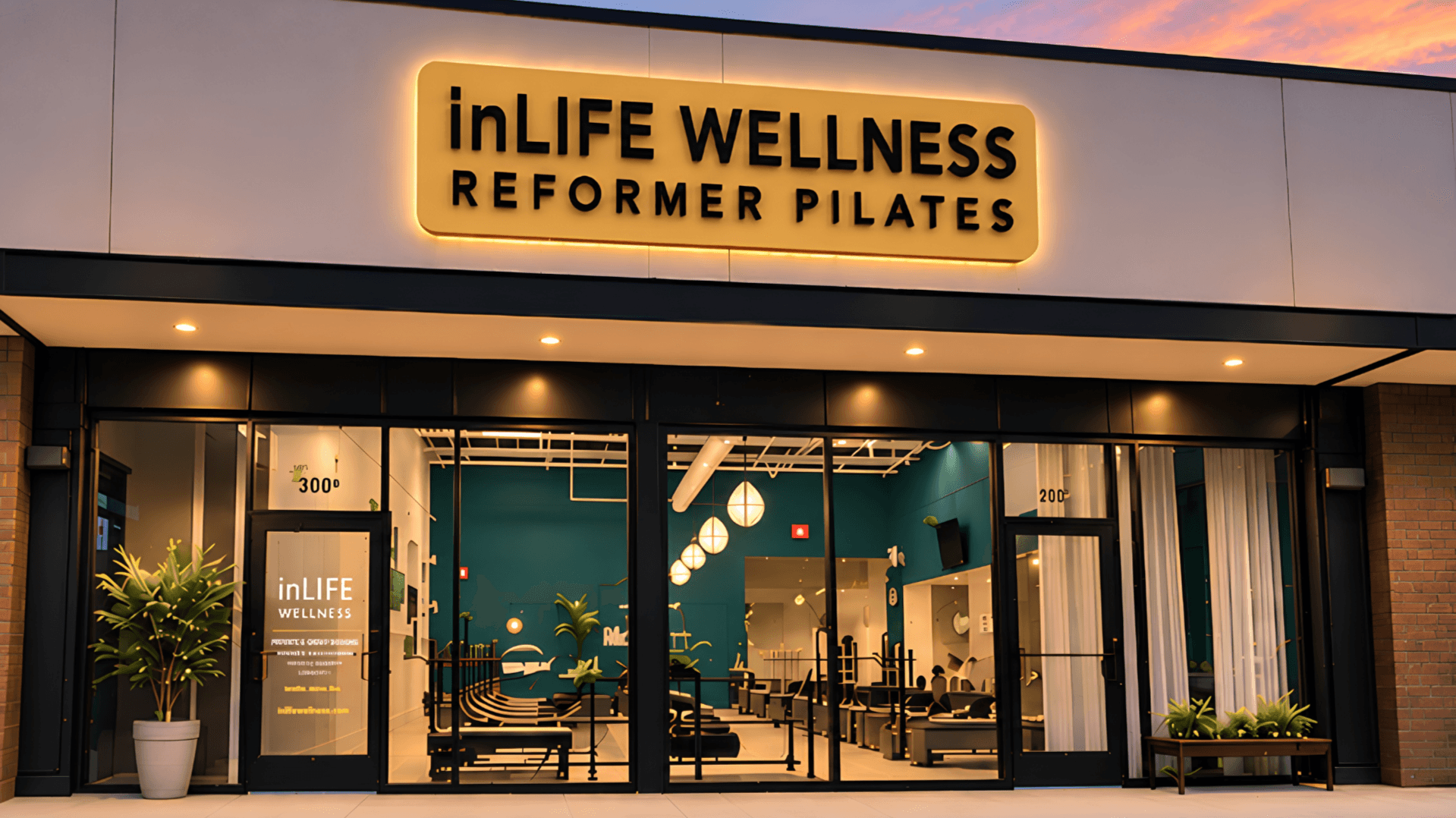
Top 5 Reasons to Buy an inLIFE Wellness Franchise in 2027
inLIFE Wellness offers entrepreneurs a Pilates franchise built on streamlined operations and strong support as boutique fitness demand grows.
Reformer Pilates may be enjoying a surge in popularity, but for inLIFE Wellness founder and CEO Scott Capelin, the opportunity goes deeper than a fitness trend.
Pilates has existed for more than a century, and in recent years, it has become increasingly mainstream. inLIFE Wellness has positioned itself to capitalize on that demand with a model designed to make the experience approachable for members while keeping the business relatively simple for franchise owners. The concept has grown internationally largely through organic interest from instructors, members and existing franchisees rather than traditional franchise marketing.
Capelin brings more than 25 years of experience in health, fitness and business ownership to the model, including firsthand experience as a franchisee himself. That background has influenced everything from real estate and build-out requirements to franchisee training and ongoing support.
As inLIFE continues building its U.S. presence, here are five reasons prospective entrepreneurs may want to take a closer look at the franchise opportunity in 2027.
For entrepreneurs evaluating a fitness or wellness franchise, one of the biggest questions is whether consumer interest will last. Capelin believes Pilates has already answered that question.
“Pilates has been around for over 100 years and has become much more mainstream in the last decade,” he said.
Reformer Pilates sits at the center of the inLIFE experience, but the studios are not limited to one type of workout. The concept incorporates barre, strength training, functional fitness, cardio and stretching, giving members variety within a single membership.
That combination gives inLIFE an opportunity to participate in growing interest around Pilates while reaching consumers who might otherwise feel intimidated by boutique fitness.
“If you look on Instagram, you see skinny fitness influencers doing some pretty unachievable things on a Pilates machine,” Capelin said. “But there are more unfit people in the community than fit people. We want to be a place where people feel comfortable coming.”
That accessibility is an intentional part of the model. According to Capelin, roughly half of the people who come to inLIFE have never belonged to a gym or studio before, while the brand’s research indicates approximately 70% had never tried Reformer Pilates.
For franchisees, that means the potential customer base is not restricted to experienced Pilates enthusiasts. The brand is designed to make the category accessible to a much wider group of consumers.
Capelin understands the franchise relationship from both sides. Before becoming a franchisor, he spent years as a franchisee, eventually owning five locations. He credits that experience with teaching him the value of proven systems, procedures, accountability and support.
“Starting my career as a franchisee helped me understand what franchisees need, what support they need from head office, what makes a good franchisor and what makes a not-so-good franchisor,” Capelin said. “Most of our franchisees own more than one location, which speaks for itself.”
That perspective helped shape inLIFE around what Capelin calls “guardrails” intended to keep owners from making unnecessarily expensive decisions. The brand, for example, places limits on acceptable rent and focuses on spaces that can be transformed without elaborate structural work.
The typical studio is approximately 1,800 square feet, and inLIFE prioritizes functional real estate that can often be refreshed with relatively straightforward changes such as flooring, paint, mirrors and lighting.
“We do not focus heavily on merchandise, supplements or apparel because we know where our membership revenue comes from; it is a simple business model,” Capelin said. “Business decisions may be made emotionally, but they must be backed up logically by the numbers.”
The brand also uses a flat monthly franchise fee rather than a traditional percentage-based royalty structure. That structure can allow franchisees to retain a greater share of incremental revenue rather than paying an increasingly large royalty tied directly to sales.
A Pilates franchise may naturally appeal to instructors and fitness professionals, but inLIFE was not designed exclusively for people who have spent their careers in the industry.
The model can accommodate owner-operators, owner-managers and, with the appropriate team in place, owners building toward a more semi-absentee multi-unit structure.
Support begins well before opening day. inLIFE works with owners across real estate, operations, staffing, marketing, sales, social media and technology. Approximately 16 weeks before opening, the brand begins lead generation and founding-member sales efforts so franchisees can start developing their customer base before the studio opens.
“It took me many years to figure out how to open a studio with hundreds of members on day one,” Capelin said. “That ties directly back into our marketing and sales program. We’re not asking someone to open the doors and then start figuring out where the customers are.”
Texas franchisee Sarah Joy experienced the value of those systems firsthand. “I had never done any type of construction in my entire life. I didn’t know anything,” Joy said. “I can tell you every muscle in your entire body, but if you ask me anything about business, I was pretty blank.”
Her first studio in Melissa, Texas, opened in March 2026 after building a substantial membership base during presales. Joy has since expanded with business partners into additional studios.
“The business side is easy. We have so many systems in place already,” Joy said. “But if you can take the time to do the hard learning, which is learning the product you are selling, that will help anyone.”
One of the more unusual parts of the inLIFE story is how many people have gone from experiencing the brand to investing in it. Rather than relying heavily on franchise advertising to build its network, inLIFE's growth has historically come in large part from people already connected to its studios.
“We have 70 locations and we’ve done no franchise marketing,” Capelin said. “What that tells me is that we’ve done a really good job with the culture and created something people want to be part of. Most of our studios have been opened by instructors and members. Now, we’re looking to open that opportunity up to the wider community.”
That pathway can begin with someone simply walking into a studio as a member. Many inLIFE instructors began as members before becoming more involved with the community, and some ultimately progressed into business ownership.
Joy's story followed a similar trajectory. She initially joined the brand as an instructor and was attracted to its welcoming, inclusive approach before considering ownership.
“It was really a breath of life into me as an instructor,” she said. “I had been teaching for 20 years and was used to everyone telling me how to teach, but this was a new approach that was inspiring. It got me hooked.”
That organic growth provides prospective franchisees with something different from a concept built primarily through outside investment: a network where many owners have already experienced the brand as instructors, members or single-unit franchisees before deciding to deepen their investment.
For inLIFE, 2027 represents an opportunity to continue translating an established international model to a much larger U.S. market.
The brand has already established a base in Texas and is continuing to develop its U.S. network. Its development team has previously identified opportunities for further growth in markets including Arizona, Minnesota, California, North Carolina, South Carolina and Florida.
Early U.S. owners are also showing an appetite for multi-unit growth. The brand has reported that its current U.S. franchisees either own multiple locations or are progressing toward additional studios, suggesting that owners are increasingly looking at inLIFE as a platform for building beyond one location.
Joy is one example. After opening her first location, she and her business partners began developing additional Texas studios. “We decided we wanted to create something even bigger,” she said. “We are really just creating a region for ourselves.”
Capelin sees significant room for the concept to grow in the U.S., but he has repeatedly emphasized that the goal is not simply to sell as many franchises as possible.
“I’m really confident in our ability to scale and build the infrastructure we need to support it,” he said. “I don’t want growth just for the sake of saying we have a certain number of locations. I want to enjoy the process, do work we’re proud of and touch people’s lives through business ownership and through the members who come into our studios.”
For more information about franchising with inLIFE Wellness, visit: https://1851franchise.com/inlife-wellness/.
inLIFE Wellness
SPONSOREDinLIFE Wellness offers entrepreneurs a Pilates franchise built on streamlined operations and strong support as boutique fitness demand grows.
Reformer Pilates may be enjoying a surge in popularity, but for inLIFE Wellness founder and CEO Scott Capelin, the opportunity goes deeper than a fitness trend.
Pilates has existed for more than a century, and in recent years, it has become increasingly mainstream. inLIFE Wellness has positioned itself to capitalize on that demand with a model designed to make the experience approachable for members while keeping the business relatively simple for franchise owners. The concept has grown internationally largely through organic interest from instructors, members and existing franchisees rather than traditional franchise marketing.
Capelin brings more than 25 years of experience in health, fitness and business ownership to the model, including firsthand experience as a franchisee himself. That background has influenced everything from real estate and build-out requirements to franchisee training and ongoing support.
As inLIFE continues building its U.S. presence, here are five reasons prospective entrepreneurs may want to take a closer look at the franchise opportunity in 2027.
For entrepreneurs evaluating a fitness or wellness franchise, one of the biggest questions is whether consumer interest will last. Capelin believes Pilates has already answered that question.
“Pilates has been around for over 100 years and has become much more mainstream in the last decade,” he said.
Reformer Pilates sits at the center of the inLIFE experience, but the studios are not limited to one type of workout. The concept incorporates barre, strength training, functional fitness, cardio and stretching, giving members variety within a single membership.
That combination gives inLIFE an opportunity to participate in growing interest around Pilates while reaching consumers who might otherwise feel intimidated by boutique fitness.
“If you look on Instagram, you see skinny fitness influencers doing some pretty unachievable things on a Pilates machine,” Capelin said. “But there are more unfit people in the community than fit people. We want to be a place where people feel comfortable coming.”
That accessibility is an intentional part of the model. According to Capelin, roughly half of the people who come to inLIFE have never belonged to a gym or studio before, while the brand’s research indicates approximately 70% had never tried Reformer Pilates.
For franchisees, that means the potential customer base is not restricted to experienced Pilates enthusiasts. The brand is designed to make the category accessible to a much wider group of consumers.
Capelin understands the franchise relationship from both sides. Before becoming a franchisor, he spent years as a franchisee, eventually owning five locations. He credits that experience with teaching him the value of proven systems, procedures, accountability and support.
“Starting my career as a franchisee helped me understand what franchisees need, what support they need from head office, what makes a good franchisor and what makes a not-so-good franchisor,” Capelin said. “Most of our franchisees own more than one location, which speaks for itself.”
That perspective helped shape inLIFE around what Capelin calls “guardrails” intended to keep owners from making unnecessarily expensive decisions. The brand, for example, places limits on acceptable rent and focuses on spaces that can be transformed without elaborate structural work.
The typical studio is approximately 1,800 square feet, and inLIFE prioritizes functional real estate that can often be refreshed with relatively straightforward changes such as flooring, paint, mirrors and lighting.
“We do not focus heavily on merchandise, supplements or apparel because we know where our membership revenue comes from; it is a simple business model,” Capelin said. “Business decisions may be made emotionally, but they must be backed up logically by the numbers.”
The brand also uses a flat monthly franchise fee rather than a traditional percentage-based royalty structure. That structure can allow franchisees to retain a greater share of incremental revenue rather than paying an increasingly large royalty tied directly to sales.
A Pilates franchise may naturally appeal to instructors and fitness professionals, but inLIFE was not designed exclusively for people who have spent their careers in the industry.
The model can accommodate owner-operators, owner-managers and, with the appropriate team in place, owners building toward a more semi-absentee multi-unit structure.
Support begins well before opening day. inLIFE works with owners across real estate, operations, staffing, marketing, sales, social media and technology. Approximately 16 weeks before opening, the brand begins lead generation and founding-member sales efforts so franchisees can start developing their customer base before the studio opens.
“It took me many years to figure out how to open a studio with hundreds of members on day one,” Capelin said. “That ties directly back into our marketing and sales program. We’re not asking someone to open the doors and then start figuring out where the customers are.”
Texas franchisee Sarah Joy experienced the value of those systems firsthand. “I had never done any type of construction in my entire life. I didn’t know anything,” Joy said. “I can tell you every muscle in your entire body, but if you ask me anything about business, I was pretty blank.”
Her first studio in Melissa, Texas, opened in March 2026 after building a substantial membership base during presales. Joy has since expanded with business partners into additional studios.
“The business side is easy. We have so many systems in place already,” Joy said. “But if you can take the time to do the hard learning, which is learning the product you are selling, that will help anyone.”
One of the more unusual parts of the inLIFE story is how many people have gone from experiencing the brand to investing in it. Rather than relying heavily on franchise advertising to build its network, inLIFE's growth has historically come in large part from people already connected to its studios.
“We have 70 locations and we’ve done no franchise marketing,” Capelin said. “What that tells me is that we’ve done a really good job with the culture and created something people want to be part of. Most of our studios have been opened by instructors and members. Now, we’re looking to open that opportunity up to the wider community.”
That pathway can begin with someone simply walking into a studio as a member. Many inLIFE instructors began as members before becoming more involved with the community, and some ultimately progressed into business ownership.
Joy's story followed a similar trajectory. She initially joined the brand as an instructor and was attracted to its welcoming, inclusive approach before considering ownership.
“It was really a breath of life into me as an instructor,” she said. “I had been teaching for 20 years and was used to everyone telling me how to teach, but this was a new approach that was inspiring. It got me hooked.”
That organic growth provides prospective franchisees with something different from a concept built primarily through outside investment: a network where many owners have already experienced the brand as instructors, members or single-unit franchisees before deciding to deepen their investment.
For inLIFE, 2027 represents an opportunity to continue translating an established international model to a much larger U.S. market.
The brand has already established a base in Texas and is continuing to develop its U.S. network. Its development team has previously identified opportunities for further growth in markets including Arizona, Minnesota, California, North Carolina, South Carolina and Florida.
Early U.S. owners are also showing an appetite for multi-unit growth. The brand has reported that its current U.S. franchisees either own multiple locations or are progressing toward additional studios, suggesting that owners are increasingly looking at inLIFE as a platform for building beyond one location.
Joy is one example. After opening her first location, she and her business partners began developing additional Texas studios. “We decided we wanted to create something even bigger,” she said. “We are really just creating a region for ourselves.”
Capelin sees significant room for the concept to grow in the U.S., but he has repeatedly emphasized that the goal is not simply to sell as many franchises as possible.
“I’m really confident in our ability to scale and build the infrastructure we need to support it,” he said. “I don’t want growth just for the sake of saying we have a certain number of locations. I want to enjoy the process, do work we’re proud of and touch people’s lives through business ownership and through the members who come into our studios.”
For more information about franchising with inLIFE Wellness, visit: https://1851franchise.com/inlife-wellness/.
Sign up for the 1851 Franchise newsletter to get our biggest stories before everyone else
By signing up, you agree to our user agreement (including class action waiver and arbitration provisions), and acknowledge our privacy policy.

No related articles found