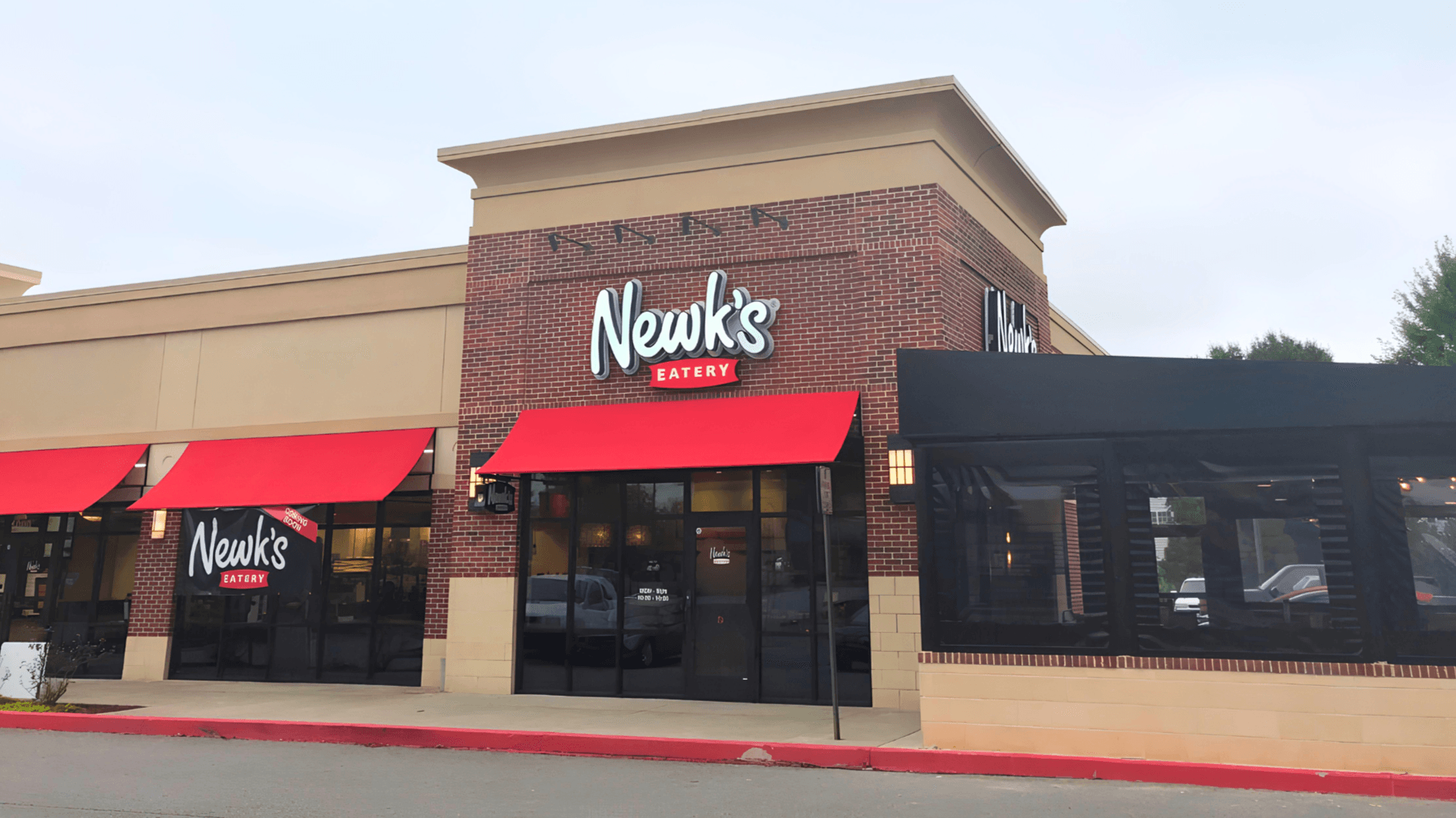
For nearly two decades, Newk’s Eatery, the nearly 100-unit fast-casual restaurant brand, has built a loyal following around scratch-made meals, genuine hospitality and neighborhood restaurants that become part of the communities they serve. As the brand looks toward its next phase of franchise growth, it isn't changing what guests love. Instead, it's modernizing the business behind the scenes, creating a restaurant model that's more flexible, more efficient and better suited for today's operators.

“We always like to start with the why,” said Chris Cheek, chief development officer of Newk’s Eatery. “People invest in restaurants for different reasons. Some dream of bringing a brand they love to their hometown. Others want to build a business they can grow over time. Our job is to make sure the model supports both those aspirations and a strong business opportunity.”

A Smaller Footprint Built Around Today’s Guest

Newk’s knows the restaurant investment environment has changed. Rent, insurance, taxes, labor and cost of goods have all increased dramatically over the past several years. In many cases, Cheek said, those costs have risen faster than restaurant sales.

Newk’s development department is focusing on the areas it can influence. “One of the ways we can continue to make our brand and our unit economics more attractive is to address some things that we can do to mitigate those costs,” Cheek said. “One of the ways is smaller restaurants.”

Historically, Newk’s restaurants were often larger than 4,000 square feet, with 120 or more seats. That model worked when the dining room was the center of the business. But guest behavior has changed.

In 2025, more than half of Newk’s sales came from off-premise channels, including catering, third-party delivery and customer pickup.

“We recognize that over half of our business was off-premise,” Cheek said. “What that means is you don’t need as many seats inside of your restaurants. The restaurants don’t need to be as big as they were.”

That shift has pushed Newk’s to rethink its development model. New restaurants opening this year are expected to fall closer to the 3,000- to 3,500-square-foot range, a meaningful reduction from the brand’s older prototype and a meaningful reduction in occupancy costs.

The goal is not simply to shrink for the sake of shrinking. It is to improve the economics of each new restaurant by reducing occupancy costs, buildout costs and unnecessary space while still preserving the guest experience Newk’s is known for.

“Unlike cost of goods and labor, once you sign a lease, occupancy cost is fixed regardless of what your sales are,” Cheek said. “That’s why we’re building smaller restaurants.”

Changing the Model Without Changing the DNA

Newk’s repositioning is not a pivot away from its identity. “Our DNA is an open kitchen, freshly prepared, culinary-driven, scratch open kitchen,” Cheek said. “That is not going to change.”

Newk’s is not trying to become a simplified fast-food concept or a drive-thru-first brand. Instead, it is adapting the business model around the way guests use restaurants today. Drive-thru and pickup-window formats may be part of that future, but Cheek is careful to frame them as optional tools, not requirements. “We’re not seeking locations where it’s either a drive-thru or nothing,” he said. “It is an option.”

Today, only a small number of Newk’s restaurants operate full drive-thrus, while others have pickup windows designed for guests who order ahead through the app. 

That flexibility is key. Newk’s can pursue inline spaces, end caps, freestanding restaurants, second-generation restaurant spaces and select drive-thru opportunities without forcing every franchisee into one box.

Designed Around Today's Franchise Reality

Whether someone has previous restaurant experience or simply dreams of bringing Newk's to their community, every prospective owner wants confidence that the business model is built for today's realities. That's why Newk's has focused on improving the parts of the business it can control, from restaurant footprints to real estate strategy and operational efficiency.

“The consumer has always evolved,” Cheek said. “The key is not getting too far ahead of where the consumer is, but not getting left behind where the consumer is. You have to continue to look at what the consumer wants, what operations needs to deliver that and, underneath all that, how you can make your restaurants generate a respectable or desirable return on investment.”

That is the foundation of the Newk’s of the future.

Community Still Comes First

While experienced multi-unit operators continue to play an important role in Newk's growth, the brand isn't defining its future around one specific franchise profile. Some candidates may begin with a single restaurant before expanding. Others may commit to developing multiple locations because they want to introduce Newk's to an underserved market they know well. What matters most is not the number of restaurants someone plans to own on day one, but their passion for the brand, their community and delivering the hospitality that has always defined Newk's.

“You hire for hospitality,” Cheek said. “We can teach and train people how to make a sandwich or a salad to almost perfection. It’s very hard to teach hospitality if you’re not hiring for that skill set. Ultimately, you want people to leave your restaurant feeling better than when they walked in. That’s not just what they taste. The restaurant touches all of your senses.”

That is also why franchisee selection matters so much. Newk’s is not looking for passive capital. The ideal franchisee believes Newk's would thrive in their market. They love the food, understand the importance of hospitality and want to become the local face of the brand in their community. Some may ultimately own multiple restaurants, while others begin with a single location and grow over time. Newk's isn't trying to fit every candidate into one ownership model.

“The two most important decisions we make on the franchise side of our business are who we choose to award franchise rights to and what sites we approve for them,” Cheek said. “That franchisee has to have the local tie, the hospitality DNA, the desire to make a return on investment, but they also have to have the passion for people, hospitality and their local community.”

A Brand With Operator Credibility

One of Newk’s biggest advantages is that the franchisor is not making recommendations from the sidelines. The company operates 28 of its nearly 100 restaurants, making it the largest operator in its own system. Its next largest franchisee owns 12 locations. That gives the leadership team firsthand exposure to the same pressures franchisees face every day.

“We’re living it and breathing it,” Cheek said. “We’re dealing with cost of goods pressures. We’re dealing with labor pressures and increasing occupancy costs. We’re dealing with all of those times 28. In my opinion, that gives credibility when the franchisor makes changes, tweaks, suggestions and recommendations. That is the stamp of credibility for us, being the largest operator of our own brand.”

The company also plans to continue opening one to two company-owned restaurants every 12 months. While the long-term growth trajectory is franchise-led, corporate development remains an important part of the system.

“We’ll always keep that growth vehicle going,” Cheek said. “It creates excitement when we open new company-owned stores that perform well. But our real trajectory is by way of franchising.”

Why Now?

For years, many people associated Newk's with larger dine-in restaurants. Today's Newk's tells a different story.

The brand is preserving everything guests already love (scratch-made food, open kitchens, broad menu appeal and genuine hospitality) while creating restaurants that are smaller, more flexible and better aligned with how people dine today.

For entrepreneurs who have always wanted to own a restaurant that becomes part of the fabric of their community, that evolution creates an exciting opportunity. Whether the goal is to introduce Newk's to a hometown that doesn't yet have one or to develop several locations over time, franchisees are joining a brand that's actively investing in its own future.

“We are continuing to look at what the customer wants and what operations has to have to deliver on what the customer wants,” Cheek said. “If we can do that in simpler ways, in lower-labor ways, we'll seek to do it.”

That philosophy isn't about changing Newk's. It's about ensuring the brand can continue growing alongside the communities it serves for years to come.

To find out more information on costs to buy this franchise, please visit https://1851franchise.com/newks-eatery/

For nearly two decades, Newk’s Eatery, the nearly 100-unit fast-casual restaurant brand, has built a loyal following around scratch-made meals, genuine hospitality and neighborhood restaurants that become part of the communities they serve. As the brand looks toward its next phase of franchise growth, it isn't changing what guests love. Instead, it's modernizing the business behind the scenes, creating a restaurant model that's more flexible, more efficient and better suited for today's operators.

“We always like to start with the why,” said Chris Cheek, chief development officer of Newk’s Eatery. “People invest in restaurants for different reasons. Some dream of bringing a brand they love to their hometown. Others want to build a business they can grow over time. Our job is to make sure the model supports both those aspirations and a strong business opportunity.”

A Smaller Footprint Built Around Today’s Guest

Newk’s knows the restaurant investment environment has changed. Rent, insurance, taxes, labor and cost of goods have all increased dramatically over the past several years. In many cases, Cheek said, those costs have risen faster than restaurant sales.

Newk’s development department is focusing on the areas it can influence. “One of the ways we can continue to make our brand and our unit economics more attractive is to address some things that we can do to mitigate those costs,” Cheek said. “One of the ways is smaller restaurants.”

Historically, Newk’s restaurants were often larger than 4,000 square feet, with 120 or more seats. That model worked when the dining room was the center of the business. But guest behavior has changed.

In 2025, more than half of Newk’s sales came from off-premise channels, including catering, third-party delivery and customer pickup.

“We recognize that over half of our business was off-premise,” Cheek said. “What that means is you don’t need as many seats inside of your restaurants. The restaurants don’t need to be as big as they were.”

That shift has pushed Newk’s to rethink its development model. New restaurants opening this year are expected to fall closer to the 3,000- to 3,500-square-foot range, a meaningful reduction from the brand’s older prototype and a meaningful reduction in occupancy costs.

The goal is not simply to shrink for the sake of shrinking. It is to improve the economics of each new restaurant by reducing occupancy costs, buildout costs and unnecessary space while still preserving the guest experience Newk’s is known for.

“Unlike cost of goods and labor, once you sign a lease, occupancy cost is fixed regardless of what your sales are,” Cheek said. “That’s why we’re building smaller restaurants.”

Changing the Model Without Changing the DNA

Newk’s repositioning is not a pivot away from its identity. “Our DNA is an open kitchen, freshly prepared, culinary-driven, scratch open kitchen,” Cheek said. “That is not going to change.”

Newk’s is not trying to become a simplified fast-food concept or a drive-thru-first brand. Instead, it is adapting the business model around the way guests use restaurants today. Drive-thru and pickup-window formats may be part of that future, but Cheek is careful to frame them as optional tools, not requirements. “We’re not seeking locations where it’s either a drive-thru or nothing,” he said. “It is an option.”

Today, only a small number of Newk’s restaurants operate full drive-thrus, while others have pickup windows designed for guests who order ahead through the app. 

That flexibility is key. Newk’s can pursue inline spaces, end caps, freestanding restaurants, second-generation restaurant spaces and select drive-thru opportunities without forcing every franchisee into one box.

Designed Around Today's Franchise Reality

Whether someone has previous restaurant experience or simply dreams of bringing Newk's to their community, every prospective owner wants confidence that the business model is built for today's realities. That's why Newk's has focused on improving the parts of the business it can control, from restaurant footprints to real estate strategy and operational efficiency.

“The consumer has always evolved,” Cheek said. “The key is not getting too far ahead of where the consumer is, but not getting left behind where the consumer is. You have to continue to look at what the consumer wants, what operations needs to deliver that and, underneath all that, how you can make your restaurants generate a respectable or desirable return on investment.”

That is the foundation of the Newk’s of the future.

Community Still Comes First

While experienced multi-unit operators continue to play an important role in Newk's growth, the brand isn't defining its future around one specific franchise profile. Some candidates may begin with a single restaurant before expanding. Others may commit to developing multiple locations because they want to introduce Newk's to an underserved market they know well. What matters most is not the number of restaurants someone plans to own on day one, but their passion for the brand, their community and delivering the hospitality that has always defined Newk's.

“You hire for hospitality,” Cheek said. “We can teach and train people how to make a sandwich or a salad to almost perfection. It’s very hard to teach hospitality if you’re not hiring for that skill set. Ultimately, you want people to leave your restaurant feeling better than when they walked in. That’s not just what they taste. The restaurant touches all of your senses.”

That is also why franchisee selection matters so much. Newk’s is not looking for passive capital. The ideal franchisee believes Newk's would thrive in their market. They love the food, understand the importance of hospitality and want to become the local face of the brand in their community. Some may ultimately own multiple restaurants, while others begin with a single location and grow over time. Newk's isn't trying to fit every candidate into one ownership model.

“The two most important decisions we make on the franchise side of our business are who we choose to award franchise rights to and what sites we approve for them,” Cheek said. “That franchisee has to have the local tie, the hospitality DNA, the desire to make a return on investment, but they also have to have the passion for people, hospitality and their local community.”

A Brand With Operator Credibility

One of Newk’s biggest advantages is that the franchisor is not making recommendations from the sidelines. The company operates 28 of its nearly 100 restaurants, making it the largest operator in its own system. Its next largest franchisee owns 12 locations. That gives the leadership team firsthand exposure to the same pressures franchisees face every day.

“We’re living it and breathing it,” Cheek said. “We’re dealing with cost of goods pressures. We’re dealing with labor pressures and increasing occupancy costs. We’re dealing with all of those times 28. In my opinion, that gives credibility when the franchisor makes changes, tweaks, suggestions and recommendations. That is the stamp of credibility for us, being the largest operator of our own brand.”

The company also plans to continue opening one to two company-owned restaurants every 12 months. While the long-term growth trajectory is franchise-led, corporate development remains an important part of the system.

“We’ll always keep that growth vehicle going,” Cheek said. “It creates excitement when we open new company-owned stores that perform well. But our real trajectory is by way of franchising.”

Why Now?

For years, many people associated Newk's with larger dine-in restaurants. Today's Newk's tells a different story.

The brand is preserving everything guests already love (scratch-made food, open kitchens, broad menu appeal and genuine hospitality) while creating restaurants that are smaller, more flexible and better aligned with how people dine today.

For entrepreneurs who have always wanted to own a restaurant that becomes part of the fabric of their community, that evolution creates an exciting opportunity. Whether the goal is to introduce Newk's to a hometown that doesn't yet have one or to develop several locations over time, franchisees are joining a brand that's actively investing in its own future.

“We are continuing to look at what the customer wants and what operations has to have to deliver on what the customer wants,” Cheek said. “If we can do that in simpler ways, in lower-labor ways, we'll seek to do it.”

That philosophy isn't about changing Newk's. It's about ensuring the brand can continue growing alongside the communities it serves for years to come.

To find out more information on costs to buy this franchise, please visit https://1851franchise.com/newks-eatery/

Don’t Miss the Next Big Franchise Story

Sign up for the 1851 Franchise newsletter to get our biggest stories before everyone else

By signing up, you agree to our user agreement (including class action waiver and arbitration provisions), and acknowledge our privacy policy.

Luca Piacentini

About the Author

Luca Piacentini

Follow

1851 Managing Editor

All Articles

No related articles found