
Pet Wants
SPONSORED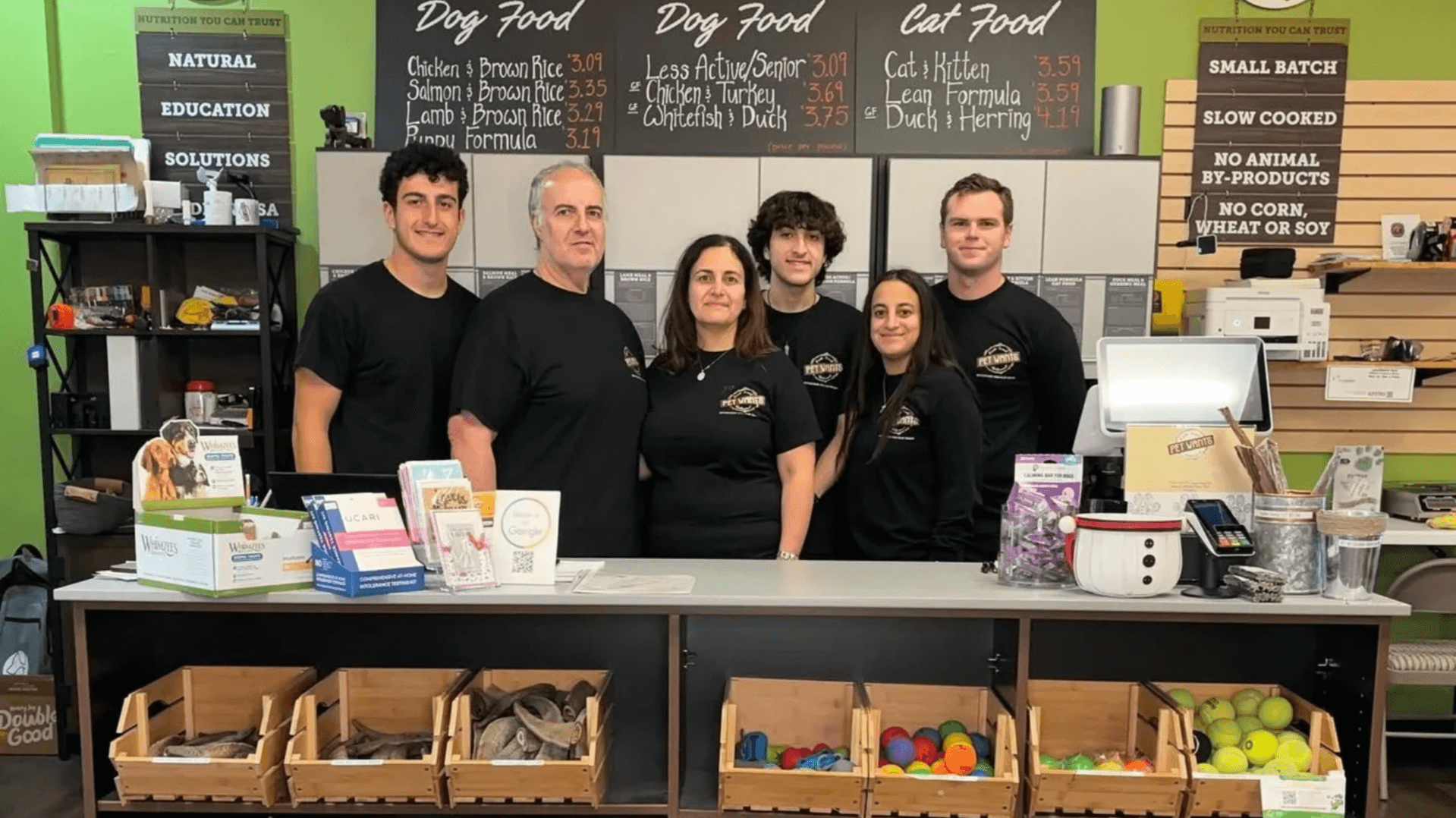
The Day-to-Day Operations of a Pet Wants Franchisee
Pet Wants franchisee Joe Alnaraie shares what it takes to run a growing pet retail and grooming business five years in, from managing inventory to connecting with the community.
For Joe Alnaraie, a typical day as a Pet Wants franchisee starts before the first customer walks through the door and often ends when he locks up for the night.
Five years into his journey with the pet health and wellness franchise, Alnaraie has built a growing Pet Wants boutique in Clarkston, Michigan, offering retail and grooming services while maintaining a presence at farmers' markets and community events. And while the operation has matured significantly since Alnaraie first launched Pet Wants as a mobile business, he still chooses to remain closely involved in its day-to-day operations.
“I am usually the one who opens and closes every day,” Alnaraie said. “I like being there and being with customers. We open at 9 and we close at 7, six days a week.”
For prospective franchisees wondering what owning a Pet Wants actually looks like, Alnaraie’s experience demonstrates how the owner’s role can evolve as the business grows. In the beginning, owners may wear nearly every hat. Over time, employees, managers and technology can take over more responsibilities, allowing the franchisee to focus on customers, community connections and the bigger picture.
When Alnaraie arrives at the store each morning, one of his first priorities is preparing for the day’s grooming appointments. “After that, it’s pretty typical retail business,” he said. “As customers come in, we help them out with everything they need.”
Customer interactions are one of the main reasons Alnaraie still spends so much time in the store, even as his team has become capable of handling more of the operation independently.
That customer-facing environment was a major change from his previous career. Before Pet Wants, Alnaraie spent years in manufacturing, primarily in the automotive industry. After his rescue dog’s stomach issues led him to Pet Wants, he saw an opportunity to transition from the B2B world into a business where he could interact directly with consumers.
Nearly three years after opening the boutique, those relationships remain one of his favorite parts of franchise ownership. “I can also take days off if I want, but for the most part I am there every day because I love talking to people,” he said.
Those conversations have changed as the business has matured. Early on, Alnaraie spent more time introducing customers to Pet Wants and educating them about the brand’s products. Now, a substantial portion of his customers are regulars.
“Three years into the store, we still get quite a few new customers, but we also have a lot of regulars,” Alnaraie said. “The education piece has become less of an everyday piece because we know these people already.”
One of the biggest components of Alnaraie’s operation today is grooming, which now accounts for nearly 40% of the business.
The service was not part of his original mobile operation. Alnaraie first launched Pet Wants in October 2021, selling at farmers' markets and craft shows throughout the Clarkston community. After getting a second dog and struggling to find a qualified groomer, he saw an opportunity.
When he opened his brick-and-mortar store in late 2023, he added grooming alongside retail and self-wash services. Today, two or three groomers typically work in the store each day.
“Their schedules are pretty full, and since we’ve been doing this a while, it’s all kind of on autopilot,” Alnaraie said. “One of our groomers is our head manager. She’s been with us since opening. We have another manager and scheduler, so they handle most of that themselves. For the most part, it really runs itself. People are pretty faithful, so once they find a groomer they like, it’s really repeat business.”
Those relationships can also support the retail side of the operation. Customers who trust their groomer have another reason to return to the store, and positive experiences can generate referrals.
“People are more willing to share good experiences, and when they find a good groomer, they are more likely to recommend the store,” Alnaraie said. “Don’t be afraid of the grooming aspect. Start slow.”
As sales have grown, inventory management has become another significant part of operating the business. “Inventory is almost a full-time job in itself now,” Alnaraie said. “We are moving quite a few chews, [and we have a] good clientele in place for frozen foods.”
The store receives deliveries twice a week from two different distributors, requiring the team to stay on top of what is selling, what needs to be replenished and how much product should be kept on hand.
Technology has made that job increasingly manageable. “The software has been growing with us, so there are provisions in there for maximum and minimum quantities, which helps take care of inventory,” Alnaraie said. “We can do shortage reports, etc. It makes things a lot easier than walking around the store to see what we are out of.”
That is one example of how Alnaraie’s daily responsibilities have changed as his Pet Wants location has scaled. Tasks that once required more manual attention can increasingly be supported by systems, software and employees.
Running a Pet Wants franchise does not mean spending every hour inside the store. For Alnaraie, community outreach remains a significant part of the operation, just as it was when he initially launched the business through farmers markets and events.
“We have focused from the very beginning to stay hyperlocal,” he said. “We do a lot of local events, and not all are selling events.”
Recently, Pet Wants sponsored a local event that offered a day at the beach specifically for dogs. Rather than bringing inventory and trying to generate immediate sales, Alnaraie and his team brought samples, interacted with attendees and focused on introducing people to the business.
“We didn’t take anything to sell, but we just had a lot of samples and had fun with it,” he said. “So a lot of that community outreach takes up time as well on the day-to-day. With our farmers markets, my wife and children still do them, and they drive people to the store. In the summer, we do events like that quite a bit. Most are within a five-mile radius of the store.”
That strategy reflects a lesson Alnaraie has learned over three years: Community involvement does not always need to produce an immediate transaction to be valuable.
“It’s not all about sales,” he said. “It’s about making connections. Franchisees don’t have to be there every day, but in those first couple of years it’s critical to be involved in the business. We love the employees, but they will never be as engaged as an owner. It’s not the same. For those first couple of years, it’s crucial to be involved at the store and at the events.”
Ultimately, no single task defines Alnaraie’s day. On any given day, he might greet a new customer, check in a grooming client, review inventory, receive a delivery, talk with an employee, prepare for a community event or simply catch up with one of the regular customers he has gotten to know over the past three years.
The owner’s job is less about completing one specific set of tasks and more about making sure all those pieces work together.
“I am at the retail store most days and I love interacting with people,” Alnaraie said. “People come in with their dogs, and the dogs are happy to be there, which makes the owners happy to be there. It’s a great feeling to spend your days making people happy.”
Ready to build a business rooted in purpose, passion and pet health and wellness? Visit https://1851franchise.com/petwants to learn more about franchising with Pet Wants.
Pet Wants
SPONSOREDPet Wants franchisee Joe Alnaraie shares what it takes to run a growing pet retail and grooming business five years in, from managing inventory to connecting with the community.
For Joe Alnaraie, a typical day as a Pet Wants franchisee starts before the first customer walks through the door and often ends when he locks up for the night.
Five years into his journey with the pet health and wellness franchise, Alnaraie has built a growing Pet Wants boutique in Clarkston, Michigan, offering retail and grooming services while maintaining a presence at farmers' markets and community events. And while the operation has matured significantly since Alnaraie first launched Pet Wants as a mobile business, he still chooses to remain closely involved in its day-to-day operations.
“I am usually the one who opens and closes every day,” Alnaraie said. “I like being there and being with customers. We open at 9 and we close at 7, six days a week.”
For prospective franchisees wondering what owning a Pet Wants actually looks like, Alnaraie’s experience demonstrates how the owner’s role can evolve as the business grows. In the beginning, owners may wear nearly every hat. Over time, employees, managers and technology can take over more responsibilities, allowing the franchisee to focus on customers, community connections and the bigger picture.
When Alnaraie arrives at the store each morning, one of his first priorities is preparing for the day’s grooming appointments. “After that, it’s pretty typical retail business,” he said. “As customers come in, we help them out with everything they need.”
Customer interactions are one of the main reasons Alnaraie still spends so much time in the store, even as his team has become capable of handling more of the operation independently.
That customer-facing environment was a major change from his previous career. Before Pet Wants, Alnaraie spent years in manufacturing, primarily in the automotive industry. After his rescue dog’s stomach issues led him to Pet Wants, he saw an opportunity to transition from the B2B world into a business where he could interact directly with consumers.
Nearly three years after opening the boutique, those relationships remain one of his favorite parts of franchise ownership. “I can also take days off if I want, but for the most part I am there every day because I love talking to people,” he said.
Those conversations have changed as the business has matured. Early on, Alnaraie spent more time introducing customers to Pet Wants and educating them about the brand’s products. Now, a substantial portion of his customers are regulars.
“Three years into the store, we still get quite a few new customers, but we also have a lot of regulars,” Alnaraie said. “The education piece has become less of an everyday piece because we know these people already.”
One of the biggest components of Alnaraie’s operation today is grooming, which now accounts for nearly 40% of the business.
The service was not part of his original mobile operation. Alnaraie first launched Pet Wants in October 2021, selling at farmers' markets and craft shows throughout the Clarkston community. After getting a second dog and struggling to find a qualified groomer, he saw an opportunity.
When he opened his brick-and-mortar store in late 2023, he added grooming alongside retail and self-wash services. Today, two or three groomers typically work in the store each day.
“Their schedules are pretty full, and since we’ve been doing this a while, it’s all kind of on autopilot,” Alnaraie said. “One of our groomers is our head manager. She’s been with us since opening. We have another manager and scheduler, so they handle most of that themselves. For the most part, it really runs itself. People are pretty faithful, so once they find a groomer they like, it’s really repeat business.”
Those relationships can also support the retail side of the operation. Customers who trust their groomer have another reason to return to the store, and positive experiences can generate referrals.
“People are more willing to share good experiences, and when they find a good groomer, they are more likely to recommend the store,” Alnaraie said. “Don’t be afraid of the grooming aspect. Start slow.”
As sales have grown, inventory management has become another significant part of operating the business. “Inventory is almost a full-time job in itself now,” Alnaraie said. “We are moving quite a few chews, [and we have a] good clientele in place for frozen foods.”
The store receives deliveries twice a week from two different distributors, requiring the team to stay on top of what is selling, what needs to be replenished and how much product should be kept on hand.
Technology has made that job increasingly manageable. “The software has been growing with us, so there are provisions in there for maximum and minimum quantities, which helps take care of inventory,” Alnaraie said. “We can do shortage reports, etc. It makes things a lot easier than walking around the store to see what we are out of.”
That is one example of how Alnaraie’s daily responsibilities have changed as his Pet Wants location has scaled. Tasks that once required more manual attention can increasingly be supported by systems, software and employees.
Running a Pet Wants franchise does not mean spending every hour inside the store. For Alnaraie, community outreach remains a significant part of the operation, just as it was when he initially launched the business through farmers markets and events.
“We have focused from the very beginning to stay hyperlocal,” he said. “We do a lot of local events, and not all are selling events.”
Recently, Pet Wants sponsored a local event that offered a day at the beach specifically for dogs. Rather than bringing inventory and trying to generate immediate sales, Alnaraie and his team brought samples, interacted with attendees and focused on introducing people to the business.
“We didn’t take anything to sell, but we just had a lot of samples and had fun with it,” he said. “So a lot of that community outreach takes up time as well on the day-to-day. With our farmers markets, my wife and children still do them, and they drive people to the store. In the summer, we do events like that quite a bit. Most are within a five-mile radius of the store.”
That strategy reflects a lesson Alnaraie has learned over three years: Community involvement does not always need to produce an immediate transaction to be valuable.
“It’s not all about sales,” he said. “It’s about making connections. Franchisees don’t have to be there every day, but in those first couple of years it’s critical to be involved in the business. We love the employees, but they will never be as engaged as an owner. It’s not the same. For those first couple of years, it’s crucial to be involved at the store and at the events.”
Ultimately, no single task defines Alnaraie’s day. On any given day, he might greet a new customer, check in a grooming client, review inventory, receive a delivery, talk with an employee, prepare for a community event or simply catch up with one of the regular customers he has gotten to know over the past three years.
The owner’s job is less about completing one specific set of tasks and more about making sure all those pieces work together.
“I am at the retail store most days and I love interacting with people,” Alnaraie said. “People come in with their dogs, and the dogs are happy to be there, which makes the owners happy to be there. It’s a great feeling to spend your days making people happy.”
Ready to build a business rooted in purpose, passion and pet health and wellness? Visit https://1851franchise.com/petwants to learn more about franchising with Pet Wants.
Sign up for the 1851 Franchise newsletter to get our biggest stories before everyone else
By signing up, you agree to our user agreement (including class action waiver and arbitration provisions), and acknowledge our privacy policy.

No related articles found