
Screenmobile
SPONSORED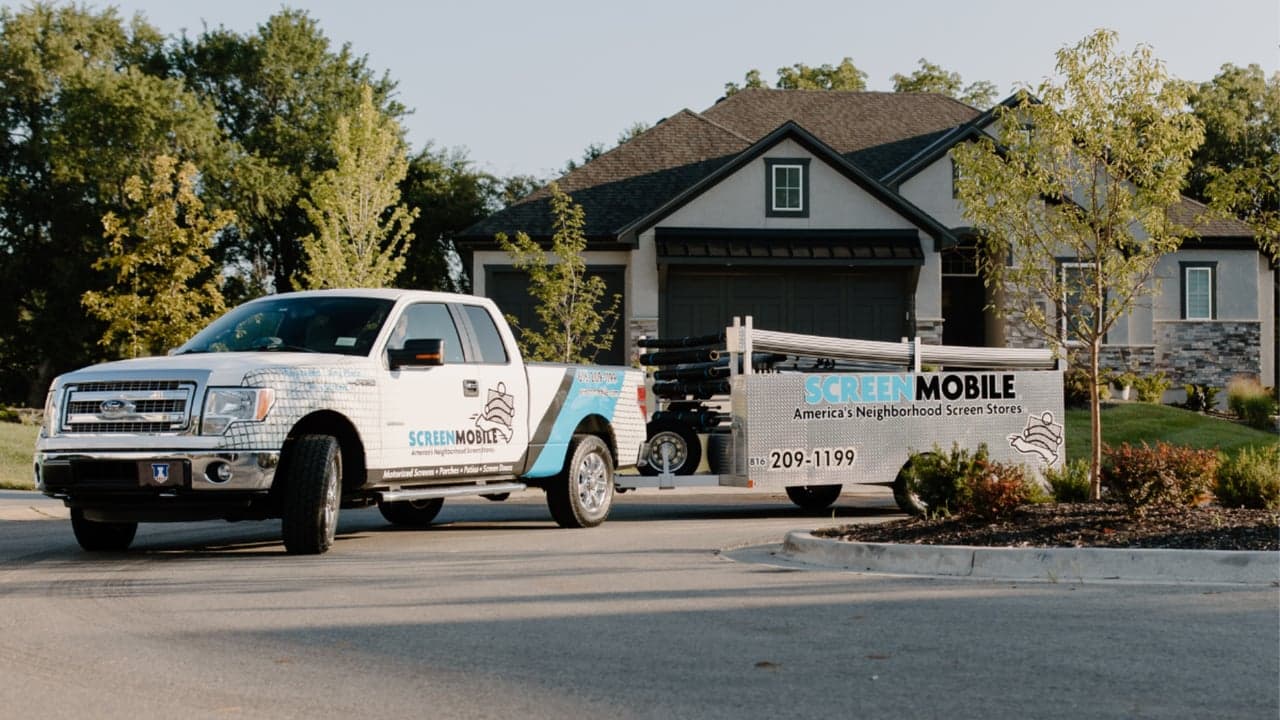
Top 5 Reasons to Buy a Screenmobile Franchise in 2026
Low overhead, high scalability, and an on-site service model capitalize on a fragmented market and strong demand for screen repair and custom outdoor living solutions.
For entrepreneurs exploring home services, the challenge is rarely finding a category. It’s finding a model that is scalable, differentiated, and built for long-term value. Screenmobile, the original mobile screen repair and installation franchise, continues to stand out for exactly those reasons.
With more than 40 years in business and a model designed around efficiency and growth, Screenmobile offers a compelling opportunity for franchisees looking to build a durable, service-based business. According to Josh Minturn, vice president of development for parent company Authority Brands, Screenmobile’s appeal comes down to a few key fundamentals.
Here are the top five reasons to consider investing in a Screenmobile franchise.
One of the biggest advantages of Screenmobile is its ability to grow beyond an owner-operator model. “It’s highly scalable — the business model allows candidates to invest in infrastructure and build out their crews in a way that doesn’t require them to be directly on a crew doing the building,” said Minturn.
Because the business is mobile and service-based, franchisees can start lean and expand by adding trucks, trailers, and teams over time. This creates a clear path from owner-operator to multi-crew operator and ultimately to building an asset that can be sold.
And the results speak for themselves. According to the brand’s FDD, owners reported average gross revenue of $477,743*, 402 average customers per year**, and $1,139 in average gross sales per customer***.
Beyond the unit-level economics, Screenmobile franchisees benefit from being part of a much larger ecosystem through Authority Brands, one of the country's leading home services franchise platforms. Franchisees gain access to shared resources, best practices, and operational insights from across multiple high-performing home service brands, from marketing and technology to training and call center support.
Screenmobile isn't just another home services concept. It's the original player in this category. A father and two sons founded the company in 1980, starting with just one truck and a tent trailer. Since then, it's grown significantly, expanding to 138 franchised Screenmobile territories.****
“From a category perspective, we have very limited competition. We have been at this for 40-plus years, and we really invented the category, particularly in the franchise space,” Minturn said. “We are miles ahead with the tools, equipment, and tech we are using, as well as the support.”
In many markets, franchisees aren’t competing against other specialized operators. They’re competing against fragmented, mom-and-pop providers or general handymen.
That fragmentation creates a major advantage. With a recognizable brand, professional systems, and strong marketing support, franchisees can quickly stand out and capture market share.
Screenmobile’s mobile, home-based model significantly lowers the barrier to entry compared to traditional brick-and-mortar franchises.
“The startup cost is very low. The investment ranges from $148,049 to $209,592*,” Minturn said. “It’s a mobile-based business that can be done from home — you don’t need a brick-and-mortar location and those other expenses. As a result, the cost to do business is very low.”
Instead of sinking money into real estate, hiring a massive staff, or stocking tons of inventory, franchisees get started with just a truck, a trailer, and the necessary gear. Materials are usually bought as needed for each job, which helps owners manage their cash flow.
Screenmobile operates in a category that many consumers don’t think about until they need it. And when they do, demand is high.
“The reality is that when we look at consumer demand, there are a lot of people who need this type of service,” Minturn said. “Based on the partners we work with, we know there is a massive amount of demand for screen repair, motorized awnings, outdoor shades, and similar products.”
With Screenmobile, franchisees aren’t tied to a single service or seasonal demand. They’re building a flexible, year-round business that grows with their market. From core services like window screen repair, screen doors, and patio enclosures to higher-ticket offerings like motorized screens, sun control, and security products, the model creates multiple revenue streams. Beyond that, owners can expand into custom home projects tailored to local demand, including pool enclosures, garage screens, storm systems, and more.
The demand is also fueled by broader home improvement trends, particularly the rise of outdoor living spaces and comfort-focused upgrades.
Additionally, the work itself becomes a marketing engine. “What we do is outwardly visible — neighbors can see what we are doing,” Minturn said. “The neighborhoods that we are typically serving have disposable income, and it’s a little bit of a keeping up with the Joneses mindset.”
This visibility creates organic word-of-mouth growth, helping franchisees generate new leads directly from jobs in progress.
Perhaps the most overlooked advantage of Screenmobile is how it delivers its service.
“This is the type of business that most people don’t think of because it’s not necessarily one that is attractive from the outside looking in,” Minturn said. “Once people dive deeper into the business model, there are a lot of differentiators.”
Unlike traditional providers who remove screens and return days or weeks later, Screenmobile completes work on-site. “Most people who do screen repair are just handymen who take them to ACE Hardware or Home Depot,” Minturn said. “We can do it all on-site and custom-build brand-new screens right there. It really gives a more professional finish.”
This immediate, high-quality service creates a better customer experience — and a clear competitive edge. “The consumer experience is very different than the competition,” Minturn said. “That is what allows us to grow in a market. The consumer realizes there is a different way to do this.”
At its core, Screenmobile combines several traits that experienced franchise buyers look for: low overhead, strong demand, scalability, and a fragmented competitive landscape.
“There are very few companies operating at a national scale with the kind of mobile, on-site screen repair and outdoor living service model that Screenmobile offers,” Minturn said. “That is where we stand out.”
For entrepreneurs, Screenmobile offers a platform to build, scale, and eventually exit a valuable asset. In a crowded franchise landscape, that combination is what continues to set Screenmobile apart.
For more information on franchising with Screenmobile, visit: https://screenmobilefranchise.com/.
*Per 2026 Screenmobile FDD, Item 19, Table 1
**Per 2026 Screenmobile FDD, item 19, table 2
***Per 2026 Screenmobile FDD, item 19, table 3
****Per 2026 Screenmobile FDD, item 20, table 1
Screenmobile
SPONSOREDLow overhead, high scalability, and an on-site service model capitalize on a fragmented market and strong demand for screen repair and custom outdoor living solutions.
For entrepreneurs exploring home services, the challenge is rarely finding a category. It’s finding a model that is scalable, differentiated, and built for long-term value. Screenmobile, the original mobile screen repair and installation franchise, continues to stand out for exactly those reasons.
With more than 40 years in business and a model designed around efficiency and growth, Screenmobile offers a compelling opportunity for franchisees looking to build a durable, service-based business. According to Josh Minturn, vice president of development for parent company Authority Brands, Screenmobile’s appeal comes down to a few key fundamentals.
Here are the top five reasons to consider investing in a Screenmobile franchise.
One of the biggest advantages of Screenmobile is its ability to grow beyond an owner-operator model. “It’s highly scalable — the business model allows candidates to invest in infrastructure and build out their crews in a way that doesn’t require them to be directly on a crew doing the building,” said Minturn.
Because the business is mobile and service-based, franchisees can start lean and expand by adding trucks, trailers, and teams over time. This creates a clear path from owner-operator to multi-crew operator and ultimately to building an asset that can be sold.
And the results speak for themselves. According to the brand’s FDD, owners reported average gross revenue of $477,743*, 402 average customers per year**, and $1,139 in average gross sales per customer***.
Beyond the unit-level economics, Screenmobile franchisees benefit from being part of a much larger ecosystem through Authority Brands, one of the country's leading home services franchise platforms. Franchisees gain access to shared resources, best practices, and operational insights from across multiple high-performing home service brands, from marketing and technology to training and call center support.
Screenmobile isn't just another home services concept. It's the original player in this category. A father and two sons founded the company in 1980, starting with just one truck and a tent trailer. Since then, it's grown significantly, expanding to 138 franchised Screenmobile territories.****
“From a category perspective, we have very limited competition. We have been at this for 40-plus years, and we really invented the category, particularly in the franchise space,” Minturn said. “We are miles ahead with the tools, equipment, and tech we are using, as well as the support.”
In many markets, franchisees aren’t competing against other specialized operators. They’re competing against fragmented, mom-and-pop providers or general handymen.
That fragmentation creates a major advantage. With a recognizable brand, professional systems, and strong marketing support, franchisees can quickly stand out and capture market share.
Screenmobile’s mobile, home-based model significantly lowers the barrier to entry compared to traditional brick-and-mortar franchises.
“The startup cost is very low. The investment ranges from $148,049 to $209,592*,” Minturn said. “It’s a mobile-based business that can be done from home — you don’t need a brick-and-mortar location and those other expenses. As a result, the cost to do business is very low.”
Instead of sinking money into real estate, hiring a massive staff, or stocking tons of inventory, franchisees get started with just a truck, a trailer, and the necessary gear. Materials are usually bought as needed for each job, which helps owners manage their cash flow.
Screenmobile operates in a category that many consumers don’t think about until they need it. And when they do, demand is high.
“The reality is that when we look at consumer demand, there are a lot of people who need this type of service,” Minturn said. “Based on the partners we work with, we know there is a massive amount of demand for screen repair, motorized awnings, outdoor shades, and similar products.”
With Screenmobile, franchisees aren’t tied to a single service or seasonal demand. They’re building a flexible, year-round business that grows with their market. From core services like window screen repair, screen doors, and patio enclosures to higher-ticket offerings like motorized screens, sun control, and security products, the model creates multiple revenue streams. Beyond that, owners can expand into custom home projects tailored to local demand, including pool enclosures, garage screens, storm systems, and more.
The demand is also fueled by broader home improvement trends, particularly the rise of outdoor living spaces and comfort-focused upgrades.
Additionally, the work itself becomes a marketing engine. “What we do is outwardly visible — neighbors can see what we are doing,” Minturn said. “The neighborhoods that we are typically serving have disposable income, and it’s a little bit of a keeping up with the Joneses mindset.”
This visibility creates organic word-of-mouth growth, helping franchisees generate new leads directly from jobs in progress.
Perhaps the most overlooked advantage of Screenmobile is how it delivers its service.
“This is the type of business that most people don’t think of because it’s not necessarily one that is attractive from the outside looking in,” Minturn said. “Once people dive deeper into the business model, there are a lot of differentiators.”
Unlike traditional providers who remove screens and return days or weeks later, Screenmobile completes work on-site. “Most people who do screen repair are just handymen who take them to ACE Hardware or Home Depot,” Minturn said. “We can do it all on-site and custom-build brand-new screens right there. It really gives a more professional finish.”
This immediate, high-quality service creates a better customer experience — and a clear competitive edge. “The consumer experience is very different than the competition,” Minturn said. “That is what allows us to grow in a market. The consumer realizes there is a different way to do this.”
At its core, Screenmobile combines several traits that experienced franchise buyers look for: low overhead, strong demand, scalability, and a fragmented competitive landscape.
“There are very few companies operating at a national scale with the kind of mobile, on-site screen repair and outdoor living service model that Screenmobile offers,” Minturn said. “That is where we stand out.”
For entrepreneurs, Screenmobile offers a platform to build, scale, and eventually exit a valuable asset. In a crowded franchise landscape, that combination is what continues to set Screenmobile apart.
For more information on franchising with Screenmobile, visit: https://screenmobilefranchise.com/.
*Per 2026 Screenmobile FDD, Item 19, Table 1
**Per 2026 Screenmobile FDD, item 19, table 2
***Per 2026 Screenmobile FDD, item 19, table 3
****Per 2026 Screenmobile FDD, item 20, table 1
Sign up for the 1851 Franchise newsletter to get our biggest stories before everyone else
By signing up, you agree to our user agreement (including class action waiver and arbitration provisions), and acknowledge our privacy policy.

No related articles found