
Caring Transitions
SPONSORED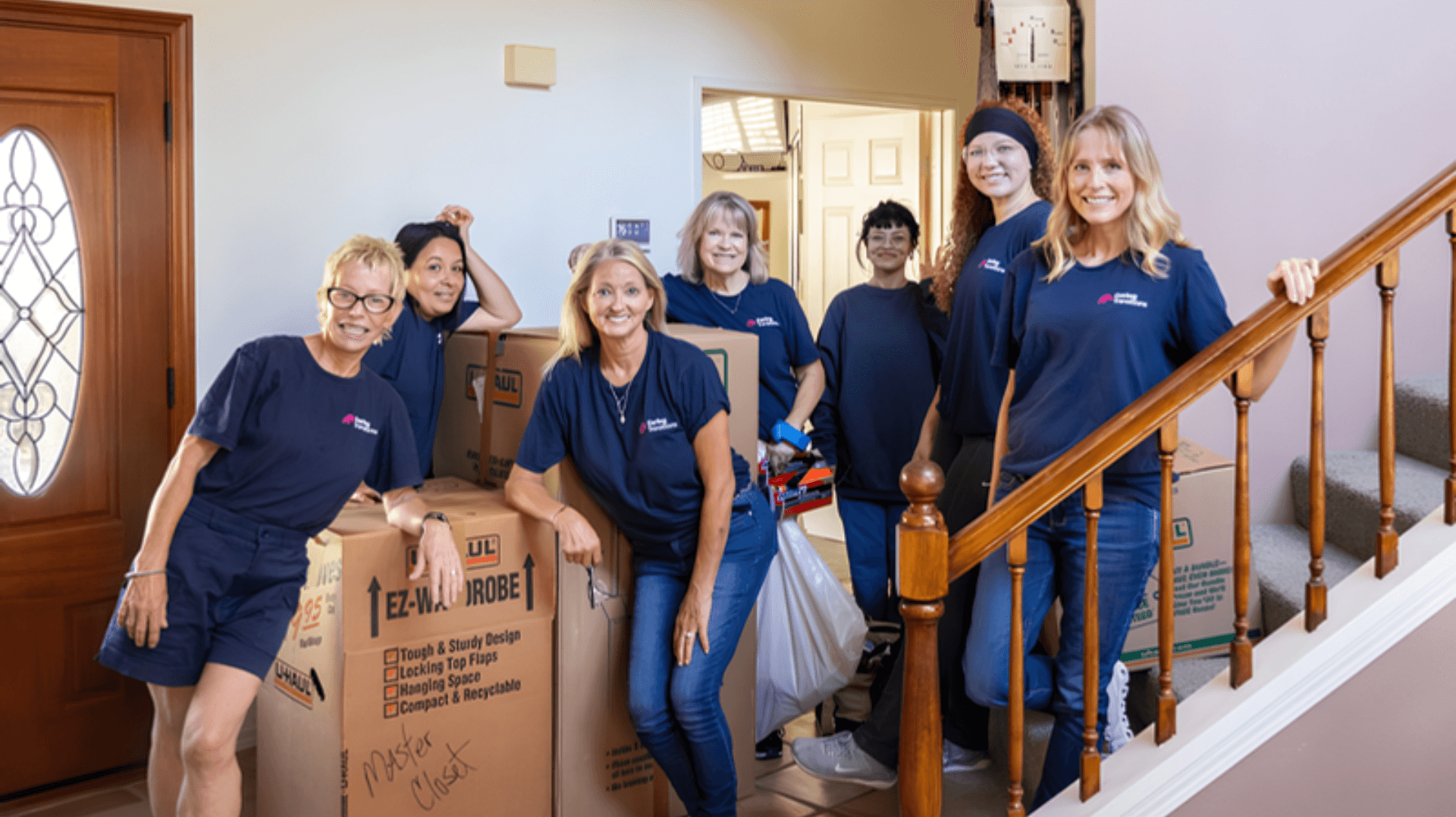
Is Caring Transitions the Right Franchise for You?
Caring Transitions is designed for empathetic, relationship-driven entrepreneurs who want to build a business around helping families through major life changes.
Choosing the right franchise is about more than finding an attractive industry or a recognizable brand. The opportunity also needs to align with the owner’s strengths, motivations and vision for entrepreneurship.
For Caring Transitions, the franchise specializing in senior relocation, downsizing, estate sales and online auctions, that alignment often starts with a desire to help people.
“With Caring Transitions, it's very relationship-driven and referral-driven,” said Kyle Kosco VP of Marketing, Caring Transitions “You are helping a family out or helping loved ones during a very difficult time. Empathy is essential.”
But empathy is only part of the equation. Successful Caring Transitions franchisees also need to be comfortable building relationships, following a proven system, managing teams and developing a trusted presence within their local communities.
So, is Caring Transitions the right franchise for you? Here are some of the qualities that may indicate a strong fit.
Caring Transitions franchisees frequently work with families during major life events. A senior may be moving from a longtime home into assisted living. Adult children may be settling a parent's estate. A family may need to downsize decades of belongings in a matter of weeks.
Those situations require more than operational efficiency. They require patience and an ability to understand what clients are experiencing. “They are generally interested in helping people,” Kosco said of Caring Transitions owners.
For Julie Bilyeu, owner of Caring Transitions of Winston-Salem, North Carolina, that mission was a major reason she chose the business. “The business is great,” she said. “It really serves my life's purpose of helping others in transition. It provides me an avenue to continue to be fulfilled, as well as provide for my family.”
That sense of purpose is important because owners aren't simply completing transactions. They are often entering people's homes during emotional periods and helping them make decisions about belongings, memories and the next chapter of their lives.
Caring Transitions isn't a business where an owner can simply open the doors and wait for customers to arrive. Local relationship-building can be a significant part of creating a sustainable pipeline of business.
Franchisees regularly develop connections with senior living communities, real estate professionals, estate attorneys, financial professionals, funeral homes and other organizations serving older adults and their families.
For Bilyeu, those relationships drive nearly all of her business. “Referrals are close to 100% of my business,” she said. “I spend a lot of time and a lot of resources on the referral network that I have.”
That doesn't mean every Caring Transitions owner needs to be the loudest person in the room. But prospective franchisees should be willing to introduce themselves, educate referral partners, participate in community events and consistently nurture professional relationships.
Families hiring Caring Transitions are often handing an owner responsibility for an incredibly personal project. That makes credibility and trust essential.
“The relationships we've built with those communities through the years are key,” said Jared Erfle, longtime owner of Caring Transitions of Santa Clarita and San Fernando Valley, California. “We've met sales reps who may move to other communities, but they stay with us because we deliver value: we solve a problem.”
For owners who enjoy becoming a known resource in their communities rather than simply selling a service, that can make Caring Transitions particularly appealing.
Bilyeu takes that philosophy even further by approaching community involvement as an opportunity to support other organizations. “I look at my job as creating solutions,” she said. “For me, that means supporting other people to create solutions as well.”
Some prospective franchisees may initially discover Caring Transitions because of its senior relocation services, but the model extends beyond moving.
Franchisees can provide downsizing, decluttering, estate sales, home cleanouts and other transition services. The brand’s proprietary CTBids online auction platform also gives owners another way to help clients liquidate belongings while reaching an established audience of buyers.
That variety can appeal to entrepreneurs who enjoy project-based businesses where every client and every day can look different. “We also have many successful owners who really love the online auction and estate sale aspect because we have CTBids,” Kosco said. “Some owners are really passionate about that world and can combine that with a meaningful business.”
For Carolyn Doerr, who has owned Caring Transitions of Mechanicsburg, Pennsylvania, for more than 11 years, CTBids has become an important component of her operation. “Probably about 75% of our business is through CTBids or a move with CTBids,” Doerr said. “That is really what gets us the attention and makes us different as a business.”
Prospective franchisees don't necessarily need experience in senior services, moving or estate sales to succeed with Caring Transitions.
“They are willing to learn, they know what they do well, they are coachable and willing to follow the playbook,” Kosco said of successful franchise owners across Strategic Franchising Systems. “They don't have to build their own thing. There is value in people learning the ropes before them.”
That philosophy is especially relevant for someone leaving corporate America or entering business ownership for the first time. Franchising provides an established framework, but owners still need to execute it.
“Whenever questions arise, you have a coach who can answer any question for you,” Doerr said. “They are pretty experienced in doing the same thing. There are always new ideas and new best practices coming in.”
The ideal candidate, then, isn't necessarily someone who already knows how to operate every aspect of the business. It is someone willing to learn from people who have done it before.
There is no single personality type required to become a successful Caring Transitions franchisee. As Kosco explains, there is no single personality profile that determines whether someone can succeed as a franchise owner. “Successful franchisees know what they are good at, and sometimes personality leans into that, and they figure out how to plug the holes,” he said.
For Caring Transitions, a strong candidate is likely someone who values relationships, has empathy for families going through major life changes, is comfortable developing referral networks and wants to follow an established system while building a local business. Most importantly, the opportunity tends to resonate with entrepreneurs who want their work to mean something.
To find out more information on costs to buy this franchise, please visit https://1851franchise.com/caringtransitions/info.
Caring Transitions
SPONSOREDCaring Transitions is designed for empathetic, relationship-driven entrepreneurs who want to build a business around helping families through major life changes.
Choosing the right franchise is about more than finding an attractive industry or a recognizable brand. The opportunity also needs to align with the owner’s strengths, motivations and vision for entrepreneurship.
For Caring Transitions, the franchise specializing in senior relocation, downsizing, estate sales and online auctions, that alignment often starts with a desire to help people.
“With Caring Transitions, it's very relationship-driven and referral-driven,” said Kyle Kosco VP of Marketing, Caring Transitions “You are helping a family out or helping loved ones during a very difficult time. Empathy is essential.”
But empathy is only part of the equation. Successful Caring Transitions franchisees also need to be comfortable building relationships, following a proven system, managing teams and developing a trusted presence within their local communities.
So, is Caring Transitions the right franchise for you? Here are some of the qualities that may indicate a strong fit.
Caring Transitions franchisees frequently work with families during major life events. A senior may be moving from a longtime home into assisted living. Adult children may be settling a parent's estate. A family may need to downsize decades of belongings in a matter of weeks.
Those situations require more than operational efficiency. They require patience and an ability to understand what clients are experiencing. “They are generally interested in helping people,” Kosco said of Caring Transitions owners.
For Julie Bilyeu, owner of Caring Transitions of Winston-Salem, North Carolina, that mission was a major reason she chose the business. “The business is great,” she said. “It really serves my life's purpose of helping others in transition. It provides me an avenue to continue to be fulfilled, as well as provide for my family.”
That sense of purpose is important because owners aren't simply completing transactions. They are often entering people's homes during emotional periods and helping them make decisions about belongings, memories and the next chapter of their lives.
Caring Transitions isn't a business where an owner can simply open the doors and wait for customers to arrive. Local relationship-building can be a significant part of creating a sustainable pipeline of business.
Franchisees regularly develop connections with senior living communities, real estate professionals, estate attorneys, financial professionals, funeral homes and other organizations serving older adults and their families.
For Bilyeu, those relationships drive nearly all of her business. “Referrals are close to 100% of my business,” she said. “I spend a lot of time and a lot of resources on the referral network that I have.”
That doesn't mean every Caring Transitions owner needs to be the loudest person in the room. But prospective franchisees should be willing to introduce themselves, educate referral partners, participate in community events and consistently nurture professional relationships.
Families hiring Caring Transitions are often handing an owner responsibility for an incredibly personal project. That makes credibility and trust essential.
“The relationships we've built with those communities through the years are key,” said Jared Erfle, longtime owner of Caring Transitions of Santa Clarita and San Fernando Valley, California. “We've met sales reps who may move to other communities, but they stay with us because we deliver value: we solve a problem.”
For owners who enjoy becoming a known resource in their communities rather than simply selling a service, that can make Caring Transitions particularly appealing.
Bilyeu takes that philosophy even further by approaching community involvement as an opportunity to support other organizations. “I look at my job as creating solutions,” she said. “For me, that means supporting other people to create solutions as well.”
Some prospective franchisees may initially discover Caring Transitions because of its senior relocation services, but the model extends beyond moving.
Franchisees can provide downsizing, decluttering, estate sales, home cleanouts and other transition services. The brand’s proprietary CTBids online auction platform also gives owners another way to help clients liquidate belongings while reaching an established audience of buyers.
That variety can appeal to entrepreneurs who enjoy project-based businesses where every client and every day can look different. “We also have many successful owners who really love the online auction and estate sale aspect because we have CTBids,” Kosco said. “Some owners are really passionate about that world and can combine that with a meaningful business.”
For Carolyn Doerr, who has owned Caring Transitions of Mechanicsburg, Pennsylvania, for more than 11 years, CTBids has become an important component of her operation. “Probably about 75% of our business is through CTBids or a move with CTBids,” Doerr said. “That is really what gets us the attention and makes us different as a business.”
Prospective franchisees don't necessarily need experience in senior services, moving or estate sales to succeed with Caring Transitions.
“They are willing to learn, they know what they do well, they are coachable and willing to follow the playbook,” Kosco said of successful franchise owners across Strategic Franchising Systems. “They don't have to build their own thing. There is value in people learning the ropes before them.”
That philosophy is especially relevant for someone leaving corporate America or entering business ownership for the first time. Franchising provides an established framework, but owners still need to execute it.
“Whenever questions arise, you have a coach who can answer any question for you,” Doerr said. “They are pretty experienced in doing the same thing. There are always new ideas and new best practices coming in.”
The ideal candidate, then, isn't necessarily someone who already knows how to operate every aspect of the business. It is someone willing to learn from people who have done it before.
There is no single personality type required to become a successful Caring Transitions franchisee. As Kosco explains, there is no single personality profile that determines whether someone can succeed as a franchise owner. “Successful franchisees know what they are good at, and sometimes personality leans into that, and they figure out how to plug the holes,” he said.
For Caring Transitions, a strong candidate is likely someone who values relationships, has empathy for families going through major life changes, is comfortable developing referral networks and wants to follow an established system while building a local business. Most importantly, the opportunity tends to resonate with entrepreneurs who want their work to mean something.
To find out more information on costs to buy this franchise, please visit https://1851franchise.com/caringtransitions/info.
Sign up for the 1851 Franchise newsletter to get our biggest stories before everyone else
By signing up, you agree to our user agreement (including class action waiver and arbitration provisions), and acknowledge our privacy policy.

No related articles found