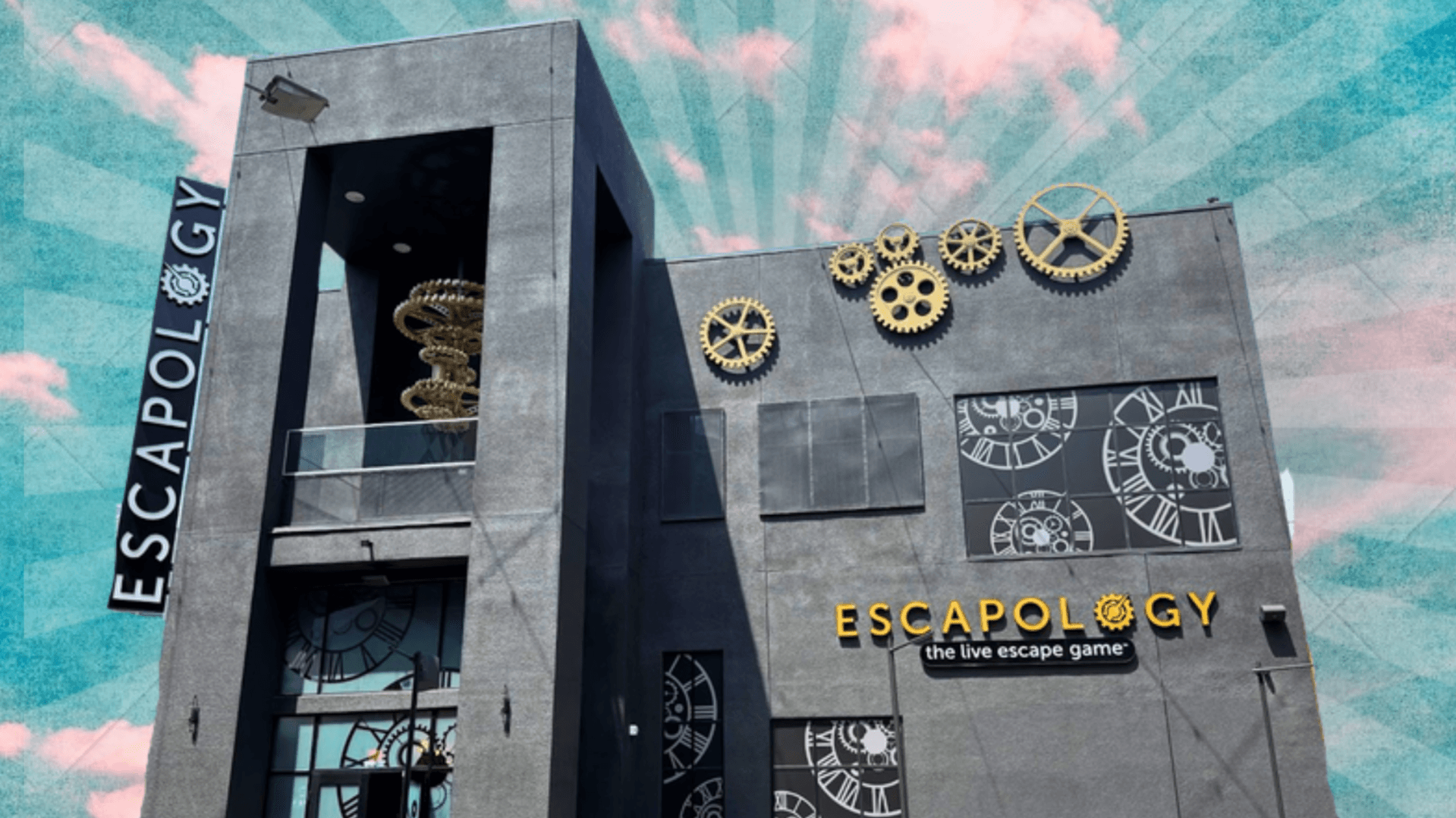
Innovation often comes from taking a familiar concept and building the systems that allow it to scale. That is exactly what Escapology has done for the escape room industry.
When escape rooms first emerged, the category was dominated by independent operators creating one-off experiences with varying levels of quality and operational sophistication. Escapology saw an opportunity to professionalize the industry, combining immersive entertainment with the business discipline of a mature franchise system. Today, the brand has grown to more than 115 locations while building a franchise model centered on proprietary game development, licensed intellectual property, hospitality-level guest experiences and data-driven operations.
Bringing Franchise Systems to an Emerging Industry
Many independent escape rooms succeed because of creativity, but maintaining that creativity while consistently delivering memorable guest experiences across dozens of markets presents an entirely different challenge.
Escapology has spent years solving that challenge by creating standardized operating systems, investing heavily in game development and continually refining its business model through both franchised and corporate-owned locations.
"When I first learned of Escapology, my first comment was, 'This looks just like the restaurant business without food costs,'" CEO Burton Heiss said. “You add that amount of profitability to the bottom line. My honest thought was that I have so much more margin for error that we can really go out and explore how to grow.”
Unlike restaurants, where profitability is constantly influenced by food costs, spoilage and supply chain fluctuations, Escapology operates with a much simpler cost structure centered primarily around occupancy and labor. That efficiency allows the company to invest more resources in the guest experience instead of inventory management.
The company also operates approximately 20 corporate locations that function as testing grounds for new initiatives before they are introduced systemwide.
"When we started to invest in that program, I said that being a bigger operator makes us a better franchisor," Heiss said. “Your problems are now my problems times 20. Now we have a sandbox. We don't roll out something that hasn't been tested.”
That commitment to continuous improvement helps franchisees benefit from proven systems instead of experimenting on their own.
Innovation Through Proprietary Experiences
Perhaps Escapology's greatest innovation lies in recognizing that successful escape rooms require much more than locked doors and clever puzzles.
The company has invested years into developing an extensive library of professionally designed games featuring immersive storytelling, advanced technology and cinematic production quality. Franchisees gain access to proven attractions without needing to build games themselves.
Even more notably, Escapology has secured licensing agreements with globally recognized entertainment brands, including Warner Bros., CBS, Lionsgate Studios and the Agatha Christie Estate. These partnerships allow franchisees to offer experiences built around recognizable characters and stories such as Batman™, Scooby-Doo™ and “Murder on the Orient Express.”
"We have partnered with companies that have household names to bring licensing into the gameplay," said Lloyd Notley, vice president of franchising. “It legitimizes the escape rooms and makes them appealing to a much larger audience of consumers.”
Those exclusive experiences create a competitive advantage that independent operators often cannot replicate while continually giving guests new reasons to return.
A Hospitality Business Without Restaurant Complexity
For investors evaluating franchise opportunities, Escapology also challenges traditional assumptions about hospitality businesses.
Chief Development Officer Shawn Baxter believes many experienced restaurant operators are beginning to recognize the advantages of experiential entertainment.
"With QSR, you are dealing with COGs, supplies, labor, spoilage, all these things that are eating into profit," Baxter said. “The escape room model may be a significant investment initially, but once you are open, it boils down to primarily occupancy and labor costs. There is nothing else. No inventory, shrinkage or spoilage. The return and the EBITDA model is much stronger versus more traditional franchising industries.”
The category itself also offers significant room for expansion. "Approximately 21% of the population has played an escape room in the last three years," Baxter said. "So the capacity to grow market share is significant.”
“Landlords are now recognizing us as one of the entertainment brands that they would want in their premium spaces," Notley added. That positioning gives franchisees greater flexibility during site selection while helping them secure attractive retail locations.
Why Escapology Stands Out
As consumers increasingly prioritize experiences over traditional retail spending, experiential entertainment continues to emerge as one of franchising's most promising growth categories. The combination of hospitality expertise, exclusive entertainment content, operational simplicity and scalable operating systems is what makes Escapology one of 1851 Franchise's Most Innovative Franchise Concepts.
Stay tuned throughout the rest of the month for 1851 Franchise's full Innovative Franchise Concepts series to explore the other innovative brands making waves in the industry.