Today’s franchise buyers are increasingly looking for businesses that combine recurring revenue, operational efficiency and technology with a model that can be replicated as they grow. In home services, that is helping shift attention toward specialized concepts that do a smaller number of things exceptionally well rather than trying to serve every possible customer need.
That philosophy is at the heart of Lawn Squad, part of the Authority Brands portfolio.
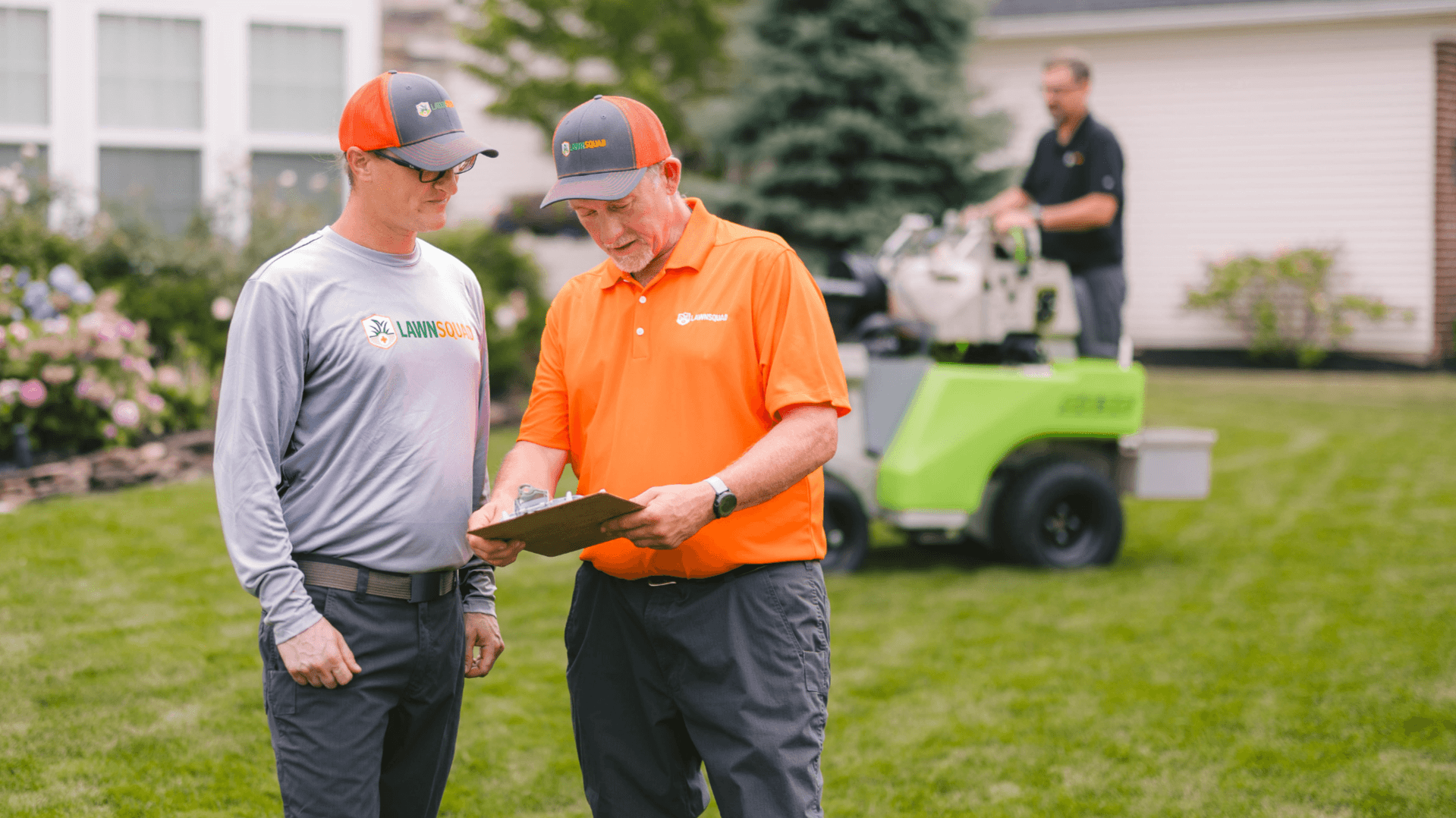
Rather than operating as a traditional landscaping company that handles everything from weekly mowing to large installation projects, Lawn Squad focuses specifically on lawn health. Its treatment-only model includes fertilization, weed control, aeration and seeding, tree and shrub care and pest control where applicable.
“We aren't trying to be every outdoor service for every homeowner,” said Josh Minturn, vice president of franchise development for Authority Brands. “We're focused on becoming the trusted lawn health expert. That specialization makes the value proposition clearer for the customer, but it also creates a much cleaner business model for the franchise owner.”
Specialization Is Becoming a Competitive Advantage
Across home services, specialization can be a powerful competitive advantage as customers look for expertise, while business owners benefit from services that are easier to train, schedule, measure and repeat.
For Lawn Squad, the decision to specialize allows franchisees to build their businesses around a defined customer need: keeping lawns healthy throughout the growing season.
Rob Palmer, founder and brand president of Lawn Squad, described the philosophy as being “large enough to serve, but small enough to care.” That approach allows Lawn Squad to leverage the infrastructure of a growing national brand while maintaining the expertise and personalized service customers expect from a local lawn care provider.
The specialization is particularly attractive to experienced landscaping operators who understand how quickly complexity can accumulate in a full-service outdoor business.
Tim Lake, a longtime landscaper and architect who spent decades building his own design-build-maintain company before becoming a Lawn Squad franchisee, saw the model as an opportunity to improve an area of his existing operation.
“We were already doing lawn care, but I was never happy with the other people we hired,” Lake said. “Lawn Squad became a vehicle for getting it right and growing that piece of the pie for us. I got into it because I believed in the systems in place and the way Rob was doing things. He had really built a better model for the lawn care industry.”
Why Lawn Squad Chose a Treatment-Only Model
At Lawn Squad, specialization is not simply a marketing strategy. It shapes the economics and day-to-day operation of the business.
Customers turn to Lawn Squad for services such as fertilization, weed control, aeration, seeding and targeted tree, shrub and pest treatments. By concentrating on those recurring lawn-health needs rather than mowing and large landscaping projects, the brand removes several layers of operational complexity. There are fewer types of equipment to manage, services can be standardized across routes and technicians can become highly proficient in a defined set of applications.
“We designed Lawn Squad around services that homeowners need repeatedly and that franchisees can deliver efficiently,” Minturn said. “When you take mowing and large landscaping projects out of the equation, you aren't constantly reinventing the workday. You can build routes, develop technicians and create systems around services that are highly repeatable.”
The approach also supports Lawn Squad’s education-first relationship with customers. Rather than applying a one-size-fits-all treatment, the brand evaluates factors including grass type, soil conditions and environmental characteristics to determine what an individual property needs.
“We are the type of brand that looks for the chemical compound that will have the best impact,” Palmer said. “What is the best fertilizer they can use for that specific lawn?”
That expertise gives specialization a customer-facing benefit as well: Lawn Squad can focus its resources on becoming better at lawn health rather than spreading its attention across an extensive menu of unrelated outdoor services.
Simplicity Creates Operational Efficiency
For the franchise owner, one of the biggest advantages of the treatment-only model is what it removes from the business. Traditional landscaping operations can require large crews, mowing equipment, trailers and different sets of tools depending on the project. Staffing requirements can also change significantly from one type of job to another.
Lawn Squad's more standardized service mix creates a tighter operational structure. Smaller technician teams can service scheduled routes using equipment designed specifically for lawn treatments.
Lake has seen the impact firsthand, particularly through the brand's use of ride-on equipment. “The Lawn Squad technicians were all using ride-on machinery,” Lake said. “That meant you could hire more mature, older operators. From an efficiency standpoint, they could cover a lot more ground than their competitors.”
That productivity becomes increasingly important as a franchisee builds route density. When multiple recurring customers are concentrated within the same service area, technicians can spend more of the workday servicing properties and less time traveling between appointments.
“The goal isn't simply to add customers. It's to build smart density,” Minturn said. “When you have recurring customers, efficient equipment and optimized routes working together, you can get more productivity from each technician and each truck. That's what makes the model increasingly efficient as the business grows.”
Technology Helps Franchise Owners Stay Focused on Growth
Lawn Squad's simplified service model is reinforced by technology and centralized support designed to remove administrative work from the franchise owner's plate. The brand leverages lawn care software to support routing, customer communication, treatment tracking, invoicing, scheduling, retention and upselling. Franchisees also benefit from Authority Brands' centralized infrastructure, including call center support.
The call center manages inbound leads and web submissions and follows up with prospective customers, helping ensure opportunities do not disappear because an owner or technician is busy in the field.
“The sales team at the call center takes inbound leads, web submissions and follows up directly with customers to fully support the franchisees,” Minturn said. “That level of responsiveness helps ensure every opportunity is worked and supported. The phone is always going to be picked up. That consistency is a big part of what drives performance across the network.”
Combined with digital estimating, CRM capabilities, route optimization and smart scheduling, those systems allow franchise owners to spend less time on routine administrative tasks and more time developing their teams, strengthening local relationships and growing their customer base.
The Power of Recurring Revenue
Perhaps the biggest benefit of the treatment-only strategy is that Lawn Squad is not primarily built around one-time projects. Lawn health is ongoing. Fertilization, weed management and other treatments must occur throughout the growing season, giving franchisees an opportunity to enroll homeowners in recurring programs rather than continually replacing completed jobs with new projects.
That creates several advantages: more predictable scheduling, repeat customers, greater revenue visibility and the opportunity to build long-term relationships with homeowners.
Lawn Squad reported an 80% customer retention rate across its network, highlighting the value of a model centered on ongoing service and customer communication.
“The standard is to call every customer after 48 hours,” Minturn said. “We want to ensure that customer expectations are aligned with the program they are in.”
For franchise buyers evaluating home service concepts, that recurring structure can be particularly compelling. Instead of beginning every month with an empty pipeline, owners have an existing customer base to service, retain and potentially expand.
Backed by Authority Brands, Built for Long-Term Growth
Lawn Squad's focused operating model does not mean franchisees are building their businesses alone. The brand is part of Authority Brands, a home services platform with 15 brands and a network of more than 2,000 franchise owners. That provides Lawn Squad franchisees with access to resources and institutional knowledge that would be difficult for an independent lawn care company or emerging franchisor to recreate.
“When it comes to franchising, it is a very crowded space,” Minturn said. “The fact that Authority Brands is the owner is a huge differentiator.”
Franchisees benefit from established training, marketing, technology, business coaching, purchasing resources and shared expertise across the broader Authority Brands network. For a relatively young franchise system, that combination creates an unusual position: Lawn Squad can maintain the growth potential and available territory of an emerging brand while tapping into the infrastructure of a much larger franchise organization.
“When people can see that there is an organized component to the brand, there is more confidence in the permanence of the brand,” Lake said.
Ultimately, Lawn Squad's approach reflects a broader idea about the future of home service franchising: Growth does not necessarily require adding more services. Sometimes, doing fewer things with greater efficiency creates the stronger platform.
For more information on franchising with Lawn Squad visit https://1851franchise.com/lawn-squad.