Buy a Franchise
SPONSORED
The Individual is in Control of the Content
The reader now controls the outcome. Not us, not you, not the journalist.
Buy a Franchise
SPONSOREDThe reader now controls the outcome. Not us, not you, not the journalist.
The news fascinates me. Not the news about something exact, but the news, the media and the delivery of content. Today, boundaries are broken and anything goes.
Now, you are the journalist. No need to go to college. No need for an accreditation. No need for an editor. No need for a predetermined audience. No need for advertising revenue. No need for a photographer or a video specialist. Today, you control all of the message and exactly how you want to tell it and can execute the delivery of anything you want.
I won’t call myself a futurist, but I did see changes when I was in college, spending my parent’s hard earned money on a 4-year education at Drake University. Following my freshman year, I had an opportunity to change my major. This was the year 2000. I went to Drake seeking a major in news-editorial journalism (essentially print media) with a minor in graphic design. I switched my major, not drastically, but more fitting to what the future could potentially unleash. My new major was news-Internet.
At that point, news publications had not fully committed to an online universe. In fact, many were unwilling to participate in the speed of content. Sure, they had Websites, but the rush of content was not necessary. Content that ran in a newspaper a few days prior would then be cataloged online for future research. It made sense, but news and the Internet had not collided yet.
In between my freshman and sophomore year of college, I began writing out a business plan for an online magazine. The ideation for this publication was finalized during an internship at Rolling Stone Magazine and Details Magazine where I saw the disconnect between delivery of news and an online experience. Magazines would hit shelves; content will slowly drip online.
I launched Lumino Magazine in the summer of 2002 – a Chicago, Des Moines, Indianapolis and Milwaukee focused music, entertainment and political publication.
With the launch, I figured I could do a few things. I could become a publisher, therefore not having to listen to anyone tell me what I could and could not write about. Thus, I had writing freedom. I also had creative control. I could take photos at a concert or video an interview. This freedom was intriguing to others in my circle, too, as they didn’t want a publication to decide whether they could write, freelance or work there. They wanted control, too.
Admittedly, we were not complete geniuses with our publication. In 2002, we launched a pilot issue featuring long-form stories on author Nicholas Sparks, Cubs future sensation and bust Mark Prior, musician Vanilla Ice’s project VICE, along with a few reviews of books and CDs. Online readership soared to the hundreds.
The project was put on pause to gather our plan.
In 2004, with a new strategy in place, we relaunched. We still wrote our stories, declared our audience, rebelled against an editor telling us what we could and could not write about. We kept the idea of covers and issues. Thus, once a month, we unloaded all of our stories (sometimes 50 of them) online at once. Our first cover was a sit-down interview with Howard Dean, who had yet to scream and was the front runner for the Presidential nomination. We followed that issue up with an Office Space reunion, a debate issue on the new term metrosexual, a Revenge of the Nerds reunion issue, and many other big time ideas.
Eventually, we punted again.
This time, we added video interviews before those were popular, including the launch of CityVision (look it up on YouTube), where we commented on stories, MySpace event buzz, concerts hosted by our magazine, and daily content M-F.
Were we a real publisher and real writers? Absolutely. And publicists loved us because we understood influencer marketing. We could move albums, drive people to attend concerts, and rally a political message.
Today, many of the same principles learned through Lumino are applied to 1851. Some question our “credibility,” but just as their questioning of our value proposition is credible and fair, so is our rebuttal that we have structure, real content, real stories and a real focus. Content today is in control of all of us. Some of it is manipulative (as seen with Facebook fake news) and some of it is wrong (biased and opinionated), but content that works is in the eye of the reader. It is their decision whether they want to read it or not.
The reader now controls the outcome. Not us, not you, not the journalist. News editorial is gone, news-Internet is alive and well.
Sign up for the 1851 Franchise newsletter to get our biggest stories before everyone else
By signing up, you agree to our user agreement (including class action waiver and arbitration provisions), and acknowledge our privacy policy.
About the Author
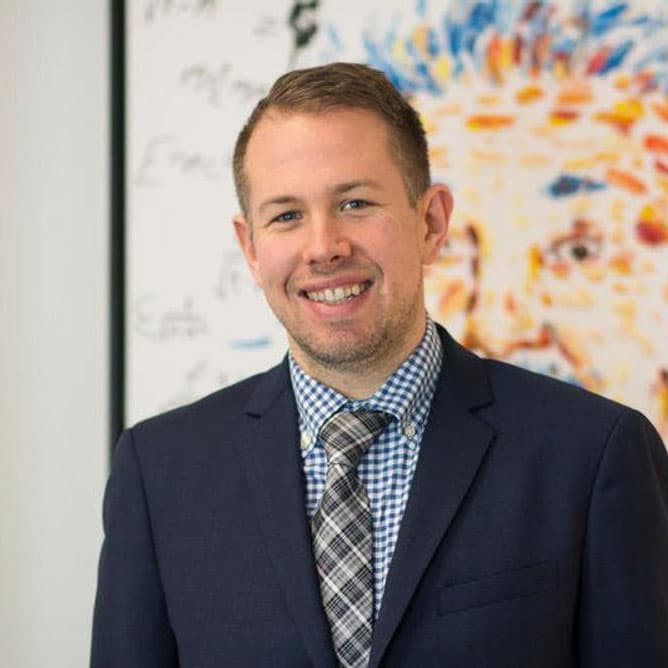
Nick Powills, CFE, founded No Limit Agency in 2008 and serves as Chief Brand Strategist for the Chicago-based firm. No Limit is a full-service communications agency that establishes and elevates brands by bridging Public Relations, Social Media, Marketing, Advertising, Digital, and a lot of creativity, to best strategize well-rounded and successful campaigns for 50+ global franchise brands. By presenting visionary ideas and building real relationships, No Limit is able to create effective media branding strategies to help companies grow. Nick currently leads a staff of writers, media strategists, designers, social media experts and digital producers in an office think-tank where brands are humanized for strong, compelling media stories. Prior to starting No Limit at the age of 27, Nick spent four years working at a franchise PR agency where he mastered the art of building rapport with media outlets and creating newsworthy pitches for earned media placements. He holds a Bachelor of Journalism from Drake University in Iowa.